
German Longhaired Pointer
Basics
The German Longhaired Pointer (GLP) is a versatile Hunt‑Point‑Retrieve gundog developed in continental Europe to work closely with the hunter, covering ground to find game and then retrieving on land or from water. Breed descriptions often compare the overall look to a “continental setter” type: a pointing dog with a full tail and a longer, protective coat.
Although still relatively uncommon compared with other German pointing breeds, the GLP is valued for being an all‑day worker with a keen nose and an enthusiastic attitude toward water work. In the home, it’s typically affectionate and people‑oriented, but it stays at its best when it has regular exercise and a job to do.
Description
The German Longhaired Pointer is a versatile and dedicated hunting dog from Germany, developed to be a reliable and skilled companion for hunters. Known for its excellent scenting ability, intelligence, and stamina, this breed excels in pointing, retrieving, and tracking game across various terrains. It is often described as a well-rounded and steady dog that is equally suited to work in the field or as a family companion.
Physically, the German Longhaired Pointer is a medium to large-sized dog, standing between 23 and 28 inches tall and weighing 55 to 70 pounds. It has a strong, athletic build that enables it to move efficiently through rough terrain. The breed’s most notable feature is its long, dense, and water-resistant coat, which comes in a variety of colors, including liver, brown, and white, often with markings or patches. The long, feathered coat requires regular grooming to maintain its appearance and prevent matting, particularly around the ears, tail, and legs.
The breed's temperament is one of its strongest attributes. German Longhaired Pointers are affectionate, loyal, and intelligent dogs that form strong bonds with their families. They are generally good with children and other animals, though they can exhibit a strong prey drive due to their hunting background. This drive can make early training and socialization important to ensure they grow into well-behaved companions. The breed is known for being eager to please, making them highly trainable with consistent, positive reinforcement.
As a working dog, the German Longhaired Pointer is highly versatile and excels in a wide range of tasks, from pointing and flushing game to retrieving in both water and land. It is especially valued for its ability to work in diverse environments, whether hunting upland birds, waterfowl, or tracking larger game. Its stamina and endurance mean it can handle long days in the field and adapt to a variety of conditions. Though it is known for its hardworking nature, the breed is also capable of settling down as a calm and loving companion at home.
Overall, the German Longhaired Pointer is an intelligent, loyal, and adaptable breed that thrives in active, outdoor-oriented households. Whether used as a hunting dog or a family companion, it offers a wonderful balance of working ability, affection, and versatility. Its combination of elegance and utility makes it a beloved breed among hunters and families who can meet its exercise and training needs.
History
The German Longhaired Pointer (*Deutsch Langhaar*) is one of the oldest continental pointing breeds, with a history rooted in 19th-century Germany. Its origins lie in the versatile hunting dogs used by German nobility for centuries. These early dogs were bred for their ability to track, point, and retrieve game, excelling in both forested and wetland environments. The German Longhaired Pointer was developed to be an all-purpose hunting companion, capable of working on land and water, with an emphasis on endurance, intelligence, and trainability.
The breed’s foundation includes a variety of European spaniel- and setter-type dogs, along with local German dogs. Breeders aimed to create a dog with a strong work ethic and a calm, cooperative temperament. The result was a medium-to-large dog with a distinctive long, wavy coat that provided protection in harsh weather and dense brush. The breed's elegant appearance and functional abilities quickly gained favor among German hunters.
In the late 19th century, the breed began to take shape under organized breeding programs. A pivotal moment came in 1879 when a breed standard was established, focusing on preserving the German Longhaired Pointer's versatility and working ability. Breeders were careful to prioritize performance over appearance, ensuring the breed remained a practical hunting dog. The formation of the German Longhaired Pointer Club further solidified the breed’s development, promoting rigorous testing for hunting ability in addition to conformation standards.
Today, the German Longhaired Pointer remains a cherished hunting dog in Germany and other parts of Europe, though it is less well-known outside of its native region. It is celebrated for its gentle temperament, loyalty, and ability to adapt to a variety of tasks, from tracking and pointing to retrieving. While it retains its role as a functional hunting dog, the breed has also found a place as a devoted family companion. The German Longhaired Pointer's history reflects a balance between tradition and utility, showcasing the breed’s enduring appeal and versatility.
Appearance
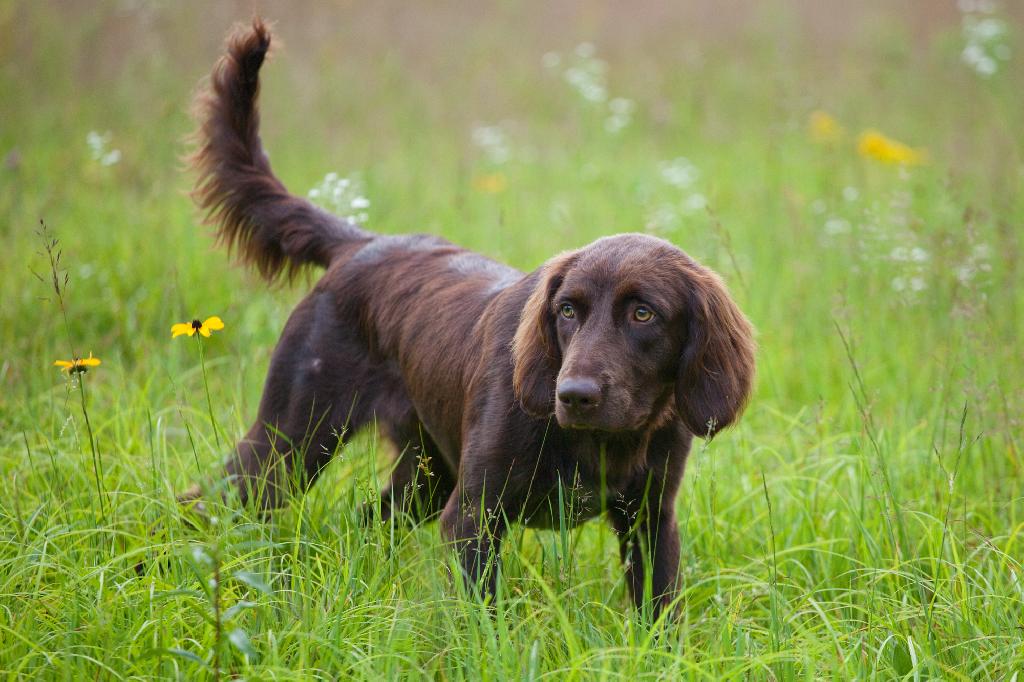
The GLP is a medium-sized, powerfully built sporting dog with a noble, athletic outline and a balanced, efficient gait. Breed standards emphasize an energetic, well‑proportioned dog built for stamina rather than extremes.
Its hallmark is the long, close‑fitting coat with a protective undercoat and noticeable feathering on the ears, legs, tail, and underside. Common colors are solid brown and various brown-and-white or roan patterns; the head is brown in all accepted colors.
Adults are typically around 58–70 cm (23–28 in) at the withers depending on sex, with an approximate weight around 30 kg (66 lb).
Colors
• Brown & White
• Dark Chocolate
• Roan
• White & Chocolate
Health
The German Longhaired Pointer Club notes no specific points of health concern unique to the breed, but it still promotes evidence-based screening of breeding stock. In the UK, recommended pre-breeding evaluations commonly include hip scoring and eye testing through established schemes.
The breed club also references participation in DNA research related to reports of thyroid cancer in some continental lines and mentions optional DNA testing related to coat color and research sampling. For a prospective owner, the practical takeaway is to choose breeders who can show relevant screening results and who are open about family health history.
As with any active sporting dog, maintaining a lean body condition and appropriate conditioning helps support joints and long-term soundness. Your veterinarian can tailor screening and preventive care to your dog’s age and activity level.
Care
Coat care is a real part of GLP ownership. The feathering and the longer hair on the ears, tail, and backs of the legs benefit from routine brushing and combing to prevent tangles and matting, especially after wet or muddy outings.
As an active gundog, the breed needs daily exercise plus mental stimulation (training, scent games, retrieving, or structured field activities). A quick backyard potty break isn’t enough for most adults; they’re built for steady work “rain or shine.”
Regular checks after outdoor time—ears, feet, and coat—help catch debris, burrs, and minor skin irritations early. Plan on normal preventive care (parasite control, dental care, nail trims) like any athletic sporting breed.
Training
German Longhaired Pointers are intelligent and generally eager to learn, and they tend to respond best to consistent, positive methods. Starting early with socialization and basic manners sets the tone for an adult dog that can settle at home and focus in distracting outdoor environments.
Because many GLPs are sensitive, training works best when it is fair and clear: short sessions, lots of rewards, and steady expectations. Recall, leash skills, and calm greetings are especially important for a breed that naturally wants to range and explore.
If you want to lean into their instincts, build on retrieving, scentwork, and field-style exercises. Giving them structured “work” often makes everyday obedience easier, too.
Temperament
Breed standards describe the German Longhaired Pointer as calm and even‑tempered, yet alert, very loyal, and biddable. Many owners experience them as “soft” dogs that thrive on praise and clear guidance rather than harsh corrections.
Because they were developed to work as part of a team, GLPs generally enjoy human company and do best when they are included in daily life. They can be affectionate “cuddle” dogs indoors, but their working heritage means they still need meaningful outlets for energy.
With sufficient exercise and engagement, they are typically friendly, steady companions; without it, boredom can show up as restlessness or destructive habits.
Lifestyle
GLPs fit best with people who enjoy an active routine. They were created to hunt, point, and retrieve on both land and water, so they tend to be happiest when they can run, swim, and use their nose regularly.
They also need companionship. Breed guidance emphasizes that a bored or lonely dog can become destructive, so this isn’t an ideal “kennel dog” or a breed for homes where the dog is left alone for long stretches every day.
Many do well in family settings when exercise and boundaries are consistent. A securely fenced area and a plan for daily activity (not just weekend outings) make life smoother for both dog and owner.
Ownership
Owning a German Longhaired Pointer is easiest when you plan around the breed’s two big needs: activity and togetherness. Expect to invest time in daily exercise, ongoing training, and mental work—especially during adolescence, when energy and curiosity can peak.
Grooming is moderate but regular. The coat is designed to protect the dog in the field, which also means it can collect burrs, mud, and moisture; routine brushing and post‑outing checks keep the dog comfortable and the coat manageable.
When evaluating a puppy or adult, look for steady temperament, clear health documentation (hip and eye results where applicable), and breeders or rescues who can honestly describe working drive and off‑switch. The right match is a loyal, affectionate companion that still enjoys having a purpose.
Interesting Facts
- Gundog type: Hunt‑Point‑Retrieve; bred for versatile work on land and in water.
- Temperament in the standard: calm, even‑tempered, alert, biddable, and very loyal.
- Coat: long, close‑fitting with undercoat and feathering; requires routine brushing to prevent matting.
- Typical size: about 58–70 cm (23–28 in) at the withers; around 30 kg (66 lb).
- Common colors include solid brown and brown/white or roan patterns (head brown in all accepted colors).
- Breed club guidance highlights hip scoring and eye testing as key pre‑breeding screens.