
German Pinscher
Basics
The German Pinscher is an old German farm dog developed to guard property and control vermin—an athletic, medium-sized “all‑purpose” dog with strong instincts and a sharp, curious mind. After the World Wars the breed’s numbers became extremely low, and modern German Pinschers descend from careful rebuilding efforts in the mid-20th century.
In a family setting, they’re often devoted and playful with their people, but they’re not a passive companion. Most thrive with structure, daily activity, and opportunities to use their brain.
Description
The German Pinscher is a sleek, energetic, and intelligent dog breed with a strong, confident presence. Originating in Germany, this breed was developed as a versatile farm dog, originally used for guarding, ratting, and herding. Known for its sharp instincts, agility, and loyalty, the German Pinscher is an excellent working dog and a devoted companion. While the breed shares some traits with the Doberman Pinscher, it is more compact and has a distinct personality that makes it unique.
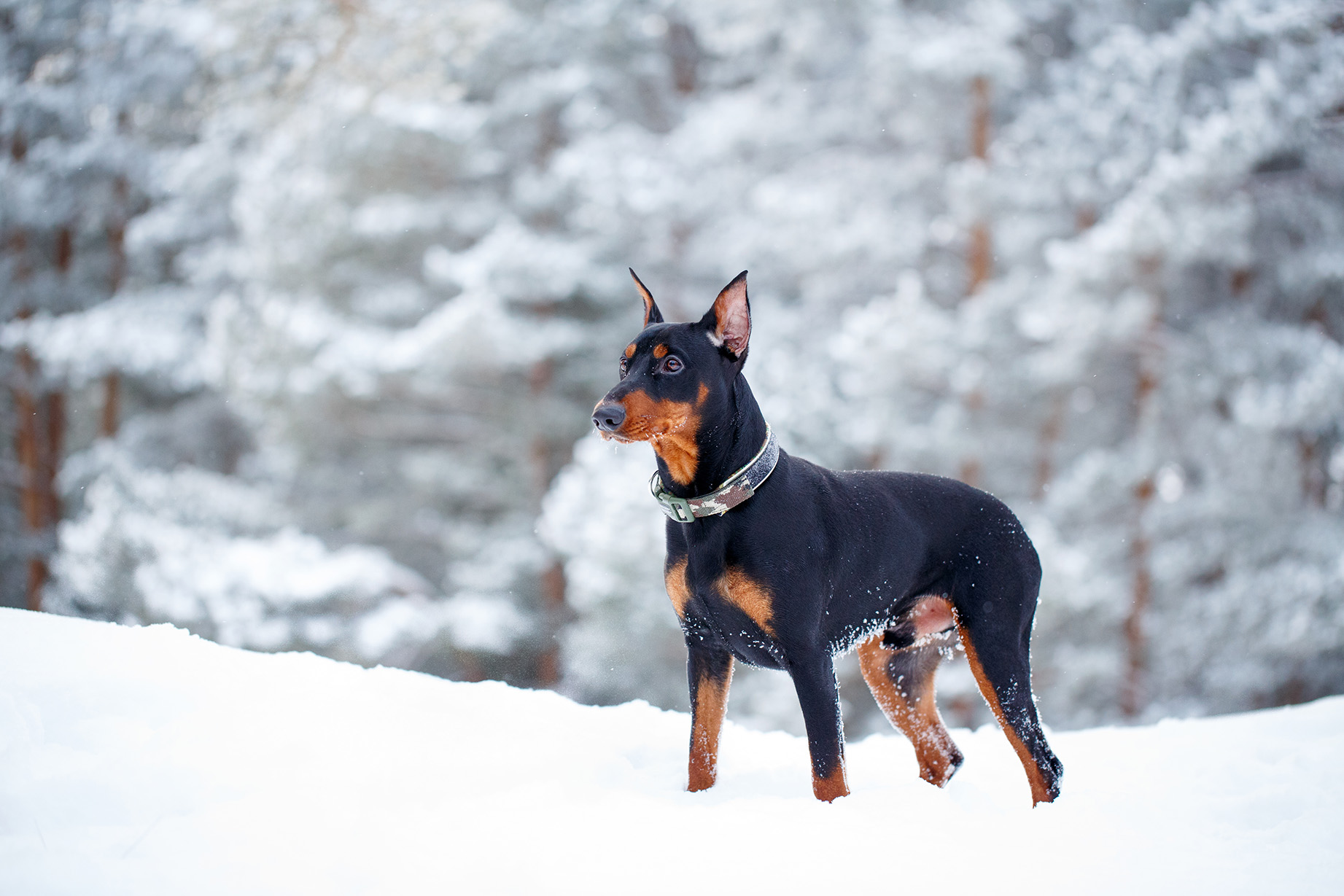
Physically, the German Pinscher is a medium-sized dog with a well-muscled, athletic build. Standing between 17 to 20 inches tall and weighing 25 to 45 pounds, it has a strong, balanced appearance that reflects its versatility as both a working dog and a companion. The breed has a smooth, short coat that is usually a rich shade of red, fawn, or black and tan. The German Pinscher’s ears are typically cropped to stand erect, though some may remain natural, adding to its alert expression. The breed's sleek coat requires minimal grooming, but regular brushing helps maintain its shine and health.
The German Pinscher is known for its sharp mind and high energy. It is an independent and alert dog, always aware of its surroundings, making it a great watchdog. While it is generally friendly and affectionate with its family, it tends to be reserved or wary of strangers, which can make it an excellent guardian. However, its strong prey drive means that it may not always get along with smaller pets like rodents or birds unless properly socialized from a young age. When it comes to training, the German Pinscher is highly intelligent and eager to please, but it can also be independent and stubborn at times, so early socialization and consistent, positive training methods are essential.
This breed is also very active and requires regular exercise to stay mentally and physically stimulated. The German Pinscher thrives in environments where it can have access to space to run, play, and engage in activities like agility or obedience training. Without enough exercise or stimulation, the German Pinscher can become bored, leading to behavioral problems. This breed is best suited to an active household with an experienced owner who can provide leadership and structure.
In summary, the German Pinscher is a loyal, intelligent, and active breed that excels as both a working dog and a family companion. Its athleticism, alertness, and strong guarding instincts make it an excellent choice for those looking for a protective dog with a sharp mind. With proper training, socialization, and ample exercise, the German Pinscher makes a wonderful, devoted addition to the right home.
History
The German Pinscher is a historic and versatile breed that traces its roots back to 19th-century Germany, where it was developed as a working dog with a focus on guarding and vermin control. Its ancestry is closely tied to the now-extinct German Bibarhund and early European terrier-type dogs, which were bred for their agility, intelligence, and hunting prowess. Originally a farm dog, the German Pinscher excelled at protecting property, eliminating rats and mice, and serving as a loyal companion.
The breed was first recognized as a distinct type in the 1870s, and its standard was formally established in 1884. Breeders aimed to create a medium-sized, muscular, and elegant dog that could perform a variety of roles while maintaining a confident and alert demeanor. The German Pinscher is also a foundational breed for several other well-known breeds, including the Miniature Pinscher and the Doberman Pinscher. Its influence can be seen in their physical appearance and working abilities.
Like many breeds, the German Pinscher faced significant challenges during the 20th century, particularly during the World Wars, when its population declined drastically. By the 1950s, the breed was nearing extinction. However, dedicated enthusiasts, particularly Werner Jung in Germany, worked to revive the breed. Jung used the few remaining German Pinschers, as well as closely related Miniature Pinschers, to rebuild the population while adhering to the breed’s traditional standards.
Today, the German Pinscher is recognized worldwide as a lively, intelligent, and loyal companion. While it retains its guarding and vermin-hunting instincts, it is also valued for its affectionate nature and adaptability in modern homes. The breed’s history reflects resilience and the enduring appeal of a dog that embodies both form and function. The German Pinscher continues to thrive, appreciated by enthusiasts for its combination of elegance, energy, and versatility.
Appearance
German Pinschers are squarely built, well-muscled, and elegant, with a short, dense coat that lies smooth and glossy. Their outline is balanced and athletic rather than bulky, built for quick movement and endurance.
Coat colors may be solid (from fawn/isabella through various shades of red) or bi-color (black-and-tan or blue-and-tan), with sharply defined markings preferred in the bi-colors.
Colors
• Black
• Fawn
• Red
Health
German Pinschers are generally healthy, but like all breeds they can be predisposed to certain conditions. Commonly noted concerns include hip dysplasia, some inherited eye conditions (such as cataracts or corneal dystrophy), and von Willebrand disease (a hereditary clotting disorder).
The best prevention strategy is selecting breeders who test and share results, then maintaining excellent fitness and body condition. Regular veterinary checkups and prompt attention to lameness, vision changes, or unusual bruising/bleeding help catch problems early.
Care
Grooming needs are simple: the short coat usually requires only occasional brushing to remove loose hair, plus routine nail trims, ear checks, and dental care. They’re a generally “clean” breed and don’t need frequent bathing unless they get dirty.
Daily care is more about management and enrichment than coat work. Provide secure fencing or leash habits (many have a strong prey drive), and keep them lean to support long-term joint health and athletic performance.
Training
German Pinschers are quick learners, but they do best with training that’s positive, consistent, and engaging. Keep sessions short and varied, and reward calmly for focus and impulse control—this breed can get overstimulated if training becomes a constant hype loop.
Prioritize reliable recall, polite leash skills, and calm behavior at doors/windows (watchfulness can turn into nuisance barking without guidance). Many enjoy outlets like obedience, rally, agility, and nose work, which suit their athleticism and problem-solving drive.
Temperament
Well-bred German Pinschers are typically alert, high-spirited, and loyal—watchful dogs that notice what’s happening around the home. They often form a strong bond with family and can be affectionate, but they also have confidence and a streak of self-possession.
Because they were bred to act independently on farms, many have a bold, inquisitive personality and may test boundaries if rules are inconsistent. Early socialization helps them become steady around new people, dogs, and environments.
Lifestyle
This is an active, people-focused dog that fits best in a home where someone genuinely enjoys daily exercise and training. Plan on brisk walks plus play and “brain work” most days; a bored German Pinscher can invent their own entertainment.
They typically do well in a house or apartment only if their needs are met and barking is trained thoughtfully. They’re often happiest when included—hiking, running errands, training classes—rather than being left alone for long stretches.
Ownership
German Pinschers can be a wonderful choice for experienced or motivated owners who like smart, athletic dogs and are comfortable setting boundaries. They’re not ideal for someone wanting an easygoing, low-energy pet.
Choose a breeder who emphasizes temperament and health testing, and be ready to invest in training from puppyhood through adolescence. With consistent structure and outlets, they mature into devoted companions and confident watchdogs.
Interesting Facts
• Originated in Germany as a farm guardian and ratter (rodent hunter).
• Medium-sized, squarely built, and well-muscled with a short, glossy coat.
• Colors include solid reds/fawns and bi-colors like black-and-tan or blue-and-tan.
• Known for being alert, playful, loyal, and naturally watchful.
• Commonly discussed health concerns include hip dysplasia, inherited eye issues, and von Willebrand disease.
• Many enjoy dog sports such as obedience, agility, and nose work.