
German Shepherd
Basics
The German Shepherd Dog (GSD) is a versatile working breed developed for herding and later prized for protection, police and military work, service roles, and as an active companion. A good GSD is athletic, steady-nerved, and capable of sustained work with its handler.
German Shepherds tend to be deeply people-oriented and thrive when they have structure and a job—training, sport, or purposeful daily routines. They’re not typically “easy mode” dogs; the breed’s intelligence and intensity mean they do best with owners who enjoy consistent training and clear boundaries.
Description
The German Shepherd Dog is one of the most popular and versatile dog breeds worldwide, known for its intelligence, loyalty, and exceptional working ability. Originally developed in Germany in the late 19th century by Max von Stephanitz, the breed was intended to create a highly intelligent and capable herding dog. Over time, the German Shepherd evolved into a multi-purpose working dog, excelling in various roles such as police, military, search and rescue, and service dog work. Its reputation for being a reliable, fearless, and protective companion has made it a favorite among families and professionals alike.
Physically, the German Shepherd is a large, muscular dog with a strong and athletic build. It typically stands between 22 to 26 inches at the shoulder and weighs between 50 to 90 pounds, depending on its sex and individual build. The breed's coat is double-layered, with a dense undercoat and a medium-length outer coat, typically in shades of black and tan, sable, or solid black. The German Shepherd’s erect ears, keen eyes, and confident expression contribute to its alert and intelligent appearance. While the breed's grooming needs are moderate, regular brushing helps manage shedding, especially during seasonal changes.
The German Shepherd is renowned for its intelligence, ranking as one of the most trainable breeds. It excels in obedience and can be trained to perform complex tasks with precision. Its eagerness to please and strong work ethic make it a favorite for police, military, and detection work. The breed's sharp instincts, courage, and protective nature also make it an excellent guard dog, while its affectionate side allows it to form strong bonds with its family. German Shepherds are generally good with children and other pets when properly socialized, though they can be reserved or protective with strangers.
This breed requires ample mental and physical stimulation to remain happy and healthy. German Shepherds are highly active and thrive in environments where they have tasks to do, such as agility, obedience training, or outdoor activities like hiking or running. Without sufficient exercise or mental engagement, they can become bored and may exhibit undesirable behaviors. Due to their high energy levels and intelligence, German Shepherds are best suited to active families or individuals who can provide consistent training and plenty of activities.
In summary, the German Shepherd Dog is a remarkable breed known for its intelligence, loyalty, and versatility. Whether as a working dog, a family companion, or a service dog, the German Shepherd excels in a variety of roles. With proper training, socialization, and exercise, this breed makes a dedicated and loving addition to active households.
History
The German Shepherd is one of the most iconic and widely recognized dog breeds in the world, with a history that begins in late 19th-century Germany. Its development is credited to Captain Max von Stephanitz, who sought to create the ideal working dog. Von Stephanitz was inspired by the various herding dogs he observed throughout Germany, which displayed intelligence, loyalty, and stamina. In 1899, he purchased a dog named Hektor Linksrhein, later renamed Horand von Grafrath, who became the foundation sire of the breed. Horand exemplified the traits von Stephanitz admired, and his offspring established the German Shepherd as a distinct breed.
Initially, German Shepherds were bred for herding sheep and protecting livestock, a vital role in rural Germany. However, von Stephanitz recognized their potential beyond herding and promoted them as versatile working dogs. The breed’s intelligence, trainability, and strength made it suitable for various tasks, including police work, search and rescue, and military service. By World War I, German Shepherds were widely used as messenger dogs, sentries, and first-aid dogs on the battlefield, earning a reputation for bravery and reliability.
The breed’s popularity spread internationally after the war, partly due to the efforts of returning soldiers and the fame of Rin Tin Tin, a German Shepherd rescued from a battlefield and later featured in Hollywood films. During World War II, the breed’s association with Germany led to a temporary decline in its popularity in some countries, and it was renamed the "Alsatian" in Britain to distance it from its German origins. Despite this, the breed’s versatility and effectiveness ensured its continued use in military and civilian roles.
Today, the German Shepherd is celebrated worldwide as one of the most intelligent, loyal, and capable breeds. It excels in diverse roles, from police and military work to search and rescue, service dog duties, and as a devoted family companion. Its history reflects the vision of von Stephanitz and the breed’s remarkable adaptability, making it a cornerstone of working and companion dogs around the globe.
Appearance
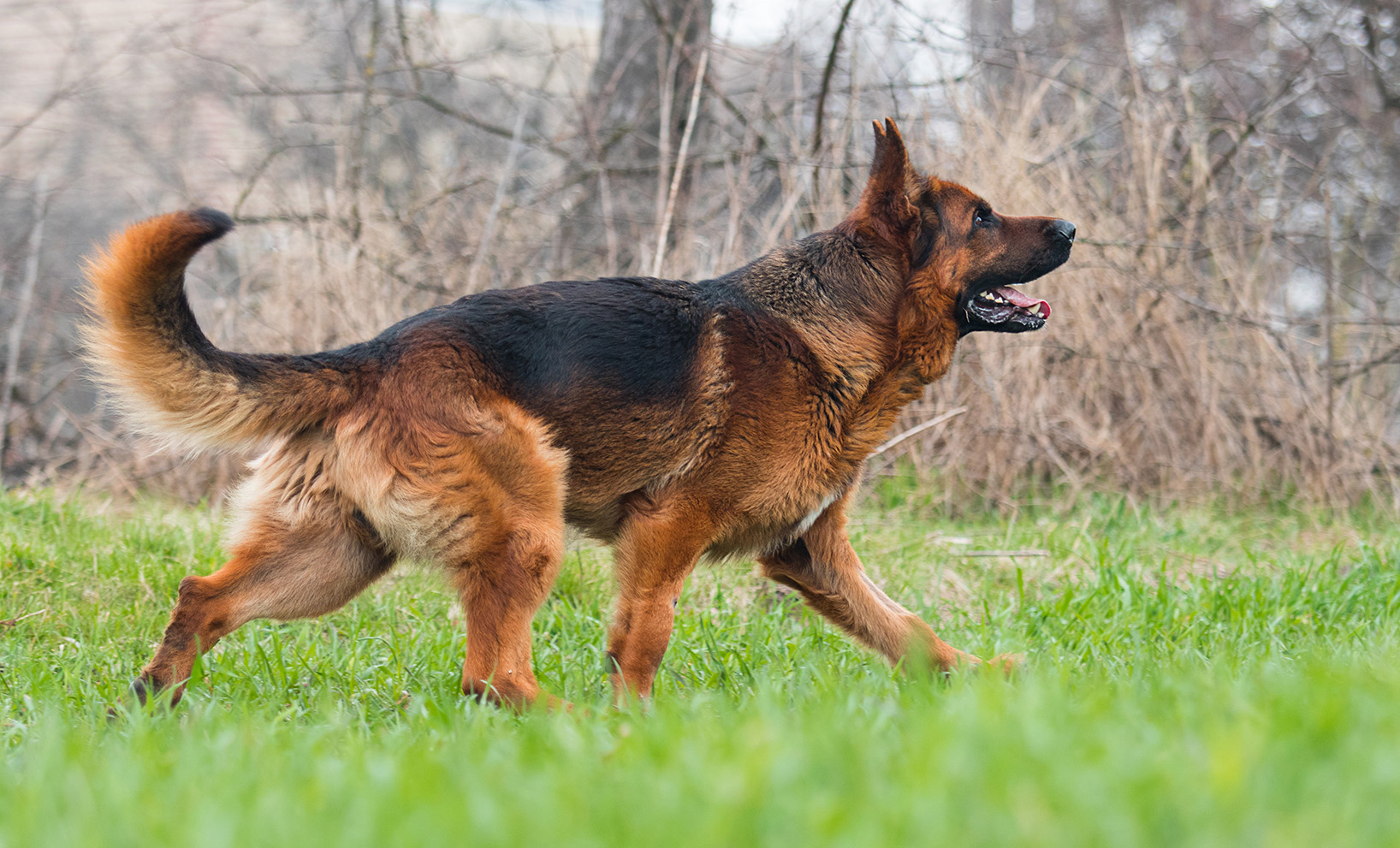
German Shepherds are strong, agile, and well-muscled, with a body that’s longer than tall and built for efficient, ground-covering movement. The head is clean and noble, ears are carried erect when alert, and expression should be intelligent and composed.
Most have a double coat of medium length (with seasonal shedding), though coat length and texture vary. Common colors include black and tan, sable, and solid black; regardless of color, the breed’s hallmark is a balanced outline and a powerful, smooth trot rather than exaggerated bulk.
Colors
• Bi-color
• Black
• Black & Cream
• Black & Red
• Black & Silver
• Black & Tan
• Gray
• Sable
• White
Health
German Shepherds are generally robust, but they have known breed risks that warrant thoughtful breeder selection and ongoing preventive care. Orthopedic issues (notably hip and elbow dysplasia) are a major consideration, and some lines are also prone to digestive sensitivities.
Work with your veterinarian on a life-stage plan that includes weight management (lean dogs keep joints happier), dental care, parasite prevention, and appropriate screening as your dog ages. When buying, prioritize breeders who health test hips/elbows and can discuss longevity and common issues in their lines with real data, not just assurances.
Care
Expect significant shedding and regular grooming. A thorough brush-out once or twice weekly (more during seasonal coat blows) helps manage loose undercoat and keeps skin healthy; baths are occasional, as needed.
Daily care also means daily work: brisk walks plus training, structured play, and problem-solving. Because many GSDs will happily overdo it, combine exercise with recovery—good footing, gradual conditioning, and rest days—especially for young dogs whose joints are still developing.
Training
German Shepherds often excel with clear, fair training and high reinforcement rates. Start with foundations—marker training, leash skills, settle/on-mat, and reliable recalls—then build complexity once the dog can think calmly around distractions.
The breed can be sensitive to handler inconsistency; strong rules one day and none the next often creates frustration and “testing.” If you want protection sports or bitework, work only with reputable clubs and trainers who prioritize temperament, control, and safety—never DIY it.
Temperament
The breed standard describes the German Shepherd as direct and fearless but not hostile, self-confident, and often naturally a bit aloof with strangers rather than instantly friendly. In a well-bred, well-socialized dog, that aloofness looks like neutrality and good judgment—not fearfulness.
German Shepherds are typically eager to work and highly responsive to training, but can become reactive, anxious, or pushy without guidance. Early socialization, calm exposure to the world, and reinforcement of neutrality (especially around strangers and other dogs) are key for a stable adult.
Lifestyle
German Shepherds fit best with active households that enjoy training and can provide daily structure. They usually prefer being near their people and may struggle if left isolated or bored for long stretches; many develop nuisance behaviors (barking, pacing, chewing) when their needs are unmet.
They can do well in suburban or even apartment settings if you’re consistent about exercise and enrichment, but they’re not “low time” dogs. Secure containment matters: a bored GSD can be a talented escape artist, and strong leash skills are important due to their size and power.
Ownership
Pick your German Shepherd based on temperament and purpose. The breed includes a wide range of drives and energy levels; an owner looking for a family companion may not enjoy the same dog a sport or working handler wants. Meet the parents when possible, and look for stable, confident dogs with good off-switches.
Plan for lifelong training and management: ongoing socialization, regular mental enrichment, and clear household rules. Done well, a GSD can be an exceptionally loyal partner—capable, protective in the right way, and deeply bonded to its family.
Interesting Facts
• German Shepherds were developed as herding/working dogs and remain one of the most versatile working breeds.
• The breed standard emphasizes confidence, approachability, and fearlessness without unwarranted aggression.
• Most have a medium-length double coat and shed heavily, especially seasonally.
• They’re commonly seen in service work (police, military, search and rescue, and assistance roles) because they’re trainable and biddable.
• Joint health and maintaining a lean body condition are especially important throughout life.
• A well-bred GSD often shows “neutrality” with strangers—observant and calm rather than instantly friendly.