
German Wirehaired Pointer
Basics
The German Wirehaired Pointer (often called the GWP) was developed in Germany in the late 1800s as a rugged, versatile hunting dog meant to work closely with a person on foot across many types of terrain. Breeders aimed for a “do‑it‑all” partner that could point upland birds, retrieve from water, and track wounded game, while also being a devoted companion at home.
In everyday life, GWPs tend to be athletic, people-oriented dogs with strong drive and stamina. They’re typically happiest when they have frequent outdoor exercise and some kind of meaningful job—whether that’s hunting, training, or structured games that use their nose and brain.
Description
The German Wirehaired Pointer (GWP) is a robust, versatile, and hardworking breed known for its distinctive wiry coat, sharp nose, and impressive hunting abilities. Developed in Germany in the late 19th century, the breed was originally bred to be an all-purpose hunting dog, capable of working in various environments and handling a wide range of game. By combining the traits of several pointing breeds, including the Pudelpointer and the German Shorthaired Pointer, the German Wirehaired Pointer became a dog designed for hunters who needed a reliable companion in both upland and waterfowl hunting.
Physically, the German Wirehaired Pointer is a medium to large-sized dog, typically standing between 23 and 26 inches tall and weighing between 50 and 70 pounds. Its most distinguishing feature is its dense, wiry coat, which is weather-resistant and protects it from the elements when working in harsh environments. The coat is usually a mix of brown and white, often with distinctive patterns, and requires regular grooming to prevent matting. The breed’s face is marked by a bushy mustache and eyebrows, giving it a distinctive, expressive look. The GWP is built for endurance, with a sturdy, muscular frame that allows it to cover large areas and perform a variety of tasks, from pointing to retrieving.
The German Wirehaired Pointer is known for its intelligence, strong work ethic, and eagerness to please. It is an extremely versatile hunting dog, excelling not only in pointing and retrieving game on land but also in water, where it is equally skilled at retrieving waterfowl. The breed’s keen nose and ability to track and scent make it a valuable tool for hunters, while its energetic and driven personality ensures that it can work tirelessly for hours in the field. Due to its intelligence and desire to work, the German Wirehaired Pointer thrives in active environments where it can be engaged in activities like hunting, dog sports, or agility training.
As a family dog, the German Wirehaired Pointer is affectionate, loyal, and protective. While it is primarily known for its hunting prowess, it can be a loving companion in the home, particularly when given enough mental and physical stimulation. The breed is generally good with children and can get along well with other dogs if socialized early. However, its strong prey drive and high energy levels mean that it requires an experienced owner who can provide consistent training and enough exercise to keep it happy. Without sufficient stimulation, the GWP can become bored and may develop behavioral issues.
In conclusion, the German Wirehaired Pointer is an intelligent, versatile, and loyal breed that excels in the field and as a family companion. With its ability to adapt to a variety of hunting tasks and its friendly, devoted nature at home, the GWP makes an excellent choice for active families or individuals who are looking for a dedicated working dog. Proper training, socialization, and regular exercise are essential to ensuring this breed remains well-behaved and happy in a family setting.
History
The German Wirehaired Pointer (Deutsch Drahthaar in its homeland) is a versatile hunting breed that emerged in Germany during the late 19th and early 20th centuries. German sportsmen of that era sought an all-purpose hunting dog that could excel on both land and water, track and point upland game birds, and retrieve waterfowl—all while tolerating the country’s varied climates and rugged terrains. To achieve this, breeders selectively crossed several existing gundogs known for their working traits. Among the ancestral contributors were the German Pointer, Griffon, Pudelpointer, and Stichelhaar, each chosen for specific attributes such as keen scenting ability, strong retrieving instincts, or weather-resistant coats. The result was a medium-to-large dog with a coarse, wiry outer coat and dense undercoat, providing excellent protection against briars and cold conditions.
By the early 20th century, the Deutsch Drahthaar (which translates to “German Wirehair”) had gained a reputation as a truly comprehensive field dog. Unlike many other sporting breeds that specialized in a single type of game or hunting style, the German Wirehaired Pointer could adapt to multiple roles, from pointing pheasants in a field to pursuing waterfowl in swampy marshes. The breed was standardized through strict breeding guidelines that prioritized temperament, trainability, and working ability, ensuring that each new generation retained the hallmark versatility. Over time, these wirehaired pointers began to appear in hunting circles outside Germany, attracting enthusiasts who admired their athletic build, intelligence, and rugged reliability.
Following World War II, the breed’s popularity spread further as returning soldiers and sporting dog aficionados brought German Wirehaired Pointers to North America and other parts of Europe. The American Kennel Club (AKC) officially recognized the breed in 1959, placing it in the Sporting Group. Today, the German Wirehaired Pointer continues to thrive as both a dedicated hunting companion and an adaptable family pet. While they excel in field trials and hunting tests, modern GWPs also find success in obedience, agility, and other canine sports, reflecting the breed’s original purpose: a hardy, multi-talented gundog developed to perform virtually any task asked of it.
Appearance
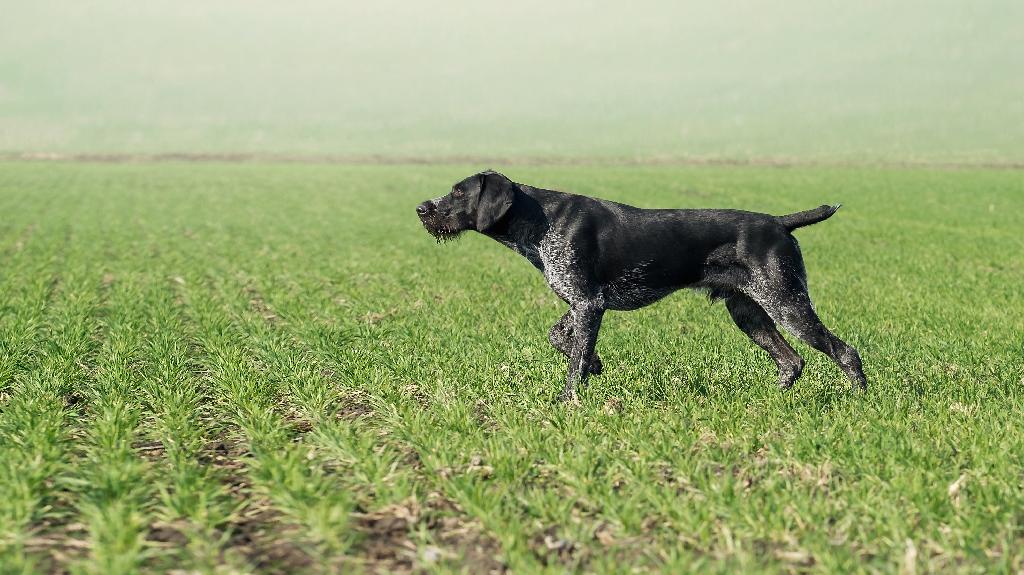
The GWP is a medium-sized, sturdy gundog with a practical, weather-resistant outline. Breed standards describe a nearly square dog with a straight topline and a harsh, wiry coat that lies close to the body, plus distinctive facial furnishings—eyebrows and a beard/whiskers that give the breed its characteristic expression.
Coat color is commonly liver or liver roan (and some standards also allow black-and-white variations). Males are typically larger than females; many standards place males around the mid‑20s inches at the shoulder, with females smaller. Overall, the look is functional rather than flashy: a tough coat, strong body, and efficient movement built for long days in the field.
Colors
• Black & White
• Black & White Roan
• Black & White Roan Ticked
• Black & White Spotted
• Black & White Ticked
• Liver
• Liver & White
• Liver & White Roan
• Liver & White Spotted
• Liver & White Ticked
• Liver & White w/ Tick
• Liver Roan
• Liver Roan & Ticked
• Liver Ticked
Health
As with any purebred dog, health varies by line, and responsible breeders screen for known concerns. Breed health guidance commonly emphasizes orthopedic evaluation (hips and elbows) and regular eye testing, alongside general veterinary care throughout life.
Some kennel-club guidance for the breed also highlights DNA testing for von Willebrand disease type II (vWD2), particularly in certain populations and in imported/overseas breeding decisions. If you’re buying a puppy, ask to see the parents’ test results (or official registry links) and discuss an age-appropriate plan with your veterinarian for growth, conditioning, and preventive care.
Care
A GWP’s coat is designed to protect against rough cover and cold, wet conditions, but it still benefits from regular upkeep. Weekly brushing and periodic hand-stripping or professional grooming can help maintain the harsh texture, prevent matting in the furnishings, and keep dirt from building up in the beard and leg hair.
Daily exercise is not optional for most GWPs. Plan for brisk physical activity plus mental work—training sessions, scent games, retrieving, or field-type outlets. Like many athletic breeds, they do best with a quality diet, lean body condition, and routine checks of ears, feet, and skin after outdoor adventures.
Training
Train with consistency, patience, and clear rules. GWPs are smart and capable, but their independent side means they respond best to structured, rewarding sessions rather than repetitive drills or harsh corrections. Keep lessons short, end on a win, and rotate skills so they stay engaged.
Early socialization and impulse-control work are especially valuable for a breed built to hunt. Strong recall, leash manners, and a reliable “leave it” help channel drive safely. Many owners find these dogs shine when training connects to purpose—hunt tests, tracking, agility, obedience, or scent work.
Temperament
German Wirehaired Pointers are widely described as friendly and intelligent, with an energetic, hardy nature. Many are affectionate with their family and prefer a close relationship with “their people,” often choosing to stay near the household rather than being content as an outside or kennel-only dog.
At the same time, the breed can have a streak of independence and creativity, which shows up as selective listening if training is inconsistent or boring. They may be naturally watchful and can be somewhat aloof with strangers until properly introduced. Because many have strong prey drive, careful introductions and management are important around cats and other small pets.
Lifestyle
This is an outdoorsy, work-driven breed that fits best with active people. Many GWPs thrive in homes where they can run, train, and explore safely—ideally with regular off-leash time in appropriate areas and a schedule that includes purposeful activity.
They generally do poorly if their days are mostly idle. Without enough exercise and mental engagement, they may invent their own entertainment (digging, barking, chewing). When their needs are met, they’re often steady house companions who like to be close to the family and involved in daily routines.
Ownership
German Wirehaired Pointers are usually a better match for owners who enjoy training and can commit to daily exercise, structure, and supervision. They’re not typically the easiest “first dog” if you want a low-energy, low-maintenance pet, but they can be excellent partners for hunters and highly active households.
When choosing a breeder or rescue, prioritize temperament and health testing over appearance. Meet adult dogs when possible, ask how the litter is socialized, and be honest about your lifestyle. Plan to invest in training from the start and keep the dog integrated with the family—these dogs tend to bond deeply and do best with plenty of human contact.
Interesting Facts
- Developed in Germany in the late 1800s as a versatile, close-working hunting dog for varied terrain and water.
- Distinctive harsh, wiry coat with eyebrows and a beard helps protect in rough cover and harsh weather.
- Recognized by the United Kennel Club (UKC) in 1948 and by the American Kennel Club (AKC) in 1959.
- Often excels at “do-it-all” field work: pointing, retrieving (including waterfowl), and tracking wounded game.
- Known for high drive and stamina; most are happiest with a job and regular, structured activity.
- Breed health recommendations commonly include hip/elbow evaluation, eye testing, and (in some guidance) DNA testing for vWD2.