
Greenland Dog
Basics
The Greenland Dog is an ancient Arctic sled and hunting breed developed by Inuit people for survival work in extreme conditions. Bred for strength, stamina, and the ability to work for long periods in cold weather, the breed is first and foremost a utilitarian working dog rather than a “pet-first” companion.
In the home, Greenland Dogs are typically energetic and tough-minded. Many are friendly with people but not especially attached to one individual, and they often retain strong instincts for running, pulling, and hunting—traits that shape everything from training plans to containment needs.
Description
The Greenland Dog is a resilient and hardworking breed that was originally developed by the Inuit people of Greenland for sledding, hunting, and guarding. This ancient breed has been a vital part of life in the Arctic regions, where it was bred to withstand extreme cold, long hours of work, and the harshest environments. The Greenland Dog’s strong work ethic, endurance, and ability to perform in freezing temperatures make it a prized sled dog and companion in colder climates.
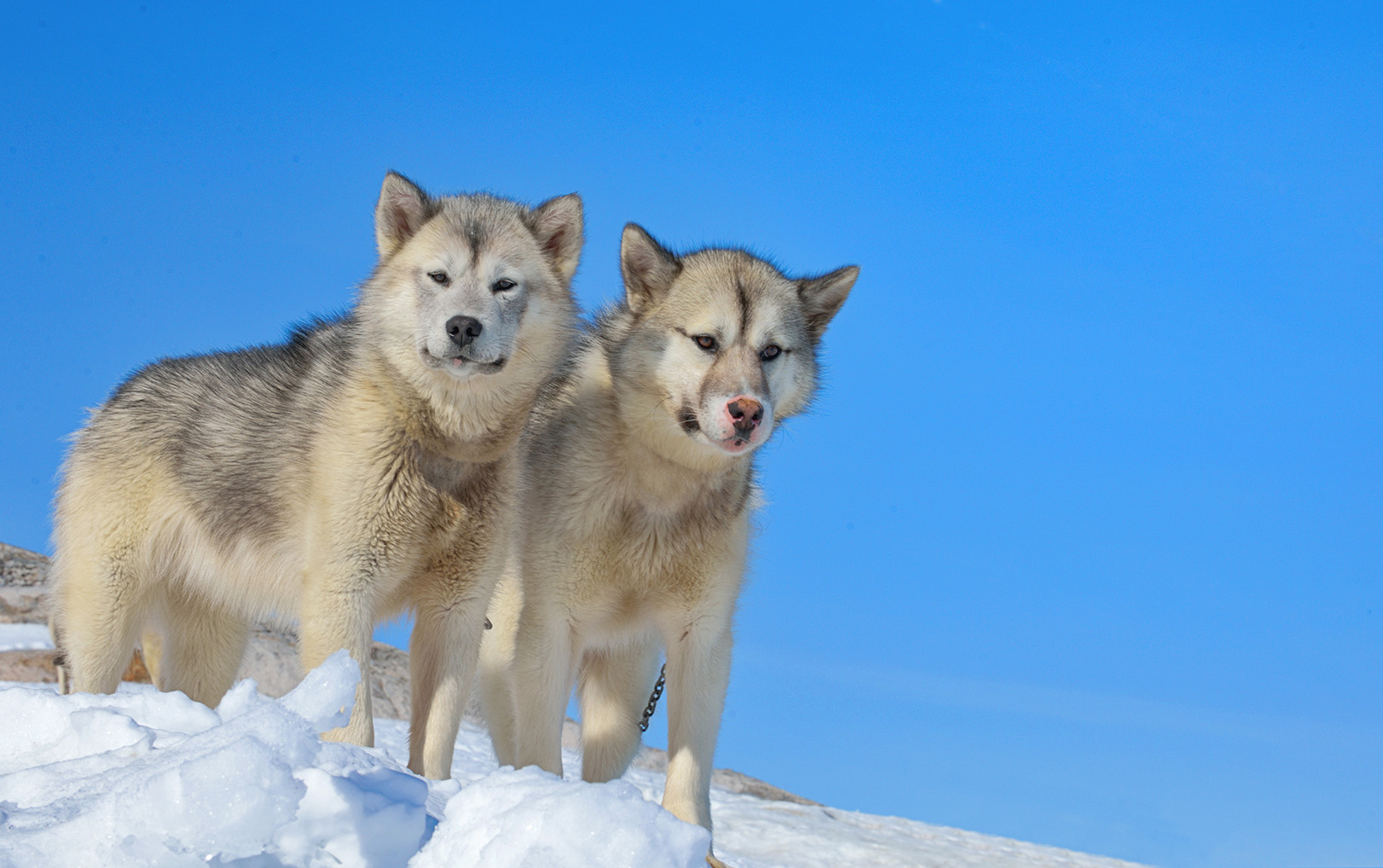
Physically, the Greenland Dog is a medium to large-sized breed, with males typically standing between 23 and 26 inches at the shoulder and weighing between 60 and 88 pounds. It has a muscular and sturdy build, designed for endurance and strength. The breed’s thick double coat is dense and weather-resistant, with a soft undercoat and longer guard hairs on top, which help to protect it from the freezing cold. The Greenland Dog’s coat is usually white, black, or a combination of both, often with markings on the face, legs, and body. The breed also has a bushy tail that curls over its back, and its ears are erect and triangular, giving it an alert, intelligent expression.
The Greenland Dog is known for its incredible stamina and intelligence, traits that make it ideal for work in extreme conditions. Historically, the breed was used not only for pulling sleds but also for hunting seals, reindeer, and other Arctic animals. The breed’s natural instincts and strong drive to work still persist today, making it a highly trainable and focused dog when given a purpose. Although it has a strong independent streak, the Greenland Dog is typically loyal, friendly, and affectionate with its family. It is also protective, making it an excellent guard dog. While it is generally reserved with strangers, the breed is not aggressive and is more likely to remain calm and alert.
Despite its hardworking nature, the Greenland Dog is also a playful and loving companion. It is well-suited to active families who can provide plenty of exercise, as this breed needs daily physical and mental stimulation to stay healthy and happy. The Greenland Dog enjoys outdoor activities such as hiking, running, and sledding, and it thrives in environments that allow it to engage in its natural instincts. Due to its history as a working dog, it requires a strong handler who can provide firm but fair training. The breed is known for being somewhat independent and stubborn at times, but with consistency and positive reinforcement, it can be a well-behaved and responsive companion.
In conclusion, the Greenland Dog is a hardy and versatile breed that excels in harsh climates and active environments. With its stamina, intelligence, and strong sense of loyalty, it is a perfect choice for those who lead an active lifestyle and are looking for a dog that can keep up with outdoor activities. While it may not be suited for everyone, especially in warmer climates, the Greenland Dog is an exceptional companion for those who appreciate its strong work ethic and loving nature.
History
The Greenland Dog is an ancient and resilient sled dog breed, with a history deeply intertwined with the Arctic cultures of Greenland and the Inuit people. This breed is believed to have been brought to Greenland over 4,000 years ago by the Thule people, ancestors of the modern Inuit. These dogs were indispensable to survival in the harsh Arctic environment, serving as sled dogs, hunting companions, and sources of warmth during the frigid winters. Their physical and mental toughness made them perfectly suited for life in one of the world's most unforgiving climates.
Greenland Dogs were bred to excel in their primary role as sled dogs, pulling heavy loads over long distances in extreme weather conditions. They were also invaluable in hunting seals, polar bears, and other Arctic wildlife, helping their human companions by tracking and sometimes cornering prey. The breed’s strength, endurance, and independence were critical traits that allowed them to thrive in these challenging tasks.
European explorers and Arctic expeditions of the 18th and 19th centuries recognized the exceptional abilities of the Greenland Dog, and the breed played a key role in many historic explorations of the polar regions. Notable explorers, such as Knud Rasmussen and Fridtjof Nansen, relied on Greenland Dogs for their expeditions, further solidifying the breed’s reputation as a reliable and capable sled dog.
Today, the Greenland Dog remains a vital part of traditional Inuit culture and is still used for sledding and hunting in Greenland. While modern transportation methods have reduced the reliance on sled dogs in many areas, the breed is celebrated for its historical importance and its role in the survival of Arctic communities. Its rich history reflects a remarkable partnership between humans and dogs in one of the harshest environments on Earth, ensuring the Greenland Dog's enduring legacy as a symbol of strength, endurance, and adaptability.
Appearance
Greenland Dogs are polar-type spitz dogs: powerful, compactly built, and designed for endurance. They have a wedge-shaped head, erect triangular ears, and a thick tail carried in a curve over the back—features that help protect against cold and wind.
The coat is a dense double coat with a coarse, straight outer layer and a softer insulating undercoat. Coat color can vary widely, and the overall look should suggest a robust working animal capable of strenuous sled work rather than an exaggerated show silhouette.
Colors
• Black
• Grey
• Spotted White
• White
Health
Working-bred northern dogs are often physically resilient, but responsible ownership still requires thoughtful breeding choices and routine preventive care. Seek breeders who prioritize sound structure and stable temperament and who can discuss health screening and longevity in their lines.
Day-to-day, keep the dog lean and well-conditioned, protect paw pads in harsh conditions, and work with a veterinarian on parasite prevention and activity guidance. A dog built for endurance can still be harmed by poor conditioning, obesity, or inappropriate exercise during growth.
Care
Expect significant shedding: the double coat protects well in cold climates, and seasonal coat blow can be heavy. Weekly brushing is a good baseline, with more frequent grooming during shedding periods to prevent impacted undercoat and to keep the dog comfortable.
Care also means meeting working-dog needs. These dogs thrive with structured daily exercise and mental outlets (pulling sports where appropriate, long hikes, sniffing work, and training games). Without enough activity and enrichment, many will become noisy, destructive, or relentlessly restless.
Training
Training should focus on practical life skills and safe management rather than expecting effortless off-leash reliability. Use positive reinforcement, keep sessions short, and build habits through repetition in real-life settings—many Greenland Dogs will disengage from harsh handling or overly repetitive drills.
Leash manners, recall foundations, and calm behavior around triggers are priority skills. Because running and pulling are natural, many owners find success channeling drive into structured activities, while also using secure fencing and long-line work to keep the dog safe.
Temperament
The breed is often described as bold, mentally strong, and high-energy. Greenland Dogs are typically social enough with humans to be approachable, but they’re not usually “velcro” dogs and may be more interested in activity than cuddling.
As a northern working breed, they can have a strong prey drive and a tendency toward independence. Many do best with experienced owners who understand primitive-breed behavior, can set clear boundaries, and can manage arousal around wildlife, other dogs, and exciting outdoor environments.
Lifestyle
This breed is best suited to active households that enjoy outdoor life and can provide secure containment. A Greenland Dog in a small space without adequate exercise is likely to struggle; they do better when they can move, explore safely, and have consistent work or sport outlets.
They can be challenging in suburban settings because of their energy, vocalization, and drive to roam. If you want a laid-back couch dog, this is usually not the right match—but for the right owner, their toughness and spirit are a major part of the appeal.
Ownership
Prospective owners should plan for a high-energy, strong, northern-breed dog that needs management as much as training. Secure fencing, durable equipment, and a commitment to daily exercise are non-negotiable, and many households benefit from working with trainers experienced in primitive and sled-type breeds.
If you’re interested in the Greenland Dog, meet adults in person and talk with breed clubs or experienced owners about temperament, dog-to-dog dynamics, and realistic training expectations. Choosing a breeder who produces stable, workable dogs—and who supports buyers after placement—matters a lot in a breed this intense.
Interesting Facts
• Ancient Arctic breed developed for sled hauling and hunting in harsh conditions.
• Predominant traits include energy, boldness, and mental toughness.
• Dense double coat; heavy seasonal shedding is typical.
• Often friendly with people but not especially one-person “attached.”
• Strong instincts for running/pulling; secure containment is essential.
• Usually best for experienced, very active owners rather than casual pet homes.