
Greyhound
Basics
The Greyhound is a classic sighthound—built to spot movement and chase with incredible speed. Despite their athletic reputation, many Greyhounds are calm, gentle house companions who enjoy comfort and quiet once their daily exercise needs are met.
Historically used for coursing game and, more recently, for racing, Greyhounds are sensitive dogs with an independent streak. They tend to bond closely with their people and thrive with routines, soft handling, and safe opportunities to stretch their legs.
Description
The Greyhound is one of the oldest and most recognizable dog breeds, known for its incredible speed, grace, and elegance. Originally bred for hunting and racing, the Greyhound has been admired for its athleticism and striking appearance for thousands of years. Depictions of Greyhounds can be traced back to ancient Egypt, where they were depicted in art alongside royalty and nobility. Today, while still used in racing, Greyhounds are also beloved as companion animals due to their gentle nature and low-maintenance care requirements.
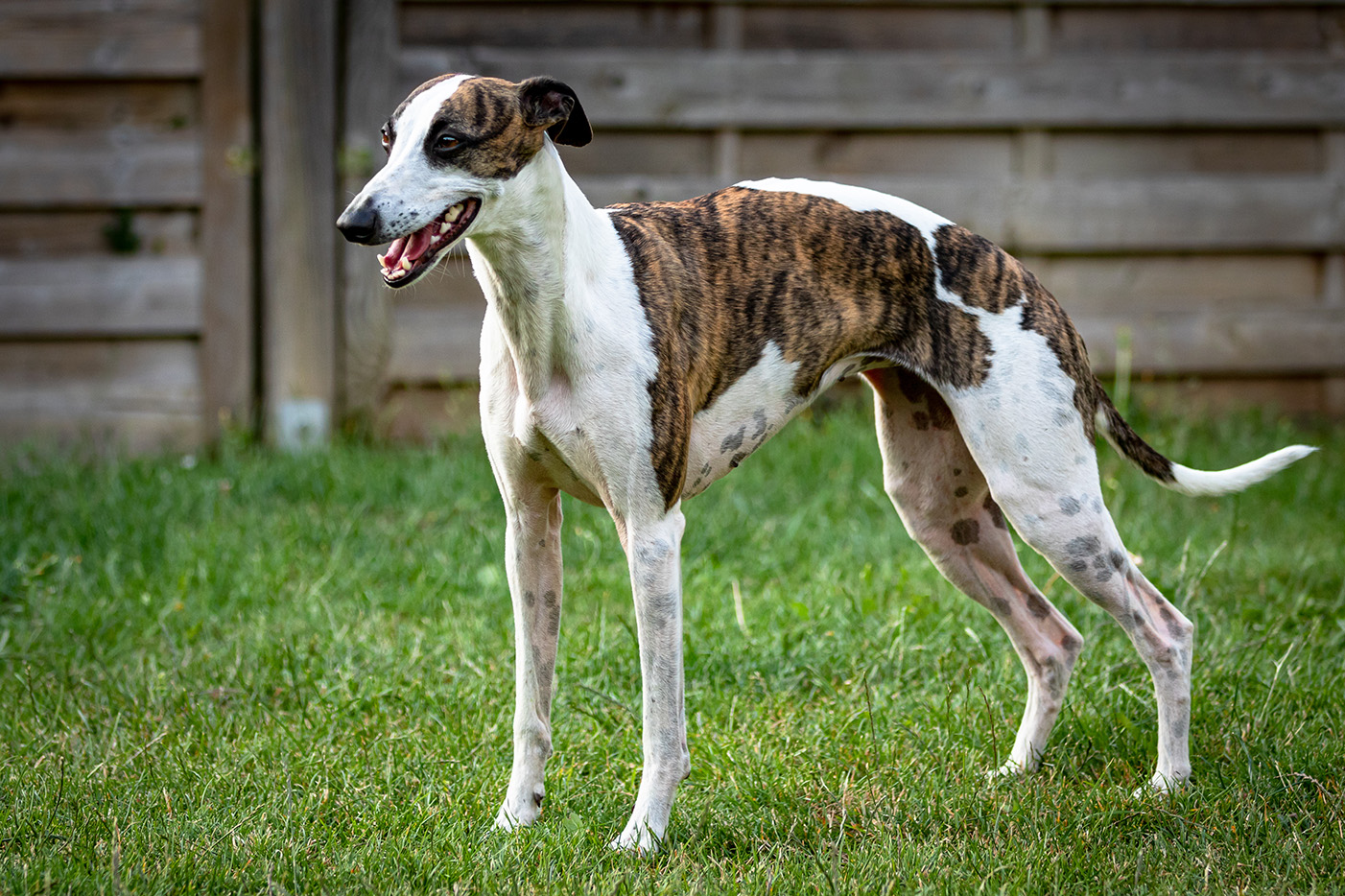
Physically, the Greyhound is a sleek, muscular dog with a streamlined body designed for speed. Males typically stand between 27 and 30 inches at the shoulder, with females being slightly smaller. They typically weigh between 60 and 70 pounds, with a body that is light but built for power. The breed’s signature feature is its long, graceful neck, deep chest, and long, slender legs—all designed to help the dog reach incredible speeds. Greyhounds are capable of running up to 45 miles per hour in short bursts, making them one of the fastest dog breeds in the world. Their short, fine coat comes in a variety of colors, including fawn, black, white, brindle, and several other combinations. Despite their athletic appearance, Greyhounds are surprisingly gentle and affectionate companions.
Known for their calm and laid-back demeanor, Greyhounds are often described as "couch potatoes" when they are not exercising. Though they are bred for speed, they tend to have a relatively low energy level at home, enjoying long naps and lounging around the house. This makes them well-suited for apartment living, as long as they have access to regular walks and the opportunity to run in a safe, enclosed area. Greyhounds are also known for their affectionate nature, often forming strong bonds with their owners. They are gentle, quiet dogs that tend to be good with children and other pets when properly introduced. Though they have a reserved nature, especially with strangers, Greyhounds are generally friendly and affectionate once they feel comfortable.
Despite their calm demeanor at home, Greyhounds require regular exercise to maintain their health and fitness. While they don’t need as much daily activity as some more high-energy breeds, they do need a chance to stretch their legs and release energy in short bursts. Because of their speed and agility, they enjoy activities like sprinting, but they should always be kept on a leash or in a secure, enclosed area when outdoors to prevent them from running off. Due to their history as racing dogs, Greyhounds can have a high prey drive and may chase smaller animals. However, with proper training and socialization, they are usually well-behaved with other dogs.
In conclusion, the Greyhound is a remarkable breed, known for its incredible speed, elegance, and gentle nature. Its graceful appearance, combined with its calm and affectionate temperament, makes it an excellent companion for families and individuals who can provide for its exercise needs. While the breed's speed and agility make it well-suited for racing and hunting, Greyhounds are equally content as relaxed, low-maintenance pets in a loving home, making them a popular choice for those seeking a dog that is both athletic and calm.
History
The Greyhound is one of the oldest known dog breeds, with a history that spans thousands of years and is steeped in mythology, art, and culture. Its origins are thought to trace back to ancient Egypt, where depictions of Greyhound-like dogs appear in tomb carvings and artifacts dating as far back as 4,000 BCE. These dogs were revered by Egyptian royalty and nobility for their speed, elegance, and hunting prowess. Greyhound-like breeds were later introduced to Europe by traders and conquerors, including the Greeks and Romans, who admired their ability to chase and capture game such as deer, hares, and boars.
During the Middle Ages, Greyhounds became a symbol of nobility and privilege in Europe. Laws known as "forest laws" often restricted ownership of Greyhounds to the aristocracy, reflecting their status as a prized companion of kings and lords. The breed was celebrated not only for its hunting abilities but also for its loyalty and graceful appearance. Greyhounds were frequently featured in medieval literature, artwork, and heraldry, solidifying their cultural significance.
The sport of coursing, where Greyhounds chase game by sight rather than scent, further cemented the breed’s reputation as a premier hunting dog. By the 16th and 17th centuries, coursing had become a popular pastime among European nobility, and the Greyhound’s unparalleled speed and agility made it the ideal competitor. The breed’s transition to racing began in the 18th and 19th centuries, with the development of formalized Greyhound racing in the early 20th century, particularly in the United States and England.
Today, the Greyhound is celebrated for its versatility and endearing temperament. While it remains a champion in racing and coursing, it is also cherished as a gentle and affectionate companion. The breed's long history reflects its enduring appeal, from ancient royalty to modern families, and its reputation as one of the fastest and most elegant of all dog breeds remains unchallenged.
Appearance
Greyhounds are tall, sleek, and aerodynamic, with a deep chest, tucked waist, long legs, and a narrow head. Their short coat lies close to the body and comes in many colors and patterns.
This is a breed designed for efficient movement: light on its feet, flexible, and powerful through the hindquarters. Because the coat is thin and body fat is low, many Greyhounds feel cold easily and appreciate warm bedding and coats in chilly weather.
Colors
• Black
• Black & White
• Black Brindle
• Black Brindle & White
• Blue
• Blue & White
• Blue Brindle
• Blue Brindle & White
• Blue Fawn
• Blue Fawn & White
• Brindle
• Fawn
• Liver
• Liver & White
• Liver Brindle
• Red
• Red
• Red & White
• Red Brindle
• Red Brindle & White
• White
• White & Black
• White & Black Brindle
• White & Blue
• White & Blue Brindle
• White & Blue Fawn
• White & Fawn
• White & Liver
• White & Liver Brindle
• White & Red
• White & Red Brindle
Health
Greyhounds are generally healthy, but like other deep-chested breeds they can be at risk for bloat. Maintaining a healthy body condition and working with a veterinarian familiar with sighthounds supports long-term wellness.
Because they’re lean and fast, they can be prone to athletic strains or minor injuries if they slip on slick surfaces. Good footing, sensible exercise, and routine veterinary care go a long way.
Care
Greyhounds do well with daily walks plus occasional chances to sprint in a safely enclosed area. Because their chase instinct can override recall, many should not be off-leash in unfenced spaces.
Grooming needs are light: weekly brushing and basic nail/ear care are usually enough. Comfort matters—soft bedding helps protect bony pressure points, and cold-weather gear can be important in winter.
Training
Greyhounds respond best to calm, reward-based training. They’re typically sensitive to harsh corrections, and confidence-building works better than confrontation.
Focus on leash skills, polite greetings, and impulse control around motion triggers. For many, a secure fenced area (or a long line) is the safest way to allow running while maintaining safety around wildlife and traffic.
Temperament
Most Greyhounds are gentle, quiet, and polite indoors. They can be affectionate without being overly demanding, and many are content to lounge for much of the day.
Outdoors, prey drive can be strong—moving small animals can trigger chase. They’re often friendly with other dogs, but socialization and careful introductions (especially with cats) are important, particularly for retired racers with limited early exposure to other pets.
Lifestyle
A Greyhound can be an excellent apartment dog for people who provide daily walks and occasional safe running. Many are quiet, low-odor, and content to relax indoors.
They do best in homes that can manage prey drive safely (secure doors, leashes, fences) and provide gentle handling. Retired racers often transition well to home life with a patient, structured introduction to stairs, glass doors, and household routines.
Ownership
Greyhound ownership is often about safety and comfort: secure leashes and fencing, soft bedding, and protection from cold. Prospective owners should also think through cat/small-pet compatibility and be prepared to manage prey drive.
Many wonderful Greyhounds are available through adoption organizations that specialize in retired racers. Whether adopting or buying from a breeder, prioritize stable temperament and responsible health practices.
Interesting Facts
• Sighthound bred for speed and chasing by sight; often considered the fastest dog breed.
• Depicted in ancient art; Greyhound-type dogs have a very long history.
• Many pet Greyhounds are retired racing dogs.
• Typically quiet indoors and often described as “couch potatoes” after exercise.
• Greyhound racing with a mechanical lure was introduced in 1926.