
Hanover Hound
Basics
The Hanover Hound (Hannoverscher Schweißhund) is a traditional German scenthound developed specifically for big-game blood tracking (following the trail of wounded hoofed game over long distances with a deep nose). In the FCI system it is in Group 6 (Scent hounds and related breeds), Section 2 (Leash/Bloodhounds), and the breed is expected to be proven in work.
The breed has a long hunting history: the medieval “lead hound” is described as its forerunner, and targeted breeding in the former Kingdom of Hanover shaped the modern type. In Germany, the breed is closely associated with organized tracking work and is overseen by the Verein Hirschmann (founded in the late 1800s) for performance-oriented breeding and training.
Description
The Hanover Hound, also known as the Hannoverian Scenthound, is a breed of dog originally developed in Germany for hunting purposes, particularly for tracking and trailing game. The breed is known for its excellent scenting abilities and tireless work ethic, making it a prized companion for hunters, especially in the pursuit of large game like boar, deer, and wild cats. The Hanover Hound's origins date back to the 19th century, when it was bred by crossing local German hounds with other breeds to create a dog with a powerful nose, stamina, and a strong desire to track scent over long distances.
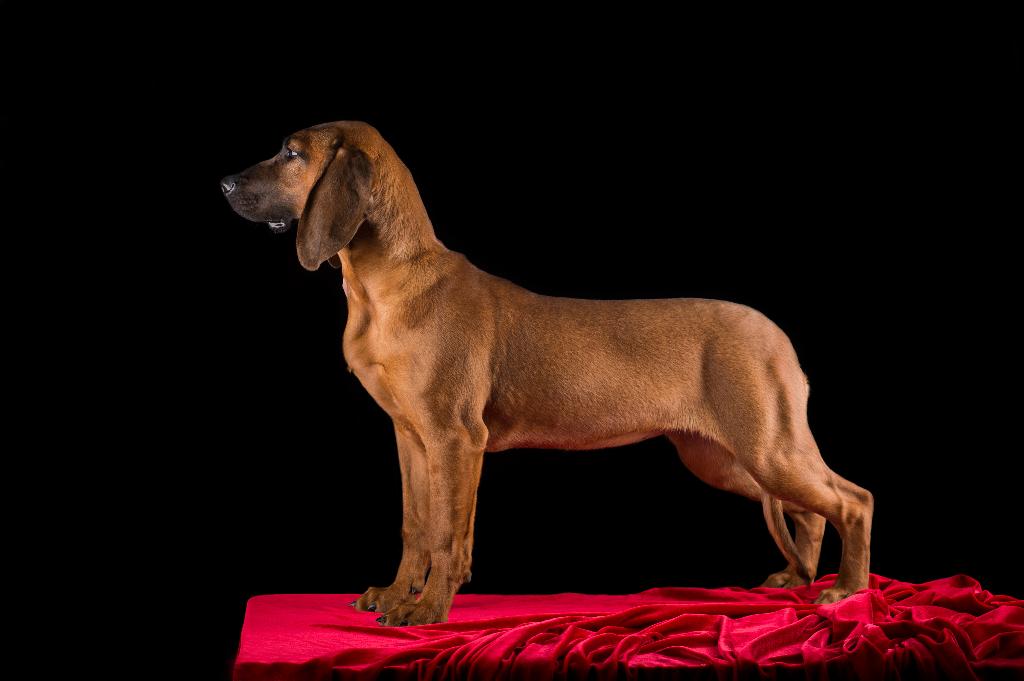
Physically, the Hanover Hound is a medium to large dog, characterized by its strong, muscular build and distinctive coat. The breed has a short, dense, and weather-resistant coat that is typically a reddish-brown or tan color, sometimes with darker markings. The Hanover Hound’s face is expressive, with long, drooping ears and dark, intelligent eyes. The breed’s legs are well-muscled, built for endurance, and its tail is often carried in a slight curve, which gives it a dignified appearance. Despite its robust build, the Hanover Hound maintains a level of agility that is essential for its role as a working hunting dog.
Hanover Hounds are known for their exceptional scenting ability and perseverance when it comes to tracking. Once they pick up a scent, they follow it with unwavering determination, making them invaluable for hunters needing a reliable tracking dog. The breed is often used in Germany and other parts of Europe for hunting and is particularly valued for its ability to track wounded game over long distances. Hanover Hounds are highly intelligent, and their strong independent streak means they can sometimes be a challenge to train. However, they respond well to consistent training, particularly when they are given tasks that engage their natural hunting instincts.
While they are primarily working dogs, Hanover Hounds can also make loyal pets for the right owners. They are affectionate and gentle, particularly with their families, but their strong hunting drive means they require proper training and socialization. As active dogs, they need plenty of exercise and mental stimulation. Without sufficient activity, they can become bored and potentially destructive. Hanover Hounds thrive in homes with large, secure yards where they can get regular outdoor time, and they are happiest when given the opportunity to perform tasks that engage their scenting abilities, such as tracking or obedience training.
In conclusion, the Hanover Hound is a hardworking, intelligent, and dedicated breed that excels in scent work and tracking. With its strong hunting background, this breed requires an active and experienced owner who can provide both physical exercise and mental stimulation. While they are best suited for those who engage in hunting or other scent-driven activities, Hanover Hounds can also make affectionate and loyal companions in the right environment. Their combination of stamina, intelligence, and loyalty makes them a versatile and reliable dog for both working and family life.
History
The Hanover Hound, or *Hannoverscher Schweißhund*, is a specialized scent hound with a history that dates back to medieval Germany. The breed was developed for its exceptional ability to track wounded game, a practice known as blood tracking (*Schweißarbeit*). Its origins lie in the large, heavy hounds used by German nobles and gamekeepers during the Middle Ages, particularly the "Liam Hounds" (*Leithunde*), which were bred to follow the scent trails of injured animals. These dogs were critical for retrieving game in dense forests, ensuring ethical hunting practices and minimizing the suffering of wounded animals.
In the 17th century, the Hanoverian hunting tradition flourished, and the Hanover Hound emerged as a distinct breed in the region of Hanover, northern Germany. Breeders focused on refining the dog’s scenting ability, stamina, and loyalty, traits that were essential for tracking game over long distances. The breed’s methodical and determined approach to tracking made it invaluable to hunters. Unlike other hounds that pursued game actively, the Hanover Hound specialized in following the faint scent trails left by wounded animals, often over challenging terrain and long periods.
The Hanover Hound was formally standardized in the 19th century when the breed’s traits were documented and preserved by the Hanoverian hunting estates. In 1894, the first breed club, the Verein Hirschmann, was established to promote and protect the breed. Despite its specialized skills, the Hanover Hound faced declining numbers in the 20th century due to changes in hunting practices and the reduced need for blood tracking. However, dedicated breeders and enthusiasts have ensured the breed’s survival, maintaining its role as a reliable working dog.
Today, the Hanover Hound remains a highly regarded breed among hunters, particularly in Europe, where ethical hunting and game management continue to value its tracking abilities. While it is less common as a companion dog due to its working nature, the breed is admired for its intelligence, loyalty, and calm temperament. Its rich history reflects its enduring importance as a specialized hunting partner and a symbol of Germany’s hunting heritage.
Appearance
The Hanover Hound is a medium-sized, powerfully built working dog—strong rather than flashy—designed for endurance at a steady pace. Typical working movement is efficient and ground-covering, and the overall outline emphasizes substance, a deep chest, and practical proportions for rough terrain.
Coat is short, dense, and coarse/harsh to the touch. Color ranges from light to dark “deer red,” often with brindling; a mask may be present, and small white chest markings are permitted. Breed-typical details often include a slightly wrinkled forehead, a serious, clear-eyed expression, and a strong tail set carried with only a slight curve.
Colors
• Brindle
• Fawn
• Red
Health
As a specialized working breed, soundness and functional fitness matter. Responsible breeders prioritize clinically healthy, physically capable dogs and select for stable working performance as well as correct structure.
For owners, focus on preventive care that supports an athletic outdoor dog: maintain a lean body condition, build conditioning gradually, and keep up with parasite prevention and vaccinations appropriate to your region. After tracks or rough-country hikes, check paws, skin, and ears, and discuss any breed-appropriate orthopedic screening with your veterinarian and breeder.
Care
Coat care is straightforward: the short, dense coat generally needs only occasional brushing to remove dead hair and dirt, plus routine bathing as needed. Regular nail trims, dental care, and ear checks are important—especially because scent hounds can be prone to ear debris after outdoor work.
Exercise needs are more about meaningful work than quick play. Plan for long, steady daily activity and scent-based enrichment (tracking lines, nosework, controlled trailing games). A secure leash or fenced area is essential; when a Hanover Hound commits to a scent, reliability off-leash can be challenging without extensive training and the right setting.
Training
Training should build on the breed’s natural tracking focus while keeping the dog engaged with the handler. Short, frequent sessions with positive reinforcement, calm consistency, and clear criteria tend to work better than repetitive drilling. Early socialization helps balance their natural seriousness and reserve.
If your goal is true blood-tracking or advanced trailing, seek mentorship from experienced handlers and consider structured training through hunting/tracking organizations. The breed’s strengths show when training is purposeful: laying gradual tracks, rewarding accurate line work, and teaching patient, controlled starts rather than frantic pulling.
Temperament
In the field, the Hanover Hound is known for concentration and persistence on a track—steady, methodical, and hard to distract once working scent. The breed is valued for close cooperation with its handler and a dependable, serious attitude appropriate to demanding tracking jobs.
At home and around familiar people, many are calm and even-tempered, but they’re commonly reserved with strangers. Because this is a purpose-bred working scenthound, most individuals do best with clear structure, predictable routines, and an owner who understands scent-driven behavior and can provide appropriate outlets.
Lifestyle
This is not a “park-and-a-toy” breed. Hanover Hounds thrive with purposeful outdoor time and a job—tracking, trailing, or other structured scent work—plus calm downtime with their people. Without enough mental work and controlled exercise, they can become frustrated or overly intent on following scents.
They’re usually a poor match for dense city living or for owners who want frequent off-leash freedom. A rural/suburban home, secure containment, and access to training areas make life easier, and the best fit is often with hunters, trackers, or committed scent-sport homes.
Ownership
Choose this breed for its working temperament, not for rarity or looks. Prospective owners should be comfortable managing a powerful nose, strong tracking drive, and a dog that may be aloof with strangers. Clear boundaries, consistent handling, and realistic expectations about recall are part of responsible ownership.
If you’re seeking a dedicated game-recovery or tracking partner, connect with breed organizations and working handlers early—ideally before you bring a puppy home. Ask about health screening, temperament, and, importantly, how the breeder develops and evaluates working ability (since the breed’s traditional purpose is tightly linked to responsible breeding decisions).
Interesting Facts
• FCI breed standard number: 213 (Germany; Group 6, Section 2 – scenthounds/bloodhounds, with working test)
• Primary traditional role: tracking wounded hoofed game (blood tracking / “Nachsuche”)
• Typical height: males 50–55 cm; females 48–53 cm
• Typical weight: males 30–40 kg; females 25–35 kg
• Coat/color: short, dense, coarse; light to dark deer-red, often brindled; mask optional; small white chest spot permitted