
Harrier
Basics
The Harrier is a medium-size English scent hound developed to hunt hare in packs. Today they’re still built for endurance and all-day movement, with strong “follow-the-nose” instincts and the independence that comes with pack work.
Although rare as a household pet, Harriers can make affectionate family companions in the right home. They tend to do best with people who enjoy outdoor time, can provide steady exercise, and appreciate a dog whose brain is often tuned to scents and movement rather than constant handler focus.
Description
The Harrier is a medium-sized breed of hound that is primarily known for its excellent scenting abilities and its history as a hunting dog. Often described as a smaller version of the English Foxhound, the Harrier was developed in England for hunting hares and other small game. This breed has ancient roots, with records suggesting that the Harrier's ancestors date back as far as the 13th century. They were bred to be pack dogs, working in teams to track and chase game over long distances, using their keen sense of smell to follow a trail. Their endurance, speed, and ability to work in the field make them ideal for hunting.
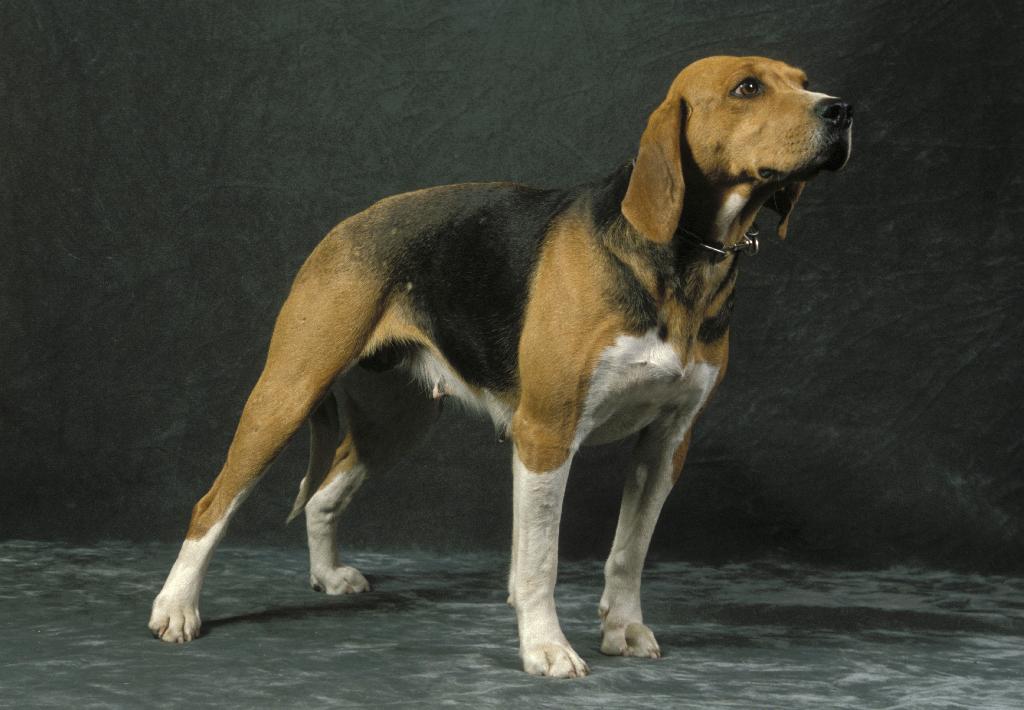
Physically, the Harrier is a well-proportioned, athletic dog with a strong and muscular build. It typically stands between 18 and 22 inches tall at the shoulder and weighs around 40 to 60 pounds. The breed has a short, dense coat that is weather-resistant, often in a variety of colors, including tri-color (black, tan, and white) or bi-color patterns. Harriers have a long, straight tail, which they hold high when alert or on the trail. Their ears are medium-sized, set low, and their eyes are usually dark and expressive, contributing to the breed's overall alert and energetic appearance.
Harriers are known for their exceptional scenting ability, which is why they have been so successful as hunting dogs. Their stamina and determination allow them to track game over long distances, and they are highly skilled at working in packs. Despite their hunting instincts, Harriers are generally friendly, social dogs that get along well with people and other dogs. They are not aggressive by nature but can be independent and stubborn due to their strong hunting drive. Early training and socialization are important for the Harrier, as they need to learn basic commands and how to be well-behaved in a home setting.
As a breed, the Harrier is energetic and needs a lot of exercise to remain happy and healthy. They are best suited for active families or individuals who can provide them with plenty of outdoor activities, such as running, hiking, or engaging in dog sports like agility. While they can make great pets, Harriers are not ideal for apartment living or small homes due to their need for space and regular exercise. Without enough physical and mental stimulation, they can become bored and may resort to destructive behaviors.
In conclusion, the Harrier is a lively, intelligent, and hardworking breed that excels in scenting and endurance. Its strong hunting instincts make it an excellent choice for those who enjoy outdoor activities or hunting, but its friendly and social nature also makes it a good companion for the right home. With proper exercise, training, and mental stimulation, the Harrier can thrive as both a working dog and a loyal family pet.
History
The Harrier is a medium-sized scent hound with a rich history that dates back several centuries in England. Originally bred for hunting hares, the Harrier's name is derived from the word “hare.” The breed is believed to have been developed in the 13th century, making it one of the oldest scent hound breeds. Its ancestry likely includes the Talbot Hound, which was brought to England by the Normans, as well as early forms of the Bloodhound and Basset Hound. These influences resulted in a hound with exceptional scenting abilities, stamina, and determination.
During the medieval period, the Harrier was a favorite among hunters who preferred to follow their hounds on foot rather than on horseback. Its steady pace, keen nose, and ability to track game over long distances made it an ideal choice for hare hunting. By the 18th and 19th centuries, organized Harrier packs became common across England, with detailed records kept by hunters who prized the breed’s performance. The Harrier’s versatility also allowed it to adapt to hunting foxes when required, further solidifying its reputation as a reliable and adaptable hound.
Despite its popularity in England, the Harrier has remained less well-known than its larger relative, the Foxhound. The breed was introduced to the United States during the colonial period, where it was similarly valued for its hunting prowess. The American Kennel Club (AKC) officially recognized the Harrier in 1885, although it remains a rare breed in the U.S. compared to other scent hounds.
Today, the Harrier continues to excel in its traditional role as a pack hound for hunting hares and foxes, while also finding a place as a loyal and energetic companion in active households. Its history reflects the breed’s enduring appeal as a hardworking and determined dog, capable of combining athleticism with an even temperament and a friendly nature.
Appearance
Harriers are sturdy, athletic hounds with a balanced outline and practical, workmanlike construction. In general look they sit between a Beagle and an English Foxhound—larger and more rangy than the former, less tall and heavy than the latter.
The coat is short, dense, hard, and glossy, designed to shed weather and brush. Breed standards allow “hound colors” broadly, and the overall impression is of a clean, durable dog meant to cover ground efficiently.
In size, the UKC standard places Harriers at about 19–21 inches at the shoulder. Features commonly described in standards include a medium head, dark expressive eyes, V-shaped ears set fairly high, and a tail carried up without curling over the back.
Colors
• Black White & Tan
• Lemon & White
• Red & White
• Tricolored
Health
Harriers are generally described by breed sources as hardy working hounds, but “healthy” still depends heavily on breeding choices, conditioning, and weight management. Keeping a lean body condition is one of the simplest ways to support long-term joint and cardiovascular health.
The Royal Kennel Club emphasizes the value of pre-breeding health screening and encourages breeders to use available health schemes and test-result resources. For prospective owners, this means asking what health checks were done, reviewing documentation, and discussing any known breed concerns with a veterinarian.
As with many active, outdoor-oriented hounds, owners should be mindful of preventable issues: injuries from rough terrain, parasite exposure, and ear problems if ears are not kept clean and monitored. Regular veterinary checkups and prompt attention to lameness, chronic itching, or recurrent ear irritation are especially important.
Care
Exercise is the biggest day-to-day need. Harriers were created for long hunts, so brisk walks aren’t always enough by themselves—plan on substantial daily activity plus safe opportunities to sniff, track, and move at a steady pace.
Grooming is straightforward: the short coat generally needs only occasional brushing to remove loose hair and dirt. Routine nail care, dental care, and ear checks are important, especially for active dogs spending time outdoors.
Because scent can override common sense, secure fencing and leash or long-line management are key parts of “care” for many Harriers. A bored Harrier is more likely to go looking for entertainment (and possibly a way out).
Training
Training a Harrier usually works best when it’s upbeat, food-motivated, and consistent. Scent hounds can be independent and will often ask, “Is this worth it?” so short sessions with real rewards tend to outperform heavy repetition.
Recall and leash skills deserve extra attention. Many Harriers will follow a smell with single-minded focus, so practicing around gradually increasing distractions—and using long lines in open areas—can keep training safe and productive.
They often excel at nose-driven games and activities. Scent work, tracking-style games, and structured searching can channel natural instincts into something that strengthens your relationship rather than competing with it.
Temperament
Harriers are typically outgoing, friendly, and social with other dogs—an important trait for a breed developed to hunt in a pack. They often enjoy canine company and many thrive in homes with another dog.
As scent hounds, they’re prey-driven and easily distracted by interesting smells. Expect a dog that will happily explore, track, and “work a trail,” sometimes with more enthusiasm than obedience.
With their people, many Harriers are affectionate and bright, but not always biddable in the way some herding or sporting breeds can be. A sense of humor (and good management) goes a long way with this breed.
Lifestyle
A Harrier fits best in an active household that enjoys daily movement and doesn’t mind a dog who wants to smell everything. They can adapt to many living situations if exercise and enrichment are consistently met, but they are not ideal for a low-activity routine.
Because they were bred to work with other hounds, many Harriers do well with another dog at home and may struggle if left isolated for long stretches. Mental outlets—sniff walks, puzzle feeding, scent games—help prevent frustration.
Outdoor safety matters: a securely fenced yard and a plan for leash/line use in unfenced areas are often essential. If a Harrier catches an interesting trail, they may range farther than you’d expect.
Ownership
Harriers are a better match for owners who like training as an ongoing process rather than a one-time puppy class. The breed’s independence and prey drive mean management (fences, leashes, enrichment) is as important as commands.
When choosing a breeder, prioritize health screening, stable temperament, and honest discussion about activity needs. Ask to meet the dam (and if possible related dogs), review health-test documentation, and learn how puppies are raised and socialized.
Rescue or rehoming can also be a great route, especially for people who are comfortable working with an adult hound and keeping secure containment. Either way, plan for a dog that needs time outside, a job for its nose, and patient, consistent handling.
Interesting Facts
• Developed in England as a pack hound for hunting hare; records of Harrier-type packs trace back to the 1200s.
• Often described as “between” a Beagle and an English Foxhound in size and overall look.
• The UKC standard lists a height of about 19–21 inches at the withers.
• Coat is short, dense, and hard; many hound color patterns are acceptable in standards.
• Temperament is generally outgoing and friendly, and dog-directed aggression is not tolerated in the UKC standard.
• Considered a rare breed in modern registrations, so finding breeders or rescues may take patience.