
Havanese
Basics
The Havanese is a small companion dog best known for its cheerful attitude, people-focused nature, and distinctive silky coat. It’s the only dog breed native to Cuba, and it was developed primarily as a house companion rather than a working dog.
Most Havanese thrive when they’re included in daily life—following their person from room to room, joining in family activities, and learning little games or tricks. They’re typically social with visitors and other pets, but they still benefit from early, positive exposure to new people and places.
Description
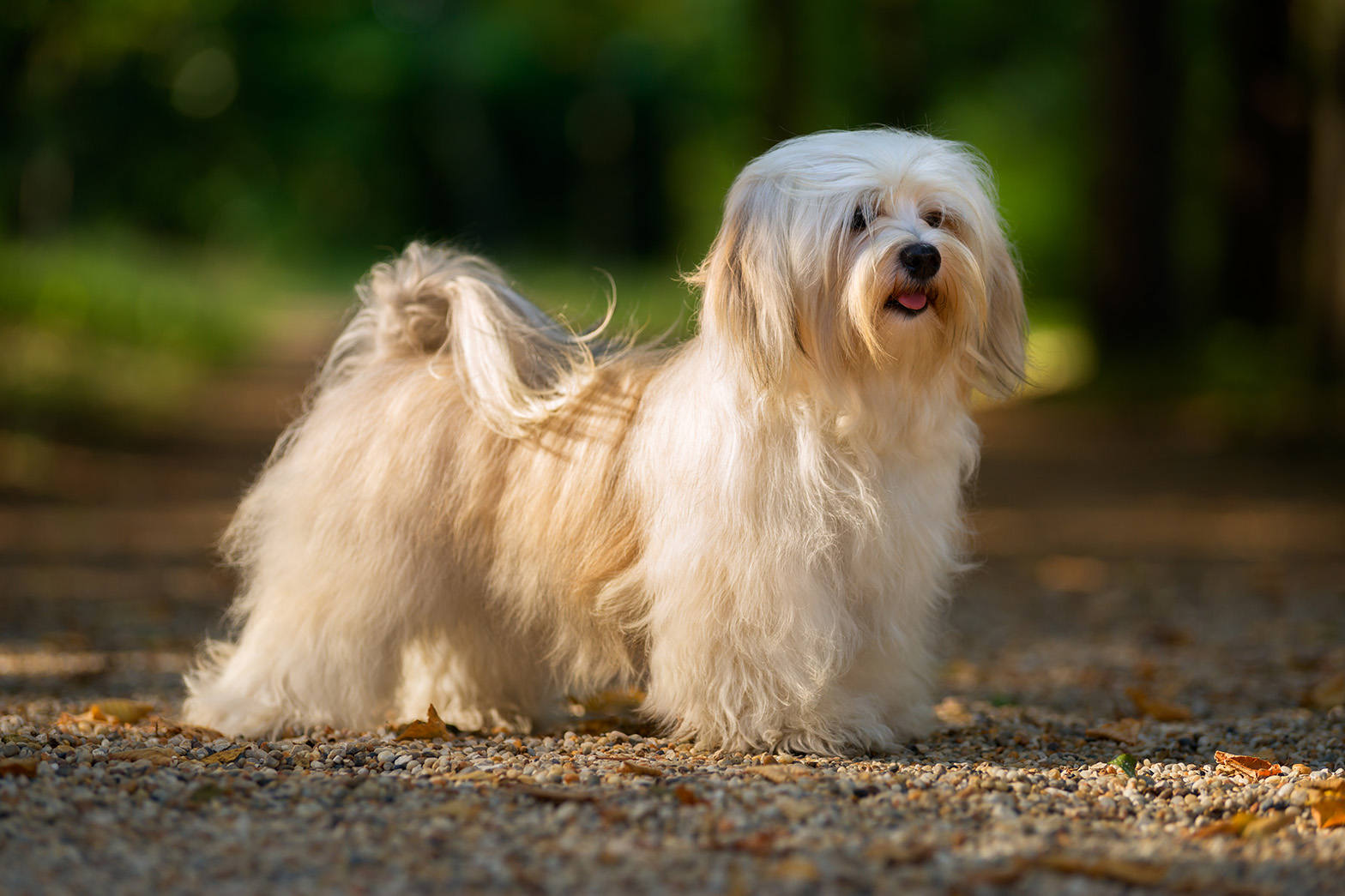
The Havanese is a small, cheerful, and affectionate toy breed known for its silky coat, lively personality, and deep attachment to its family. Often referred to as the "Velcro dog" due to its tendency to stick close to its owners, the Havanese thrives on companionship and makes an excellent lapdog and family pet. Typically weighing between 7 and 13 pounds and standing 8.5 to 11.5 inches tall, this breed is both sturdy and compact, making it well-suited for a variety of living environments, including apartments.
One of the breed's most distinguishing features is its luxurious, long, and wavy or curly coat, which comes in a wide range of colors and patterns. Despite its elegant appearance, the coat is lightweight and serves to protect the dog from both heat and cold, a nod to its tropical origins. The Havanese also has expressive, almond-shaped eyes and a lively tail that curls over its back, reflecting its playful and friendly nature.
Havanese are known for their intelligence and trainability, often excelling in obedience training, tricks, and even canine sports like agility. Their playful, clown-like demeanor makes them entertaining companions, and they are particularly good with children and other pets. While they are not excessively demanding in terms of exercise, they enjoy daily walks and interactive play to keep their minds and bodies active.
The breed’s loving and adaptable nature makes it a popular choice for families, singles, and seniors alike. However, the Havanese does not do well when left alone for extended periods, as it thrives on human interaction. Regular grooming is essential to maintain its coat, but its shedding is minimal, making it a relatively low-maintenance breed in terms of allergens.
Whether as a loyal companion, a spirited playmate, or an affectionate lapdog, the Havanese brings joy and warmth to any household. Its combination of beauty, intelligence, and charm has made it one of the most beloved toy breeds in the world.
History
The history of the Havanese is as rich and colorful as its homeland, Cuba. As the national dog of Cuba, the Havanese traces its roots back to the early 16th century, when Spanish colonists brought small companion dogs, likely ancestors of the Bichon family, to the island. These dogs, which may have included the Tenerife and other small Mediterranean breeds, adapted to the tropical climate and evolved into the distinct Havanese we know today. Over time, the breed became a beloved companion to Cuban aristocrats and wealthy families, admired for its charming personality and striking appearance.
During the 18th and 19th centuries, the Havanese gained popularity among European travelers and settlers who visited or traded with Cuba. Its luxurious coat and playful demeanor made it a favorite among the Cuban elite, and the breed was often referred to as "Blanquito de la Habana" or "little white dog of Havana." By the 19th century, the Havanese had also found its way to Europe, where it became a fashionable pet among nobles and royalty, especially in Spain and France.
The Cuban Revolution of the 1950s marked a challenging period for the breed. Many wealthy Cuban families fled to the United States and Europe, often bringing their cherished Havanese dogs with them. However, the breed's population in Cuba dwindled, and it faced the risk of extinction. Dedicated breeders in the U.S. and Europe worked to preserve and revitalize the breed, using the small gene pool of Havanese refugees to rebuild its numbers.
In the late 20th century, the Havanese experienced a resurgence in popularity, particularly in the United States. The American Kennel Club (AKC) officially recognized the breed in 1996, solidifying its status as a cherished companion dog. Today, the Havanese is celebrated worldwide for its unique history, endearing personality, and adaptability.
The breed’s journey from its Spanish origins to its development in Cuba and eventual worldwide fame is a testament to its resilience and enduring appeal. The Havanese remains a symbol of its Cuban heritage, bringing warmth, charm, and joy to homes across the globe.
Appearance
Havanese are slightly longer than tall, giving them a rectangular outline, with a plumed tail carried over the back. Their expression is soft and alert, with dark, oval eyes and drop ears framed by long hair.
The coat is a hallmark of the breed: long, soft, and often wavy, with many possible colors and patterns. Owners can keep the coat long and natural, or maintain a shorter “puppy cut” for easier upkeep, but either way the coat requires regular brushing to prevent matting—especially behind the ears, in the armpits, and around the collar area.
Colors
• Black
• Black & Silver
• Black & Silver Brindle
• Black & Tan
• Black & Tan Brindle
• Black Brindle
• Blue
• Blue Brindle
• Chocolate
• Chocolate Brindle
• Chocolate Sable
• Cream
• Fawn
• Fawn Brindle
• Fawn Sable
• Gold
• Gold Brindle
• Gold Sable
• Red
• Red Brindle
• Red Sable
• Silver
• Silver Brindle
• Silver Sable
• White
Health
Havanese are generally sturdy for their size, but they can still face typical small-breed concerns. Keeping them lean, protecting knees and joints from repeated high jumps, and staying current on preventive care all help support long-term soundness.
Work with a veterinarian and (if buying) a responsible breeder who screens for inherited issues relevant to the breed. Regular eye checks, orthopedic screening (such as patellas), and heart monitoring are commonly discussed in small companion breeds, and good breeders will be transparent about health history in their lines.
Care
Grooming is the biggest day-to-day commitment. A long Havanese coat needs frequent brushing and combing to prevent mats; a shorter trim reduces time but still requires regular maintenance, plus routine baths and careful drying. Keep hair out of the eyes, check ears for wax or irritation, and trim nails so the dog stays comfortable on hard floors.
Like many small breeds, dental care matters: daily tooth brushing (or as close as possible) and regular veterinary dental checkups help prevent painful periodontal disease. A well-fitted harness is often more comfortable than a collar for leash walking.
Training
Havanese are bright and tend to enjoy learning when training is upbeat and reward-based. Short sessions, clear cues, and games (including trick training) work especially well for this breed’s people-oriented personality.
House-training can be managed with consistency and a predictable routine; some owners successfully teach an indoor potty option for bad weather or long workdays. Early socialization and gentle handling practice (brushing, paw touches, vet-style exams) make grooming and care much easier over the dog’s lifetime.
Temperament
The Havanese is affectionate, outgoing, and often a bit clownish—happy to greet friends, play, and then settle in close. Many are gentle with respectful children and do well in multi-pet homes because they were bred to be companions first.
They’re usually alert and will let you know someone is at the door, but with good socialization they aren’t typically sharp or suspicious. Because they bond strongly, some can struggle with being alone; building independence gradually is an important part of raising a confident adult.
Lifestyle
This is an adaptable city-or-suburb dog that usually does well in apartments as long as it gets daily attention and moderate exercise. A couple of short walks plus indoor play and training games typically meet its needs.
The Havanese is happiest when it has company. If the household is gone all day, plan for a midday break, dog sitter, or a gradual alone-time training plan to reduce the risk of separation-related stress.
Ownership
A great Havanese home is one that wants a friendly companion and can commit to grooming—either frequent brushing for a long coat or regular trims for a shorter style. When choosing a breeder, ask about health testing, temperament, and how puppies are raised and socialized in the home.
If adopting, look for a rescue that can describe grooming tolerance and any anxiety around being alone. Budget for professional grooming if you don’t plan to do all coat care yourself, and prioritize training early so the dog grows up comfortable with handling, brushing, and everyday household life.
Interesting Facts
- The only dog breed native to Cuba.
- A small, rectangular companion breed with a plumed tail carried over the back.
- Coat can be long and natural or kept shorter for easier maintenance, but regular grooming is always required.
- Typically social and affectionate; many enjoy learning tricks and playing games.
- Often alerts to visitors, but can be trained to be a polite “watchdog” rather than a constant barker.
- Many do best when they aren’t left alone for long stretches.