
Hungarian Greyhound
Basics
The Hungarian Greyhound (Magyar Agár) is a Hungarian sighthound developed for hunting and coursing by sight, with a reputation for toughness and endurance over longer distances. While it shares the streamlined look of other sighthounds, the breed is typically stronger-boned and more rugged than a modern racing Greyhound.
Historically, the Magyar Agár dates back to the era when the Magyars arrived in the Carpathian Basin, and later breeding in the 1800s incorporated other sighthounds to increase speed. Today it’s seen in lure coursing, amateur racing, and as an athletic companion for experienced owners who enjoy an active lifestyle.
Description
The Hungarian Greyhound, also known as the Magyar Agár, is a sighthound breed that has been historically bred for hunting in Hungary. This breed is highly prized for its speed, endurance, and ability to track and catch game, particularly in the open plains of the Hungarian countryside. The Hungarian Greyhound is one of the oldest sighthound breeds in Europe, with a history that dates back over a thousand years. It is believed to have been brought to Hungary by the Magyars (the Hungarian people) during their migration into the Carpathian Basin. Over time, the breed developed as a versatile hunter, used primarily for chasing hares, rabbits, and other small to medium-sized game.
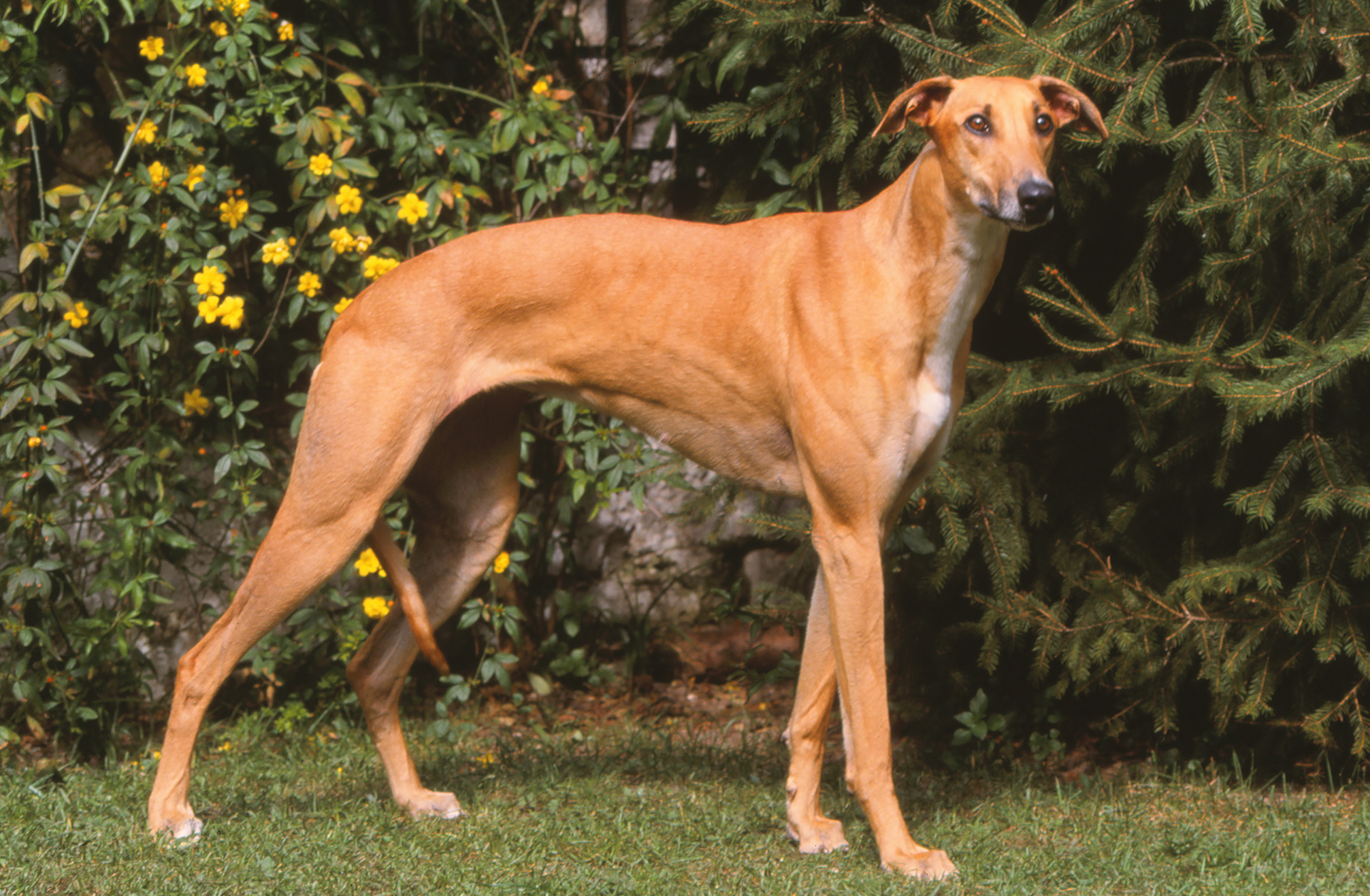
Physically, the Hungarian Greyhound is an elegant and athletic dog, built for speed and agility. It has a sleek, muscular body that is light yet powerful, allowing it to run at impressive speeds. The breed typically stands between 24 to 28 inches tall at the shoulder, with males being larger than females. The head is long and narrow, with almond-shaped eyes that give the dog a sharp and intelligent expression. The Hungarian Greyhound’s coat is short, smooth, and dense, providing minimal protection from the elements while still offering enough insulation to handle the cold winters of Hungary. The coat comes in a variety of colors, including fawn, brindle, and black, often with white markings on the chest or legs.
As a sighthound, the Hungarian Greyhound relies heavily on its keen eyesight to locate and chase prey. Its ability to spot movement from long distances and its incredible speed make it an excellent hunter, capable of chasing down fast-moving game. Historically, it was used both as a solitary hunter and in packs, depending on the quarry and terrain. The breed’s endurance allows it to maintain a high speed over long distances, which is a valuable trait for hunting in the vast, open landscapes of Hungary. While they were primarily used for hunting, Hungarian Greyhounds are also known for their gentle and calm nature, especially when they are at rest.
In terms of temperament, the Hungarian Greyhound is typically calm, gentle, and affectionate, making it an excellent companion for families and individuals alike. Though they are reserved and independent when hunting, they tend to be quite affectionate and loyal to their owners. They are generally good with children and other pets, though they retain a strong prey drive and may not be suitable for households with small animals like rabbits or guinea pigs. Despite their hunting instincts, Hungarian Greyhounds are not overly demanding in terms of exercise; a few good runs or walks to stretch their legs will suffice. However, they do enjoy the opportunity to run freely in open spaces, which helps them burn off energy and stay healthy.
Overall, the Hungarian Greyhound is a beautiful and versatile breed with a rich history rooted in hunting. Its combination of speed, intelligence, and calm demeanor makes it an excellent choice for those seeking a sighthound with both working ability and companionship qualities. Whether as a hunting partner or a family pet, the Magyar Agár stands out for its elegance, loyalty, and athleticism.
History
The Hungarian Greyhound, known as the *Magyar Agár*, is an ancient sighthound breed native to Hungary, with a history that dates back over a thousand years. It is believed to have been brought to the Carpathian Basin by the Magyar tribes during their migration from Central Asia in the 9th century. These dogs were prized for their speed, endurance, and keen eyesight, making them essential hunting companions for tracking and chasing game across Hungary's expansive plains. Unlike the English Greyhound, which is built for sprinting, the Hungarian Greyhound was developed for long-distance running, excelling in stamina over endurance hunts.
The Magyar Agár became an integral part of Hungarian hunting culture, used primarily for pursuing hare, deer, and even wolves. Its lean yet muscular build allowed it to cover vast areas of terrain with ease, and its thick, slightly coarse coat provided protection from the region’s harsh winters and rough vegetation. Over time, the breed was refined through selective breeding, occasionally crossed with other sighthounds to enhance specific traits. However, its core qualities of speed, resilience, and loyalty remained consistent.
By the 19th and early 20th centuries, the popularity of the Hungarian Greyhound declined as modern firearms and new hunting practices reduced the need for sighthounds. The two World Wars further impacted the breed's population, threatening its survival. Dedicated Hungarian breeders, however, worked to preserve the breed’s legacy, emphasizing its traditional roles and cultural importance. It gained recognition in its homeland and was later recognized by international kennel organizations, including the Fédération Cynologique Internationale (FCI).
Today, the Hungarian Greyhound remains relatively rare but is cherished by enthusiasts for its rich heritage and unique qualities. While it continues to be used for hunting in some regions, it has also found a role as a loyal and affectionate companion in active households. The Magyar Agár’s enduring legacy is a testament to its adaptability and the dedication of those who have worked to preserve this historic breed.
Appearance
The overall impression is of a strong yet elegant sighthound, slightly longer than tall, with well-developed bone and musculature rather than an ultra-light frame. The head is long and lean, the chest is deep, and the body is built for efficient, ground-covering stride and stamina.
Coat is short and close, and the breed is generally presented in practical, low-maintenance condition. Because function matters, the best examples look athletic and balanced—built to run hard, turn quickly, and keep going across varied terrain.
Colors
• Black
• Brindle
• Fawn
• Red
Health
In general, the Hungarian Greyhound is considered a robust, functional athlete, but any running breed can be susceptible to soft-tissue injuries (sprains, strains, toe and pad problems) if conditioning, footing, or warm-ups are neglected. Regular fitness work, sensible ramp-up of intensity, and attention to nails and pads help prevent many issues.
As a deep-chested dog, bloat (gastric dilatation-volvulus) is a concern to discuss with a veterinarian, especially for very active individuals. Responsible breeders prioritize sound structure and stable temperament, and routine screening and veterinary care should be part of any ownership plan.
Care
The short coat needs only occasional brushing and routine bathing as needed; nails, ears, and teeth should be maintained on a regular schedule. Because they’re athletic, keeping them lean and well-muscled is part of good care—overweight Magyar Agárs are more prone to strain and fatigue.
Provide daily opportunities to move: brisk walks plus controlled running in a secure area are ideal. As with other deep-chested breeds, it’s sensible to avoid hard exercise immediately around meals and to feed a high-quality diet matched to activity level.
Training
Training is most successful when it’s calm, consistent, and reward-based. These dogs can be sensitive to harsh corrections; they do best with clear routines, short sessions, and plenty of reinforcement for attention and recall foundations.
Because chasing is self-rewarding, recall around wildlife is a lifelong project—use long lines, secure fencing, and staged distractions. Many Magyar Agárs enjoy lure coursing-style games and tracking/scent activities that channel both their sight-hunting instincts and their workable nose.
Temperament
Magyar Agárs are typically steady and sensible dogs—often calm at home but quick to switch on when something moves. They can be reserved with strangers without being sharp, and many owners describe them as loyal and attentive to their people.
Like many sighthounds, prey drive can be significant, especially toward small animals, so management outdoors matters. With appropriate socialization, they can live peaceably with other dogs and become affectionate, mannerly family companions.
Lifestyle
This is a breed for people who like to be active. A Magyar Agár typically wants daily exercise and occasional chances to sprint; without outlets, boredom and frustration can show up as restlessness or mischief.
They’re often surprisingly relaxed indoors once their needs are met, but they are not ideal off-leash in unfenced areas due to prey drive. A securely fenced yard, structured walks, and a few weekly higher-intensity sessions (lure coursing practice, safe running, or similar) fit them well.
Ownership
Prospective owners should look for breeders who can explain health history, working/sport temperament, and how puppies are raised and socialized. Ask about the parents’ stability, recovery after excitement, and how the line does with other dogs and small animals.
Plan for management as much as training: secure fencing, leash skills, and a safe way to let the dog run. If you want a devoted companion that can also compete in sighthound sports, and you’re comfortable with a strong chase instinct, the Magyar Agár can be a rewarding choice.
Interesting Facts
• FCI places the Magyar Agár in Group 10 (Sighthounds), Section 3 (Short-haired Sighthounds).
• Traditionally used for hunting/coursing by sight, with a noted ability to use scent as well.
• The breed’s history is tied to the Magyars’ arrival in Hungary; 19th-century crosses with other sighthounds were used to increase speed.
• Typically described as strong, tough, and robust, excelling particularly over longer distances.
• Recognized by the United Kennel Club (UKC) in 2006.
• Athletic build: strong bone and musculature with an overall elegant sighthound outline.