
Hungarian Vizsla
Basics
The Hungarian Vizsla is a medium-sized, short-coated gundog developed in Hungary to work long days in the field. Bred to hunt upland birds, it’s valued for a combination of speed, stamina, a strong nose, and the ability to both point and retrieve.
In the home, most Vizslas are intensely people-oriented and do best as “with-you” dogs rather than backyard pets. They thrive when they get daily exercise plus steady interaction and purpose, whether that’s hunting, running, dog sports, or structured training games.
Description
The Hungarian Vizsla is a versatile and highly energetic hunting dog breed that originates from Hungary. Known for its exceptional tracking abilities, the Vizsla has been a reliable companion to hunters for centuries. The breed’s history dates back to the 10th century, with ancestors that were used for hunting birds and small game. The Vizsla is revered for its keen nose, speed, and stamina, making it one of the most skilled bird dogs in the world. Over time, the breed has been refined to be an all-around hunting companion, excelling not only in fieldwork but also as a family dog, thanks to its loyal and affectionate nature.
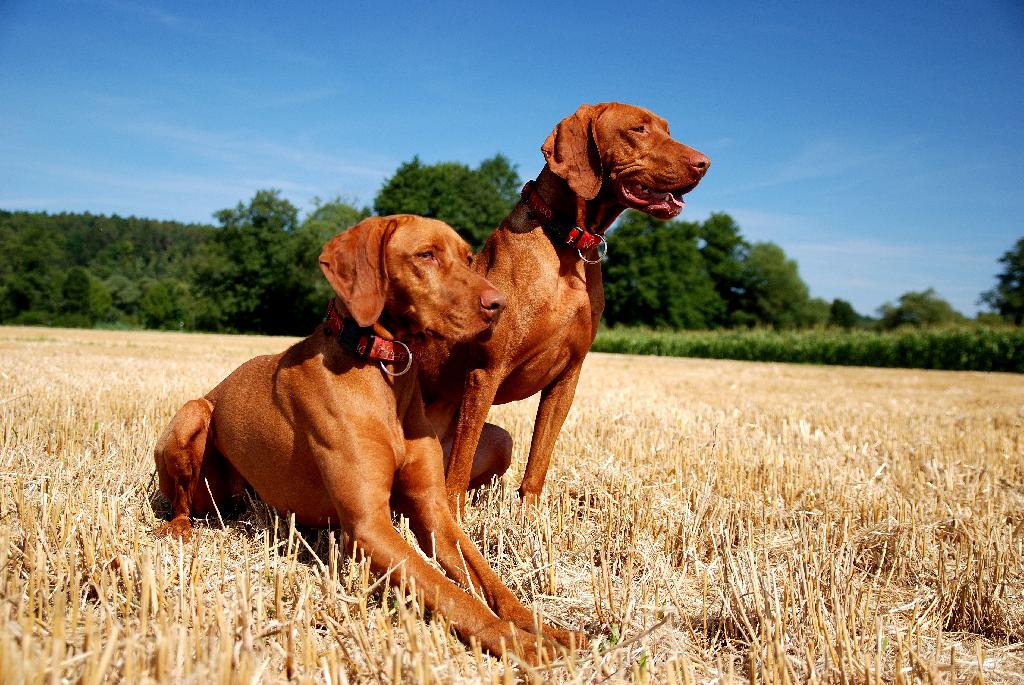
Physically, the Hungarian Vizsla is a medium-sized dog with a sleek and athletic build. It stands between 21 and 25 inches tall at the shoulder, and its weight typically ranges from 45 to 65 pounds, depending on gender. The Vizsla’s short, rust-colored coat is one of its most distinctive features, smooth and fine, providing little protection from the elements but enhancing its agility and speed. Its coat often has a shiny, copper-red hue, which can vary slightly in tone. The breed has a noble, slender appearance with an angular head, large, expressive eyes, and long, floppy ears that frame its face. The Vizsla’s graceful, muscular body is built for endurance and quick movement, ideal for both running through fields and swimming in water.
The Hungarian Vizsla is known for its excellent hunting instincts. As a versatile pointing dog, it is skilled in tracking and pointing out game, as well as retrieving from both land and water. Vizslas are intelligent and eager to please, which makes them relatively easy to train for hunting or other dog sports. However, their high energy levels require plenty of exercise and mental stimulation. They thrive in active households where they can receive daily walks, runs, or trips to the field for training and hunting. When given the right outlets for their energy, Vizslas are well-mannered, obedient, and affectionate.
In terms of temperament, the Vizsla is renowned for its loyalty and affectionate nature. They form strong bonds with their families and are known to be "velcro dogs" because of their tendency to stay close to their owners. This breed is friendly and gentle with children, making it an excellent choice for families with active lifestyles. Although they can be reserved with strangers, Vizslas are generally not aggressive and are more likely to be wary and cautious. They thrive in homes where they can be part of family activities, as they dislike being left alone for long periods. The breed is also highly sensitive, so positive reinforcement methods work best in training.
Overall, the Hungarian Vizsla is a devoted, high-energy breed with a deep-rooted history as a working dog. Its intelligence, hunting prowess, and friendly nature make it a great companion for active individuals or families who can provide the mental and physical stimulation it needs. With proper care, training, and exercise, the Vizsla is an affectionate and loyal dog that excels as both a hunting partner and a loving family pet.
History
The Hungarian Vizsla, often simply called the Vizsla, is a storied hunting breed with origins that date back centuries in the region now known as Hungary. References to dogs resembling the Vizsla appear in ancient art and manuscripts, suggesting that the breed’s ancestors were already present when the Magyar tribes settled in the Carpathian Basin over a thousand years ago. These early pointer-type dogs were reportedly prized by Hungarian nobility for their ability to work closely with falconers, tracking and pointing game birds in the vast grasslands, wetlands, and forests of Central Europe.
Over the ensuing centuries, the Vizsla’s reputation grew among Hungarian aristocrats who favored a versatile companion capable of pointing and retrieving across diverse terrains. Despite political upheaval and conflicts in the region—including the World Wars—the Vizsla persisted, though its numbers sometimes dipped precariously low. After World War II, a handful of dedicated Hungarian breeders undertook the task of reviving and preserving the breed, ensuring that its hallmark traits—a keen nose, agile build, and affectionate nature—remained intact.
The Vizsla began to gain international attention in the mid-20th century when these dogs were brought to Western Europe and North America. Many hunters and dog enthusiasts were impressed by the breed’s intelligence, enthusiasm for work, and gentle temperament. Recognition from major kennel clubs soon followed: The American Kennel Club (AKC) officially recognized the Hungarian Vizsla in 1960. Today, the Vizsla maintains its heritage as a skilled gundog while also thriving as an active, devoted family companion, showcasing the enduring appeal of Hungary’s “velcro dog.”
Appearance
Vizslas are athletic and lightly built, designed for efficient, ground-covering movement. They have a clean head with long, thin ears that hang close to the cheeks, and an alert, elegant outline that reads “endurance athlete” more than “power dog.”
The coat is short, smooth, and close-lying, typically in shades of golden rust. Because the coat is minimal and there’s no heavy undercoat, they’re easy to keep clean but not well-suited to living outdoors in cold or wet weather for long periods.
Colors
• Golden
• Golden Rust
• Pale Yellow
• Red Golden
• Solid Dark Mahogany Red
• Solid Golden Rust
Health
Vizslas are generally robust, but like many purebred, active dogs they can be affected by inherited conditions. Owners should discuss screening and family history with breeders and veterinarians, with common concerns including hip dysplasia, certain eye problems, thyroid disease, and seizure disorders.
They’re also deep-chested enough that bloat (gastric dilatation-volvulus) is a consideration. Sensible prevention includes avoiding intense exercise right around meals, watching for warning signs, and talking with your veterinarian about risk factors and whether preventive gastropexy makes sense for your dog.
Care
Coat care is straightforward: a quick weekly brush or rub-down removes loose hair and keeps the coat glossy, with baths only as needed. Routine ear care is important because the long, folded ears can trap moisture and debris, especially for dogs that swim or hunt.
Exercise is the bigger “care” requirement. Plan on daily, vigorous activity (running, long hikes, retrieving, field work, or sport training) plus enrichment at home. Without enough outlet, many Vizslas become restless, noisy, or destructive—so a securely fenced area and a consistent schedule help a lot.
Training
Vizslas are smart and generally eager to work with their person, which makes them very trainable—especially with reward-based methods. Because they’re sensitive, harsh corrections often backfire; clear cues, calm consistency, and high-value reinforcement tend to produce the best results.
Start early with socialization and foundation skills (name response, loose-leash walking, settle on a mat, and reliable recall). Their nose and prey drive can overpower obedience in distracting environments, so structured practice, long lines, and progressive proofing are key—particularly if you want dependable off-leash control.
Temperament
A well-bred Vizsla is lively, affectionate, and sensitive—often forming a very close bond with its people. Many are friendly with strangers and gentle with children when properly socialized, but they’re not usually content being ignored or left alone for long stretches.
Their working heritage shows up as high drive and enthusiasm: they can be excitable, mouthy as youngsters, and easily distracted by scent and motion outdoors. Calm manners typically come from a mix of maturity, consistent routines, and enough physical and mental outlets.
Lifestyle
This breed fits best with active people who want a dog to be part of daily life—running partner, hiking buddy, hunting companion, or sport teammate. A Vizsla can adapt to many living situations, but only if its exercise and attention needs are met every day.
They’re often happiest when they have significant time with their humans, and many struggle with isolation if left alone for long workdays without support. If your household is frequently away, plan for help (dog walker, daycare, enrichment routines) or consider a breed that’s more independent.
Ownership
Before bringing one home, be honest about time: the “cost” of a Vizsla is mostly daily effort—training, exercise, and companionship—rather than grooming. First-time owners can do well if they’re committed to structured routines and positive training.
If buying a puppy, look for breeders who can document health testing and who prioritize stable temperament and working-appropriate structure. Expect to be asked questions in return; good breeders match energy level and goals, and they remain a resource for the life of the dog. Rescue and rehoming groups can also be a great option for adults whose adult temperament is already visible.
Interesting Facts
• Origin: Hungary; developed as a versatile hunting dog that points and retrieves.
• Coat: short, smooth, close-lying; typically “golden rust” in shade.
• Recognition: AKC recognized the Vizsla in 1960; UKC recognized the breed in 1984.
• Personality nickname: often called a “velcro dog” for its strong desire to stay close to its people.
• Needs: high daily exercise plus mental work; boredom commonly leads to nuisance behaviors.
• Sporting strengths: excels in field work, retrieving games, scent work, and many dog sports when trained consistently.