
Irish Terrier
Basics
The Irish Terrier is a medium-sized, athletic terrier from Ireland, long admired for courage, grit, and devotion to its people. Often described as a “daredevil” terrier, it combines a bold working temperament with a strong bond at home.
Historically, Irish Terriers were used as versatile farm dogs—helping with vermin control and general utility work. Today they’re typically companions, but they still need purposeful daily activity and a confident, consistent handler.
Description
The Irish Terrier is a spirited and versatile breed, often referred to as the "Daredevil" of the terrier group due to its bold and courageous nature. One of the oldest terrier breeds, the Irish Terrier hails from Ireland, where it was bred as a working dog capable of hunting, guarding, and providing companionship. Its combination of athleticism, intelligence, and fiery spirit made it a valuable partner for farmers and families alike, adept at chasing vermin, guarding livestock, and even serving as a messenger dog during wartime.
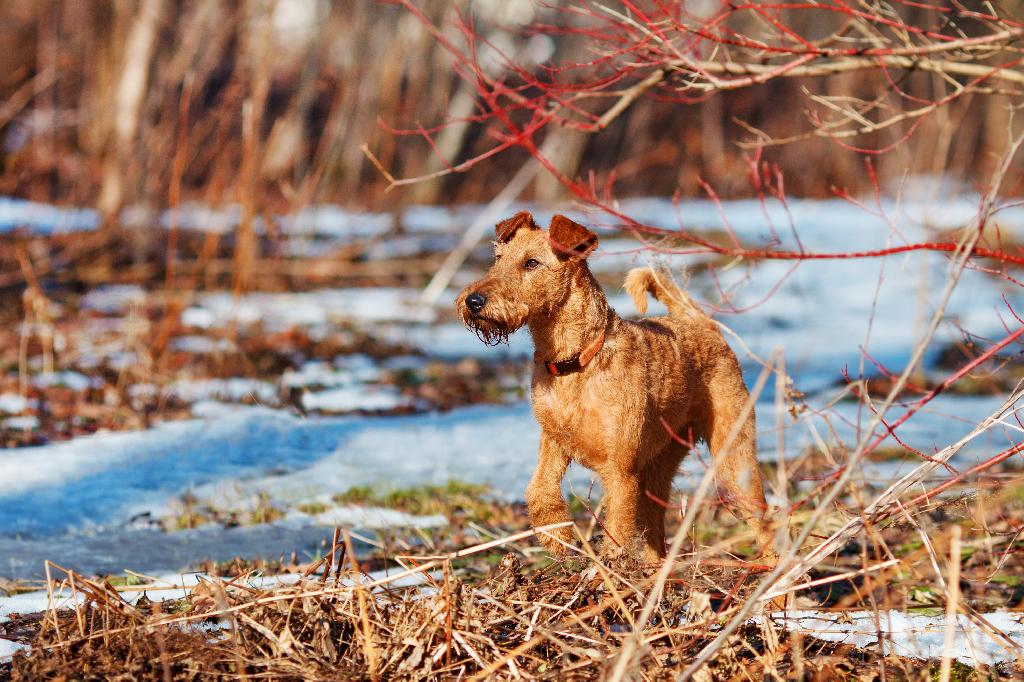
Physically, the Irish Terrier is a medium-sized dog with a lean, muscular build that conveys agility and strength. Its wiry, red coat is one of its most distinctive features, offering protection against harsh weather and rugged terrain. The coat comes in shades of bright red, golden red, or red wheaten, and requires regular grooming to maintain its texture and appearance. The breed's dark, expressive eyes and erect, V-shaped ears give it a sharp, alert expression that reflects its lively and inquisitive nature.
In terms of personality, the Irish Terrier is known for its loyalty, courage, and independent streak. While it is affectionate and devoted to its family, this breed retains a strong-willed and adventurous temperament that requires consistent training and socialization. Irish Terriers are intelligent and eager to learn, making them responsive to training, but they can also be stubborn if not properly motivated. They are excellent with children and make devoted family pets, but their natural guarding instincts mean they may be reserved or assertive around strangers and other dogs.
Despite their spirited nature, Irish Terriers have a loving and sensitive side, forming deep bonds with their families. They thrive in active households where they can participate in plenty of physical and mental stimulation. Activities such as hiking, agility training, and interactive play are ideal for keeping them engaged. Whether as a loyal family companion or a skilled working dog, the Irish Terrier is a breed that brings energy, charm, and unwavering devotion to any home it joins.
History
The Irish Terrier is one of the oldest terrier breeds, with a history that is deeply rooted in Ireland’s rural traditions. The breed is believed to have been developed over 2,000 years ago, making it one of the earliest known terriers. Originally bred as a versatile working dog, the Irish Terrier excelled in a variety of tasks, including hunting, guarding, and vermin control. Its agility, intelligence, and tenacity made it a valuable asset to farmers and hunters alike, and its loyal and affectionate nature ensured it was also a cherished family companion.
In the 19th century, the Irish Terrier gained popularity outside its native Ireland. It became a favorite among British dog enthusiasts, both as a working dog and as a show dog. The breed was first exhibited in dog shows in the late 1800s, and it quickly gained recognition for its striking red coat, elegant build, and spirited personality. The Irish Terrier was one of the first terrier breeds to be officially recognized by the Kennel Club in 1879, helping to cement its reputation as a distinct and desirable breed.
The breed’s courage and versatility were showcased during World War I when Irish Terriers were used as messenger dogs and sentries on the battlefield. Their bravery, resilience, and intelligence earned them the nickname "Daredevils of the Dog World." These wartime contributions further solidified the breed’s place as a loyal and dependable companion in both work and family life.
Today, the Irish Terrier is celebrated for its vibrant personality, loyalty, and adaptability. While its role as a working dog has diminished, it continues to be a beloved family pet and participant in canine sports such as agility and obedience. The breed’s rich history and enduring qualities reflect its remarkable ability to transition from a rugged farm dog to a modern-day companion, all while maintaining its distinctive character and charm.
Appearance
Irish Terriers are racy and streamlined compared with many other terrier breeds, built for stamina and agility. They carry a distinctive, harsh, wiry coat that forms characteristic furnishings on the face, and the overall outline reads as balanced and athletic rather than bulky.
The breed is best known for rich red shades (along with wheaten and related tones). That crisp coat texture isn’t just cosmetic—it’s meant to be weather resistant and protective, and it benefits from regular grooming to keep it tidy and functional.
Colors
• Red
• Red Wheaten
• Wheaton
Health
Irish Terriers are generally hardy, but responsible breeding should include attention to known inherited risks. Some kennel club guidance highlights a DNA test for hereditary footpad hyperkeratosis (HFH) as a best-practice consideration, alongside broader efforts to maintain genetic diversity.
For owners, practical health support looks like keeping the dog lean and fit, maintaining good coat/skin care, and addressing chronic paw discomfort, lameness, or skin changes promptly with a veterinarian. When choosing a puppy, ask for transparent health testing and a clear explanation of how results are used in breeding decisions.
Care
Plan for daily exercise that goes beyond a quick potty break: brisk walks, jogging, hiking, or structured play, plus mental work such as training games and scent activities. Irish Terriers often thrive when they have a routine and a job-like outlet, rather than unstructured backyard time.
Coat care is ongoing. Many owners use brushing and periodic stripping or professional grooming to maintain the harsh texture and clean outline; clipping is sometimes chosen for convenience but can soften the coat over time. Keep nails short, maintain dental hygiene, and monitor skin/coat condition as part of regular care.
Training
Irish Terriers respond best to upbeat, reward-based training paired with clear boundaries. They’re smart and can learn quickly, but they tend to notice inconsistency—so keep cues simple, reinforce what you want, and prevent rehearsal of unwanted behaviors like jumping, door-dashing, or chasing.
Focus early on leash skills, recalls, and calm settling in the home. Because the breed can be intense around distractions, controlled socialization and impulse-control games (leave-it, place/settle, handler check-ins) are especially valuable.
Temperament
At their best, Irish Terriers are spirited, confident, and intensely loyal. They’re typically affectionate with family and can be surprisingly tender at home, but they don’t lack edge—many are bold watchdogs who react quickly to novelty.
Like most terriers, they can be independent and determined, and some may be reactive with other dogs if not carefully socialized and managed. Early training, clear household rules, and giving the dog constructive outlets for drive help channel the “fiery” personality into a stable companion.
Lifestyle
This breed suits active households that want a confident companion and can provide daily exercise, training, and engagement. Irish Terriers can do well in a home with a yard, but they still need structured activity—and the yard must be secure, because terriers can be persistent explorers.
They often do best when included in family life and given routine. If left under-exercised or bored, they may become noisy, destructive, or pushy, so the lifestyle fit matters more than the size of the living space.
Ownership
Owning an Irish Terrier is rewarding if you enjoy a dog with personality and presence. Prospective owners should be prepared for a confident, sometimes opinionated terrier that needs consistent training, thoughtful socialization, and regular grooming.
Look for breeders or rescues who prioritize stable temperament and can speak honestly about drive, dog-to-dog behavior, and coat maintenance. If you want a brave, devoted partner and you’re willing to put in steady work, the Irish Terrier can be an exceptional companion.
Interesting Facts
- Nicknamed the “Daredevil” of Irish terriers for its bold, courageous temperament.
- Known for a harsh, wiry, weather-resistant coat with facial furnishings.
- Coat colors commonly include red and wheaten shades.
- Selective breeding helped establish the bright red coat as a hallmark in the breed’s history.
- Some breeding guidance recommends DNA testing for hereditary footpad hyperkeratosis (HFH).
- Typically thrives with daily exercise plus mental work, not just casual play.