
Irish Water Spaniel
Basics
The Irish Water Spaniel (IWS) is a rare Irish gundog developed to hunt and retrieve, especially from water and heavy cover. It’s the tallest of the spaniel breeds and is known for being a powerful swimmer with the stamina to work in cold, wet conditions.
In the home, the IWS tends to be people-oriented and playful, with a curious, alert outlook. Many owners describe the breed as having a clever “clownish” streak—fun to live with, but happiest when it has a job, a routine, and daily exercise.
Because the breed is uncommon, finding a responsible breeder and meeting adult dogs (not just puppies) is particularly important. A well-bred Irish Water Spaniel should be confident, biddable, and physically sound for an active life.
Description
The Irish Water Spaniel is a distinctive and versatile breed, known for its unique appearance and exceptional skills in the water. As one of the oldest and rarest spaniel breeds, it is often called the "clown of the spaniel family" due to its playful and humorous personality. Originating in Ireland, the breed was developed as a water retriever, excelling in retrieving game from rivers, lakes, and marshes. Its natural athleticism and love of water make it an excellent hunting companion and a favorite among those who enjoy outdoor activities.
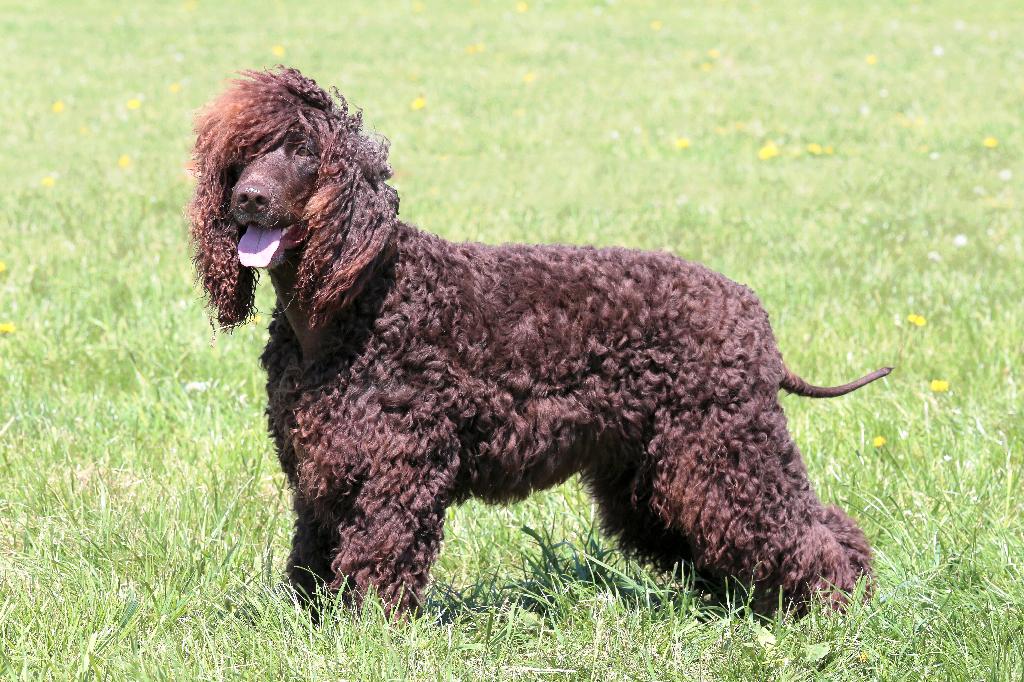
One of the most striking features of the Irish Water Spaniel is its coat. The breed has a dense, curly, liver-colored coat that is water-resistant, providing protection in cold and wet environments. Its distinctive topknot of loose curls on the head and smooth "rat tail" (a tapering tail with short, smooth hair) further sets it apart from other spaniels. This unique appearance requires regular grooming to maintain, particularly to prevent matting in its thick curls.
The breed is not only defined by its physical traits but also by its personality. Irish Water Spaniels are intelligent, energetic, and loyal, often forming strong bonds with their families. They are known for their sense of humor and playful antics, which make them delightful companions. However, their intelligence and energy mean they thrive best in active households that can provide plenty of physical exercise and mental stimulation. Without these outlets, they can become bored and may develop undesirable behaviors.
History
The Irish Water Spaniel is a distinctive and ancient breed with a rich history that reflects its role as a versatile hunting companion. Its exact origins are somewhat mysterious, but the breed is believed to have been developed in Ireland as early as the 7th century. The Irish Water Spaniel is one of the oldest spaniel breeds, thought to descend from native Irish water dogs and possibly influenced by other curly-coated breeds brought to Ireland by traders and settlers. Renowned for its unique liver-colored, tightly curled coat and characteristic "rat tail," the Irish Water Spaniel became a valued gundog, excelling in retrieving waterfowl and upland game in Ireland’s wetlands and rugged countryside.
The modern development of the Irish Water Spaniel is credited to a breeder named Justin McCarthy, who refined the breed in the 19th century. His dog "Boatswain," born in 1834, is considered the foundation sire of the breed. McCarthy focused on enhancing the breed’s hunting abilities, intelligence, and distinctive appearance, resulting in a dog that quickly gained popularity among sportsmen in Ireland and Great Britain. The breed’s waterproof coat and exceptional swimming ability made it particularly well-suited for retrieving game in cold, wet environments, earning it a reputation as a reliable and versatile hunting dog.
The Irish Water Spaniel gained recognition outside Ireland during the 19th century, with its introduction to dog shows and growing popularity among hunters in Britain and North America. It was officially recognized by The Kennel Club in 1862 and later by the American Kennel Club (AKC) in 1884, making it one of the first breeds registered in the AKC. Despite its early success, the breed’s popularity waned in the 20th century as other retriever and spaniel breeds became more widespread.
Today, the Irish Water Spaniel remains relatively rare but is cherished by enthusiasts for its intelligence, agility, and unique appearance. It continues to excel in field trials and dog sports, while also serving as a loyal and affectionate companion. The breed’s long history as a hardworking and distinctive gundog reflects its enduring appeal and the dedication of those who have worked to preserve its legacy.
Appearance
The Irish Water Spaniel is instantly recognizable by its crisp, tight curls and distinctive “rat tail” that’s thick and curly at the base and then tapers to a smoother, finer point. A long curl “topknot” on the head and a clean, smooth face (with a narrow beard line at the jaw) are classic breed hallmarks.
In outline, the IWS is athletic and slightly rectangular, with a deep chest and strong hindquarters built for swimming power. The head is cleanly chiseled with a prominent occiput; eyes are typically dark hazel/amber with an intelligent, quizzical expression.
Color is traditionally solid liver. The coat has a natural oiliness and water-resistant texture; it’s meant to look functional rather than sculpted, and it should not be clipped to resemble a Poodle.
Colors
• Liver
Health
Irish Water Spaniels are generally robust, athletic dogs, but they benefit from the same proactive health approach used in many medium-to-large sporting breeds. When sourcing a puppy, prioritize breeders who screen breeding stock and share verifiable results for hips and eyes, along with any breed-recommended testing.
Day to day, the biggest “health maintenance” wins are practical: keep the dog lean, condition it gradually for strenuous exercise, and avoid repetitive high-impact activity while growing. Because many IWS dogs love water, add a routine of ear care and thorough drying after swims.
Work with your veterinarian to set an individualized prevention plan (parasites, vaccines, dental care) and to discuss any breed-relevant concerns for your area and the dog’s line. Early attention to skin/ear irritation, limping, or exercise intolerance helps catch issues before they become chronic.
Care
Coat care centers on keeping the curls clean, separated, and free of mats. Plan on thorough combing down to the skin on a regular schedule, plus occasional trimming to keep feet, sanitary areas, and overall outline tidy—without over-clipping the natural look.
Because the breed’s coat is naturally oily and water-oriented, bathing needs vary by lifestyle (swimming, hunting, muddy play). After water work, rinse and dry well to prevent skin irritation, and check for burrs or debris that can tangle into the curls.
Like most floppy-eared sporting breeds, routine ear checks and gentle cleaning are important, especially if the dog swims. Keep nails short for traction and sound movement, and maintain dental care with brushing and chews approved by your veterinarian.
Training
The IWS is generally eager to learn and responds best to upbeat, reward-based training that keeps sessions short and purposeful. Because they’re smart and sometimes mischievous, clear criteria and consistent follow-through prevent “creative” interpretations of commands.
Retrieving, nose work, and water-based games tap into natural instincts and make training feel like fun. Many Irish Water Spaniels thrive when given structured outlets such as hunt tests, obedience, rally, agility, or dock-style retrieving work.
Start early with calm handling, cooperative grooming behaviors, and reliable recall. As with many sporting dogs, adolescence can bring a spike in independence—staying patient and keeping engagement high pays off.
Temperament
An Irish Water Spaniel is typically bright, inquisitive, and devoted to its people. In the field it’s hardworking and brave; at home it’s often affectionate and funny, especially when it gets enough activity and attention.
This is a thinking sporting dog, not a couch ornament. Many IWS dogs will invent their own “projects” if bored, so mental stimulation—retrieving games, scent work, training sessions, and puzzle feeding—matters as much as physical exercise.
With strangers, some individuals can be reserved until properly introduced, while remaining steady and responsive to their handler. Early socialization and consistent rules help the breed mature into a confident companion.
Lifestyle
This breed fits best with an active household that can provide daily exercise and regular interaction. A quick walk around the block usually isn’t enough—most IWS dogs do best with a mix of brisk movement, retrieving play, and training or problem-solving.
They’re often happiest when they can be part of the family’s routine and included in outings. Access to safe swimming (when conditions are appropriate) can be a big enrichment win, but the dog still needs structured work and boundaries.
Because they’re rare and distinctive, Irish Water Spaniels can attract attention in public. Teaching polite greetings and a relaxed “settle” makes life easier in busy environments like parks, patios, and training classes.
Ownership
Owning an Irish Water Spaniel is a commitment to an engaged sporting dog with specialized grooming needs. Before bringing one home, plan for time: regular coat maintenance, consistent training, and enough exercise to keep the dog’s brain and body satisfied.
Seek out breeders who focus on temperament, working ability, and health testing, and who can match you to a puppy whose drive level fits your household. Because the breed is uncommon, you may need to travel or wait for the right litter—worth it for long-term fit.
If you want a versatile companion for outdoor life—especially water retrieving—and you enjoy training, the IWS can be deeply rewarding. If you prefer a low-energy, low-maintenance dog, another breed will likely suit you better.
Interesting Facts
- Tallest of the spaniel breeds, built for waterfowl hunting and strong swimming.
- Signature look: tight, crisp curls, a curl “topknot,” and a tapering “rat tail.”
- Traditional color is solid liver; the coat has natural oiliness and water resistance.
- Developed into its modern form in the 1830s; commonly associated with Justin McCarthy’s dog “Boatswain.”
- Often described as alert, inquisitive, and a bit of a “clown” when comfortable.
- Recognized by the United Kennel Club in 1948.