
Irish Wolfhound
Basics
The Irish Wolfhound is a giant sighthound known for a calm, dignified temperament and impressive height. Historically used to hunt wolves and other large game, today’s Wolfhound is typically a gentle companion that bonds deeply with its family.
Because they grow fast and become very large, Irish Wolfhounds require thoughtful management during puppyhood, consistent manners training, and owners who are prepared for giant-breed expenses and space needs.
Description
The Irish Wolfhound is a majestic and noble breed, renowned for its towering height and gentle temperament. As one of the tallest dog breeds in the world, the Irish Wolfhound is often described as a "gentle giant." This ancient breed has deep roots in Ireland, dating back to as early as 391 AD, when they were prized by nobility for their prowess in hunting wolves, deer, and even boar. Their name reflects this historic role as hunters of wolves, a task at which they excelled thanks to their incredible strength, speed, and keen instincts.
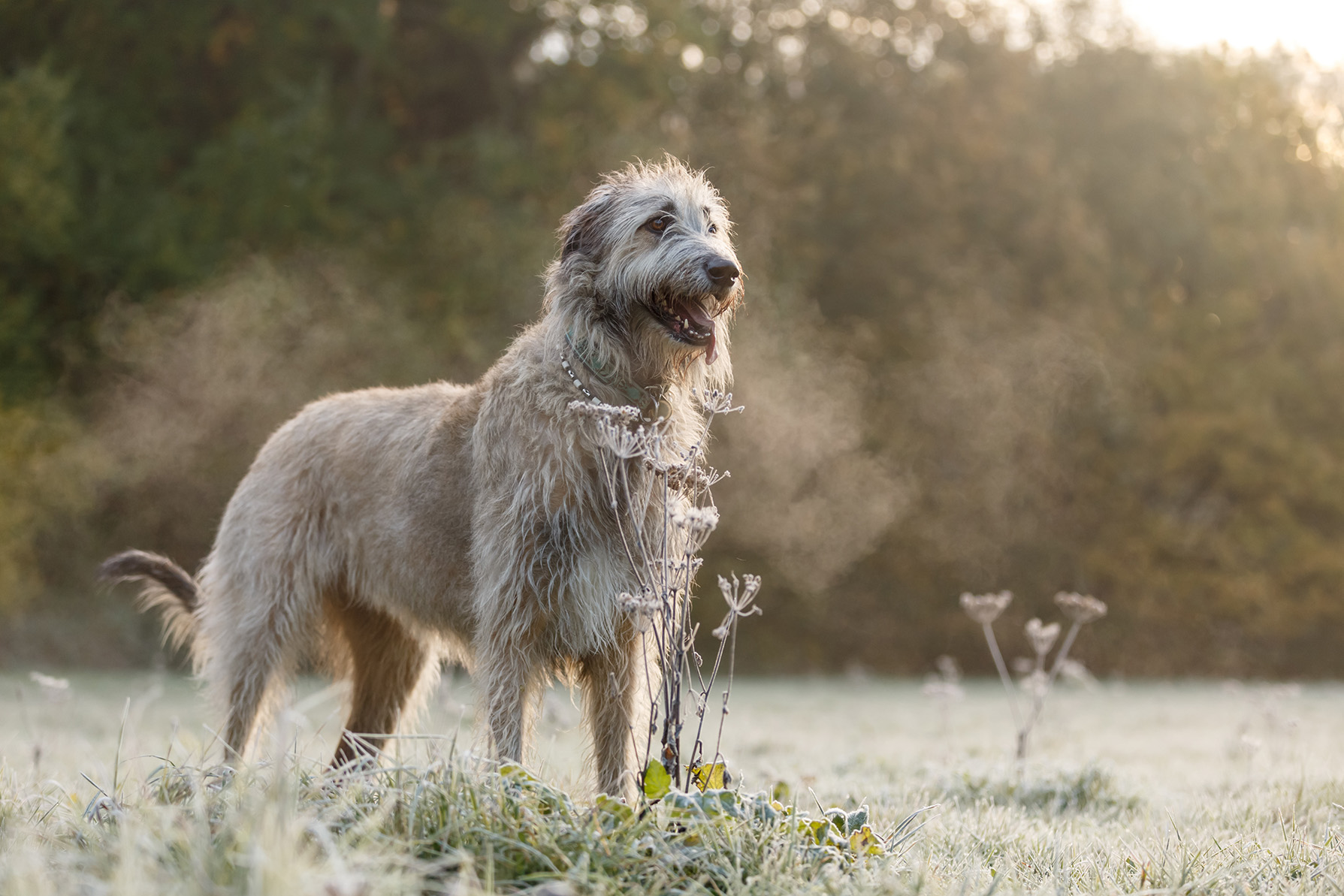
Physically, the Irish Wolfhound is a sight to behold. Standing at an average height of 30 to 35 inches at the shoulder, with some individuals even taller, their size alone commands attention. Despite their massive stature, they are built for agility, with a muscular yet lean frame. Their coat is rough and wiry, typically seen in shades of gray, brindle, fawn, black, or white, providing protection against harsh weather conditions. Their expressive eyes and long, slightly curved tail contribute to their graceful and dignified appearance.
The breed’s temperament is as remarkable as its size. Irish Wolfhounds are known for their calm, gentle, and friendly nature. They are deeply affectionate and bond closely with their families, making them excellent companions. Their patience and kindness make them particularly good with children, though their large size requires supervision during interactions to avoid accidental injuries. Unlike many other hounds, Irish Wolfhounds are not aggressive or territorial; they are generally reserved and peaceful, even around strangers.
However, their size and energy levels mean they require ample space and regular exercise. They thrive in homes with large yards or access to open areas where they can stretch their long legs. While they are not high-energy dogs, they do need daily walks and occasional opportunities to run. Potential owners should also be mindful of their relatively short lifespan, typically ranging from 6 to 8 years, a common trait among giant breeds.
The Irish Wolfhound remains a symbol of courage and loyalty, embodying a mix of strength and gentleness that has earned it admiration for centuries. Whether as a hunting partner in history or as a cherished family companion today, the Irish Wolfhound continues to captivate with its grandeur and warm-hearted nature.
History
The Irish Wolfhound is one of the most ancient and storied dog breeds, with a history that stretches back thousands of years. These giant sighthounds are believed to have been brought to Ireland by Celtic tribes around 700 BCE, making them one of the oldest known breeds in Europe. Renowned for their massive size and strength, Irish Wolfhounds were primarily used for hunting wolves, deer, and wild boar. They also played a role in warfare, where they were employed to pull riders off horses and guard encampments. Their imposing stature and courage earned them a place in Irish mythology and folklore, where they were celebrated as noble and loyal companions.
By the medieval period, Irish Wolfhounds had become symbols of prestige and power among the Irish nobility. They were often given as gifts to foreign rulers and dignitaries, spreading their reputation across Europe. However, their popularity as hunting dogs led to their decline, as they were so effective at hunting wolves and other large game that these animals were nearly eradicated in Ireland by the 17th century. With no need for their traditional role, the breed's population dwindled, and by the 19th century, Irish Wolfhounds were on the brink of extinction.
The breed's revival is credited to Captain George Augustus Graham, a British army officer and dog enthusiast, who began efforts to save the Irish Wolfhound in the late 1800s. Graham used the remaining Irish Wolfhounds he could find and crossed them with other large breeds, such as the Scottish Deerhound, Great Dane, and Mastiff, to restore their size and appearance. Thanks to his dedication, the Irish Wolfhound regained its stature and was officially recognized by The Kennel Club in 1925.
Today, the Irish Wolfhound is celebrated as a gentle giant, known for its calm and friendly demeanor despite its imposing size. While it is no longer used for hunting or warfare, the breed remains a cherished companion and a symbol of Ireland’s rich history and cultural heritage. Its legacy as a noble and loyal dog endures, reflecting its long-standing role as a protector and friend to humans.
Appearance
Irish Wolfhounds are tall, strong dogs with a rough, wiry coat and a long, athletic outline. They have a deep chest, long legs, and a noble head and expression.
Coat colors can include gray, brindle, red, black, white, and fawn. Their rough coat provides some weather resistance, but regular brushing is still needed, and their size means even basic care (food, bedding, transport) is on a giant scale.
Colors
• Black
• Blue
• Brindle
• Cream
• Fawn
• Gray
• Gray & Brindle
• Grey Brindle
• Red
• Red & Brindle
• Red Wheaten
• Sliver
• Steel
• Wheaten & Brindle
• Wheaton
• White
Health
Irish Wolfhounds have some notable giant-breed health risks and generally benefit from proactive veterinary partnerships. Common concerns in the breed include cardiac disease, bloat, orthopedic issues, and certain cancers.
Owners should learn the warning signs of bloat and discuss prevention options with a veterinarian. Choosing reputable breeders who health-test and track longevity can make a meaningful difference, and maintaining a lean body condition helps reduce stress on joints and the heart.
Care
Exercise needs are moderate for such a large dog: daily walks and opportunities for controlled running are helpful, but hard impact and excessive forced exercise should be avoided in growing puppies.
Coat care usually means weekly brushing and occasional hand-stripping of dead hair, plus routine nail and ear care. Feeding should support steady growth—many veterinarians recommend large-breed puppy diets and a careful eye on body condition.
Training
Manners training is essential because of the breed’s size and strength. Start early with leash skills, polite greetings, and calm handling so the adult dog is easy and safe to manage.
Irish Wolfhounds often do best with gentle, reward-based methods. Keep sessions short, focus on consistency, and prioritize real-life skills like recall in safe areas, settling on a mat, and walking politely past distractions.
Temperament
Most Irish Wolfhounds are gentle, patient, and even-tempered. They’re not typically sharp watchdogs, but their size alone can be a deterrent.
They may have a chase instinct typical of sighthounds and can enjoy running in safe areas. Early socialization helps them become confident, well-mannered adults, especially around visitors, other dogs, and novel environments.
Lifestyle
Wolfhounds are often quiet and relaxed indoors, but they need space to move comfortably and a home that can accommodate a very large dog. They also do better with cool-weather comfort than with extreme heat.
They tend to thrive in households that enjoy daily walks and have a safely enclosed area for occasional running. Because of their size, they’re often best suited to families with older children and adults who can handle a giant dog responsibly.
Ownership
Owning an Irish Wolfhound means committing to giant-breed realities: higher food costs, larger beds/crates, and more expensive veterinary care. Planning for the breed’s relatively short lifespan is also part of responsible ownership.
For the right home, they are deeply rewarding—gentle, affectionate companions with a historic presence. Seek reputable breeders or breed-savvy rescues and prioritize health testing, stable temperament, and careful puppy rearing.
Interesting Facts
• One of the tallest dog breeds; described by the AKC as the tallest of all AKC breeds.
• Mentioned in historical sources dating back to Roman times (391 A.D.).
• Nearly declined to extinction in the 1800s; revived through reconstitution efforts in the 19th century.
• Historically used for hunting wolves and other large game.
• Giant-breed ownership requires early manners training due to size and strength.