
Italian Spinone
Basics
The Spinone Italiano (often called the Italian Spinone) is a rough-coated, versatile gun dog developed in Italy to hunt and retrieve over varied terrain. Breed standards describe a solidly built, powerful dog with a slightly longer-than-tall outline, made to work at an efficient trot and to handle thick cover and cold water.
In the home, the Spinone is typically a steady companion—social with people, gentle, and patient—but it can have an independent streak. Most do best with owners who enjoy outdoor time and who appreciate a dog that thinks for itself while still wanting to be close to its family.
Description
The Italian Spinone, also known as the Spinone Italiano, is a versatile and rugged hunting dog with a rich heritage and an endearing personality. Originating in Italy, this ancient breed has been a loyal companion to hunters for centuries, prized for its ability to track, point, and retrieve game in a variety of terrains. Unlike some of its more high-strung sporting counterparts, the Spinone is known for its calm and steady nature, making it not only an excellent working dog but also a beloved family pet.
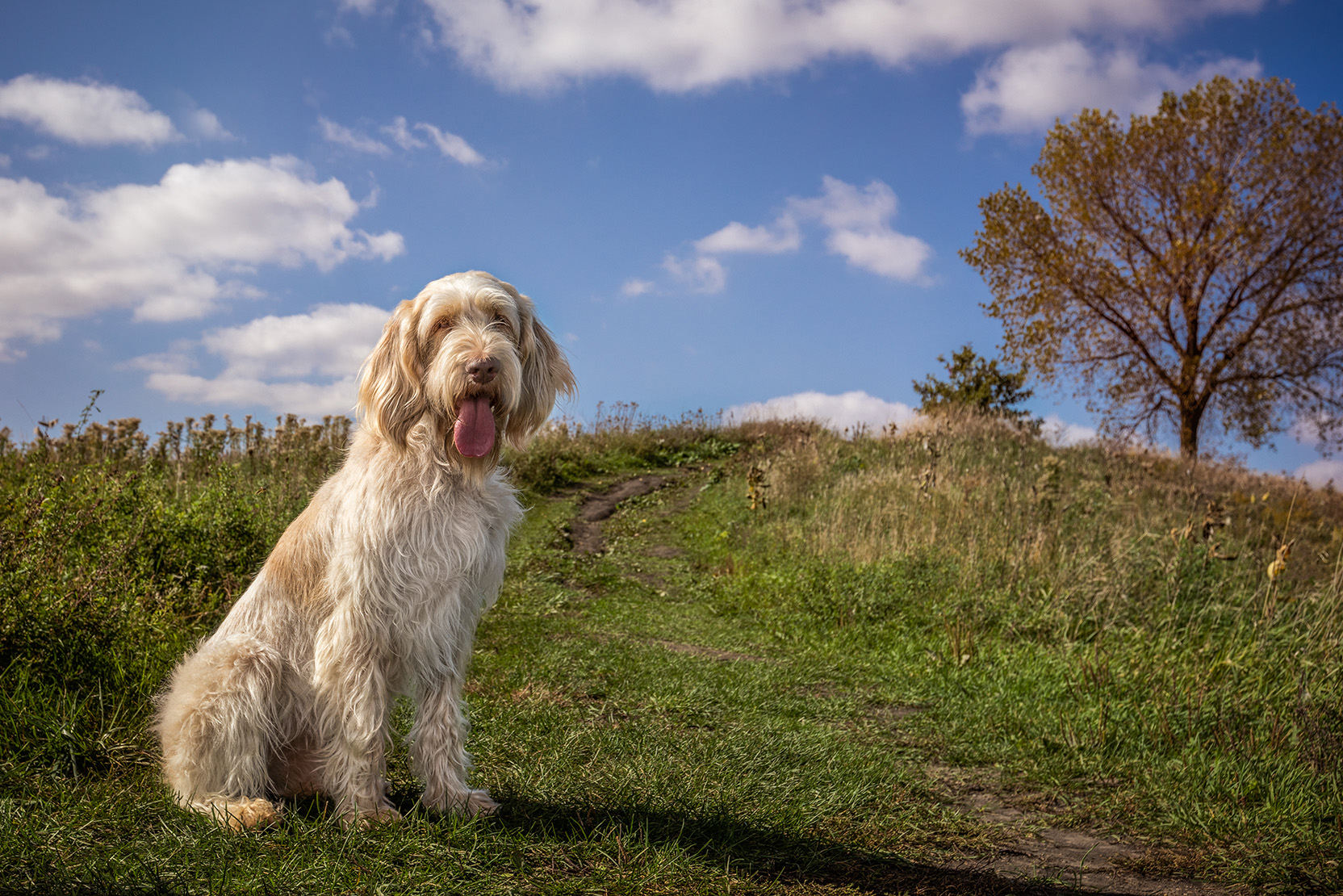
Physically, the Italian Spinone is a large, robust dog with a distinctive, rustic appearance. Its wiry, dense coat, which can be white, orange roan, brown roan, or white with orange or brown markings, provides protection against harsh weather and rough underbrush. One of the breed’s most striking features is its expressive face, adorned with bushy eyebrows, a beard, and soulful, amber-colored eyes that convey its affectionate and gentle nature. The Spinone’s muscular build and strong, slightly arched neck give it the stamina and strength to work tirelessly in the field.
Temperamentally, the Italian Spinone is as charming as it is capable. Known for its affectionate and friendly demeanor, the breed bonds closely with its family and gets along well with children and other pets. Unlike some hunting breeds, the Spinone is relatively laid-back, enjoying both active outdoor adventures and quiet time at home. This gentle disposition, combined with its intelligence and eagerness to please, makes the Spinone a joy to train, although it may have a slightly independent streak that requires patience and consistency.
As a working dog, the Spinone is highly adaptable and excels in a variety of roles, from hunting to therapy work. It requires regular exercise to stay healthy and happy, making it a great match for active families who enjoy hiking, running, or other outdoor activities. At the same time, the breed’s calm nature makes it content to relax indoors, provided its physical and mental stimulation needs are met.
The Italian Spinone’s unique blend of rugged capability, affectionate personality, and charming appearance makes it a standout among hunting breeds. Whether in the field or at home, this breed continues to win hearts with its versatility, loyalty, and gentle spirit.
History
The Italian Spinone, also known as the Spinone Italiano, is an ancient and versatile breed with a history that stretches back to at least the Renaissance. Its origins are believed to lie in northern Italy, particularly in the Piedmont region, where it was developed as an all-purpose hunting dog. The breed’s ancestry likely includes various European pointing and retrieving dogs, as well as ancient hounds and possibly even water dogs. The Spinone’s name is thought to derive from the Italian word *spino*, meaning thorn, a reference to the breed’s ability to navigate through thorny terrain while hunting.
During the Renaissance, the Spinone was a popular companion for hunters, prized for its versatility, endurance, and steady temperament. It excelled in both pointing and retrieving game, performing well on land and in water. The breed’s thick, wiry coat provided protection from harsh weather and dense underbrush, making it particularly well-suited to the rugged landscapes of Italy. Paintings and writings from the Renaissance often depict Spinoni-like dogs, attesting to their long-standing role in Italian hunting traditions.
The breed faced significant challenges during the 19th and early 20th centuries, as other breeds, such as German Pointers and English Setters, became more widely favored. World War II further impacted the Spinone’s population, with numbers dwindling dangerously low. Dedicated Italian breeders worked tirelessly to preserve the breed, focusing on its traditional hunting abilities and distinctive appearance. These efforts led to the breed’s resurgence in Italy and its eventual recognition by the Fédération Cynologique Internationale (FCI) in 1955 and by the American Kennel Club (AKC) in 2000.
Today, the Italian Spinone is celebrated not only as a capable hunting dog but also as a loyal and affectionate family companion. Its calm demeanor, intelligence, and versatility have earned it admirers worldwide. The Spinone’s rich history as a rugged yet gentle working dog reflects its enduring appeal and the dedication of those who have preserved this unique and ancient breed.
Appearance
Spinoni are substantial, athletic dogs with strong bone and a distinctly rustic look. The head is long with a pronounced stop that’s not abrupt, a full beard and moustache, and bushy eyebrows that give a soft, kindly expression.
The coat is harsh and dense rather than silky, usually about 1.5–2.5 inches on the body, shorter on the head and front of the legs. Colors commonly include solid white or white with orange or brown (chestnut) markings, as well as roan variations; the breed’s coat is intended to protect it while moving through brambles and wet conditions.
Colors
• Brown Roan
• Brown Roan w/ Markings
• Orange Roan
• Orange Roan w/ Markings
• White
• White & Orange
Health
Like many medium-to-large sporting breeds, Spinoni can be affected by orthopedic problems such as hip (and sometimes elbow) dysplasia. Reputable breeders commonly screen breeding stock and can show documentation of health testing; this is one of the biggest predictors of a sound, comfortable adult dog.
They may also experience issues seen across many deep-chested, active dogs, including gastric dilatation-volvulus (bloat), along with various eye or skin/ear concerns depending on individual lines and lifestyle. A vet can help you tailor prevention (healthy weight, appropriate exercise, parasite control, ear care) and set a plan for early detection as your dog matures.
Care
A Spinone’s wiry coat needs routine upkeep to stay comfortable and clean. Plan on brushing and combing several times a week to prevent tangles in the beard, legs, and undercarriage, plus regular trimming of hair around the feet and sanitary areas. After muddy or wet outings, rinse and dry the coat and especially the beard to reduce odor and skin irritation.
Daily exercise is important, but it doesn’t have to be frantic: long walks, hikes, swimming, and free running in a safe area suit the breed well. Because the ears are pendant and the dog often works in water and brush, check ears regularly, and keep nails short to support sound, efficient movement.
Training
Spinoni usually respond best to positive reinforcement, clear structure, and patient repetition. They can be sensitive to heavy corrections; instead, keep sessions short, reward generously, and rotate skills so the dog stays engaged.
Prioritize recall and calm leash skills early, since scent and game can be distracting. Many Spinoni excel at retrieving games, tracking/scent work, and field training that taps into their natural “hunt, point, and retrieve” instincts. Consistent socialization—people, dogs, surfaces, grooming, and car rides—helps their naturally friendly demeanor stay confident and steady.
Temperament
Breed descriptions emphasize a Spinone’s sociable, docile, and patient nature. Many are notably affectionate and thrive on being included—hanging near their people, joining family routines, and greeting visitors with calm interest rather than sharp suspicion.
That said, they’re still hunting dogs with their own opinions. Some can be stubborn or slow to “drill,” especially if training feels repetitive or harsh. A calm, consistent approach and plenty of opportunities to use their nose and retrieve tend to bring out the best in their temperament.
Lifestyle
The Spinone Italiano fits best with people who genuinely enjoy a dog “tagging along” for outdoor life—weekend hikes, rural property walks, hunting or training days, and regular adventures. They’re generally more about steady endurance than short bursts of speed, and many love water.
Indoors, they tend to be calm if their exercise and companionship needs are met. Because they’re social and people-oriented, they can struggle if isolated for long hours; a predictable routine, enrichment toys, and time with family help prevent boredom behaviors.
Ownership
If you’re considering a Spinone, seek breeders or rescues who can describe the parents’ temperaments and provide proof of health screening. Ask specifically about orthopedic evaluations and any breed-relevant testing the line has done, and look for puppies raised with early handling and thoughtful socialization.
Be prepared for some “sporting-dog realities”: a bearded face that collects water and food, an outdoorsy coat that brings in burrs, and a mind that likes to problem-solve. Owners who train kindly, provide daily activity, and enjoy an affectionate, slightly stubborn companion usually find the Spinone a deeply rewarding breed.
Interesting Facts
• Italian hunting breed also known as the Italian Coarsehaired Pointer.
• Breed standards describe a robust, square-built worker known for endurance and an extended, fast trot in the field.
• The harsh coat forms characteristic eyebrows, moustache, and beard and is meant to protect the dog in brambles and wet conditions.
• UKC recognized the Spinone Italiano on January 1, 1995.
• Common colors include white, white with orange or brown (chestnut) markings, and roan variations.