
Jack Russell
Basics
Often called the Jack Russell Terrier, this is a small, agile working terrier developed from hunting terriers associated with Reverend John ("Jack") Russell. In modern registries, the name can refer to closely related types; UKC recognizes the Jack Russell Terrier as a longer-bodied, shorter-legged working terrier, while some kennel clubs distinguish it from the Parson Russell Terrier.
At its core, the breed is a bold go-to-ground terrier: quick, vocal, and intensely motivated to chase and dig. Most Jack Russells do best with owners who enjoy training, daily activity, and giving a smart dog a real job—whether that’s sports, hiking, or structured play.
Description
The Jack Russell Terrier is a small, energetic, and fearless breed known for its lively personality and boundless enthusiasm. Originating in England in the early 19th century, the Jack Russell was developed by Reverend John Russell for fox hunting. The breed was designed to be small enough to follow foxes into their dens yet sturdy and spirited enough to keep up with hounds in the field. Over the years, the Jack Russell Terrier has evolved into a versatile working dog and a beloved companion for active families.
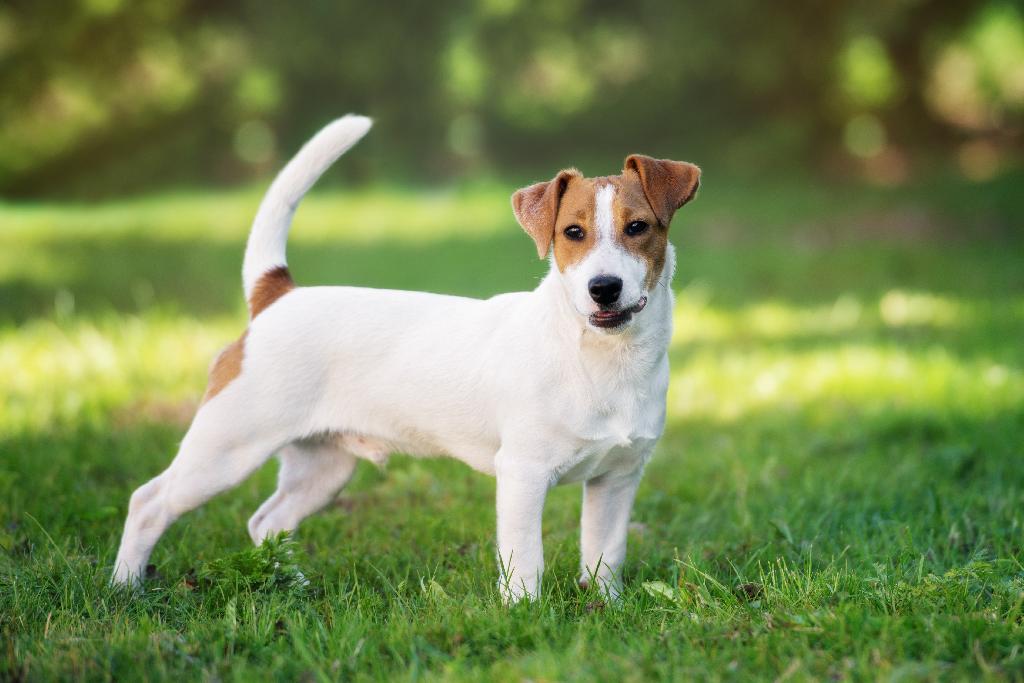
Physically, the Jack Russell Terrier is compact and muscular, with a height ranging from 10 to 15 inches at the shoulder. Its coat can be smooth, rough, or broken (a mix of both textures), and is predominantly white with black, tan, or brown markings. Its expressive, almond-shaped eyes and alert, upright ears give the breed a lively and intelligent appearance. Despite its small size, the Jack Russell is robust and athletic, built for agility and endurance.
The breed's personality is one of its most defining traits. Jack Russells are intelligent, curious, and fearless, often displaying a big-dog attitude in a small body. They are known for their high energy levels and need for mental and physical stimulation. Without adequate exercise or engagement, they can become bored and may develop destructive behaviors. However, for those who can meet their needs, Jack Russells are endlessly entertaining and loyal companions. They are affectionate with their families and generally good with children, although their boisterous nature may require supervision around very young kids.
Jack Russells excel in a variety of activities, including agility, obedience, and even scent work. Their intelligence and drive make them quick learners, but their independent streak can make training a challenge at times. Positive reinforcement methods work best with this breed, as they respond poorly to harsh corrections. They are also natural diggers and hunters, a reflection of their working heritage, so a secure yard is essential to prevent escape attempts.
Overall, the Jack Russell Terrier is a vibrant and spirited breed that thrives in active homes. It is best suited to owners who can match its energy and provide plenty of opportunities for exercise and mental stimulation. With the right environment and care, the Jack Russell proves to be a loving, entertaining, and endlessly loyal companion.
History
The Jack Russell Terrier is a spirited and energetic breed with roots deeply tied to 19th-century England. It was developed by Reverend John Russell, a passionate fox hunter, who sought to create a small yet tenacious terrier capable of working alongside hounds. Reverend Russell, known as "Jack" to his friends, began selectively breeding terriers to produce a dog that could locate and flush foxes from their dens without harming them, ensuring the fox could be pursued by the larger hounds. The result was a versatile and hardworking terrier with a compact build, boundless energy, and sharp intelligence.
The breed’s foundation lies in small terriers of the time, particularly those with white coats and markings, which were bred for visibility in the field. Russell’s early terriers became highly valued among hunters for their stamina, courage, and determination. These dogs were not only effective in fox hunting but also excelled in controlling vermin on farms, further solidifying their reputation as indispensable working dogs.
Throughout the 20th century, the Jack Russell Terrier’s popularity grew beyond its working roots, gaining recognition as a lively and affectionate companion. Despite its widespread appeal, the breed has remained true to its origins, retaining its hunting instincts and energetic personality. The breed’s versatility also made it a favorite in canine sports, such as agility and obedience, and even in entertainment, with Jack Russells appearing in movies and television.
Today, the Jack Russell Terrier is recognized worldwide, although variations in the breed have led to distinct classifications. The Parson Russell Terrier and Russell Terrier are closely related breeds that have been separately recognized by some kennel clubs. Regardless of classification, the Jack Russell remains celebrated for its bold personality, intelligence, and enduring connection to its working heritage. Its history reflects its adaptability and the timeless appeal of a spirited and loyal companion.
Appearance
The Jack Russell is compact but athletic, built to work in tight spaces. A hallmark is a slightly longer-than-tall outline, with strong straight forelegs and a chest that is moderate (not overly broad) so the dog can maneuver underground.
Coats come in smooth, broken, or rough varieties, all intended to be dense and weather resistant. Color is typically white or predominantly white with black and/or tan markings, a practical trait for distinguishing the dog from quarry in the field.
Colors
• Black & White
• White
• White & Lemon
• White & Tan
• White w/ Black markings
• White w/ Brown
• White w/ Brown Markings
• White w/ Tan Markings
• White w/Black and Tan
Health
Many Jack Russells are sturdy, long-lived dogs, but they do have known inherited risks. Eye concerns are an important focus in the breed; some kennel club programs specifically recommend DNA testing for primary lens luxation (PLL) and other inherited ataxias, along with formal eye screening schemes.
Choose breeders who health-test, keep records, and can explain how they’re managing genetic risk in their lines. For owners, maintaining a lean body condition, protecting joints during high-impact play, and keeping up with routine veterinary care (including dental health) are practical ways to support long-term soundness.
Care
Exercise is non-negotiable: plan on brisk daily activity plus brain work (training games, scent games, puzzle feeders, or a sport). Without outlets, many Jack Russells invent their own entertainment—digging, barking, counter-surfing, or redecorating the yard.
Grooming needs are modest but regular. Smooth coats usually need a weekly brush; broken/rough coats benefit from thorough brushing and occasional hand-stripping or trimming to keep the coat tidy and functional. Keep nails short, check ears, and prioritize dental care—small, busy dogs can accumulate tartar quickly.
Training
Start early and keep sessions short, upbeat, and structured. Jack Russells learn fast, but they also learn what works—so reinforce the behaviors you want and prevent rehearsal of the ones you don’t (like door-dashing or chasing). Rewards that match the dog—food, tug, or a quick chase game—often produce the best focus.
Because the breed was built for independent work, reliable recalls and impulse control take deliberate practice. Use management (leash, long line, secure fencing) while you build skills, and channel the terrier brain into jobs like trick training, agility, rally, barn hunt/earthdog-style games, or scent work.
Temperament
Jack Russells are famously confident and energetic—alert, curious, and ready to investigate anything that moves. They tend to be people-oriented and fun-loving, but they can also be single-minded when something triggers their prey drive.
Many are social with other dogs when well managed, yet they may challenge unfamiliar dogs or fixate on small pets if not carefully introduced and supervised. A stable adult Jack Russell is usually friendly and bold, but not pushy or sharp toward people; consistent boundaries and outlets for drive make a big difference.
Lifestyle
This breed fits active households that enjoy daily exercise and hands-on training. A Jack Russell can thrive in an apartment only if the owner is committed to structured activity and noise management; otherwise, their alert nature and boredom barking can become a problem.
Secure containment matters. Many Jack Russells can climb, squeeze through gaps, or dig under fences, so yards should be escape-proof and outdoor time supervised. They’re typically happiest when included in family life, given tasks, and offered safe outlets for chasing and digging (like a designated dig pit).
Ownership
Prospective owners should expect a lot of dog in a small package: high energy, high drive, and a talent for finding weak spots in routines. The best match is someone who enjoys terrier humor and is willing to be consistent about rules, enrichment, and supervision.
When selecting a puppy or adult, prioritize stable temperament and responsible breeding/rehoming practices over color or size. Ask about working aptitude, sociability, and how the dog behaves around other animals; then plan for training support early, because a well-started Jack Russell is a joy, and an under-managed one can be a handful.
Interesting Facts
- Bred as a go-to-ground terrier; many still have strong instincts to chase, dig, and vocalize.
- Coat types include smooth, broken, and rough, all designed to be dense and weather resistant.
- Typically predominantly white with black and/or tan markings.
- Often confused with (or grouped alongside) the Parson Russell Terrier; some registries separate them by build and proportion.
- Many lines have recommended eye and neurologic DNA tests (for example, PLL and certain ataxias) plus formal eye screening.
- Best suited to owners who can provide daily exercise and regular training games.