Korthals Griffon
Basics
The Korthals Griffon—also widely known as the Wirehaired Pointing Griffon—is a medium-sized, all-purpose gundog developed to work close to the hunter and handle a full day in the field. The breed’s reputation comes from being a versatile companion that can point, retrieve, and track while still settling in as a devoted house dog when its exercise needs are met.
The modern type was refined in the late 1800s by Edward Korthals, and the “Korthals” name is still used in many registries today. As a breed, Griffs are typically described as outgoing, eager, and quick-witted—best suited to people who enjoy training, outdoor time, and a dog that wants to be involved in everything.
Description
The Korthals Griffon, also known as the German Wirehaired Pointer or Griffon Korthals, is a highly versatile and hardworking dog breed with a rich history as a hunting and pointing dog. Originating in the late 19th century in France and Germany, the breed was developed by a man named Eduard Korthals, who sought to create a dog capable of handling various terrains and weather conditions while being able to hunt both upland game and waterfowl. The Korthals Griffon quickly gained recognition for its excellent nose, retrieving abilities, and strong work ethic, making it a favorite among hunters.
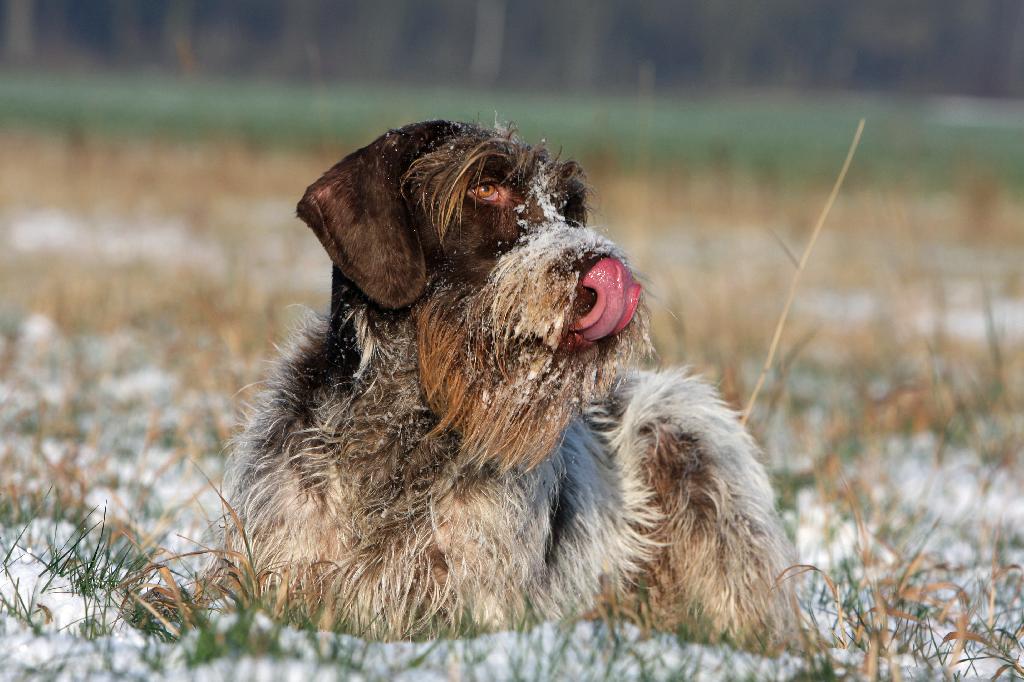
Physically, the Korthals Griffon is a medium-sized, robust dog with a distinctive, wiry coat that is harsh to the touch, providing protection against the elements. The coat is typically a mix of brown and white, often with roan or patched markings. One of the breed's most recognizable features is its expressive face, adorned with a prominent beard, bushy eyebrows, and a distinctive, wiry muzzle. This appearance, combined with its muscular body and strong, straight back, gives the Korthals Griffon an alert and rugged look, well-suited to its role as a working dog.
Temperamentally, the Korthals Griffon is intelligent, energetic, and eager to work. As a pointing and retrieving breed, it excels in fieldwork and is known for its determination and focus while on the hunt. The Korthals Griffon has a high prey drive and a strong instinct to track and retrieve, making it an excellent choice for hunters. Despite its high-energy nature, the breed is generally affectionate and loyal to its family. It is also known for its independence and confidence, traits that make it a great working dog but can also present challenges in training. Early socialization and consistent training are essential to ensure that the Korthals Griffon becomes well-mannered and responsive to commands.
Although the Korthals Griffon is often used for hunting, it also makes a great family companion for active households. Its playful and friendly nature, combined with its intelligence, means it enjoys being part of family activities and is good with children and other pets when properly socialized. However, this breed requires plenty of physical and mental stimulation, so it is best suited for homes with an active lifestyle. Without sufficient exercise and engagement, it may become bored and develop behavioral problems.
In summary, the Korthals Griffon is an exceptional hunting dog with a friendly, loyal temperament and a strong work ethic. Its versatility in the field, intelligence, and loving nature make it an excellent choice for active families or hunters in need of a reliable and hardworking companion. Whether in the field or at home, the Korthals Griffon continues to impress with its remarkable skills and affectionate personality.
History
The Korthals Griffon, also known as the Wirehaired Pointing Griffon, is a versatile and intelligent gundog that originated in the late 19th century. The breed’s development is credited to Eduard Karel Korthals, a Dutch sportsman and avid hunter. Korthals had a vision to create the ultimate versatile hunting dog that could excel in both pointing and retrieving game across diverse terrains. Beginning in 1873, he meticulously bred a variety of dogs, including Griffons, Pointers, Spaniels, Setters, and German Wirehaired Pointers, to refine the traits he desired. His efforts culminated in the creation of a robust, adaptable, and intelligent hunting companion with a distinctive wiry coat.
Korthals’ work took place primarily in Germany, where he was employed by a wealthy landowner who supported his breeding program. His careful selection emphasized hunting ability, stamina, and a cooperative temperament, resulting in a breed that quickly gained recognition among European hunters. By 1887, Korthals had established a breed standard for what would become known as the Korthals Griffon, and the breed began to gain popularity in France, Germany, and other parts of Europe.
The Korthals Griffon was officially recognized in the late 19th century and continued to grow in prominence among hunters who valued its versatility and hardworking nature. The breed is particularly well-suited for hunting in marshy or densely vegetated areas, thanks to its waterproof, wiry coat and strong nose. Its adaptability made it a favorite for both upland and waterfowl hunting, cementing its reputation as a truly all-purpose hunting dog.
Today, the Korthals Griffon is celebrated not only for its hunting abilities but also for its affectionate and loyal nature as a family companion. While still more common in Europe, the breed has gained a dedicated following in North America. Its history reflects the dedication of Eduard Korthals and the enduring appeal of a breed that combines functionality, intelligence, and charm.
Appearance
Everything about the Korthals Griffon reads “workmanlike”: a sturdy, medium build with slightly more length than height, designed for endurance rather than flashy speed. The head is long with the breed’s hallmark furnishings—shaggy eyebrows and a noticeable moustache/beard that give an expressive, intelligent look.
The coat is a true double coat. On top is a harsh, bristly outer coat (often compared to boar bristles), with a dense, softer undercoat beneath; together they help protect the dog in cover and rough weather. Commonly described colors include steel gray with liver patches as well as liver-and-white variations, and the tail is often seen carried level when moving.
Colors
• Brown
• Brown & Gray
• Chestnut
• Chestnut & Gray
• Chestnut Brown
• Chestnut Roan
• Steel Gray w/ brown Markings
• White
• White & Brown
• White & Orange
Health
Korthals Griffons are generally sturdy, but like many medium-to-large sporting breeds they benefit from health-conscious breeding and sensible management. When choosing a puppy, ask what screening is done in the line (commonly orthopedic evaluations and eye checks) and request documentation; a responsible breeder will be transparent about test results and long-term outcomes.
At home, keep a close eye on weight and conditioning—lean, fit dogs tend to stay sound longer, especially if they do high-impact activity like running, jumping, or field work. Routine veterinary care, parasite prevention, and prompt attention to ear irritation or lingering lameness are especially important for a dog that spends time outdoors in brush and water.
Care
A Griff’s coat is meant to be practical, not fussy, but it does require routine maintenance. Plan on a couple of quick brush/comb sessions each week to keep the harsh coat from matting in the beard, legs, and undercoat, plus occasional tidying when burrs and seeds get caught after field time. Many owners also learn light hand-stripping or targeted trimming to keep the texture weather-resistant.
Daily life care should match an active sporting breed: consistent exercise, regular nail and dental care, and attention to ears (especially if your dog swims or hunts in wet cover). After hikes or hunts, a quick “head-to-tail check” for ticks, foxtails, and small cuts goes a long way toward keeping a rugged dog comfortable and healthy.
Training
These dogs are typically eager learners with a strong desire to work, so training goes smoothly when it feels like a shared project. Start early with socialization, basic obedience, and lots of short, upbeat sessions—rewarding focus, calm greetings, and reliable recall. Because the breed is intelligent, repetition without purpose can bore them; variety and clear goals keep them engaged.
If you plan to hunt or do nosework, build on their natural instincts in a structured way: introduce birds/scent gradually, teach steadiness and a dependable “here” before freedom in the field, and prioritize cooperation over independence. Positive reinforcement and thoughtful boundaries usually produce the best adult Griff—confident, responsive, and able to settle when the day’s work is done.
Temperament
Korthals Griffons tend to be biddable and people-oriented—affectionate with their family and generally happiest when they can stay close rather than being “kennel dogs.” They’re typically enthusiastic about work and play, and they often show a natural desire to use their nose and carry objects, which makes them fun for field sports and active households.
Because they’re alert and bonded to their people, many will also act as capable watchdogs, sounding the alarm when something seems off. The same sensitivity that makes them responsive in training means they do best with steady, calm handling and plenty of positive interaction; harsh corrections or long periods of isolation can create anxiety or stubbornness.
Lifestyle
This is not a “few laps around the block” breed. Most Korthals Griffons thrive with real daily outlets—brisk walks plus off-leash running in safe areas, training games, retrieval, scent work, or field time. When their physical and mental needs are met, they’re typically pleasant housemates; when they’re underworked, they can become restless or mouthy.
They’re often happiest in homes that can provide yard access or frequent outdoor adventures, but what matters most is consistent engagement. Families who hike, hunt, train, or simply enjoy active weekends tend to see the best side of the breed: a close-working partner that wants to be included, from morning chores to evening couch time.
Ownership
Owning a Korthals Griffon is easiest when you want an involved, trainable companion and you have time to invest. Expect a dog that checks in often, follows you from room to room, and prefers to be part of the family routine. The tradeoff is commitment: daily exercise, regular grooming upkeep, and ongoing training so that enthusiasm in the field translates to manners at home.
If you’re shopping for a puppy, prioritize breeders who prove working ability or stable temperament and who health test their breeding dogs. It’s also worth talking through your goals—hunting, sport, or active pet—so you’re matched with the right drive level. A well-chosen Griff can be a decade-plus partner that’s equally at home in the uplands and in the living room.
Interesting Facts
- Developed and “perfected” in the late 1800s by Edward Korthals (often cited between 1865 and 1885).
- Medium-sized, slightly longer-than-tall sporting dog built for endurance and close-working versatility.
- Distinctive double coat: harsh, bristly outer coat with a thick, soft undercoat.
- Commonly described colors include steel gray with liver patches and liver/white variations.
- UKC recognition dates to 1936.
- Often praised as a versatile, all-around gundog that can point and retrieve while remaining a devoted companion.