
Labrador Retriever
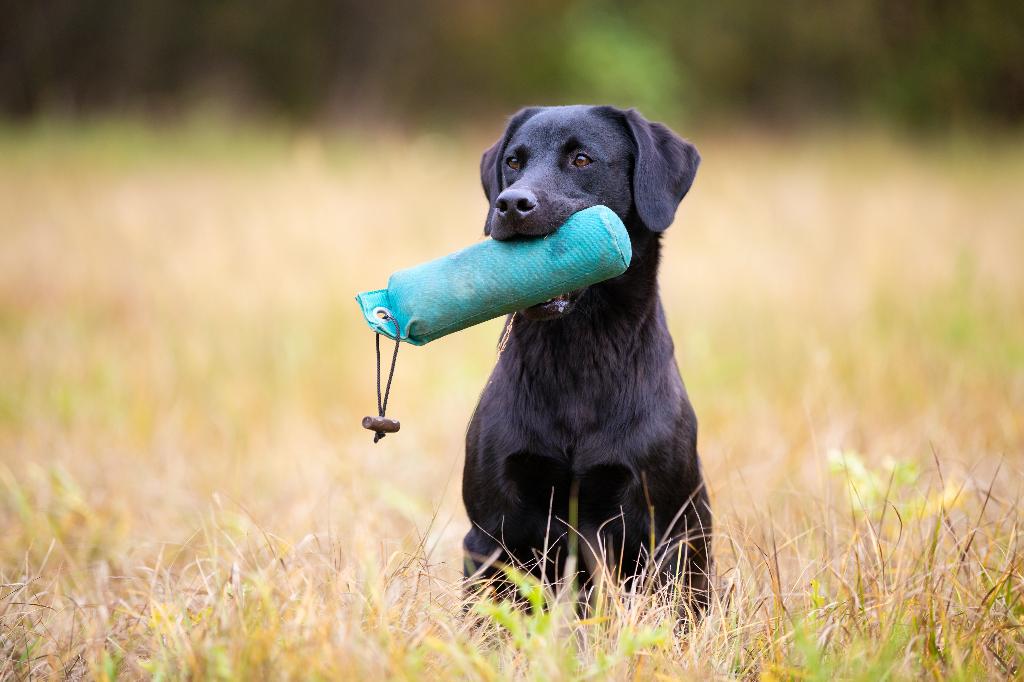
Basics
The Labrador Retriever is a medium-to-large sporting dog developed to work closely with people as a capable retriever on land and in water. Modern Labs are widely kept as family companions and are also common in roles that reward their steadiness and trainability, such as assistance work, detection, and search-and-rescue.
Labs tend to be social, people-oriented dogs that do best when they are included in daily life. They are athletic and enthusiastic, and many stay puppyish in attitude well into adulthood.
Many people talk about “field” and “show” (or “working” and “conformation”) lines. Individuals can differ in build and energy level, so it’s worth meeting the parents and choosing a puppy (or adult) whose drive and off-switch match your home.
Description
The Labrador Retriever is one of the most popular and beloved dog breeds worldwide, known for its friendly temperament, intelligence, and versatility. Originally bred in Newfoundland, Canada, the Labrador Retriever was developed as a working dog to assist fishermen by retrieving fishing nets and catching fish that escaped from lines. Over time, the breed became highly sought after for a variety of tasks, from hunting and retrieving game to serving as guide dogs for the blind and therapy dogs, thanks to its gentle nature and eagerness to please.
Physically, the Labrador Retriever is a well-balanced and sturdy dog, with a strong, athletic build designed for endurance and activity. Males typically weigh between 65 to 80 pounds, while females are slightly smaller. The breed has a short, dense coat that is water-resistant, and it comes in three standard colors: black, yellow, and chocolate. The Labrador's tail is thick and tapers at the end, often referred to as a "otter tail" due to its shape and its ability to assist with swimming. The breed's strong, muscular legs and webbed feet make it an excellent swimmer, an important characteristic for its original role as a retriever in water.
Temperamentally, Labrador Retrievers are renowned for their friendly, outgoing, and sociable personalities. They are known to be great with children, other pets, and strangers, making them one of the best family dogs available. Their intelligence and eagerness to work mean that they excel in obedience training, though they do require consistent guidance to maintain good behavior. Labradors are energetic and love to stay active, whether through games of fetch, long walks, or swimming. Their high energy levels, combined with their friendly nature, make them ideal companions for people who lead active lifestyles.
Labradors are also incredibly versatile working dogs. They are used in a variety of service roles, including as guide dogs for the visually impaired, detection dogs for law enforcement, and search-and-rescue dogs. Their keen sense of smell, combined with their ability to stay focused on tasks, makes them invaluable in these roles. Additionally, Labrador Retrievers are often employed in the field as hunting dogs, where their retrieving instincts are highly prized by hunters. Their love of water and retrieving, in particular, makes them exceptional in duck hunting and other waterfowl activities.
In summary, the Labrador Retriever is a loving, loyal, and highly adaptable dog that has earned its place as one of the most popular breeds in the world. Its friendly demeanor, intelligence, and energy make it an excellent family pet, while its versatility and working abilities allow it to thrive in many different roles. Whether as a hunting companion, service dog, or beloved family member, the Labrador Retriever continues to be a cherished and reliable companion for millions of people worldwide.
History
The Labrador Retriever’s origins can be traced back to the coast of Newfoundland in the early 19th century. Fishermen there developed a robust water dog known as the St. John’s Water Dog or Lesser Newfoundland. These dogs were indispensable crew members, helping haul fishing nets and retrieve escaping fish. Their thick, water-repellent coats and otter-like tails were perfectly suited to the harsh maritime climate and constant exposure to cold Atlantic waters. Local accounts describe them as tireless workers that showed both intelligence and an eager-to-please demeanor.
English nobles visiting Newfoundland took note of these capable water dogs and began importing them to Britain in the early to mid-1800s. Once in England, breeders refined and standardized the “Labrador Retriever,” emphasizing traits such as a stable temperament, keen retrieving instincts, and a strong affinity for water. The Malmesbury family and the Dukes of Buccleuch were particularly influential in developing the modern Labrador lines. They selected for a medium-sized, athletic build, a dense coat, and natural retrieving ability—qualities that made the Labrador an exceptional gun dog for hunting waterfowl and upland birds.
The Labrador Retriever’s popularity spread quickly among British sportsmen. By the late 19th century, the Kennel Club (UK) officially recognized the breed. Around the same time, Labradors began appearing at field trials, demonstrating their remarkable skill in flushing and retrieving game. In the early 20th century, the breed crossed the Atlantic again, this time to the United States, where it was similarly embraced by hunters and families seeking an intelligent and good-natured companion. The American Kennel Club (AKC) recognized the Labrador Retriever in 1917.
Throughout the 20th century, the Labrador became a multi-purpose dog, excelling not just in hunting and field trials but in roles such as search and rescue, service dog work, and detection for law enforcement. Today, it is consistently ranked as one of the most popular dog breeds worldwide. Beloved for its friendly disposition, trainability, and adaptability, the Labrador Retriever remains a living testament to its hardworking fishing-dog roots in the wilds of Newfoundland.
Appearance
A Labrador Retriever is strongly built and well-balanced, designed for stamina and efficient, effortless movement. The breed is famously “short-coupled” (compact in body) with good substance, without looking heavy or coarse.
The head is clean-cut with a broad skull, moderate stop, and a kind, intelligent expression. Ears are medium and hang close to the head; eyes are typically brown/hazel (with a warm, friendly look). A hallmark feature is the thick “otter” tail—very thick at the base and tapering toward the tip.
The coat is short, dense, and weather-resistant with an insulating undercoat, made for cold water work. Standard colors are black, yellow (from light cream to fox-red shades), and chocolate/liver; other colors are considered non-standard in major breed standards.
Colors
• Black
• Chocolate
• Yellow
Health
Like many medium-to-large, athletic breeds, Labradors can be predisposed to orthopedic issues such as hip and elbow dysplasia. Keeping a dog lean, building fitness gradually, and choosing breeders who screen hips/elbows can reduce risk.
Weight is a health issue in itself for Labs: excess pounds can worsen joint stress and reduce stamina. Ask your veterinarian about an appropriate growth plan for puppies and a long-term feeding plan for adults.
Other issues seen in the breed can include certain eye conditions and exercise-related collapse syndromes in some lines. A good breeding program will use appropriate health testing, share results transparently, and match puppies to homes that can meet their physical and mental needs.
Care
Coat care is straightforward: regular brushing keeps shedding manageable, and seasonal shedding can be heavy. The dense coat can trap dirt and moisture, so check the skin, ears, and tail base after swimming or muddy outings.
Exercise needs are real. Most Labs do best with a daily mix of aerobic activity (retrieving, swimming, jogging, hiking) and mental work (training games, scent work, puzzle feeding). Without enough to do, they can invent their own entertainment—often involving chewing or counter-surfing.
Nutrition and weight management are a major part of Labrador care. Many Labs are food-motivated and prone to gaining weight, so portion control, measured treats, and regular body-condition checks are important throughout life.
Training
Labradors are typically quick learners and respond especially well to reward-based training. They often enjoy repetition when it feels like a game, and food or retrieving rewards can make training sessions highly productive.
Start early with polite greetings, leash skills, and handling comfort (ears, feet, mouth), because an adult Lab is strong and enthusiastic. Teaching “drop it/leave it,” a reliable recall, and a calm settle are practical life skills that pay off every day.
Because Labs are natural retrievers, structured fetch and simple retrieves are excellent outlets—when done thoughtfully (good surfaces, warm-ups, breaks). If you enjoy dog sports, many Labs shine in obedience, rally, field work, dock diving, nose work, and more.
Temperament
Well-bred Labs are known for being friendly, biddable, and eager to participate. They usually greet people with enthusiasm and are often outgoing with strangers, which makes them a poor choice if you want a naturally suspicious watchdog.
Their classic strengths are a “soft mouth” for carrying items, a love of water and retrieving, and a strong will to please. They can be exuberant—especially as adolescents—so manners and impulse control matter as much as basic obedience.
As with any popular breed, temperament varies with genetics and early experiences. Look for confidence without pushiness, and for curiosity without fearfulness; responsible breeders prioritize stability and sound nerves.
Lifestyle
Labs fit best with households that enjoy being active and interacting with their dog daily. They are rarely happiest as “backyard-only” dogs; they want to be where the people are and to have a job—whether that’s retrieving balls, accompanying runs, or practicing training.
They can adapt to many living situations, including suburban homes and apartments, as long as exercise and enrichment are consistent. Swimming opportunities are a bonus, but not required if you can provide equivalent activity and safe outlets.
Expect a long adolescent phase with lots of energy and enthusiasm. A predictable routine—exercise, training, rest—helps Labs settle and makes their easygoing nature shine.
Ownership
Choose a Labrador with your real schedule in mind. Adults typically need significant daily activity and attention; puppies need even more structure, supervision, and training time. If your household is busy, consider an older dog or a calmer line.
When selecting a breeder, look for documented health testing, thoughtful socialization, and a willingness to take the dog back if circumstances change. Meet the dam (and sire if possible), and ask about temperaments in the line—especially confidence, noise sensitivity, and off-switch at home.
Labs thrive with clear boundaries and plenty of positive engagement. Plan for training classes, durable chew options, and a safe way to manage their strong interest in food (trash cans, counters, and unattended snacks will be tested).
Interesting Facts
- Originated in Newfoundland as a working retriever, despite the name.
- Distinctive “otter” tail and dense, weather-resistant coat are hallmark features in breed standards.
- Standard coat colors in major standards are black, yellow, and chocolate/liver.
- Often highly food-motivated; weight management is a common lifelong challenge.
- Many individuals love water and retrieving, which can be used as powerful training rewards.