
Lagotto Romagnolo
Basics
The Lagotto Romagnolo is a small-to-medium Italian working dog best known today as a specialist truffle hunter. Historically it was used as a water-retrieving dog in marshy coastal areas; as wetlands were drained and converted to farmland, the breed’s work shifted toward scenting and digging out truffles.
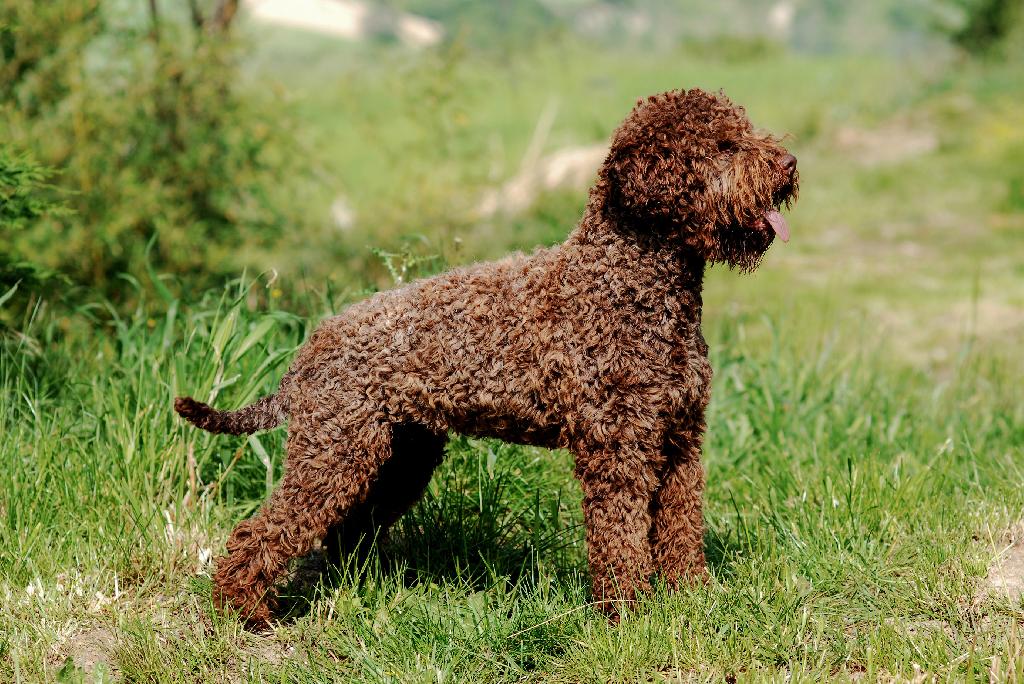
In build the Lagotto is compact and nearly square, with a dense, curly coat and a strong nose. Many families choose the breed for its blend of “real” working ability and companionable nature—an alert dog that bonds closely and thrives when it has a job to do.
Description
The Lagotto Romagnolo is an ancient and versatile dog breed that originates from the Romagna region of Italy. Initially bred as a water retriever and hunting dog, it has a rich history that dates back over a thousand years. The Lagotto Romagnolo was originally used for retrieving waterfowl in marshy areas, but over time, it gained recognition for its exceptional skills in truffle hunting. Today, it is widely known for being an outstanding truffle dog, able to detect the prized underground fungi with remarkable accuracy.
Physically, the Lagotto Romagnolo is a medium-sized dog, with a compact and sturdy build. It typically stands around 16 to 19 inches at the shoulder and weighs between 24 to 35 pounds. One of its most distinctive features is its curly, dense coat, which is water-resistant and requires regular grooming to prevent matting. The coat, which can be an array of colors such as white, brown, orange, or a combination, gives the Lagotto a soft, almost poodle-like appearance. Despite its fluffy, curly coat, the Lagotto is a very active and energetic breed, well-suited for a variety of outdoor activities, including its famous truffle hunts.
Temperamentally, the Lagotto Romagnolo is known for its affectionate, friendly, and intelligent nature. It is a highly trainable dog, eager to please its owner, and forms strong bonds with its family. The breed is typically good with children, making it an excellent family companion, and it is often described as playful and social. While they are gentle and loving with their family, Lagottos are also known for being alert and can make good watchdogs. They enjoy staying active and require regular exercise to keep them physically and mentally stimulated. Without sufficient activity, the Lagotto can become bored and may exhibit undesirable behaviors.
Truffle hunting is one of the Lagotto Romagnolo's most famous roles. The breed has an exceptional sense of smell, which is fine-tuned for locating truffles buried deep in the soil. Historically, the Lagotto was used in the marshlands of Italy to retrieve waterfowl, but its truffle-hunting abilities became highly prized over time. Today, many Lagottos are still employed for this purpose, working alongside professional truffle hunters in Italy and other countries known for their truffle production. The dog’s keen nose, combined with its determination and energy, makes it an invaluable partner for truffle hunters.
In summary, the Lagotto Romagnolo is a versatile and affectionate dog with a rich history as both a water retriever and a truffle hunter. Its unique curly coat, intelligent and friendly personality, and strong work ethic make it an excellent companion for active families and individuals alike. Whether as a truffle hunter or a family pet, the Lagotto Romagnolo continues to thrive in its role as a loyal and skilled working dog.
History
The Lagotto Romagnolo is an ancient Italian breed with a rich history that dates back to the marshlands of the Romagna region in northeastern Italy. Its name, derived from the Italian words *lago* (lake) and *cane da lagotto* (lake dog), reflects its original role as a water retriever. The breed was developed to retrieve waterfowl for hunters, excelling in its role due to its dense, waterproof coat, keen sense of smell, and strong work ethic. Historical references to dogs resembling the Lagotto Romagnolo can be found as early as the Renaissance, depicted in art and described in texts from the time.
As the marshlands of Romagna were drained in the 19th century to make way for agriculture, the Lagotto’s role as a water retriever became obsolete. However, the breed’s exceptional olfactory abilities made it well-suited for a new task: truffle hunting. Farmers and truffle hunters recognized the Lagotto’s potential and began training it to locate these valuable fungi. Over time, the breed transitioned into its specialized role as the premier truffle-hunting dog, a position it still holds today.
Despite its usefulness, the Lagotto Romagnolo faced a decline in the mid-20th century due to modernization and changes in rural lifestyles. Efforts to preserve and promote the breed began in the 1970s, led by dedicated Italian breeders who sought to maintain its traditional traits and working abilities. The breed was officially recognized by the Fédération Cynologique Internationale (FCI) in 1995 and later by the American Kennel Club (AKC) in 2015.
Today, the Lagotto Romagnolo is celebrated not only for its truffle-hunting prowess but also as a loving and intelligent companion. Its hypoallergenic, curly coat and friendly demeanor have made it a popular choice for families and dog enthusiasts worldwide. The breed’s history reflects its adaptability and resilience, transitioning from a water dog to a truffle hunter while retaining its status as a cherished part of Italian heritage.
Appearance
A Lagotto Romagnolo is sturdy and well-proportioned, typically appearing almost as tall as it is long. The head is moderately broad with a distinct stop; the eyes are round and expressive, and the ears are triangular with rounded tips, hanging close to the head.
The hallmark is the coat: woolly in texture, forming tight curls over the body and tail, with looser curls and furnishings on the face (eyebrows, whiskers, beard). A waterproof undercoat is part of the breed’s function, and the coat is intended to look rustic rather than sculpted.
Colors are commonly off-white; white with brown or orange patches; brown or orange roan; solid brown in various shades; and solid orange (often with white). Pigmentation and eye color tend to harmonize with coat color, giving each dog a slightly different “earthy” look.
Colors
• Brown
• Brown Roan
• Off White
• Off White Roan
• Off-White
• Orange
• Orange Roan
• Sable
• White
• White Roan
• White w/ Brown
• White w/ Orange
Health
A Lagotto Romagnolo should be athletic, sound, and capable of sustained work. Like any purebred dog, the most reliable way to stack the odds in your favor is thoughtful breeding: health-tested parents, transparent records, and a breeder who can discuss longevity trends in their lines.
When you’re evaluating a puppy or adult, ask about orthopedic evaluations and eye screening, and whether the breeder uses breed-appropriate DNA testing. Also pay attention to practical “everyday health” items for curly-coated working dogs: skin condition under the coat, ear health, and maintaining a fit, lean body condition.
Routine veterinary care, sensible exercise, and avoiding excess weight go a long way toward preserving joint health and overall stamina throughout adulthood.
Care
Coat maintenance is non-negotiable. The curly coat can mat and felt as it grows, so most owners plan for regular clipping and hands-on detangling. Keeping the coat at a practical length (and checking friction points like armpits, collar area, and behind the ears) helps prevent painful mats and skin irritation.
Because the coat is meant to be curly and rustic, heavy brushing that “fluffs” the coat like a poodle-style blowout isn’t the goal. Routine bathing, thorough drying, and a sensible trim schedule usually work better than chasing a perfect silhouette.
Daily care also includes ear and paw checks—especially for dogs who love to explore brush, sand, or water. Add steady exercise plus sniffy enrichment (scatter-feeding, scent puzzles, short training sessions) and you’ll have a calmer, happier Lagotto.
Training
Training tends to go well when it’s upbeat, consistent, and job-oriented. Lagotti are often described as easy to train because they’re people-focused and enjoy working; they shine with positive reinforcement and clear markers.
Lean into the breed’s strengths: nosework games, tracking-style activities, and “find it” cues can channel that searching drive into something constructive. Short sessions multiple times a day generally beat long drills.
Start early with socialization, handling/grooming skills, and calm behaviors at home. A Lagotto that learns to settle, be comfortable with clipping and ear care, and walk politely on leash is much easier to live with than one who’s only trained for fun tricks.
Temperament
Lagotti are typically affectionate, attentive dogs that form strong attachments to their people. Breed standards emphasize a tractable, keen temperament—eager to work, responsive to training, and happiest when included in daily life.
Their natural searching instinct and strong nose are central to who they are. Many Lagotti are bright and persistent problem-solvers, which is wonderful for scent games and training but can become mischief if they’re under-stimulated.
They’re often alert watchdogs rather than “guard dogs”: quick to notice changes in the environment and willing to announce them. With early socialization and consistent routines, most settle into steady companions who are friendly but not indiscriminately so.
Lifestyle
This is a working-minded companion that generally does best with an active household. Lagotti enjoy daily walks, play, and especially activities that engage the brain and nose; without that outlet, they may invent their own entertainment.
They can adapt to many living situations (including smaller homes) as long as exercise and enrichment are consistent. Many also love water, mud, and digging—traits that reflect their history—so plan for a dog that may happily come home dirty.
Because they’re often alert and bonded, they typically prefer being involved rather than left alone for long stretches. A predictable routine, training for alone-time, and interactive work can make them easier for busy schedules.
Ownership
Owning a Lagotto Romagnolo is easiest when you embrace the “truffle dog” mindset: this breed wants purposeful activity, not just a quick lap around the block. If you enjoy training, scent games, hiking, and having a dog that’s mentally present, they can be deeply rewarding.
Budget and time for grooming are part of responsible ownership. Whether you learn to clip at home or use a professional groomer, you’ll need a plan that keeps the coat comfortable, clean, and mat-free.
When choosing a breeder or rescue, prioritize temperament and health transparency. Ask to meet adult relatives when possible, discuss realistic energy level and vocal tendencies, and make sure you’re getting a dog whose needs match your household.
Interesting Facts
- The breed originated in Italy and is famous today as a dedicated truffle-hunting dog.
- It’s a compact, nearly square dog with a dense, woolly, curly coat and a waterproof undercoat.
- The coat is intended to look rustic; if left to grow, it can felt/mat, so regular clipping is commonly recommended.
- Common colors include off-white, white with brown/orange patches, brown or orange roan, solid brown, and solid orange.
- The United Kennel Club (UKC) recognized the Lagotto Romagnolo in 2006.
- In the FCI system it’s listed under Group 8 (Retrievers/Flushing Dogs/Water Dogs), Section 3 (Water Dogs), Standard No. 298.