
Lakeland Terrier
Basics
The Lakeland Terrier is a small, hardy terrier from England’s Lake District, developed as a working farm dog and pack hunter with the grit to take on foxes in rough country. In the home, Lakelands are lively companions—compact, athletic, and often a classic “big dog in a small package.”
They tend to do best with owners who enjoy an engaged, active terrier and who can provide structure, enrichment, and regular grooming. While they’re adaptable, they’re not typically a couch-only breed: a Lakeland wants a job, even if that job is training games, hikes, or learning new tricks.
Description
The Lakeland Terrier is a small but robust terrier developed in England’s Lake District, a region known for steep hills, rocky ground, and demanding working conditions. Compact, agile, and well-balanced, the breed was built to navigate narrow crevices and rough terrain while retaining enough strength and endurance to work all day. Its harsh, weather-resistant coat provided protection against brambles, rock, and cold, making it well suited for its original purpose.
Bred primarily for fox control, the Lakeland Terrier was expected to go to ground, bolt quarry from dens, and work independently with confidence and determination. Unlike some heavier terriers, the Lakeland combined toughness with speed and agility, allowing it to maneuver effectively underground and keep pace above ground when needed. This balance of grit and athleticism made it a valued working dog among shepherds and farmers.
In temperament, the Lakeland Terrier is bold, alert, and intelligent, with a strong sense of self-assurance typical of true working terriers. It is generally more adaptable and less combative than some earth-working terrier types, but it retains a pronounced prey drive and a readiness to take on challenges. With proper training and structure, the breed is capable of excelling in activities such as earthdog trials, agility, and obedience.
Today, the Lakeland Terrier is seen both as a companion and a show dog, yet it still carries the hallmarks of its working ancestry. Beneath its tidy outline and expressive face lies a resilient, determined terrier shaped by generations of practical use—one that reflects the hard landscape and no-nonsense demands of the Lake District where it was formed.
History
The Lakeland Terrier’s history begins in the rugged Lake District of northern England during the 18th and 19th centuries. Farmers and shepherds in this mountainous region relied on small, tough terriers to control foxes that preyed on sheep. The terrain—steep fells, rocky outcrops, and deep earths—required a dog that was agile, fearless, and durable, capable of working both above and below ground in harsh weather.
Early Lakeland Terriers were closely related to other working terriers of the region, including what would later become the Fell Terrier and Border Terrier. These dogs were bred purely for function, with little concern for uniform appearance. Crosses with Bedlington Terriers are believed to have contributed to the Lakeland’s speed and arched outline, while its dense, harsh coat evolved as protection against the elements and rough terrain.
By the late 19th century, as dog shows gained popularity, interest grew in preserving and standardizing the Lakeland Terrier as a distinct breed. Breeders began selecting for a more consistent type while attempting to retain the courage and working ability that defined the dog’s purpose. The breed was officially recognized by The Kennel Club in England in 1921, marking its transition from purely utilitarian farm dog to a recognized terrier breed.
Despite its acceptance into the show world, the Lakeland Terrier never entirely lost its working identity. Many early breeders insisted that the breed remain capable of doing the job it was created for, and that philosophy helped preserve its balance of toughness, agility, and intelligence. Today, the Lakeland Terrier’s history reflects a successful blend of practical field use and careful breed preservation, rooted firmly in the demanding landscape of England’s Lake District.
Appearance
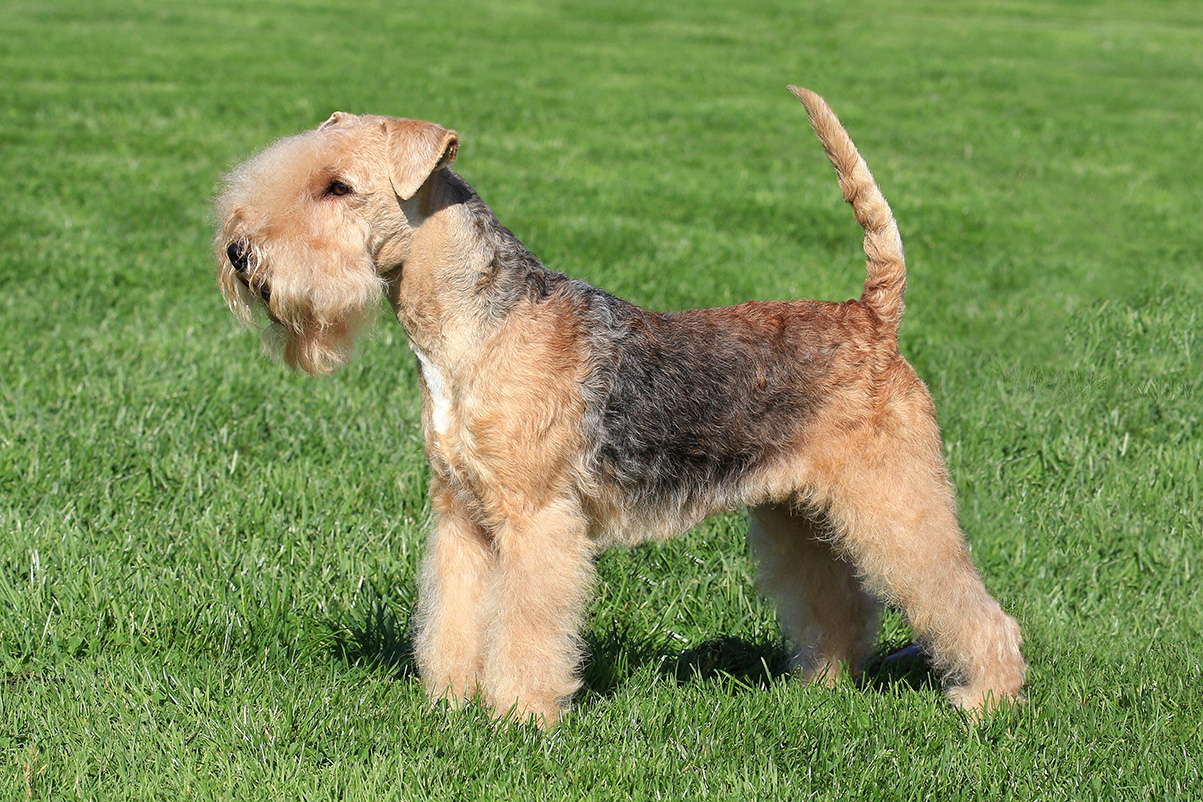
Lakelands are smart, well-balanced, and compact, with a narrow-ish chest and a strong, moderately short back. Their head is refined with a keen expression; ears are small, V-shaped, and carried alertly.
The hallmark coat is dense, harsh, and weather-resisting with a good undercoat. Coat colors include black and tan, blue and tan, red, wheaten, grizzle, liver, blue, or black, and the overall look is tidy and workmanlike rather than frilly.
Colors
• Black
• Black & Tan
• Blue
• Blue & Tan
• Brindle
• Grizzle
• Grizzle & Tan
• Liver
• Liver & Tan
• Red
• Red Grizzle
• Wheaton
Health
Most Lakeland health outcomes start with good breeding decisions and sensible lifestyle management. Ask breeders what health testing they do, what issues they watch for in their lines, and what support they provide after placement.
Routine veterinary care, parasite prevention, dental care, and staying lean go a long way for an active small breed. If you’re considering rescue, request whatever medical history is available and plan a baseline exam soon after adoption.
Care
Plan for regular coat maintenance. Many owners choose hand-stripping or regular professional grooming to keep the coat’s correct texture and a neat outline; brushing and combing between appointments helps prevent tangles.
Day-to-day care includes nail trims, ear checks, and dental hygiene. Lakelands are athletic and benefit from keeping a trim body condition—extra weight can make an energetic dog feel less comfortable and less willing to exercise.
Training
Training a Lakeland works best when it’s upbeat, structured, and varied. Keep sessions short, reward generously, and rotate skills and games so they don’t get bored.
Because terriers can be quick to chase, it’s worth prioritizing recall foundations, impulse control, and leash skills early. Puzzle feeders, scent games, and trick training are great outlets for their bright, busy brain.
Temperament
A typical Lakeland is bold, friendly, and self-confident—quick on their feet and mentally “on.” They’re often cheerful and game, and many enjoy being part of whatever the household is doing.
Terrier instincts can show up as tenacity, high prey drive, and an independent streak. Early socialization and consistent expectations help them become polite companions, especially around other dogs, small pets, and busy public spaces.
Lifestyle
Lakelands can thrive in apartments or houses if their exercise and enrichment needs are met. A daily mix of brisk walks, play, and training is usually a better fit than long, monotonous outings.
They often enjoy being close to their people and can be vocal if under-stimulated. With management and training they can do well in multi-pet homes, but introductions should be careful and supervised—especially around small animals.
Ownership
A Lakeland Terrier is a good match for someone who likes terrier energy and personality, and who is prepared for grooming needs and ongoing training. They can be wonderful companions for active individuals or families who will include the dog in daily routines.
Look for reputable breeders or breed rescues who prioritize temperament, sound structure, and transparent health practices. Meeting adult Lakelands (or the puppy’s relatives) can help you understand whether their intensity and drive fit your household.
Interesting Facts
- Named for England’s Lake District, where they were developed as tough working terriers.
- Traditionally used by farmers and hunters to help deal with foxes and other vermin.
- Known for a dense, harsh, weather-resisting coat that sheds relatively little when maintained properly.
- Breed standard describes a compact, balanced dog with an alert, keen expression and quick movement.
- Coat colors include black and tan, blue and tan, red, wheaten, grizzle, liver, blue, or black.