
Mastiff
Basics
The Mastiff (often called the English Mastiff) is a giant guardian breed with deep historical roots and a long association with England. Modern Mastiffs are best known as devoted family dogs whose presence alone can be a deterrent—massive, calm, and watchful.
Despite their intimidating size, well-bred Mastiffs are typically docile and dignified at home. They’re not “high-octane” dogs, but they do require early training and good management because a gentle giant is still a giant.
Description
The Mastiff, often referred to as the English Mastiff, is one of the largest and most ancient dog breeds, known for its imposing size, loyal nature, and gentle temperament. Originating in England, the Mastiff's history stretches back thousands of years, with ancestors that were used as war dogs, guardians, and hunters. Their lineage can be traced to the Molosser dogs of ancient Mesopotamia, and they gained prominence in medieval Europe as protectors of estates and companions to nobility. Today, the Mastiff is celebrated as a devoted family companion and a symbol of strength and dignity.
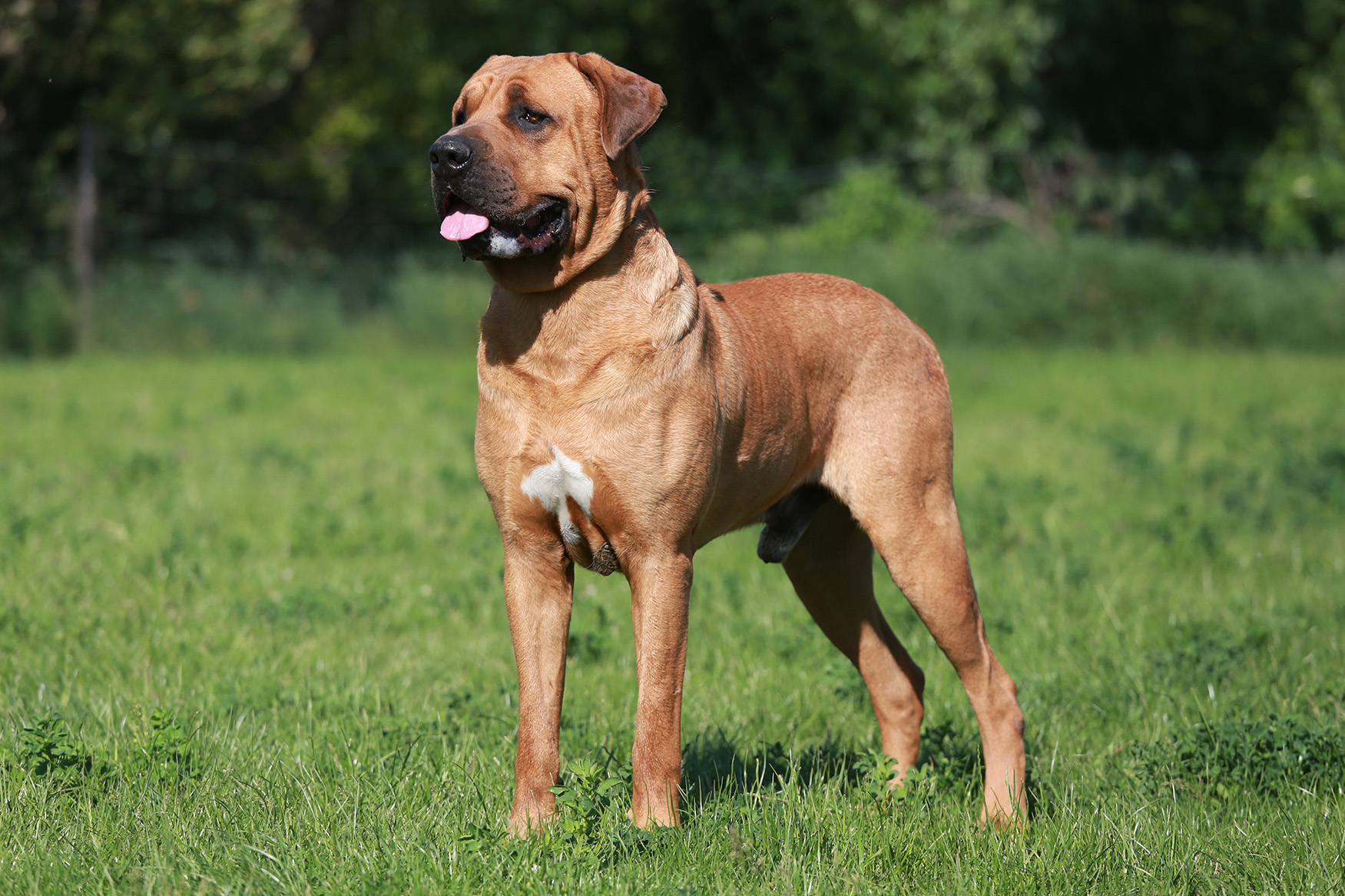
Physically, the Mastiff is an impressive and powerful dog with a massive, muscular frame. Adult males typically stand between 30 to 34 inches at the shoulder and can weigh 160 to 230 pounds or more, while females are slightly smaller but equally robust. Their broad heads, wrinkled foreheads, and dark, expressive eyes give them a distinct appearance of both strength and warmth. The breed's short, dense coat is easy to maintain and comes in a variety of colors, including fawn, brindle, and apricot, often accompanied by a black mask. Despite their large size, Mastiffs are surprisingly agile and graceful for their build.
In terms of temperament, Mastiffs are known as "gentle giants." They are affectionate, calm, and incredibly loyal to their families, often forming strong bonds with their owners. While they are naturally protective and will instinctively guard their loved ones, they are not aggressive by nature. Instead, they rely on their sheer presence and deep bark to deter threats. This makes them excellent watchdogs without being overly reactive. They are especially good with children, displaying patience and tolerance, and are known to adapt well to family life as long as they receive love, attention, and proper training.
The Mastiff's needs are relatively straightforward but must be met to ensure a happy and healthy life. Due to their size, they require ample space to move and relax, although they are not highly energetic dogs. Regular moderate exercise, such as daily walks and playtime, is crucial to keep them fit and prevent obesity. Their size also makes early socialization and training essential, as an untrained Mastiff can inadvertently cause problems simply due to its strength. Positive reinforcement methods work best, as these dogs are sensitive and respond poorly to harsh training techniques.
In summary, the Mastiff is a breed that combines majestic strength with a loving and gentle personality. Its imposing size is matched only by its loyalty and devotion to its family, making it a wonderful companion for those who can accommodate its needs. With proper care, training, and socialization, the Mastiff is a protective yet gentle-hearted dog, perfectly suited for families looking for a calm and devoted canine presence.
History
The Mastiff, often referred to as the English Mastiff, is one of the oldest and most iconic breeds, with a history that spans thousands of years. Its origins trace back to ancient times, with depictions of Mastiff-like dogs appearing in Babylonian, Egyptian, and Greek artifacts as early as 2500 BCE. These massive dogs were revered for their strength, courage, and loyalty, serving as war dogs, guardians, and hunters. The breed’s lineage is believed to have been influenced by the Molossian dogs of Epirus, which were brought to Europe by traders and conquerors, including the Romans.
In Britain, Mastiffs became a distinct breed over centuries, gaining prominence during the Roman conquest of the British Isles. The Romans were impressed by the ferocity and strength of British Mastiffs, which were used in battles and later as gladiators in Roman arenas. Throughout the medieval period, Mastiffs were highly valued as protectors of estates and castles, as well as for their role in hunting large game such as boars and bears. Their imposing size and fearless demeanor made them a symbol of power and security for nobility.
The breed faced significant challenges during the 19th and 20th centuries. The practice of bull-baiting and bear-baiting, in which Mastiffs were often involved, was outlawed in England in 1835, leading to a decline in demand for the breed. Later, both World Wars had a devastating impact on the Mastiff population due to food shortages and the breed’s high maintenance costs. By the end of World War II, only a handful of Mastiffs remained in Britain, but dedicated breeders worked to revive the breed, using individuals from Canada and the United States to rebuild its numbers.
Today, the Mastiff is celebrated for its gentle and affectionate nature, despite its formidable appearance. It is no longer a warrior or gladiator but a loyal family companion and guardian. The breed’s rich history reflects its evolution from ancient war dog to modern gentle giant, a testament to its adaptability and enduring appeal.
Appearance
Mastiffs are among the heaviest, most powerfully built breeds: broad, thick-boned, and substantial from head to tail. The head is notably massive with a short, broad muzzle; many dogs show facial wrinkles when alert.
They have a short, close coat and typically carry darker pigment on the muzzle and ears (a black mask is common in standards). Even when standing still, the breed’s overall impression is one of enormous strength and solid structure.
Colors
• Apricot
• Brindle
• Fawn
Health
As a giant breed, Mastiffs are commonly associated with issues that affect large dogs: orthopedic disease (including hip/elbow problems), bloat (GDV), and complications related to carrying excess weight. Many also benefit from routine monitoring for cardiac concerns and mobility changes as they age.
Owners can stack the odds in their favor by choosing health-focused breeders, keeping the dog lean, and learning the warning signs of bloat (a true emergency). Because growth is rapid, veterinary guidance on nutrition and age-appropriate exercise is especially valuable during the first two years.
Care
Coat care is relatively straightforward: regular brushing to manage shedding, occasional baths, and attention to skin folds and ears. Many owners also plan for drool—water bowls, towels, and a willingness to wipe jowls are part of the package.
Giant-breed care matters more than grooming: maintain a lean body condition, use joint-friendly exercise, and avoid overdoing impact while the dog is growing. Heat can be hard on heavy dogs, so shade, cool surfaces, and sensible activity timing are important in warm climates.
Training
Training should focus on practical manners and safety: polite greetings, leash walking, waiting at doors, and a dependable recall/“leave it.” Mastiff puppies grow quickly, and behaviors that are cute at 40 pounds are not cute at 140.
Use calm, consistent reinforcement and keep sessions short. Early socialization—meeting people, seeing new places, and learning to be handled—helps prevent fearfulness and supports the breed’s desired confident, steady demeanor.
Temperament
The classic Mastiff temperament blends good nature and steadiness with protective instincts. Most are calm around the house and prefer to stay close to their people, quietly monitoring what’s going on rather than constantly seeking activity.
They can be reserved with strangers and are naturally capable of guarding, but a stable Mastiff is not typically looking for trouble. Because the breed is sensitive to environment and handling, consistent routines and confident, fair leadership help them mature into trustworthy adult dogs.
Lifestyle
Most Mastiffs are happiest in a calm household with plenty of room to stretch out and a predictable routine. They generally don’t need marathon runs, but they do need daily walks and gentle conditioning to stay fit and mentally settled.
They’re often better suited to families who prefer a quiet companion and can manage the practical realities of giant-dog life: space, drool, shedding, and the logistics of transporting a very large dog. Secure fencing and controlled introductions help channel natural protective instincts appropriately.
Ownership
Living with a Mastiff means planning around size. Food, crates, beds, vehicles, and veterinary care all scale up, and training is not optional—good manners are a safety feature for everyone who lives with or visits the dog.
Prospective owners should be realistic about time, budget, and physical handling ability, and should prioritize breeders who produce stable temperaments and screen for giant-breed health issues. In the right home, a Mastiff can be a gentle, loyal companion and a formidable protector simply by being present.
Interesting Facts
- Type: giant guardian breed; historically associated with England for many centuries.
- Temperament: typically docile and dignified with family, but naturally capable of guarding.
- Build: massive, heavy-boned, broad-headed; one of the heaviest dog breeds.
- Coat: short and close; grooming is simple but shedding and drool are common realities.
- Standard notes (commonly cited): dark muzzle/ears and a black mask are typical; males often have a 30" minimum height in some standards.
- Owner priorities: early training, controlled socialization, lean body condition, and bloat awareness.