Miniature Pinscher
Basics
The Miniature Pinscher (“Min Pin”) is a bold, high-energy toy breed with a big-dog attitude in a small package. Often nicknamed the “King of Toys,” it’s known for its confident personality, keen alertness, and distinctive high-stepping gait.
Originally developed in Germany, the breed has long been valued as a lively companion and an enthusiastic little watchdog. Min Pins tend to bond closely with their people and do best with owners who enjoy training, daily play, and clear household rules.
Description
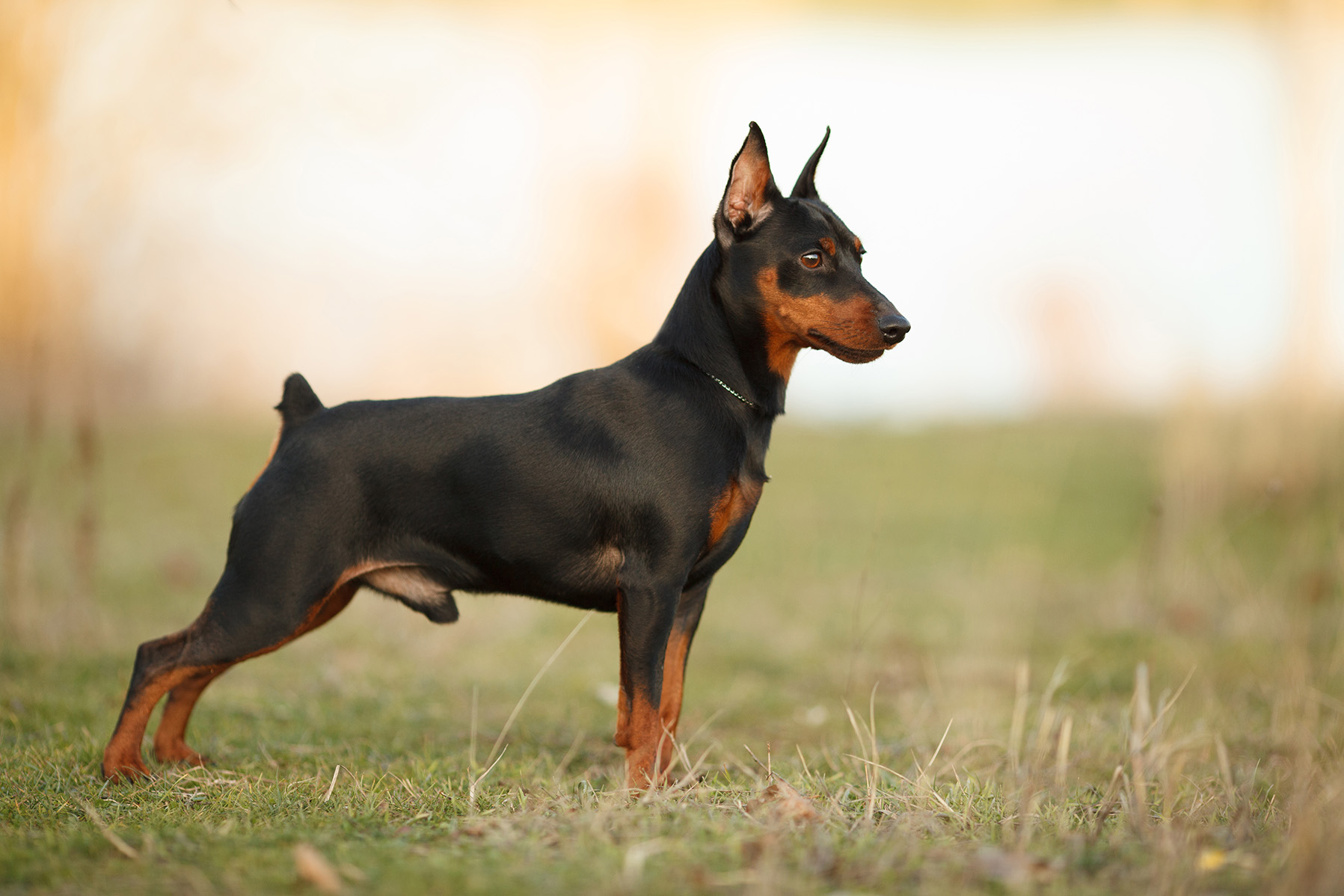
The Miniature Pinscher, affectionately known as the "Min Pin," is a small but spirited dog breed renowned for its bold personality, sleek appearance, and lively energy. Often referred to as the “King of Toys,” the Miniature Pinscher stands 10 to 12.5 inches tall and weighs 8 to 12 pounds. Despite its diminutive size, the breed is confident, fearless, and full of zest, making it a captivating companion for those who appreciate a dog with a big personality.
The breed’s appearance is striking, characterized by a compact and muscular body, smooth and shiny coat, and an elegant gait often compared to that of a horse’s high-stepping trot. Common coat colors include black and rust, chocolate and rust, or solid red, each adding to the Min Pin’s distinct and polished look. Its expressive eyes, erect ears, and proud carriage further highlight its confident and alert nature.
Miniature Pinschers are intelligent and curious dogs with a seemingly endless supply of energy. They thrive on mental and physical stimulation, enjoying interactive games, puzzles, and daily walks. Their playful and sometimes mischievous personality keeps their owners entertained, though their independent streak can make training a bit of a challenge. Early socialization and consistent, positive reinforcement are essential for bringing out the best in this breed.
Despite their small size, Miniature Pinschers make excellent watchdogs. They are naturally alert and protective, with a bark that belies their stature. Their loyalty and affection toward their families are balanced by their adventurous and independent spirit, making them a well-rounded and dynamic companion.
The Miniature Pinscher is an adaptable breed, suitable for both apartment living and homes with yards, as long as it receives sufficient exercise and attention. While its spirited nature may not be for everyone, those who embrace the Min Pin’s lively energy and bold personality are rewarded with an affectionate and entertaining lifelong companion.
History
The history of the Miniature Pinscher is both intriguing and steeped in tradition, with roots tracing back several centuries to Germany. Despite its resemblance to the Doberman Pinscher, the Miniature Pinscher is not a miniature version of the larger breed. In fact, the Min Pin predates the Doberman by several decades and has its own distinct lineage. The breed is believed to have descended from a mix of the German Pinscher, Dachshund, and Italian Greyhound, which contributed to its agility, sleek appearance, and spirited personality.
Originally bred to hunt vermin, particularly rats, in homes and stables, the Miniature Pinscher was a valuable working dog in its early days. Its compact size, alert nature, and fearless demeanor made it exceptionally effective at its job. Over time, the breed’s bold personality and striking looks gained the attention of dog enthusiasts, transitioning it from a working dog to a popular companion.
The Miniature Pinscher began to gain formal recognition in the late 19th and early 20th centuries. In Germany, the breed was carefully refined and standardized, with its high-stepping gait and polished appearance becoming hallmarks. The first breed standard for the Min Pin was established in 1895 by the Pinscher-Schnauzer Club in Germany, solidifying its distinct identity. The breed was introduced to the United States in the early 20th century and quickly gained popularity. The American Kennel Club (AKC) officially recognized the Miniature Pinscher in 1925, and by the mid-20th century, the breed had cemented its reputation as a vibrant and engaging companion.
Today, the Miniature Pinscher is celebrated worldwide for its unique combination of elegance, intelligence, and spirited energy. Its rich history as both a working dog and a cherished companion underscores its versatility and enduring appeal. Whether as a rat-catcher in old-world Germany or as a beloved family pet today, the Min Pin continues to captivate dog lovers with its bold personality and timeless charm.
Appearance
Miniature Pinschers are compact, short-coated, and cleanly muscled, with a wedge-shaped head and an overall “up-on-the-leg” look that makes them appear bigger than their height. Their movement is a signature: a proud, hackney-like action with noticeable lift in the front.
The coat is short, smooth, and lustrous, requiring minimal grooming. Common colors include solid red or stag red (red with darker hairs), as well as black-and-rust and other dark coats with rust markings. Because the coat is thin, many Min Pins appreciate a sweater or jacket in cold weather.
Colors
• Black & Rust
• Black & Tan
• Blue & Rust
• Blue & Tan
• Blue Stag Red
• Chocolate & Rust
• Chocolate Stag Red
• Fawn & Rust
• Fawn & Tan
• Fawn Stag Red
• Red
• Stag Red
Health
Miniature Pinschers are generally hardy, but their small size and high activity mean prevention matters: keep them lean, protect them from falls and rough play, and use a harness for walks if they pull. Cold sensitivity is common due to the short, thin coat.
Talk with your veterinarian and breeder about health screening and family history. Toy breeds are often monitored for orthopedic concerns (including kneecaps), dental disease, and weight-related issues. Puppies, especially very small ones, may need careful feeding routines to avoid low blood sugar.
Care
Grooming is simple: a weekly brush or wipe-down removes loose hair and keeps the coat shiny. Nail trims, dental care, and ear checks are the bigger maintenance items—especially teeth, since small breeds can be prone to dental disease.
Safety and containment are part of Min Pin care. They’re fast, clever, and surprisingly athletic, so secure fencing and leash habits are important. Provide warm bedding and cold-weather protection, and avoid letting them jump repeatedly from high furniture to reduce joint strain.
Training
Miniature Pinschers are smart and learn quickly, but they can also be independent and easily bored. Training works best in short, upbeat sessions with rewards, variety, and clear boundaries. If they discover that ignoring cues is fun, they’ll repeat it—so consistency is everything.
Early training should focus on recall, polite leash walking, and impulse control (doorways, barking, chasing). Crate training and structured routines help with house-training and prevent mischief. Socialization—calm exposure to people, dogs, and handling—helps channel their boldness into confidence rather than reactivity.
Temperament
Min Pins are fearless, curious, and constantly on the move—quick to investigate anything new and quick to let you know when something seems “off.” They’re affectionate with their families, but many are naturally reserved with strangers and may be vocal if not taught a calm greeting routine.
They’re often playful with older, respectful kids, but their intensity and speed can be a lot for toddlers. With other dogs, some Min Pins can be pushy or scrappy, so early socialization and supervised introductions matter. Many also have a strong chase drive, which can make small pets a poor match.
Lifestyle
Min Pins can do well in apartments, but they are not “low-energy lapdogs.” They need daily outlets—brisk walks, indoor games, puzzle toys, and training—otherwise they’ll create their own entertainment. Their alert nature also makes them a good fit for owners who enjoy a lively, engaged companion.
They typically prefer being part of the action and can become noisy or destructive if under-stimulated. A predictable routine, a safe play space, and regular mental work (tricks, scent games) make a big difference in how easy they are to live with.
Ownership
The best Min Pin owners like spirited dogs and are willing to train, manage barking, and provide structure. Secure doors and fences are non-negotiable, and families should be comfortable supervising interactions with children and other pets.
When choosing a breeder, ask about temperament, socialization, and health screening, and meet adult dogs if possible—the breed’s confidence should not tip into uncontrolled sharpness. If adopting, look for a rescue that can describe energy level, dog-to-dog manners, and whether the dog has strong chase instincts.
Interesting Facts
- Nicknamed the “King of Toys” for its bold, confident personality.
- Known for a distinctive high-stepping, hackney-like gait.
- Short, smooth coat is easy to groom but offers little cold-weather insulation.
- Often alert and vocal; benefits from early training around barking and greetings.
- Can be very fast and athletic—secure fencing and good leash habits are important.
- Some have strong chase instincts and may not be ideal with small pets.