
Neapolitan Mastiff
Basics
The Neapolitan Mastiff (Mastino Napoletano) is a massive Italian guardian breed developed to protect home and property. It’s best known for its imposing size, loose skin, and deep facial wrinkles—an appearance that historically served as a visual deterrent as much as a working tool.
Despite the intimidating look, many Neos are calm and affectionate with their own people. They tend to be naturally suspicious of strangers and are not a “social butterfly” breed, so thoughtful early socialization and clear household rules matter as much as exercise.
Description
The Neapolitan Mastiff is a large, powerful breed of dog that is known for its imposing size, distinct wrinkled skin, and protective nature. Originally from Italy, this breed was developed to guard homes and estates, and it still retains its role as a loyal and formidable guardian. The Neapolitan Mastiff is often described as a "gentle giant," as despite its intimidating appearance, it is generally calm, affectionate, and devoted to its family. Its history can be traced back to ancient times, where it is believed to have descended from large Molossian dogs used by the Romans in battle and as guard dogs.
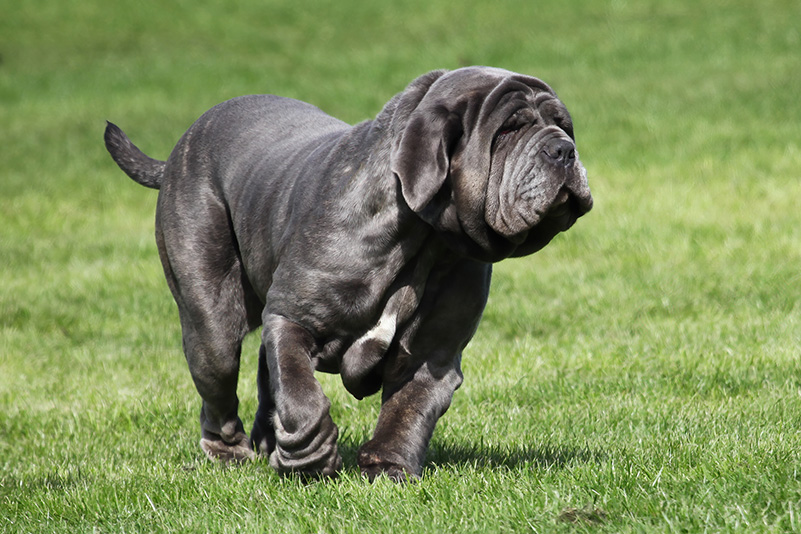
Physically, the Neapolitan Mastiff is an imposing presence, with males often standing 26 to 31 inches tall at the shoulder and weighing between 110 to 150 pounds or more. Their most distinctive feature is their loose, wrinkled skin, particularly around the face and neck, which gives them a unique, almost exaggerated appearance. The breed has a muscular build, with a broad chest and powerful legs. Their coat is short, smooth, and typically comes in colors like blue, black, mahogany, or tawny, often with a darker mask on the face.
Despite their intimidating size and appearance, Neapolitan Mastiffs are known for their calm and gentle temperament, especially with their families. They are deeply loyal and protective of their loved ones, making them excellent guard dogs. However, they are not aggressive by nature and generally exhibit a calm demeanor unless they sense a threat to their home or family. Early socialization and consistent training are important to ensure that they are well-behaved and comfortable around strangers and other animals. With proper guidance, they can be loving companions, especially for families who appreciate their quiet and dignified presence.
Neapolitan Mastiffs tend to be relatively low-energy compared to other breeds, preferring to lounge around the home rather than engage in high-intensity activities. Despite their size, they are usually content with moderate exercise, such as daily walks, and enjoy spending time with their family. Their calm and affectionate nature also makes them good with children, although their size means they should be monitored around young kids to prevent accidental knocks or falls.
In terms of care, the Neapolitan Mastiff's distinctive wrinkles require regular attention to keep them clean and free from irritation. Their loose skin can trap moisture, which, if left unchecked, can lead to infections. Regular bathing, skin folds cleaning, and eye care are necessary to maintain their health. Due to their size, they are also prone to certain health issues, such as hip dysplasia and heart problems, so regular veterinary check-ups are essential.
In summary, the Neapolitan Mastiff is a noble and protective breed, known for its impressive size, striking appearance, and loyal temperament. While their physical presence can be intimidating, they are gentle giants who make affectionate and devoted family companions when properly trained and cared for. With their unique look and calm demeanor, the Neapolitan Mastiff remains a beloved breed among dog lovers who are prepared for the responsibility of caring for such a large and powerful dog.
History
The Neapolitan Mastiff, or *Mastino Napoletano*, is an ancient and powerful breed with roots tracing back to the Molossus dogs of ancient Mesopotamia and the Roman Empire. These large, muscular dogs were originally bred as war dogs and guardians, known for their imposing presence and fearlessness in battle. The Molossus dogs were brought to Italy by the Romans, where they were further developed into the ancestors of the modern Neapolitan Mastiff. In Roman times, they served not only in warfare but also in arenas, fighting wild animals for entertainment, and as protectors of estates and livestock.
After the fall of the Roman Empire, these dogs found a more utilitarian role in rural southern Italy, particularly around Naples, where they became essential as guard dogs for farms and estates. Their massive size, loose skin, and protective instincts made them effective deterrents against intruders and predators. The breed was kept alive through centuries of selective breeding by local farmers and peasants, who valued the Mastino’s loyalty, strength, and intimidating appearance.
By the mid-20th century, the Neapolitan Mastiff was on the brink of extinction, as its numbers dwindled due to changes in agricultural practices and urbanization. Italian painter and dog enthusiast Piero Scanziani played a pivotal role in preserving the breed. In the 1940s, Scanziani began collecting and breeding the remaining Neapolitan Mastiffs, working to standardize their appearance and traits. In 1949, the breed was officially recognized by the Italian Kennel Club, and its revival gained momentum.
Today, the Neapolitan Mastiff is celebrated worldwide for its unique appearance, characterized by its massive build, loose, wrinkled skin, and expressive eyes. While it retains its role as a guardian, it is also cherished as a loyal and affectionate family companion. The breed’s history reflects its resilience and the dedication of those who ensured its survival, preserving its legacy as a symbol of strength and protection.
Appearance
This is a giant, heavy-boned dog with a broad head, short muzzle, and abundant skin that forms wrinkles and folds on the head and neck. The outline is rectangular and powerful, with a characteristic slow, rolling movement; the skin should be loose but not so exaggerated that it impairs the dog’s eyes, breathing, or mobility.
Coat is short, dense, and smooth. Common colors include shades of gray, black, mahogany, and tawny, sometimes brindled, with small white markings occasionally seen on the chest or toes.
Colors
• Black
• Blue
• Mahogany
• Tawny
Health
Like many giant breeds, Neapolitan Mastiffs can be prone to orthopedic issues (such as hip/elbow problems) and benefits from responsible breeding and weight control. Eye concerns can occur, especially if excessive skin interferes with normal eyelid function, and skin fold irritation is possible if hygiene is neglected.
Work with a veterinarian on a sensible growth and nutrition plan for large-breed puppies, and ask breeders about health testing and family history. Keep the dog lean, monitor mobility and comfort, and seek prompt evaluation for persistent limping, breathing difficulty, or eye irritation.
Care
Grooming is straightforward for the coat (weekly brushing and routine nail/ear care), but the skin and wrinkles require attention. Many owners wipe facial folds and the mouth area regularly to reduce irritation and odor, and keep the dog dry and clean after drinking, eating, or being out in wet weather.
Because of their size, focus on joint-friendly conditioning: controlled walks, traction on slippery floors, and avoiding repetitive high-impact jumping—especially during growth. Heat management is important; provide shade, water, and air conditioning as needed, and exercise during cooler parts of the day.
Training
Training should start early and stay consistent: leash manners, calm greetings, and reliable “place/settle” cues are especially valuable in a large guardian breed. Use reward-based methods with clear boundaries; harsh corrections often backfire by creating distrust or defensive behavior.
Prioritize structured socialization (neutral exposure to people, dogs, noises, and handling) and basic cooperative care (gentle restraint, paw/ear checks, brushing). Many Neos mature slowly, so short, regular sessions and patience tend to outperform drilling.
Temperament
Neapolitan Mastiffs are typically steady, watchful, and deeply devoted to their family. They are often reserved with unfamiliar people and may position themselves between “their” humans and anything new, which is exactly what generations of guarding selected for.
They are not usually frantic or high-drive indoors, but they do require confident handling. A Neo that hasn’t been socialized can become overly wary, while one that’s pushed into too much “meet everyone” pressure can shut down—best results come from calm exposure, structure, and respect for the breed’s natural seriousness.
Lifestyle
Neos generally do best in a stable home with predictable routines and enough space to move without constant crowding. They’re often content with moderate daily walks plus mental engagement, but they are not a good fit for people who want an off-leash jogging partner or a dog that loves busy dog parks.
They can live in a house or larger apartment if exercise, training, and management are excellent, but their sheer size, strength, and guarding instincts raise the “margin for error.” Expect drool, big footprints, and a dog that likes to keep tabs on what’s happening around the home.
Ownership
This breed suits experienced, physically capable owners who enjoy structure and are comfortable setting boundaries kindly and consistently. Early investment—puppy classes, controlled socialization, and household management—pays off for the dog’s entire life.
Plan for the real-world costs of a giant breed: higher food and medication doses, larger crates/beds, and potentially higher veterinary expenses. A well-bred Neo with appropriate training can be an exceptional home guardian and family companion, but it’s not a “set it and forget it” dog.
Interesting Facts
- Origin: Italy; historically kept as an estate and farm guardian.
- Type: giant mastiff/guardian breed known for loose skin and heavy wrinkles.
- Temperament: typically calm and devoted at home, reserved and wary with strangers.
- Coat: short, dense, smooth; often gray/black/mahogany/tawny, sometimes brindled.
- Owner notes: expect drool and regular wrinkle care; prioritize early socialization and leash manners.
- Lifestyle: moderate exercise needs, but requires space, structure, and responsible handling due to size.