
Norfolk Terrier
Basics
The Norfolk Terrier is a small, sturdy working terrier from England, developed to go to ground and tackle vermin and other pests on farms. Despite its size, it’s a true terrier: compact, game, and always ready to investigate what’s happening.
In a modern home, Norfolks are often described as affectionate and companionable while still retaining plenty of spark. They do best with owners who enjoy an active little dog and who can provide consistent structure, enrichment, and good social habits from puppyhood.
Description
The Norfolk Terrier is a small but exceptionally sturdy terrier developed in England, prized for its courage, adaptability, and lively personality. Compact and low to the ground, it is built for work rather than ornamentation, with a strong bone structure and a harsh, weather-resistant coat. Despite its size, the breed carries itself with confidence and determination typical of true working terriers.
Originally bred for vermin control and small game hunting, the Norfolk Terrier was expected to bolt foxes and other quarry from dens and tight cover. Its drop ears—one of its defining features—help protect the ear canal while working underground. Agile, quick-thinking, and fearless, the breed excels at squeezing into narrow spaces and confronting quarry well above its weight class.
Temperamentally, the Norfolk Terrier is known for being more sociable and even-tempered than many terriers. It retains strong prey drive and alertness, but is often described as affectionate, outgoing, and eager to engage with people. This balance of working grit and approachable character has contributed to its popularity as both a capable earthdog and a companion.
Today, the Norfolk Terrier is commonly seen in homes and show rings, yet it remains well-suited for activities such as earthdog trials, barn hunt, and agility. Its enduring appeal lies in its blend of toughness and charm—a small terrier shaped by real work, with the personality to thrive in modern life while still honoring its hunting roots.
History
The Norfolk Terrier’s history begins in the late 19th and early 20th centuries in East Anglia, England, particularly around the county of Norfolk and the city of Norwich. Small, rough-coated terriers were commonly kept by farmers, gamekeepers, and stable hands to control rats and other vermin. These early dogs were valued for their toughness, fearlessness, and ability to work in tight spaces, whether underground or in dense cover.
Originally, the Norfolk Terrier and what is now known as the Norwich Terrier were considered the same breed. Both types appeared in litters, distinguished mainly by ear carriage—some with erect ears and others with dropped ears. These terriers gained popularity among Cambridge University students, who kept them as companions and vermin hunters, helping spread their reputation beyond rural working circles.
As dog shows became more prominent in the early 20th century, breeders began to standardize type and appearance. Debate over ear carriage eventually led to a formal split, and in 1964 the Kennel Club in England recognized the drop-eared variety as the Norfolk Terrier, while the erect-eared dogs became the Norwich Terrier. Despite this separation, both breeds retained strong working terrier traits.
Although modern Norfolk Terriers are most often kept as companions, their history as hardworking earth dogs remains evident in their structure, confidence, and drive. The breed’s development reflects a transition from purely functional farm terrier to a recognized breed, while still preserving the grit and determination that defined its early role in vermin control.
Appearance
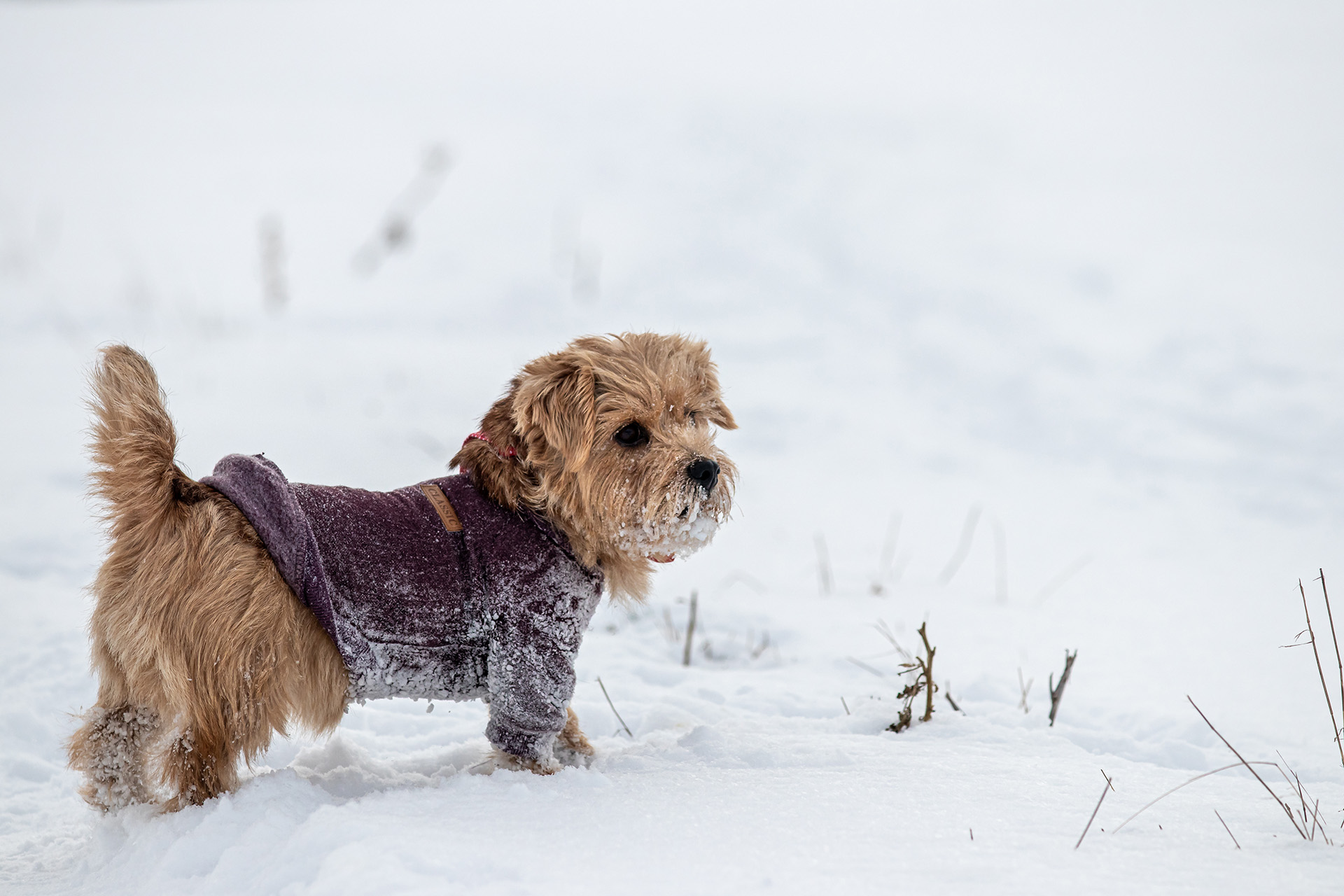
Norfolk Terriers are low, compact, and strong with a short back, good bone, and a level topline. The head is broad with a strong, wedge-shaped muzzle; eyes are dark and oval with an alert, intelligent expression.
The coat is hard, wiry, and straight, lying close to the body, with a rougher texture on the neck and shoulders. Typical colors include shades of red, wheaten, black and tan, or grizzle; excessive trimming is generally discouraged in traditional breed presentation.
Colors
• Black & Tan
• Brown
• Grizzle
• Red
• Red Wheaten
• Wheaton
Health
A solid foundation starts with responsible breeding and regular veterinary care. Ask breeders what health screening they perform and what issues they monitor in their lines, and request documentation where available.
For owners, the basics make a big difference: keep up with preventive care, maintain good dental health, and manage weight. If you’re adopting an adult, schedule a baseline exam and discuss an age-appropriate wellness plan with your veterinarian.
Care
Coat care is moderate: regular brushing and combing helps prevent tangles, and periodic hand-stripping or professional grooming can help maintain the crisp texture typical of a wiry terrier coat. Routine nail trims, ear checks, and dental hygiene should be part of ongoing care.
Norfolks are energetic for their size, so keeping them lean matters. A good daily mix of walks, play, and sniffing time helps them stay fit and reduces the odds of boredom behaviors indoors.
Training
Norfolk Terriers usually learn quickly, but they respond best to short, upbeat sessions with clear rewards. Keep training practical and fun—terriers can disengage if asked to repeat the same drill too many times.
Because they can be keen chasers, put extra emphasis on recall foundations, leash skills, and impulse control. Puzzle toys, scent games, and trick training are excellent outlets for their busy little brains.
Temperament
Norfolks are typically alert and fearless, with the lively confidence you’d expect from a working terrier. Many are friendly and enjoy being in the middle of family activity rather than left out of it.
Terrier traits can include persistence, enthusiasm for digging or chasing, and a tendency to sound the alarm. Early socialization and consistent rules help channel that boldness into a well-mannered companion who can handle visitors, city noise, and other dogs with ease.
Lifestyle
Norfolks adapt well to many living situations, including apartments, as long as they get daily exercise and enrichment. They’re often happiest when they can be near their people and participate in normal household routines.
They can live with respectful children and other dogs when introduced thoughtfully, but supervision is important—especially around very small pets, since terrier instincts may kick in. A secure yard (or reliable leash habits) is a must for such a curious, quick little dog.
Ownership
A Norfolk Terrier is a great match for someone who wants a small dog with real working-dog personality—bold, entertaining, and engaged. They’re easiest to live with when owners commit to training, enrichment, and consistent boundaries from the start.
Look for reputable breeders or breed rescues who prioritize temperament and health transparency. Because coat care and terrier drive are part of the package, it helps to talk through grooming expectations and typical behaviors before committing.
Interesting Facts
- One of the smallest terrier breeds, but known for being tough and fearless for its size.
- Compact, low build with a short back and sturdy bone.
- Distinctive hard, wiry coat that lies close to the body; excessive trimming is traditionally discouraged.
- Common colors include red, wheaten, black and tan, or grizzle.
- Often described as affectionate and loyal at home while still retaining classic terrier “go” outdoors.