
Norwich Terrier
Basics
The Norwich Terrier is a small but sturdy terrier developed in England as a bold little “earthdog” for tackling vermin above and below ground. Though only about 10 inches tall, the breed carries itself like a much bigger dog—confident, game, and always ready for an adventure.
Historically, drop-eared and prick-eared dogs were shown together; today the prick-eared variety is the Norwich Terrier, while the drop-eared variety is recognized separately as the Norfolk Terrier. Norwich Terriers remain true companions as well as spirited, active pets for people who enjoy terrier personality in a compact package.
Description
The Norwich Terrier is a small, spirited breed known for its fox-like appearance, lively personality, and boundless energy. Originating from England, the Norwich Terrier was bred as a working dog, specifically designed to hunt small vermin like rats and foxes. Standing about 10 inches tall and weighing between 10 and 12 pounds, the Norwich Terrier is one of the smallest working terriers, yet it is full of determination and courage. Its compact, sturdy build and wiry coat make it well-suited for life in the countryside, while its affectionate nature makes it a beloved companion in modern homes.
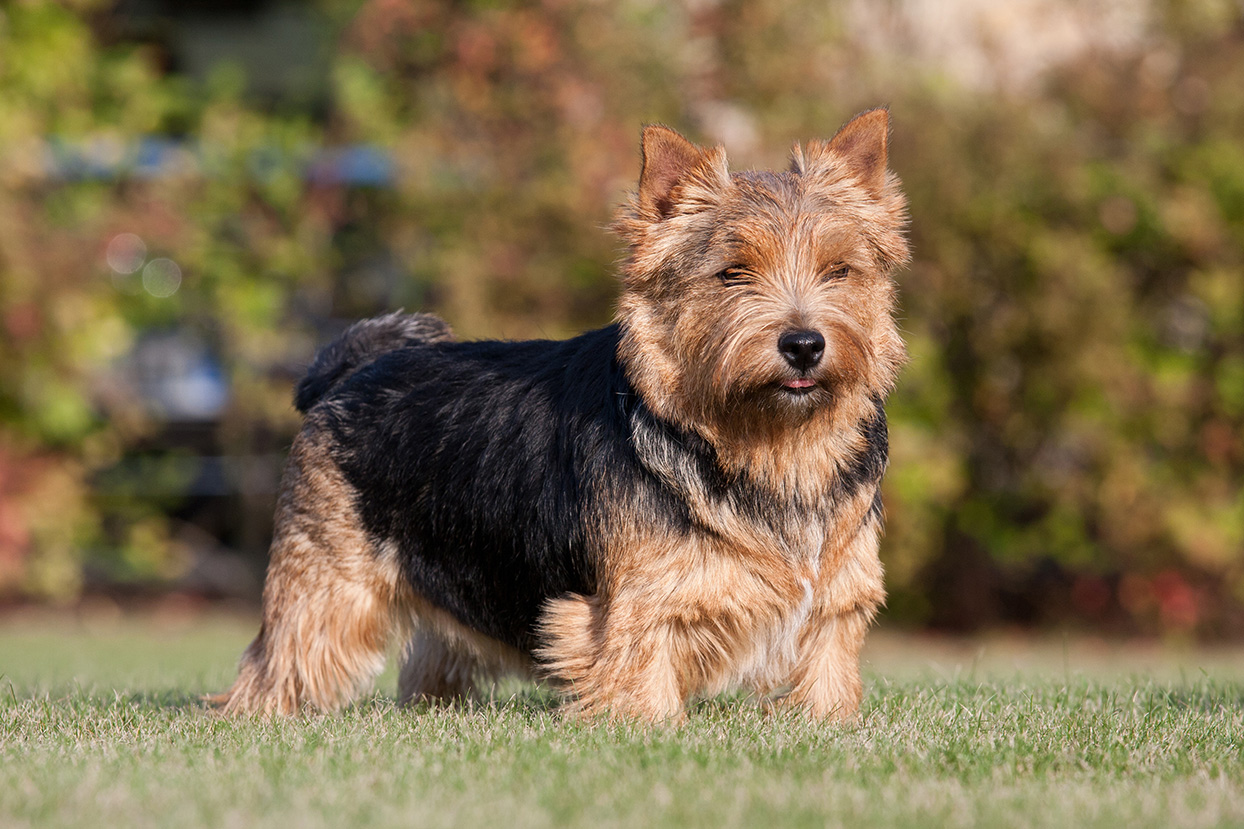
The breed’s coat is rough and weather-resistant, typically coming in shades of red, wheaten, black and tan, or grizzle. Its small, erect ears and bright, alert eyes give the Norwich Terrier a charming and inquisitive expression. While these dogs are small in size, they have a bold and confident demeanor, often described as having a "big dog" personality in a petite package. They are highly social and enjoy being part of family activities, thriving on attention and interaction.
Norwich Terriers are intelligent and eager to please, making them relatively easy to train, though their terrier instincts can sometimes lead to a bit of stubbornness. They are active and playful dogs that require regular exercise to keep them physically and mentally stimulated. Despite their working origins, they adapt well to a variety of living environments, including apartments, as long as they receive plenty of daily activity.
These dogs are affectionate and loyal, forming strong bonds with their families. They are good with children and other pets, though their prey drive may occasionally make them a little too interested in smaller animals. With their cheerful disposition and fearless attitude, Norwich Terriers bring energy and joy to any home they are part of. Their combination of charm, intelligence, and versatility makes them a treasured breed among dog lovers.
History
The Norwich Terrier has a rich history that dates back to the late 19th and early 20th centuries in England, where it was developed as a small, hardworking terrier bred to hunt vermin and assist in fox hunting. The breed originated in East Anglia, particularly around the city of Norwich, and was initially referred to as the "Cantab Terrier" due to its popularity among students at Cambridge University. These small, energetic dogs were kept as ratters and loyal companions, admired for their tenacity and spirited personality.
The Norwich Terrier’s ancestors included various small working terriers, such as the Irish Terrier and the Border Terrier, which contributed to its rugged build and fearless nature. In the early 1900s, a breeder named Frank “Roughrider” Jones played a significant role in refining the breed, developing a line of terriers known as "Jones Terriers." These dogs became the foundation for the modern Norwich Terrier and were highly prized for their hunting abilities and adaptability.
In the 1930s, the Norwich Terrier began to gain recognition as a distinct breed. During this time, a significant distinction emerged between dogs with erect ears and those with drop ears, which eventually led to the creation of two separate breeds. The erect-eared variety retained the name Norwich Terrier, while the drop-eared variety became the Norfolk Terrier. This separation was officially recognized in the 1960s by The Kennel Club in England.
The Norwich Terrier was introduced to the United States in the early 20th century, where it quickly gained popularity for its charm, intelligence, and versatility. The breed was officially recognized by the American Kennel Club (AKC) in 1936, cementing its place as a beloved companion and show dog. Despite its small size, the Norwich Terrier remains a true working dog at heart, embodying the courage and determination of its terrier ancestors.
Today, the Norwich Terrier is celebrated for its rich heritage, lively personality, and adaptability. From its beginnings as a hardworking ratter to its role as a cherished family pet, the Norwich Terrier’s history reflects its enduring appeal and versatility as one of the most delightful terrier breeds.
Appearance
Norwich Terriers are compact, low-to-the-ground terriers with good substance for their size. They have a keen, foxy expression, small dark eyes, and distinctive prick ears that add to their alert outline.
The coat is a harsh, wiry outer layer with a softer undercoat, designed for working in brush and rough terrain. Breed-standard colors include red, wheaten, black and tan, and grizzle varieties; the coat is typically kept tidy with regular brushing and occasional stripping or trimming to maintain texture.
Colors
• Black & Tan
• Grizzle
• Red
• Wheaton
Health
Like many small purebred dogs, Norwich Terriers can experience a mix of orthopedic, dental, and eye issues, and individual risk varies by line. Responsible breeders screen breeding stock, track family history, and aim to reduce the chance of inherited problems through testing and careful selection.
For owners, the biggest health levers are practical: maintain a lean body condition, keep up with dental hygiene, and address limping, persistent coughing, noisy breathing, or changes in activity promptly with a veterinarian. Regular checkups help catch small-dog issues early, when they’re often easiest to manage.
Care
Coat care is moderate but consistent: brush regularly to prevent tangles and remove debris, and plan for periodic grooming to keep the wiry coat in good condition. Many owners choose hand-stripping to preserve texture, while others opt for clipping for convenience; either way, routine ear, nail, and dental care should be part of the schedule.
Norwich Terriers benefit from daily exercise and enrichment. They’re small, but they’re not couch potatoes—walks, short training games, and sniffy exploration help prevent boredom-driven behaviors like excessive barking or digging.
Training
Training a Norwich Terrier works best when it’s upbeat and purposeful. They’re smart and responsive, but they can lose interest if sessions are repetitive, so keep lessons short, mix in play, and reward the behaviors you want.
Recall and impulse control are especially important for a terrier. Start early with reliable “come,” “leave it,” and leash skills, and use secure fencing or a long line in open areas if your dog is inclined to chase. Social exposure as a puppy helps them stay confident and polite around unfamiliar people and dogs.
Temperament
Norwich Terriers are plucky and upbeat—classic terriers who are brave, curious, and quick to investigate anything interesting. They usually bond closely with their families and enjoy being involved, whether that means neighborhood walks, games in the yard, or simply keeping their people company.
That terrier confidence can come with a stubborn streak and a strong prey drive, so manners around small pets and wildlife need thoughtful management. With early socialization, many Norwich Terriers are friendly little dogs that carry their courage lightly and bring a lot of personality to a home.
Lifestyle
Norwich Terriers adapt well to many homes, including apartments, as long as they get daily activity and mental stimulation. They enjoy being close to their people and typically prefer an indoor life with plenty of interaction.
Because they’re terriers, they may alert-bark and can be enthusiastic diggers if given the chance. A secure yard (or careful leash habits) is important, and households with small pets should plan for introductions, supervision, and management to account for prey drive.
Ownership
A Norwich Terrier is a great fit for someone who wants a small dog with real “go” and doesn’t mind a bit of terrier attitude. Prospective owners should be ready for consistent training, a daily activity routine, and some grooming upkeep to keep the coat healthy.
When choosing a puppy, prioritize health-tested lines and breeders who raise confident, well-socialized dogs. Meeting adult Norwich Terriers is especially helpful—these little dogs are full of character, and seeing that personality in real life is the best way to know you’ll enjoy living with one.
Interesting Facts
- Small English terrier originally used as an earthdog for vermin control.
- Prick-eared variety; closely related to the Norfolk Terrier (drop-eared).
- Typically around 10 inches tall, but notably sturdy for its size.
- Wiry double coat; red, wheaten, black & tan, and grizzle shades are common.
- Often affectionate with family, but retains a terrier prey drive.
- Does best with daily exercise and enrichment despite its compact size.