Papillon
Basics
The Papillon is a small Continental Toy Spaniel known for its “butterfly” ears, bright expression, and surprising athleticism for a toy breed. Originating in Europe and popular in royal courts, Papillons today are cherished as lively companions that often excel in performance sports like agility and obedience.
Despite their refined look, Papillons are generally sturdy little dogs with a confident, inquisitive nature. They tend to bond closely with their people, enjoy being involved in daily life, and do best in homes that appreciate an energetic, engaged companion rather than a purely lap‑oriented pet.
Description
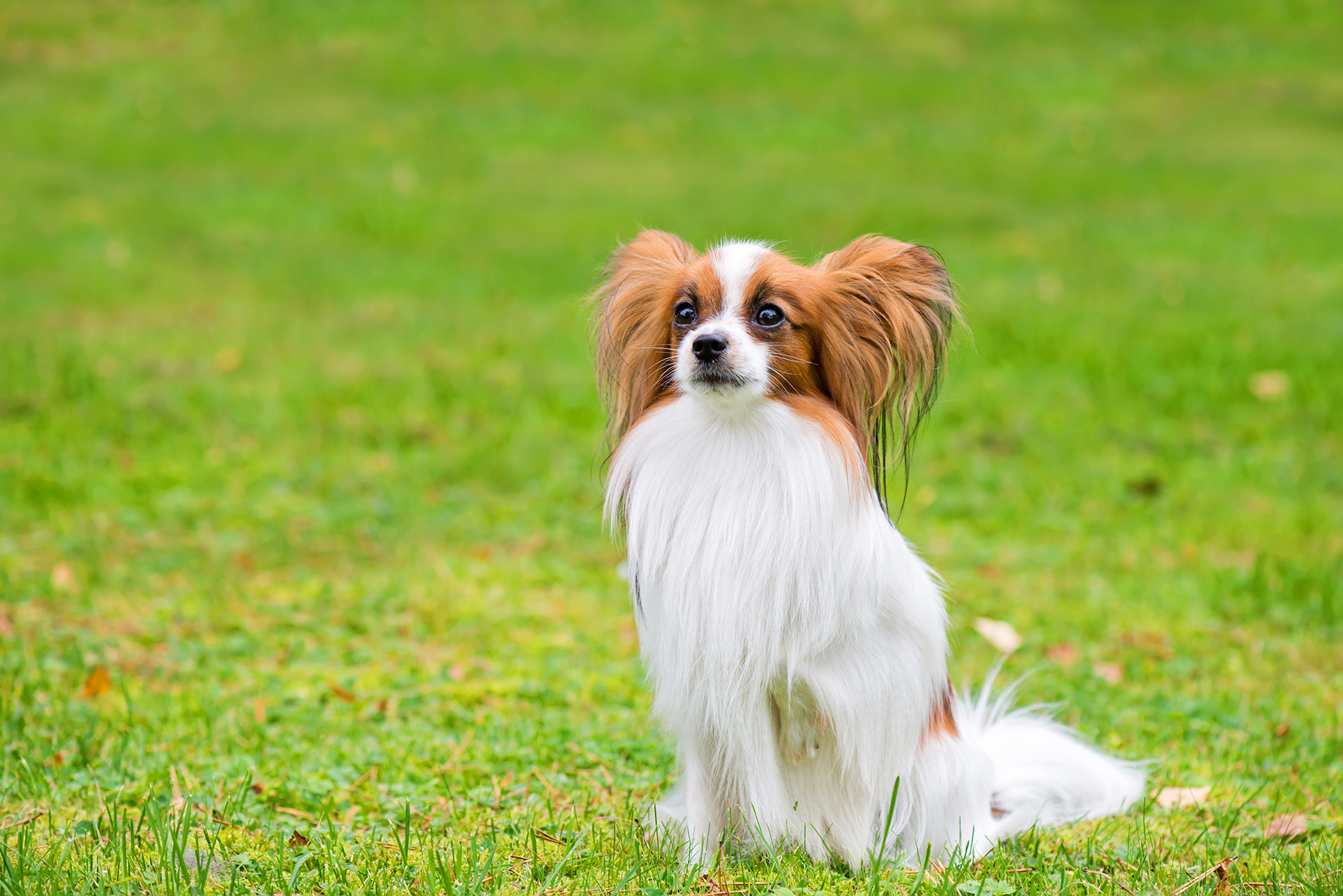
The Papillon, whose name means “butterfly” in French, is a small, elegant toy breed known for its distinctive butterfly-like ears and lively personality. Weighing between 5 to 10 pounds and standing 8 to 11 inches tall, this breed is both delicate in appearance and robust in spirit. Its fine-boned frame is adorned with a long, silky, single-layer coat that requires minimal grooming despite its luxurious look. The most striking feature of the Papillon is its large, fringed ears, which resemble the wings of a butterfly when upright and contribute to its unique charm.
Papillons are highly intelligent and trainable, often excelling in obedience and agility competitions. They are energetic and playful, yet also possess a calm and affectionate demeanor, making them versatile companions for a wide range of households. Their adaptability allows them to thrive in various living situations, whether in a bustling family home or a quiet apartment. While they are small, Papillons have an athletic and agile build, and they enjoy regular exercise and mental stimulation.
This breed is highly social and forms strong bonds with its owners, thriving on interaction and affection. Papillons are also known for their alertness, often acting as effective watchdogs despite their diminutive size. Their lively and curious nature ensures they are always eager to explore and engage with their environment. However, they remain gentle and good-natured, making them excellent companions for children and other pets.
The Papillon’s combination of elegance, intelligence, and playful personality has made it a favorite among dog enthusiasts for centuries. Its unique appearance, coupled with its friendly and engaging temperament, ensures it continues to be a beloved and enduring breed.
History
The history of the Papillon is long and illustrious, tracing back to Renaissance Europe, where the breed was highly favored by nobility and royalty. Its origins can be linked to the continental toy spaniel, a small companion dog depicted in countless works of art from the 16th and 17th centuries. These spaniels were celebrated for their elegance and charm and were commonly seen in the laps of European aristocrats, as portrayed in paintings by renowned artists such as Titian, Rubens, and Van Dyck.
Initially, these early toy spaniels had drooping ears and resembled what is now known as the Phalène variety of the Papillon, which means "moth" in French. By the late 17th and early 18th centuries, selective breeding led to the development of the breed's signature erect, butterfly-like ears. This new variation was named "Papillon," French for "butterfly," to reflect its distinctive appearance. Both the Phalène and Papillon varieties were cherished throughout Europe, especially in France, Italy, and Spain.
The breed's association with royalty and nobility is legendary. Papillons were beloved by notable figures such as Marie Antoinette, who is said to have owned one named Coco, and other members of European courts. Their small size and charming demeanor made them ideal lapdogs and symbols of sophistication. Papillons were often included in royal portraits, further immortalizing their status as a breed of elegance and refinement.
In the 19th and 20th centuries, the Papillon began to gain popularity beyond Europe, particularly in the United States and England. The breed was officially recognized by the American Kennel Club (AKC) in 1915, solidifying its place as a beloved companion dog. Today, the Papillon remains a favorite among dog enthusiasts, admired for its unique combination of beauty, intelligence, and playful spirit.
The Papillon’s journey from the courts of Renaissance Europe to modern households showcases its timeless appeal and enduring legacy. Its rich history as a cherished companion of royalty and its evolution into a beloved pet worldwide make the Papillon a truly remarkable breed.
Appearance
Papillons are fine-boned, elegant toy dogs with a slightly longer-than-tall outline and a light, dainty way of moving. The hallmark is the large, rounded, fringed ear set that can be carried erect (Papillon) or dropped (the Phalène variety), creating the breed’s distinctive butterfly‑wing silhouette.
The coat is long, silky, and flowing with feathering on ears, legs, and tail; there’s typically no heavy undercoat. Color is parti-color—white with patches of any color—often with a white blaze on the face. The long, plumed tail is set high and carried arched over the back.
Colors
• Black
• Black & Silver
• Black & Tan
• Black & Tan Brindle
• Black Brindle
• Blue
• Blue Brindle
• Chocolate
• Chocolate Brindle
• Chocolate Sable
• Cream
• Fawn
• Fawn Brindle
• Fawn Sable
• Gold
• Gold Brindle
• Gold Sable
• Red
• Red Brindle
• Red Sable
• Silver
• Silver Brindle
• Silver Sable
• White
Health
Papillons are generally hardy for a toy breed, but responsible owners plan for both routine preventive care and breed-associated risks. Dental disease is a common issue in small dogs, so regular tooth brushing and professional cleanings as recommended by your veterinarian are important.
Breed communities also emphasize eye health and inherited conditions that can be screened through DNA testing and ophthalmic exams. Additionally, toy breeds can be prone to orthopedic issues (like kneecap problems) and to hypoglycemia as young puppies if meals are skipped. Choose breeders who health-test, provide documentation, and can discuss longevity and health trends in their lines.
Care
Papillon grooming is more about maintenance than heavy trimming. Regular brushing to prevent tangles in the ear fringes, behind the elbows, and on the “breeches,” plus routine nail care, ear checks, and dental hygiene, keeps them comfortable and presentable.
Because they’re small, they’re vulnerable to injury from jumps, being stepped on, or rough handling. Provide safe ramps or steps where needed, supervise play with larger dogs, and keep them at a healthy weight. Daily exercise can be modest in distance, but it should include interactive play and problem-solving to match their intelligence.
Training
Papillons are often fast learners who thrive on positive reinforcement and short, upbeat sessions. Focus early on socialization, house-training routines, and handling skills (brushing, nail trims, gentle restraint). Because they’re clever, they can also learn “what works” quickly—so be consistent about rules like jumping up, demand barking, and door manners.
They tend to enjoy performance-style training: targeting, recalls, heeling games, and trick work. Keep repetitions low and rewards frequent to prevent boredom, and use management (baby gates, pens) to set them up for success during house-training or when guests arrive.
Temperament
Papillons are typically happy, alert, and friendly, with quick reactions and a “busy brain.” Many are outgoing with familiar people and enjoy learning games, tricks, and structured activities; their confidence can make them seem bigger than they are.
They can be sensitive to chaotic handling or rough play, so thoughtful introductions and gentle, consistent routines matter—especially around children. Without enough mental stimulation, a Papillon may become barky or develop nuisance behaviors, but they usually respond well to training and enrichment.
Lifestyle
Papillons fit well in apartments or larger homes as long as they get daily engagement. They’re typically happiest when they have frequent interaction, training games, and opportunities to explore safely, rather than being left alone for long stretches.
Their small size makes them portable companions, but they still benefit from structure: predictable walks, indoor play, and enrichment toys. In multi-pet homes, they often do well with other polite dogs, though supervision is wise with much larger, boisterous dogs due to the risk of accidental injury.
Ownership
A Papillon is a great match for someone who wants a small dog with a big interest in learning, moving, and participating. They’re often ideal for owners who enjoy training—whether for manners, tricks, or dog sports—and who can offer gentle handling and consistent routines.
Before committing, plan for ongoing grooming and dental care, and consider your household’s activity level and noise tolerance (many Papillons are enthusiastic “alarm barkers” without training). Seek out ethical breeders or rescue groups that prioritize health screening and stable temperaments, and be prepared to protect a tiny dog from common hazards in busy homes.
Interesting Facts
• Named for its butterfly-like ear fringes; the drop-eared variety is called the Phalène.
• A fine-boned toy spaniel type with a light, graceful gait and a plumed tail carried over the back.
• Typically very trainable and frequently seen in agility, rally, and obedience.
• Coat is long and silky with feathering; generally not a heavy-shedding double coat.
• Usually thrives on mental stimulation and close contact with its people.
• Breed resources commonly highlight eye health and genetic screening as part of responsible breeding.