Pomeranian
Basics
The Pomeranian is a tiny, lively companion dog from the Spitz family, essentially a “miniature spitz” with big-dog confidence. UKC notes the breed was once much larger and that today’s toy size came from selecting smaller dogs over time, while VCA also describes early Pomeranians weighing around 30 pounds.
Despite the small package, Poms are active and curious. They tend to bond strongly with their people, enjoy being involved in household life, and do best when they get both daily play and consistent manners training rather than being treated only as a lap dog.
Description
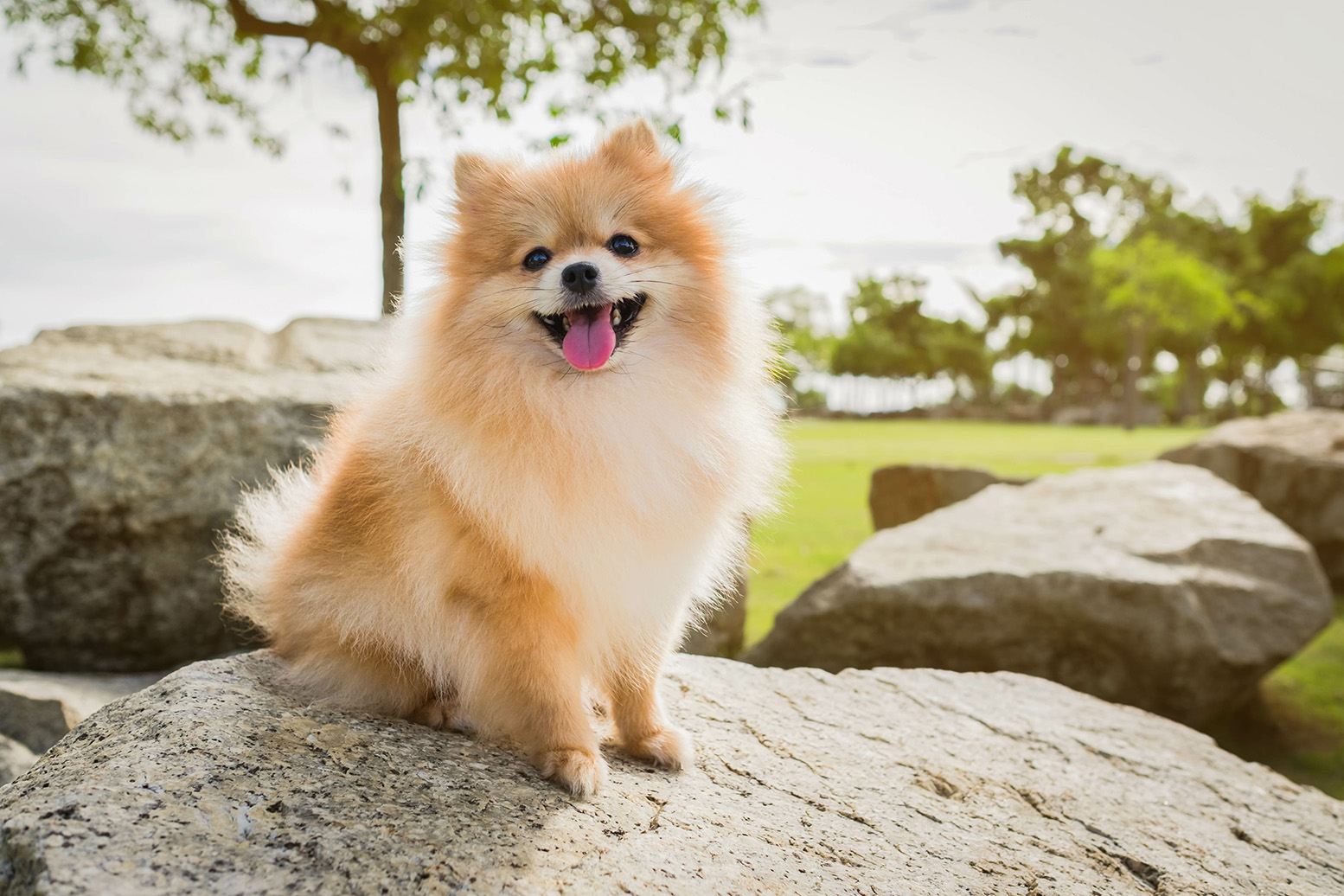
The Pomeranian is a small and spirited toy breed known for its fluffy double coat, fox-like face, and lively personality. Weighing between 3 to 7 pounds and standing 6 to 7 inches tall, the Pomeranian is a compact but robust dog that combines elegance with a feisty attitude. This breed is instantly recognizable by its abundant, plumed tail carried over its back and its wide variety of coat colors, including orange, cream, black, blue, sable, and more. Despite its small size, the Pomeranian is known for its confident demeanor and energetic nature.
Pomeranians are highly intelligent and quick learners, excelling in activities such as obedience, tricks, and even agility. They are social dogs that form strong bonds with their families and thrive on interaction, often seeking to be the center of attention. While they are playful and curious, they also have a bold, sometimes stubborn streak that adds to their charm. Their alertness makes them excellent watchdogs, as they are quick to bark at unfamiliar sounds or strangers.
One of the most endearing traits of the Pomeranian is its versatility. It is equally happy being a pampered lapdog or an active participant in play and exploration. While its luxurious coat requires regular grooming to keep it in top condition, its size and adaptability make it well-suited for various living environments, from apartments to larger homes with yards. The breed enjoys daily walks and interactive playtime to stay mentally and physically stimulated.
With their combination of beauty, intelligence, and vibrant personality, Pomeranians are beloved by dog enthusiasts around the world. Their compact size, engaging temperament, and regal appearance make them a popular choice for individuals and families seeking a small dog with a big presence. Whether as a show dog or a cherished companion, the Pomeranian continues to captivate hearts and bring joy to those who welcome them into their lives.
History
The history of the Pomeranian traces back to the Arctic regions, where their ancestors, larger sled-pulling spitz-type dogs, were used for working tasks such as herding and hauling. Over time, these dogs made their way to the Pomerania region, an area that spans parts of modern-day Poland and Germany. It was in Pomerania that the breed began to be selectively bred into a smaller size, becoming the foundation of the Pomeranian we know today. Despite their reduced size, these early Pomeranians weighed around 20 to 30 pounds, much larger than the toy-sized breed recognized today.
The breed gained significant popularity in the 18th and 19th centuries, particularly among European royalty. Queen Victoria of England played a pivotal role in refining and popularizing the Pomeranian as a companion dog. During a visit to Italy in the late 1800s, Queen Victoria became enchanted by a particularly small and fluffy Pomeranian named Marco, whom she brought back to England. Her passion for the breed spurred a trend for even smaller Pomeranians, leading breeders to focus on reducing the size further while enhancing their distinctive fluffy coat.
By the late 19th century, the Pomeranian had become a well-established toy breed, and its popularity spread rapidly across Europe and the United States. The breed was officially recognized by the American Kennel Club (AKC) in 1900, and it quickly became a favorite among dog lovers for its charming personality, elegant appearance, and manageable size. Through selective breeding, the Pomeranian’s weight was reduced to its modern standard of 3 to 7 pounds, while its coat and distinctive features were further refined.
Today, the Pomeranian is one of the most beloved toy breeds in the world, admired for its rich history, vibrant personality, and striking appearance. Its journey from the Arctic working dogs to a cherished companion of royalty and modern families highlights its adaptability and enduring appeal. Whether as a show-stopping performer in the ring or a loyal lapdog, the Pomeranian’s legacy continues to thrive.
Appearance
Pomeranians are squarely proportioned toy spitz dogs with a fox-like expression, small high-set pointed ears, and a profuse “stand-off” double coat. UKC highlights the characteristic plumed tail that turns over the back and lies flat—one of the breed’s signature silhouettes.
Their coat consists of a dense, soft undercoat and a longer, harsh outer coat that gives the breed its fluffy outline and ruff around the neck. A wide range of colors and patterns is acceptable in the UKC standard, and the overall look should be bright, balanced, and compact.
Colors
• Beaver
• Beaver Sable
• Black
• Black & Brindle
• Black & Tan
• Blue
• Blue & Tan
• Blue Brindle
• Blue Merle
• Blue Sable
• Brindle
• Chocolate
• Chocolate & Tan
• Chocolate Merle
• Chocolate Sable
• Cream
• Cream Sable
• Orange
• Orange Sable
• Red
• Red Sable
• Tricolored
• White
• Wolf Sable
Health
Most Poms are hardy little dogs, but their very small size comes with predictable risks: dental disease, injury from falls or rough handling, and weight gain from “just a few snacks.” VCA notes Pom puppies may be prone to hypoglycemia, so very small puppies often benefit from frequent meals and careful monitoring—work with a veterinarian on an age-appropriate feeding plan.
Choose breeding stock (or rescue intake) with health in mind and keep up with routine preventive care. Practical management—safe ramps/steps, supervised play with kids, and keeping them at a lean body condition—goes a long way toward protecting long-term health.
Care
Coat care is a core part of Pom life. Regular brushing and combing helps prevent mats, especially behind the ears, in the “pants,” and around the tail; during shedding periods, grooming needs increase. Keep nails short, prioritize dental care (small dogs are prone to tartar), and check hygiene areas routinely.
Because they’re tiny, safety and temperature management matter. Their thick coat offers some protection in cool weather, but VCA notes their small size can still make them vulnerable to cold; in heat, use shade, water, and short outings.
Training
Pomeranians often learn quickly, but they can also be independent-minded. VCA notes they do best with reward-based training, and that house-training can be more challenging than with some breeds—so patience and consistency pay off.
Keep training sessions short and upbeat, and focus early on leash manners, recall, and polite greeting. Teaching calm handling (brushing, tooth brushing, paw work) is especially important because grooming is frequent and the breed’s small size makes cooperative care a big quality-of-life win.
Temperament
Poms are typically alert, intelligent, and bold—often acting like much bigger dogs. UKC describes them as lively and devoted companions, while VCA notes many are spunky and adventurous, sometimes with a tendency to be aloof with strangers without early socialization.
They can be vocal watchdogs, which is great for alerting but can become nuisance barking if it’s reinforced. Early socialization, calm exposure to visitors, and teaching “quiet” and “settle” cues help keep their confidence from turning into reactivity.
Lifestyle
Pomeranians fit well in apartments and smaller homes, provided they get daily activity and mental stimulation. Much of their exercise can be met with indoor games, but VCA emphasizes that they still benefit from outdoor walks for sniffing and enrichment.
They often enjoy being carried or traveling with their owners, but they shouldn’t become “purse-only” dogs. A Pom that gets regular walks, play, and training is usually calmer at home and less likely to bark excessively.
Ownership
Poms are a strong match for owners who want a bright, interactive companion and are willing to keep up with grooming and training. Because of their size, they’re not ideal for households where very young children can’t be closely supervised, and they need careful introductions to larger dogs.
When choosing a Pom, prioritize temperament and health practices over coat color or extreme “tiny” size. A well-bred or well-matched Pom, raised with socialization and boundaries, is typically affectionate, entertaining, and highly devoted.
Interesting Facts
- UKC calls the Pomeranian the smallest member of the Northern (Spitz-type) breeds and describes it as a true toy spitz.
- The breed has a profuse double coat and a plumed tail carried flat over the back (UKC standard).
- VCA notes early Pomeranians were much larger (around 30 pounds) than today’s dogs.
- Many Poms are vocal and benefit from early training to prevent nuisance barking (VCA).
- Very small Pom puppies can be prone to hypoglycemia and may need frequent meals (VCA).