Porcelaine
Basics
The Porcelaine is a French scenthound developed to hunt in pack and drive game toward waiting guns. Athletic and fast, it’s built for hours of work on scent, with an eager “let’s go” attitude outdoors and a gentler, people-focused side at home.
They tend to bond closely with their household and do best when they’re included in daily life rather than treated as a kennel-only dog. While the breed can be polite with children and visitors, most Porcelaines are happiest with a predictable routine, plenty of exercise, and a safe area to run.
Because they’re true hounds, many are independent thinkers with a strong nose and a “follow the trail” instinct. Owners should expect some wanderlust, especially if the dog catches a scent—reliable containment and recall training matter from day one.
Description
The Porcelaine is a rare and elegant French hunting breed known for its grace, endurance, and excellent scenting abilities. Sometimes referred to as the "French Porcelain Hound," the breed was developed in the 18th century in the regions of France where it was primarily used for hunting game such as deer, wild boar, and hares. The Porcelaine was prized for its speed, stamina, and ability to track game over long distances, making it an effective hunting companion for both nobility and peasants alike. While the breed has seen a decline in popularity in recent years, it remains a symbol of French hunting traditions and is cherished by those who appreciate its hunting instincts and regal appearance.
Physically, the Porcelaine is a medium-sized hound with a refined and athletic build. Standing around 22 to 27 inches at the shoulder and weighing between 45 and 60 pounds, the Porcelaine is built for speed and endurance, with long, powerful legs and a deep chest that allows for efficient running and breathing during hunts. Its coat is short, smooth, and typically white with distinct patches of orange, black, or tan, often with a marbled pattern. The breed’s expressive, dark eyes and long, floppy ears contribute to its gentle and noble appearance, while its elegant posture gives it a refined, aristocratic air.
In terms of temperament, the Porcelaine is known for being affectionate, friendly, and calm, both in the field and at home. While it was originally bred for independent hunting, the Porcelaine is not as aloof or solitary as some other hound breeds. It is loyal and forms strong bonds with its family, often being good with children and other pets. However, like many hounds, the Porcelaine has a strong prey drive and requires secure environments where it can’t chase after smaller animals. Early training and socialization are important to ensure that the breed becomes well-behaved in both hunting situations and as a family companion.
Although the Porcelaine is not as well-known outside of France, it is a breed with a devoted following among hunters who appreciate its ability to work tirelessly in the field. The breed’s intelligence and keen sense of smell make it an outstanding tracking dog, and it can be trained to follow scent trails over long distances. In addition to its work as a hunting dog, the Porcelaine is also a loyal and loving companion that thrives in active households where it can receive ample exercise and stimulation. With its combination of beauty, intelligence, and hunting skills, the Porcelaine continues to be a cherished breed for those who appreciate its noble history and its remarkable abilities in the field.
History
The Porcelaine dog, often referred to as the "Royal Hound of France," is a distinguished and ancient breed with origins dating back to the 18th century. This elegant and refined scent hound is believed to have descended from medieval hunting dogs used by French nobility. The breed likely arose from a combination of ancient scent hounds, such as the now-extinct Montaimboeuf and Saintongeois hounds, which were valued for their keen noses and stamina. The Porcelaine’s name derives from its unique, porcelain-like white coat, which is sleek and glossy, giving it an almost luminous appearance.
Initially bred for hunting small game such as hare, the Porcelaine became a favorite among French and Swiss hunters for its exceptional tracking ability, endurance, and melodious voice. The breed was known for its ability to navigate challenging terrains with ease, making it particularly effective in the dense forests and open fields of France. It gained a reputation as a highly skilled pack hound, able to work cooperatively with other dogs and maintain focus during long hunts.
The Porcelaine faced a period of decline during the French Revolution and the subsequent political upheavals of the 19th century, as many noble families who maintained hunting kennels were displaced. However, the breed survived thanks to its continued use in Switzerland, where it was preserved by dedicated hunters. In the early 20th century, efforts to standardize and promote the breed led to its resurgence, and it was officially recognized in France.
Today, the Porcelaine remains relatively rare but is celebrated for its elegance, intelligence, and hunting prowess. While it continues to be used as a working hound in France and Switzerland, it has also gained recognition as a companion dog for those who appreciate its beauty and even-tempered nature. The breed’s rich history reflects its enduring appeal as both a skilled hunter and a symbol of refinement.
Appearance
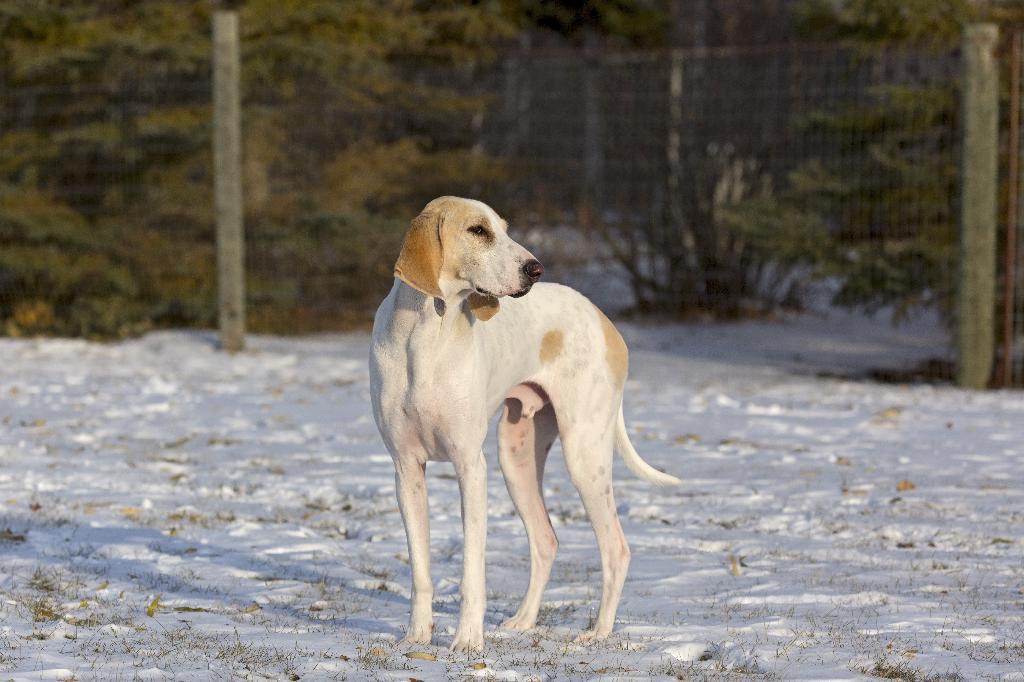
Porcelaine are medium-sized, elegant hounds with a long, refined head and a lean, racy outline. The ears are set low, thin, and curl inward, and the expression is typically soft and intelligent.
The coat is short, smooth, fine, and shiny, lying close to the body. Color is predominantly white with orange spotting; orange ticking on the ears is a characteristic look, and overall the breed’s crisp white coat is part of what gives it the “porcelain” name.
Movement should look lively, light, and tireless—this is a dog designed to cover ground efficiently. The chest is deep without being overly wide, the back is strong, and the tail is carried in a curve without a heavy “brush.”
Colors
• White
• White & Orange
Health
As a functional scenthound, the Porcelaine is generally bred for stamina and soundness, but no breed is free of health risk. The most practical approach is to work with a veterinarian on preventive care and to choose breeders who prioritize temperament, structure, and health screening.
Like many active, deep-chested breeds, they can be at risk for bloat (gastric dilatation-volvulus). Discuss feeding routines and risk-reduction strategies with your vet—especially if your dog eats quickly or does intense exercise around mealtimes.
Ears and skin should be monitored, particularly if the dog is frequently outdoors in wet or brushy conditions. Maintain a healthy weight to protect joints over a lifetime of athletic activity.
Care
Coat care is straightforward: the short coat usually needs only a weekly brushing to remove dead hair and keep the shine, plus occasional baths as needed. Regular ear checks are important for any drop-eared scenthound, especially after running through brush or damp fields.
Daily exercise isn’t optional. A Porcelaine typically thrives with a mix of long walks, jogging, structured scent games, and opportunities to safely run. Without enough physical and mental outlet, many hounds will invent their own entertainment—usually involving noise, digging, or escaping.
Nail trims, dental care, and routine parasite prevention should be kept on schedule. If your dog spends time in tall grass or wooded areas, do frequent tick checks and inspect paws and ears after outings.
Training
Porcelaine can learn quickly, but the “why” has to make sense to them. Training tends to go best when it’s reward-based, short, and upbeat, with food, play, and permission to use their nose as part of the process.
Because scent can overpower everything else, recall is a long-term project. Start with management (long line, secure fencing) while building strong reinforcement history for coming when called, and practice in gradually more distracting environments.
They often excel at tracking-style games and nosework, which also make training feel natural rather than confrontational. Consistent house rules, calm repetition, and patience typically produce better results than drilling or harsh corrections.
Temperament
In temperament, the Porcelaine is typically energetic, social, and very motivated by the outdoors. Many are affectionate with their people and enjoy being part of family activities, but their day-to-day personality is strongly shaped by their hunting heritage.
Expect a dog that is friendly yet single-minded when scent is involved. Porcelaines often work best with calm, consistent handling—too much pressure can make a sensitive hound shut down, while too little structure can lead to selective hearing.
They generally do well with other dogs, especially if raised with them, because the breed is traditionally a pack hound. With small pets, introductions and management are important; the drive to follow and chase can be strong.
Lifestyle
This is a high-activity breed that fits best with people who enjoy being outside and can commit to daily exercise. A Porcelaine that gets sufficient mileage and enrichment is more likely to settle indoors; one that doesn’t may stay restless and vocal.
They’re typically happiest in a home with space to move and a securely fenced yard, though dedicated owners can make apartment life work with serious daily exercise. Because they’re scent-driven, off-leash time should only happen in safely enclosed areas.
Social time matters. Many Porcelaines prefer not to be left alone for long stretches, and some will bay when bored or frustrated. Plan for companionship, training, and enrichment if your schedule is busy.
Ownership
Owning a Porcelaine is easiest when you accept that you’re living with a purpose-built hound: independent, nose-led, and built to go. The best matches are people who enjoy training as an ongoing practice and who can provide structured outlets for hunting instincts.
Secure containment is a core responsibility—sturdy fencing, good gates, and supervised outdoor time reduce the risk of roaming. A GPS collar can be a smart add-on for active households, but it should complement (not replace) training and management.
Because the breed is relatively uncommon in many regions, prospective owners may need patience when finding ethical breeders or breed rescue contacts. Ask about socialization, pack temperament, health history, and what lines are bred for (hunting vs. companion) so expectations are aligned.
Interesting Facts
- Group/type: French scenthound developed to hunt in pack and drive game toward waiting guns.
- Coat: smooth, thin, close-lying, and shiny; relatively low grooming needs.
- Typical color: white with orange spots; orange ticking on the ears is characteristic.
- Size (UKC): males about 22–23.5 in at the withers; females about 21.5–22.5 in.
- Notable trait: strong scent drive—secure fencing and recall training are especially important.
- Generally social with other dogs due to pack-hound heritage.