
Redbone Coonhound
Basics
The Redbone Coonhound is an American scent hound developed for trailing and treeing game over tough country, from wet lowlands to hills and mountains. It’s built to work for long stretches on a track, then settle into an easygoing house companion when the day is done.
Most Redbones are people-oriented with a classic hound mindset: friendly and affectionate, but independent when their nose tells them a story. Expect a musical voice, strong scent drive, and a need for purposeful activity rather than constant high-speed exercise.
Description
The Redbone Coonhound is a breed of coonhound known for its remarkable hunting ability, especially when it comes to tracking and treeing raccoons. Originating in the southern United States, the Redbone was developed primarily for hunting purposes, and its ancestors likely include a mix of various hound breeds, including the Coonhound and the Bloodhound. The breed was initially used for hunting a wide variety of game, including raccoons, bears, and wild boar, and it has earned a reputation for its exceptional scenting ability and tenacity in the field. Over the years, the Redbone Coonhound has become well-regarded not only as a working dog but also as a loyal and affectionate companion for those who enjoy outdoor activities and hunting.
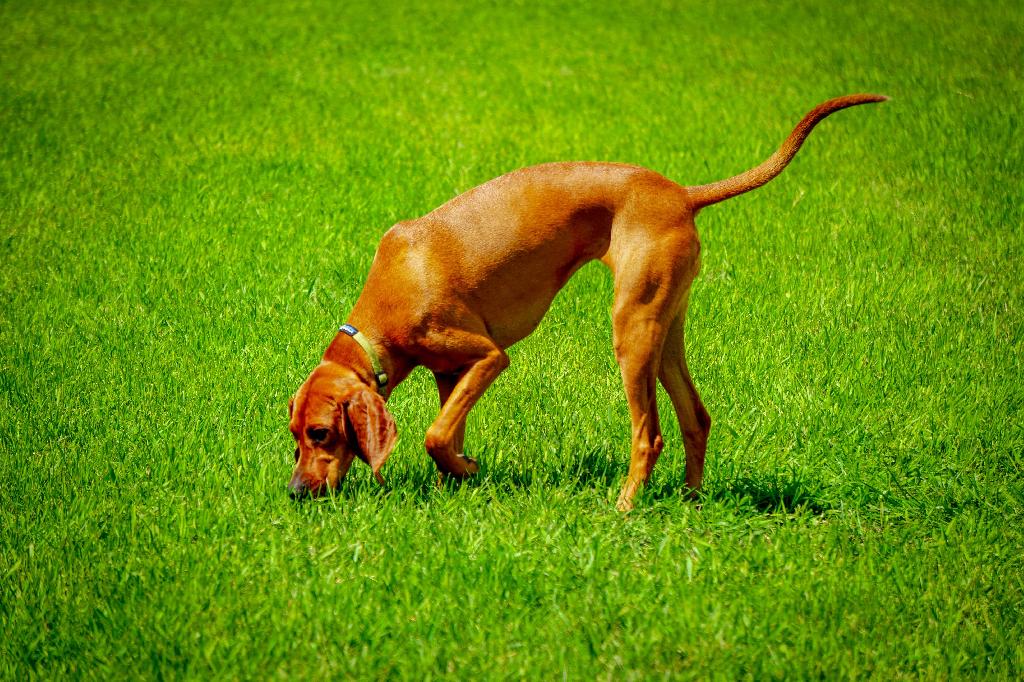
Physically, the Redbone Coonhound is a medium to large-sized dog, standing between 21 and 27 inches tall at the shoulder and weighing between 45 and 70 pounds. It has a sleek, muscular build that reflects its endurance and stamina, essential traits for a dog bred for hunting over long distances. The breed’s short, dense coat is typically a rich red or mahogany color, which is how it got its name. The coat is relatively low-maintenance but does require some grooming to keep it in good condition. Redbone Coonhounds have long, expressive ears and a deep, soulful gaze, which adds to their distinctive and striking appearance. Their strong, athletic bodies are built for tracking and running, making them excellent hunters in both rugged terrain and dense forests.
The temperament of the Redbone Coonhound is known for being friendly, loyal, and independent. As a hunting dog, it is highly driven and focused, often working independently while on the trail of its quarry. While they are very self-reliant in the field, Redbones are also affectionate and social dogs who enjoy being part of the family. They tend to be good with children and other pets, though their strong prey drive can sometimes lead them to chase smaller animals if not properly trained. They are known for their intelligence, though they can be a bit stubborn at times, which is common in breeds that were developed to work independently. Early socialization and consistent training are important to help them develop good manners and control their natural instincts.
While the Redbone Coonhound is primarily known for its hunting skills, it also makes an excellent companion for active families or individuals who enjoy outdoor adventures. They are particularly suited to families with a lot of space, such as those who live on a farm or have a large yard, where they can run and expend their energy. With the right amount of physical and mental stimulation, the Redbone Coonhound thrives as both a working dog and a loyal family member. They enjoy activities like running, hiking, and scent-based games, which allow them to tap into their natural instincts and keep them happy. Overall, the Redbone Coonhound is a versatile and devoted breed, combining the traits of an excellent hunter with the affection and loyalty of a beloved companion.
History
The Redbone Coonhound is a quintessentially American breed, developed in the southern United States during the 18th and 19th centuries. Its origins can be traced back to red-colored foxhounds brought to America by Scottish and Irish immigrants. These early dogs were valued for their keen scenting abilities, stamina, and versatility in hunting. Over time, American breeders sought to create a dog specifically suited for tracking and treeing raccoons and other game in the dense forests and rugged terrain of the South, leading to the development of the Redbone Coonhound.
The breed’s striking red coat became its hallmark feature and is attributed to careful selective breeding. The name “Redbone” comes from one of the early breeders, Peter Redbone, who played a significant role in establishing the breed’s characteristics in the early 19th century. Breeders also introduced bloodlines from other hunting dogs, such as the Bloodhound, to enhance the Redbone’s scent-tracking abilities and endurance. The result was a versatile, sure-footed dog capable of working in a variety of conditions, including swamps, mountains, and dense forests.
By the late 19th and early 20th centuries, the Redbone Coonhound had gained a reputation as a reliable and efficient hunting dog. Unlike some other coonhound breeds, the Redbone was noted for its even temperament and adaptability, making it suitable not only for hunting but also as a family companion. The breed was recognized by the United Kennel Club (UKC) in 1902 and later by the American Kennel Club (AKC) in 2009.
Today, the Redbone Coonhound is celebrated for its versatility, intelligence, and striking appearance. While it remains a favorite among hunters for its exceptional tracking and treeing abilities, it has also gained popularity as a loyal and affectionate family pet. The breed’s rich history reflects its deep connection to America’s hunting traditions and the dedication of those who worked to preserve its unique qualities.
Appearance
Redbones are medium-sized, athletic hounds with a smooth, glossy coat in a rich red shade. Their overall outline is balanced and agile, with a deep chest for stamina and clean, workmanlike muscling.
The head has the breed’s signature “pleading” expression, with round dark-brown-to-hazel eyes and long, fine-textured ears that reach close to the end of the nose when stretched forward. The coat is short and close, designed to protect in brush without needing heavy grooming.
Colors
• Red
Health
Redbone Coonhounds are generally sturdy working dogs, and good breeding aims for sound structure and endurance. The best starting point is choosing breeders who can discuss health screening and long-term soundness in their lines.
Like many athletic, deep-chested hounds, they benefit from maintaining a lean body condition, regular conditioning rather than weekend-only exertion, and prompt veterinary attention for limping or persistent soreness. Their long ears can trap moisture and debris, so routine ear checks are important—especially after swimming or hunting.
Care
Daily exercise should include time to sniff and work their brain—long walks, hikes, and structured scent games are often more satisfying than a quick run around the yard. Because many Redbones will follow a smell without hesitation, safe off-leash time usually requires a securely enclosed area.
Coat care is straightforward: a weekly brush or rub-down helps remove dead hair and keep the coat shiny. Pay extra attention to ears (clean and dry them as advised by your veterinarian), keep nails trimmed, maintain dental care, and use year-round parasite prevention, especially for dogs that spend time in fields and woods.
Training
Train a Redbone with patience and consistency. They respond best to upbeat, reward-based sessions that feel like a game, with short reps and clear criteria; drilling can make them tune out.
Recall is often the hardest skill because scent can override everything else. Start early with leash skills, name response, and a strong “check-in” habit, then build reliable recall using long lines and high-value rewards. Channel their instincts into tracking-style games, which can improve focus while respecting what the breed was built to do.
Temperament
At home, the Redbone is typically steady and affectionate, enjoying close contact with its people and a comfortable place to recharge. Many are gentle with familiar family members, but their social confidence improves a lot with early, positive exposure to new people, dogs, and places.
Outdoors, their instincts switch on: they can be single-minded and enthusiastic when following scent, and they may vocalize when excited or working. That combination makes them best for households that appreciate a hound’s independence and are ready to manage prey drive with training, leashes, and secure fencing.
Lifestyle
Redbones fit best with people who enjoy being outside and can provide consistent outlets for scent work. They’re often happy to lounge for long stretches indoors, but they’re not truly “low-energy” if they don’t get regular, meaningful exercise.
Apartment living can work only if you’re committed to daily long walks and enrichment, and if you’re able to manage noise (hound voices carry). A home with a securely fenced yard, plus owners who like hiking, hunting, or dog sports such as scent work and tracking, tends to be the easiest match.
Ownership
Before bringing one home, plan for management as much as training: secure fencing, leash discipline, and routines that prevent boredom. Redbones do best when they’re included as part of the household, with plenty of human interaction and a job to do.
Potential owners should also be comfortable with typical hound traits—selective hearing, enthusiastic sniffing, and vocal communication. If you want a quiet, instantly responsive off-leash dog, a Redbone may be frustrating; if you want a friendly, athletic companion with classic hound character, they can be a wonderful fit.
Interesting Facts
• Breed type: American scent hound developed for trailing and treeing game.
• Size (breed standard): males 22–27 in; females 21–26 in at the shoulder.
• Coat: short, close, glossy; rich red color.
• Expression: described in the standard as “pleading,” with dark-brown-to-hazel eyes.
• Ears: long and fine-textured, reaching near the end of the nose when stretched forward.