Rhodesian Ridgeback
Basics
The Rhodesian Ridgeback is a strong, athletic hound developed in southern Africa as a versatile hunting and homestead dog. Historically, Ridgebacks worked in small packs to track game and hold dangerous quarry at bay until hunters arrived, while also serving as steady watchdogs and companions.
In family life they’re typically devoted and calm indoors when their exercise needs are met, but they’re not a ‘busy’ pleaser. Most Ridgebacks mature into confident, independent dogs that do best with consistent leadership, early training, and thoughtful socialization.
Description
The Rhodesian Ridgeback is a distinctive and powerful breed of dog known for its unique ridge of hair along its back, which grows in the opposite direction from the rest of its coat. This feature, which is where the breed gets its name, makes the Rhodesian Ridgeback one of the most recognizable dog breeds. Originating in Southern Africa, the breed was originally used by the indigenous Khoikhoi people and later by European settlers for hunting large game, including lions. The Ridgeback's strength, speed, and excellent tracking abilities made it an ideal companion for hunters, who relied on the breed to track, corner, and even hold off dangerous game while waiting for the hunter to arrive. Today, the Rhodesian Ridgeback is still valued for its versatility and excellent hunting instincts, though it also makes a loyal companion and family pet.
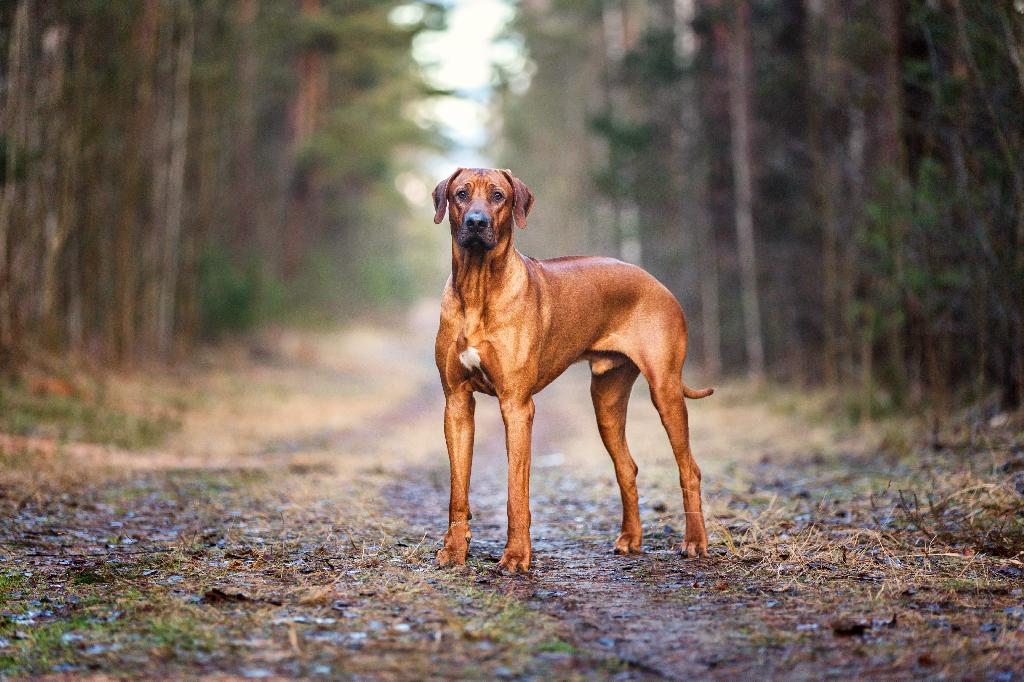
Physically, the Rhodesian Ridgeback is a large, well-muscled dog with a striking appearance. Males typically weigh between 85 and 110 pounds, while females range from 65 to 85 pounds. Standing around 24 to 27 inches at the shoulder, Ridgebacks are tall and athletic, built for endurance and speed. Their short, sleek coat is usually a rich red or light wheaten color, and the characteristic ridge of hair along the back is a signature feature. The breed's expressive, almond-shaped eyes and powerful, square jaw give it a dignified and noble appearance. Despite their large size, Rhodesian Ridgebacks are agile and can move with great speed, making them formidable hunters and excellent companions for active families who enjoy outdoor activities.
Temperamentally, Rhodesian Ridgebacks are known for their independent, confident, and sometimes aloof nature. They are intelligent and highly trainable, but they also have a strong independent streak, which can make training a challenge for novice dog owners. Early socialization is key to helping Ridgebacks become well-adjusted and friendly around other animals and people. While they can be reserved around strangers, Rhodesian Ridgebacks are typically affectionate and loyal to their family members, often forming close bonds with their owners. They are generally good with children and can be protective of their loved ones, making them excellent guard dogs as well as companions. However, their strong prey drive and hunting instincts mean they may not always get along well with smaller pets like cats or small dogs unless carefully introduced and socialized.
Rhodesian Ridgebacks are an active and energetic breed that thrives in environments where they can exercise and expend their energy. Regular walks, runs, and playtime are essential to keep them physically and mentally stimulated. Due to their hunting background, they enjoy activities that allow them to track scents and engage in independent problem-solving. While they can adapt to living in apartments or smaller spaces, having a large yard or access to open space is ideal for this breed. Due to their protective instincts and strong hunting drive, Ridgebacks need consistent training and boundaries to ensure they are well-behaved in various situations. With the right training, socialization, and care, the Rhodesian Ridgeback can be an incredibly loyal, intelligent, and affectionate companion, excelling as both a family pet and a working dog.
History
The Rhodesian Ridgeback, often referred to as the "African Lion Dog," is a versatile and resilient breed with roots in southern Africa. Its history dates back to the 17th century, when European settlers in the Cape Colony encountered indigenous Khoikhoi dogs. These native dogs, known for their distinctive ridge of hair running along their backs, were valued by the Khoikhoi people for their ability to guard livestock and hunt game. Early settlers recognized the dogs’ hunting prowess and began crossbreeding them with their own imported breeds, such as mastiffs, Great Danes, and hounds, to create a versatile and hardy hunting companion.
The breed was further refined in the late 19th and early 20th centuries in what is now Zimbabwe, then known as Rhodesia. European hunters and settlers, including Cornelius van Rooyen, sought to develop a dog capable of hunting large game, including lions, in the harsh African environment. The Rhodesian Ridgeback was bred for its courage, stamina, and intelligence, enabling it to track and corner large predators while working cooperatively with hunters. Despite its nickname, the Ridgeback was not tasked with killing lions but rather with tracking and holding them at bay until hunters could arrive.
The Rhodesian Ridgeback’s distinctive ridge of hair, formed by hair growing in the opposite direction along its back, became one of its most recognizable traits and a hallmark of the breed. In 1922, the first breed standard was established in Rhodesia, emphasizing the Ridgeback’s physical and working characteristics. The breed gained recognition in the United States in 1955 when it was accepted by the American Kennel Club (AKC).
Today, the Rhodesian Ridgeback is celebrated as a loyal family companion and versatile working dog. While it retains its hunting instincts and protective nature, it is also known for its affectionate and dignified temperament. The breed’s rich history reflects its adaptability and its unique role as both a hunting partner and a cherished member of the family.
Appearance
Breed standards describe a symmetrical, well-balanced dog—muscular and powerful yet agile, with an emphasis on soundness and endurance rather than bulk. The hallmark is the ridge of hair along the back growing in the opposite direction from the rest of the coat; it should be clearly defined, symmetrical, and include two matching crowns.
The coat is short, dense, and sleek. Color is typically in the wheaten range (light wheaten to red wheaten), with dark muzzles and ears accepted; small white markings on chest/toes may be acceptable but larger white is generally discouraged in standards. Overall, the ideal Ridgeback looks like a capable endurance athlete.
Colors
• Light Wheaten
• Lt Whtn Blk Nose
• Lt Whtn Brn Nose
• Rd Whtn Blk Nose
• Rd Whtn Brn Nose
• Red Wheaten
• Wheaten Blk Nose
• Wheaten Brn Nose
• Wheaton
Health
Ridgebacks are generally robust, but prospective owners should pay attention to screening and family history. The Royal Kennel Club highlights pre-breeding recommendations that commonly include hip and elbow evaluations and DNA testing for juvenile myoclonic epilepsy (JME), with additional testing often discussed for conditions such as degenerative myelopathy (DM).
Maintain a lean body condition to support joints and longevity, and discuss growth, exercise, and nutrition with your veterinarian—especially during puppyhood. When choosing a breeder, ask to see health test results for the parents and to understand what issues have appeared in the line.
Care
Grooming needs are modest: a short coat that benefits from weekly brushing, occasional bathing, and routine ear, nail, and dental care. Their bigger ‘maintenance item’ is conditioning—regular exercise keeps joints, muscles, and behavior in a good place.
Provide daily brisk walks plus opportunities to run in safe, fenced areas, and add mental work (tracking games, scent work, structured obedience). Ridgebacks can have a strong chase instinct, so reliable leash skills and secure containment are important.
Training
Start training early and keep it practical. Ridgebacks are smart and often learn quickly, but they can be independent; harsh corrections may create resistance, while reward-based training paired with consistent boundaries tends to work best.
Focus on foundations that matter for a large, powerful dog: polite greetings, leash manners, recall practice with long lines, and calm behavior around distractions. Many Ridgebacks enjoy activities that use their nose and athleticism—tracking-style games, scent work, endurance conditioning, and structured hiking.
Temperament
A well-bred Ridgeback is often intelligent, dignified, and self-possessed. Many are reserved or aloof with strangers, but breed standards emphasize that they should not be shy or aggressive; confidence and steadiness are key.
With their own people they’re usually affectionate and loyal, often forming strong bonds. Because they can be independent and strong-willed, they respond best to calm, consistent training and clear household rules. Early exposure to different people, places, and handling helps them grow into stable adult companions.
Lifestyle
This breed fits best with owners who want an athletic companion and can provide daily exercise, training, and thoughtful social time. Ridgebacks can adapt to many homes, but they typically do better with space to move and a secure yard rather than being confined with minimal outlets.
They’re often calm house dogs once mature, but they’re not ideal for people seeking a highly social ‘greeter’ dog. Expect some reserve with strangers and plan for ongoing training and management in busy environments.
Ownership
A Ridgeback owner should be comfortable handling a large, strong dog and committed to early socialization, consistent training, and secure containment. Because they can be independent and have chasing instincts, management (leashes, fences, structured routines) is part of responsible ownership.
Choose breeders or rescues that emphasize temperament stability and health screening. Ask about hip/elbow results, relevant DNA tests, and how puppies are raised and socialized; a good program will be transparent and will help match the right puppy or adult dog to your household.
Interesting Facts
- Indigenous to southern Africa; historically used to track game and hold dangerous quarry at bay.
- The breed’s trademark is the ridge of reverse-growing hair along the spine.
- UKC describes the Ridgeback as strong and muscular but active and agile, built for endurance.
- Typical coat color ranges from light wheaten to red wheaten; dark muzzles/ears are commonly accepted.
- The Royal Kennel Club recommends common pre-breeding screening such as hips/elbows and DNA testing for juvenile myoclonic epilepsy (JME).
- Ridgebacks are often dignified and aloof with strangers, but should not be shy or aggressive.