
Rottweiler
Basics
The Rottweiler is a powerful working breed historically used to guard, drive cattle, and protect people and property. Modern Rotties are often described as confident family guardians—steady and affectionate with their own people, and serious-minded about their home territory.
This is not a “set it and forget it” breed. Rottweilers do best with owners who enjoy training, can provide consistent boundaries, and are committed to early socialization so the dog grows into a stable, controllable adult.
Description
The Rottweiler is a powerful, confident, and versatile breed of dog that has gained widespread popularity as both a working dog and a companion. Originating in Germany, the Rottweiler's history dates back to the Roman Empire, where it was used to drive cattle and guard livestock. The breed's name comes from the town of Rottweil, where it was originally employed to herd cattle and protect money during the transport of goods. Over time, the Rottweiler evolved into a highly skilled working dog, known for its strength, loyalty, and protective instincts. Today, Rottweilers are used in a variety of roles, including police and military work, search and rescue, and as service dogs, in addition to being beloved family pets.
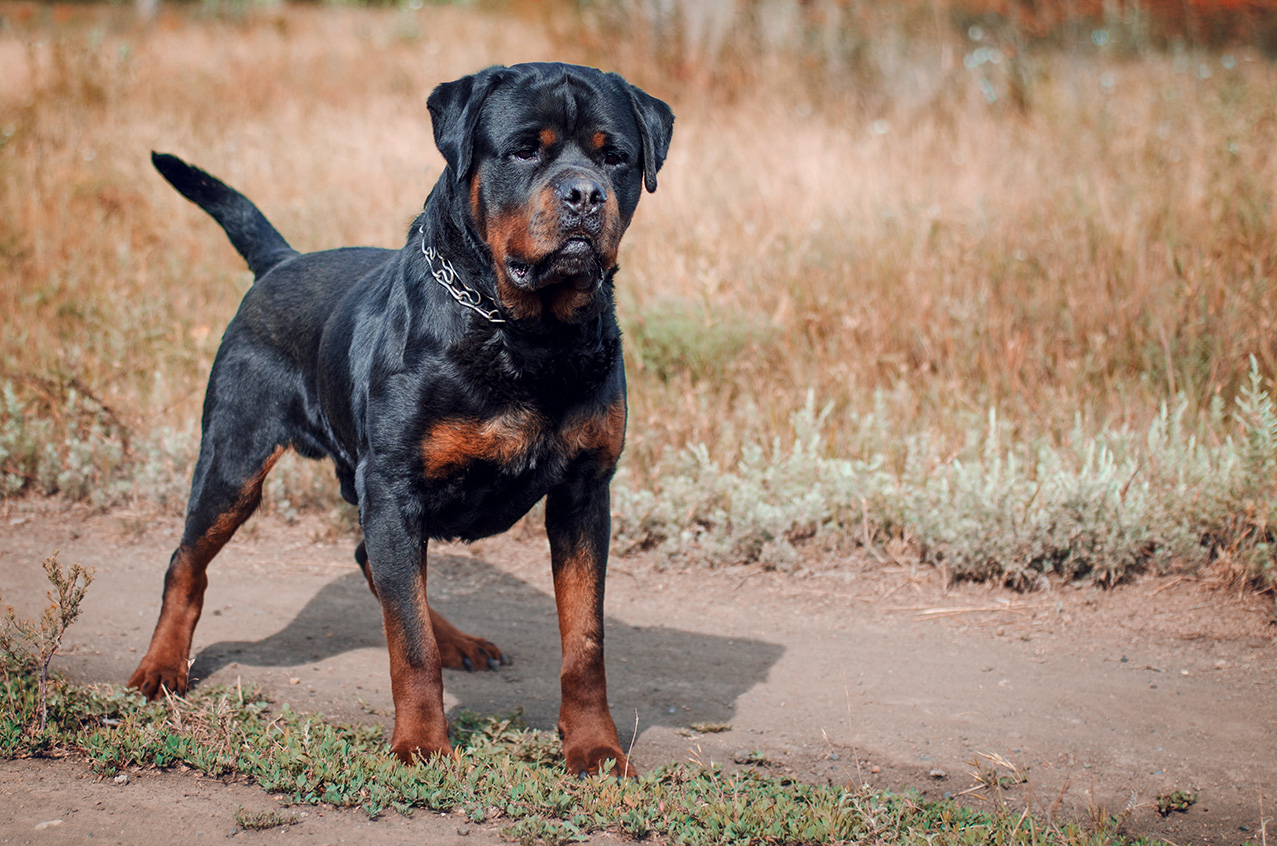
Physically, the Rottweiler is a large and imposing dog with a muscular, robust frame. Males typically weigh between 95 and 135 pounds, while females are usually between 80 and 100 pounds. The breed stands 22 to 27 inches tall at the shoulder. Rottweilers have a striking appearance, with a dense, short black coat marked by tan or mahogany markings on their face, legs, and chest. Their broad head, strong jaws, and confident stance give them an air of authority, while their expressive, intelligent eyes reflect their alert and observant nature. Despite their intimidating appearance, Rottweilers are often gentle and affectionate with their families, making them excellent companions when properly trained and socialized.
Temperamentally, Rottweilers are known for their loyalty, intelligence, and strong protective instincts. They are often described as being confident, alert, and even-tempered, though they can also be reserved or aloof with strangers. Their natural guarding instincts make them excellent watchdogs, and they are quick to protect their home and family if they sense a threat. However, this strong protective nature requires proper training and socialization from an early age to ensure that Rottweilers are well-behaved and not overly territorial or aggressive. With the right guidance, Rottweilers are loving and devoted family dogs, known for their bond with their owners. They are also intelligent and eager to please, making them highly trainable, though they require an owner who can assert themselves as a confident leader.
Rottweilers are highly active dogs that require regular exercise to stay healthy and happy. They thrive in environments where they can engage in physical activities like walking, running, and playing. Without sufficient mental and physical stimulation, Rottweilers can become bored and potentially develop behavioral issues. They excel in various dog sports, such as obedience, agility, and protection work, where they can use their intelligence and physical abilities. Though Rottweilers are often kept as working dogs, they are equally well-suited to family life, as long as their exercise needs and socialization requirements are met. With the right balance of training, exercise, and attention, the Rottweiler is a loyal, loving, and protective companion that can thrive in both active and family-oriented homes.
History
The Rottweiler is one of the oldest herding and working breeds, with a history that traces back to the Roman Empire. Its ancestors were mastiff-like dogs used by Roman soldiers to drive and guard livestock as the empire expanded across Europe. These dogs were valued for their strength, intelligence, and loyalty, traits that were essential for managing large herds of cattle and protecting the Roman army’s resources. As the Romans advanced into Germany, these dogs were bred with local herding breeds, resulting in the foundation of the modern Rottweiler.
The town of Rottweil in southern Germany became the focal point for the breed’s development during the Middle Ages. Here, the dogs were used extensively by butchers and cattle traders, earning them the name "Rottweiler Metzgerhund," or "Rottweil Butcher’s Dog." They played a crucial role in driving cattle to market and pulling carts loaded with meat and other goods. Their imposing presence and protective instincts also made them effective guardians of money and valuables. Traders often tied money pouches around the dogs' necks, confident that no one would dare approach these formidable animals.
By the late 19th century, as railways replaced cattle drives, the need for herding dogs declined, and the Rottweiler’s numbers dwindled. However, the breed’s working abilities were rediscovered when Germany began training dogs for police and military work in the early 20th century. The Rottweiler’s strength, intelligence, and trainability made it an excellent candidate for these roles, leading to a resurgence in popularity. The breed was officially recognized by the German Rottweiler Club in 1921, and it was introduced to the United States shortly thereafter, gaining recognition by the American Kennel Club (AKC) in 1931.
Today, the Rottweiler is celebrated as a versatile and loyal companion, excelling in roles such as search and rescue, police work, and therapy. While it retains its natural guarding instincts, it is also known for its affectionate and devoted nature with its family. The breed’s history reflects its adaptability and enduring appeal, evolving from a Roman drover to a modern working dog and cherished pet.
Appearance
Rottweilers are large, stocky, and heavily muscled, built for strength and endurance. The classic look is a sleek black coat with distinct rust/tan markings, a broad head, and powerful jaws.
Under the handsome exterior is an athletic dog that needs conditioning and weight control. Keeping a Rottie lean is important—extra pounds quickly stress joints and can reduce stamina.
Colors
• Black
• Black & Mahogany
• Black & Rust
• Black & Tan
• Mahogany
• Tan
Health
Like many large breeds, Rottweilers can be prone to orthopedic problems such as hip dysplasia and other joint disease. Owners should also be aware of risks seen in large, deep-chested dogs, including bloat (gastric dilation-volvulus), and some lines may have heart or eye conditions.
Choose breeders who health-test and who can explain longevity and cause-of-death patterns in their lines. Keep your dog lean, condition them gradually, and talk with your veterinarian about bloat-risk reduction strategies and joint-supportive exercise.
Care
Rottweilers need daily physical exercise plus regular mental work (training games, scent work, structured play). Because they’re powerful and athletic, safe equipment, good leash skills, and secure fencing matter.
Grooming is generally straightforward: routine brushing, occasional baths, and basic maintenance (nails, ears, teeth). The bigger “care” issues tend to be lifestyle-related—preventing obesity, building good manners, and providing consistent structure.
Training
Start training early and keep it consistent. Rottweilers respond best to calm, fair, reward-based methods that build engagement and impulse control; harsh or chaotic handling can create conflict and worsen reactivity.
Focus on foundational skills (loose-leash walking, recall, place/settle, polite greetings) and make socialization a positive, planned process. A trained Rottie is a joy; an untrained one can be unsafe simply because of size and strength.
Temperament
A well-bred Rottweiler is confident, alert, and composed—ready to respond to a real threat without being frantic or unstable. They typically bond deeply with their family and can be gentle, playful companions at home.
Many Rotties are naturally wary of strangers, which is why thoughtful socialization is essential. They’re also strong and determined; without clear leadership and training, they can become pushy, overprotective, or difficult to manage.
Lifestyle
Rottweilers thrive in homes that want a steady companion and are comfortable managing a large, strong dog in public. They usually prefer being close to their people and often do poorly as “yard dogs” with little interaction.
They can fit suburban or rural life well, and some do fine in larger apartments if exercise is consistent—but expect a dog that needs purposeful daily activity and clear rules. If your household is busy and inconsistent, a Rottie can become stressed and overly vigilant.
Ownership
Ownership comes with responsibility: early socialization, ongoing training, and careful management around visitors and unfamiliar dogs. A good owner invests in manners long before the dog is full-grown, and takes seriously the legal and safety expectations that come with guardian breeds.
If you want an easygoing social butterfly, pick a different breed. If you want a devoted, capable partner and you’re willing to do the work, a well-bred Rottweiler can be one of the most reliable and affectionate companions you’ll ever have.
Interesting Facts
- Traditional work: guarding, cattle driving, and general farm/merchant protection.
- Look: black coat with rust/tan markings; powerful, muscular build.
- Temperament: confident and watchful; usually reserved with strangers.
- Training priority: socialization and impulse control from puppyhood.
- Common concerns: weight management, joint health, and bloat risk.