
Russian Wolfhound
Basics
Often called the Borzoi, the “Russian Wolfhound” is a tall, elegant sighthound developed for coursing game across wide, open country. Historically, packs of these dogs were used by Russian nobility to pursue and catch wolves and other quarry, relying on keen vision, speed, and athletic endurance. (UKC)
Today the breed is most often a calm, quiet companion with a strong chase instinct and a need for safe, purposeful exercise. Their graceful movement and streamlined build reflect their original job: swift acceleration and long, efficient stride over distance. (UKC)
Description
The Russian Wolfhound, also known as the Borzoi, is a majestic and elegant breed of sighthound that originated in Russia. This ancient breed was primarily developed to hunt large game, particularly wolves, in the vast and rugged landscapes of Russia. Known for their speed, endurance, and keen eyesight, Russian Wolfhounds were used by Russian nobility for hunting purposes, especially for coursing wolves and other large prey. The Borzoi’s regal appearance and hunting prowess made it a prized companion in Russian aristocratic circles, and it has since become beloved for both its noble presence and its gentler temperament.
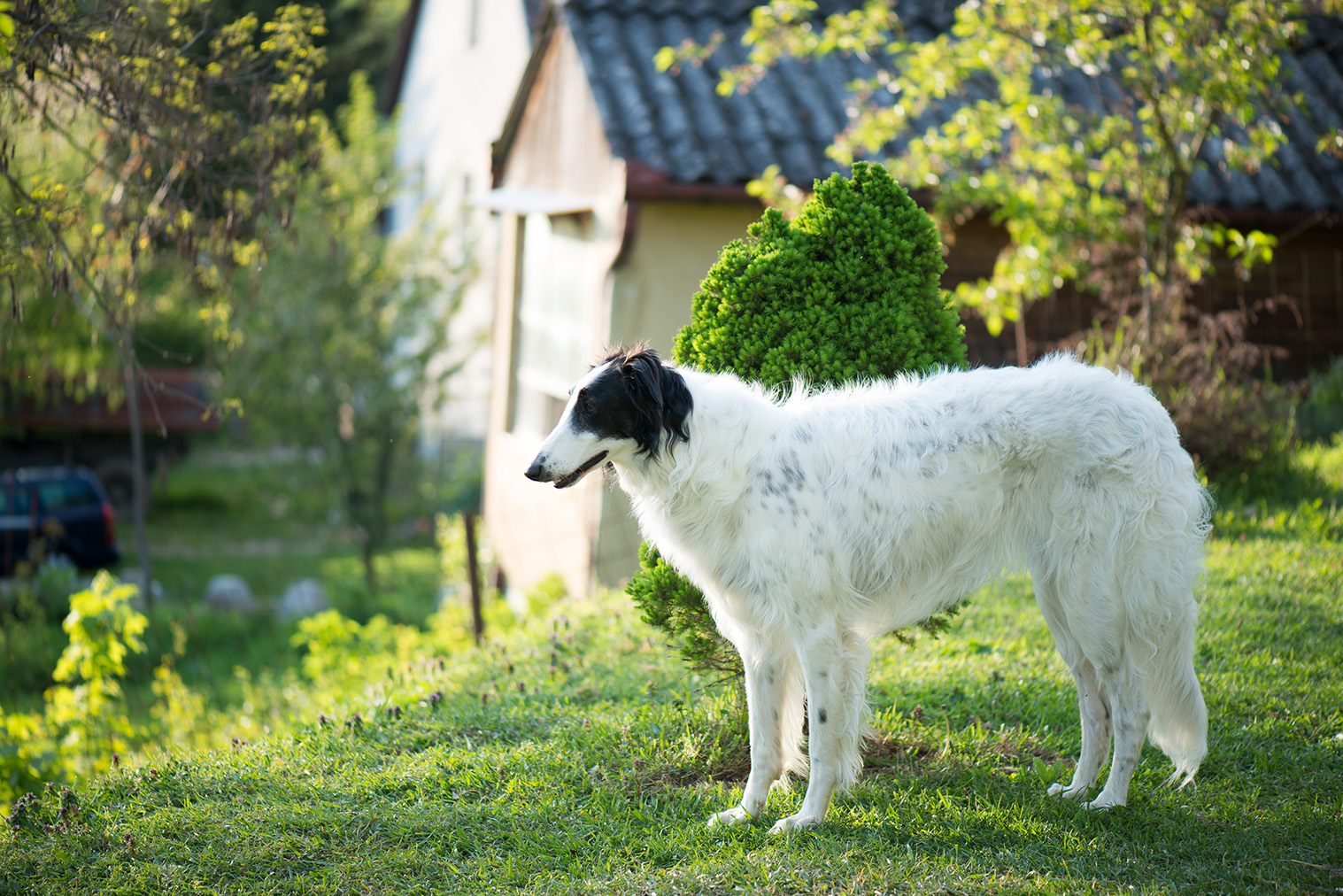
Physically, the Russian Wolfhound is a tall and graceful dog, with males typically standing between 28 to 32 inches at the shoulder, and females slightly smaller. They weigh between 60 and 105 pounds, with a lean yet muscular build that emphasizes their speed and agility. Their long, silky coat is one of the breed's most striking features, flowing and wavy in texture, often in colors like white, cream, gold, black, or brindle. The Borzoi's long, narrow head, deep-set eyes, and graceful neck contribute to its noble and dignified look. Their streamlined body is built for speed, with long legs and a deep chest that allows them to run at remarkable speeds, often reaching up to 35 miles per hour. This combination of elegance and athleticism makes the Russian Wolfhound a striking and graceful presence.
In terms of temperament, the Russian Wolfhound is known for its calm and reserved nature. While they are often independent and dignified, Borzois are also affectionate and loyal to their families. They tend to be gentle with children and can get along well with other dogs, though their strong prey drive means they may not always do well with smaller animals, such as cats or small pets. Their calm demeanor at home is a stark contrast to their high-energy hunting instincts, and they can often be found lounging lazily around the house after a good run. However, they are not typically "cuddly" dogs, preferring their space and showing affection in a more reserved manner.
The Russian Wolfhound is an active breed that requires regular exercise to maintain its health and happiness. Despite their elegant and relaxed appearance, they are a highly energetic breed with a deep-rooted instinct to chase and run. Regular runs in a securely fenced area are ideal, as they have a strong prey drive and should not be trusted off-leash unless in a safe, enclosed area. While Borzois are generally good with families, they do best in environments where they can have a large, secure space to run and stretch their legs. They are not well-suited for apartment living unless the owner can provide ample exercise opportunities. Regular grooming is also necessary due to their long coat, which can become tangled and matted without care. Overall, the Russian Wolfhound is a magnificent and gentle companion, ideal for families or individuals who appreciate the breed’s unique blend of elegance, independence, and athleticism.
History
The Russian Wolfhound, better known today as the Borzoi, is a majestic and elegant breed with a history deeply rooted in Russian aristocracy. The name "Borzoi" derives from the Russian word borzii, meaning "swift," which perfectly describes this sighthound's incredible speed and grace. The breed was developed centuries ago, specifically for hunting wolves, foxes, and hares on the vast steppes of Russia. Its origins are believed to trace back to ancient Asian sighthounds, which were brought to Russia and then crossed with native Russian breeds to create a dog capable of enduring the harsh climate while maintaining speed and agility.
By the 17th and 18th centuries, the Borzoi had become a symbol of prestige and wealth among the Russian nobility. Grand hunting parties, known as *caza*, featured packs of Borzois that worked in coordination to chase down and hold wolves until hunters arrived. These hunts were not only functional but also extravagant events that showcased the aristocracy's power and sophistication. Borzois were so prized that they were often given as gifts to foreign royalty and dignitaries, spreading their reputation across Europe.
The breed’s fortunes changed with the fall of the Russian Empire in the early 20th century. The Russian Revolution led to the decline of the aristocracy, and many Borzois were lost during this period of political upheaval. Fortunately, the breed had already gained popularity in Europe and North America, where breeders worked to preserve its lineage. Borzois were introduced to England in the mid-19th century and later to the United States, where they became symbols of elegance and refinement. The American Kennel Club (AKC) recognized the breed in 1891, further establishing its presence outside of Russia.
Today, the Borzoi is celebrated for its beauty, grace, and calm temperament. While it is no longer used for wolf hunting, it remains a beloved companion and participant in dog sports such as lure coursing. The breed’s rich history, from its aristocratic roots to its modern-day role as a cherished pet, reflects its enduring appeal and the dedication of those who have preserved its legacy.
Appearance
The Russian Wolfhound is a slightly long-bodied, narrow-framed hound with flowing lines and an unmistakably aristocratic outline. The head is long, lean, and narrow; the neck is long and clean; and the chest is deep, supporting efficient breathing during fast running. (UKC)
Coat is long and silky and may be flat, wavy, or loosely curled, with heavier feathering on the hindquarters and tail; it is shorter and smoother on the head, ears, and front of the legs. Colors vary widely, and many color combinations are accepted in major standards. (UKC)
Colors
• Apricot
• Black
• Black & Brindle
• Black & Cream
• Black & Tan
• Blue
• Blue & Cream
• Blue Brindle
• Brindle
• Brown
• Cream
• Cream Sable
• Fawn
• Gold
• Gold Brindle
• Gold Sable
• Mahogany Brindle
• Mahogany Red
• Red
• Red Brindle
• Sable
• Sabled Red
• Silver
• Silver Brindle
• Silver Sable
• White
Health
Like other large, deep-chested breeds, Russian Wolfhounds benefit from sensible feeding routines and activity planning around meals. Owners commonly choose to split daily food into multiple meals and avoid hard exercise immediately before and after eating as a practical risk-reduction habit. (general large-breed management; UKC describes deep chest)
Their athletic build also means conditioning matters: maintaining a lean body and steady muscle tone supports sound running gear. Work with your veterinarian on an age-appropriate wellness plan and ask about breed-relevant screening in your lines (heart, eyes, and orthopedic considerations) when selecting a breeder. (UKC; responsible-breeder guidance consistent with parent clubs)
Care
Grooming centers on keeping the long coat clean, tangle-free, and comfortable. Regular brushing helps prevent mats in feathering and friction areas (behind ears, elbows, tail, and breeches), and occasional baths plus thorough drying keep the coat in good condition. (UKC)
Exercise should include frequent opportunities to stretch out and run safely, balanced with their generally low-key indoor demeanor. A fenced area or controlled lure-coursing style activity fits their heritage, while long, steady walks help maintain muscle and joint support. (UKC)
Training
Training works best with a calm, consistent handler and short sessions that emphasize clarity and rewards. Many Russian Wolfhounds are sensitive to harsh corrections; they respond more reliably to positive reinforcement and predictable routines. (AKC)
Recall is the hardest “real-world” skill for many sighthounds because motion can override listening. Practice recall in fenced spaces, use long lines during training, and prioritize management (leash laws, secure gates) rather than expecting off-leash reliability in unfenced areas. (UKC)
Temperament
Well-bred Russian Wolfhounds are typically intelligent, calm, and quiet in the home—often reserved rather than overtly outgoing with strangers. They tend to be agreeable companions, but they are not “always-on” dogs; many prefer a peaceful routine and a soft approach. (AKC, UKC)
Because they are sighthounds, their prey drive can be intense, especially with fast-moving small animals. Early socialization, careful introductions, and secure management (leash, fenced areas) help them live safely alongside other pets and in busy neighborhoods. (UKC)
Lifestyle
Russian Wolfhounds often do well in quiet households that can provide daily walks plus periodic chances to run safely. They’re frequently content to lounge indoors once their exercise needs are met, but they are not ideal for homes where they must be loose in unfenced areas. (UKC)
They can thrive in apartments if the owner is committed to structured exercise and calm indoor manners, though their size and tail can be “furniture rearrangers.” Because they can be reserved, thoughtful socialization (people, surfaces, handling, and environments) is important to build confidence. (AKC, UKC)
Ownership
Choose breeders who prioritize sound structure, stable temperament, and health transparency, and who place puppies with clear expectations about management and exercise. The breed’s history is tied to functional athleticism; extremes that compromise movement, breathing, or durability should be avoided. (UKC)
Plan for the realities of owning a fast sighthound: secure fencing, a strong leash setup, and an understanding that “chase first, think later” is normal behavior—not stubbornness. For many owners, organized activities like lure coursing and straight racing offer a safe outlet and deepen the bond. (UKC; BCOA notes performance events)
Interesting Facts
- Also known as the Borzoi; historically called the Russian Wolfhound in some registries. (UKC)
- Developed in Russia for coursing and catching game over open terrain, relying primarily on sight rather than scent. (UKC)
- Long, silky coat that can be flat, wavy, or loosely curled; short and smooth on the head and ears. (UKC)
- Typically intelligent, calm, and quiet as a companion, but with strong chase instincts common to sighthounds. (AKC, UKC)
- Breed standard emphasizes sound, athletic “running gear,” long stride, and effortless movement. (UKC)