
Saint Bernard
Basics
The Saint Bernard is a giant working breed developed in the Swiss Alps and closely associated with the Great St. Bernard Pass. Historically kept by hospice monks, these dogs became famous for mountain search-and-rescue work, using their size, endurance, and steady nerves to help locate stranded travelers.
Today, the Saint Bernard is best known as a gentle, family-oriented companion. They tend to be patient and watchful rather than highly energetic, and they mature into very large, powerful dogs that do best with early structure and sensible routines.
Description
The Saint Bernard is a large and powerful breed, best known for its gentle temperament, impressive size, and historical role in rescue missions in the Swiss Alps. Originating in the Saint Bernard Pass in the Swiss Alps, this breed was initially developed by monks at the Hospice of Saint Bernard to help rescue travelers stranded in the snowy, treacherous mountain passes. Over time, the Saint Bernard became renowned for its bravery and keen sense of smell, often rescuing lost or injured travelers and saving countless lives. Today, while the breed is less involved in active rescue work, it remains one of the most beloved and iconic dog breeds around the world.
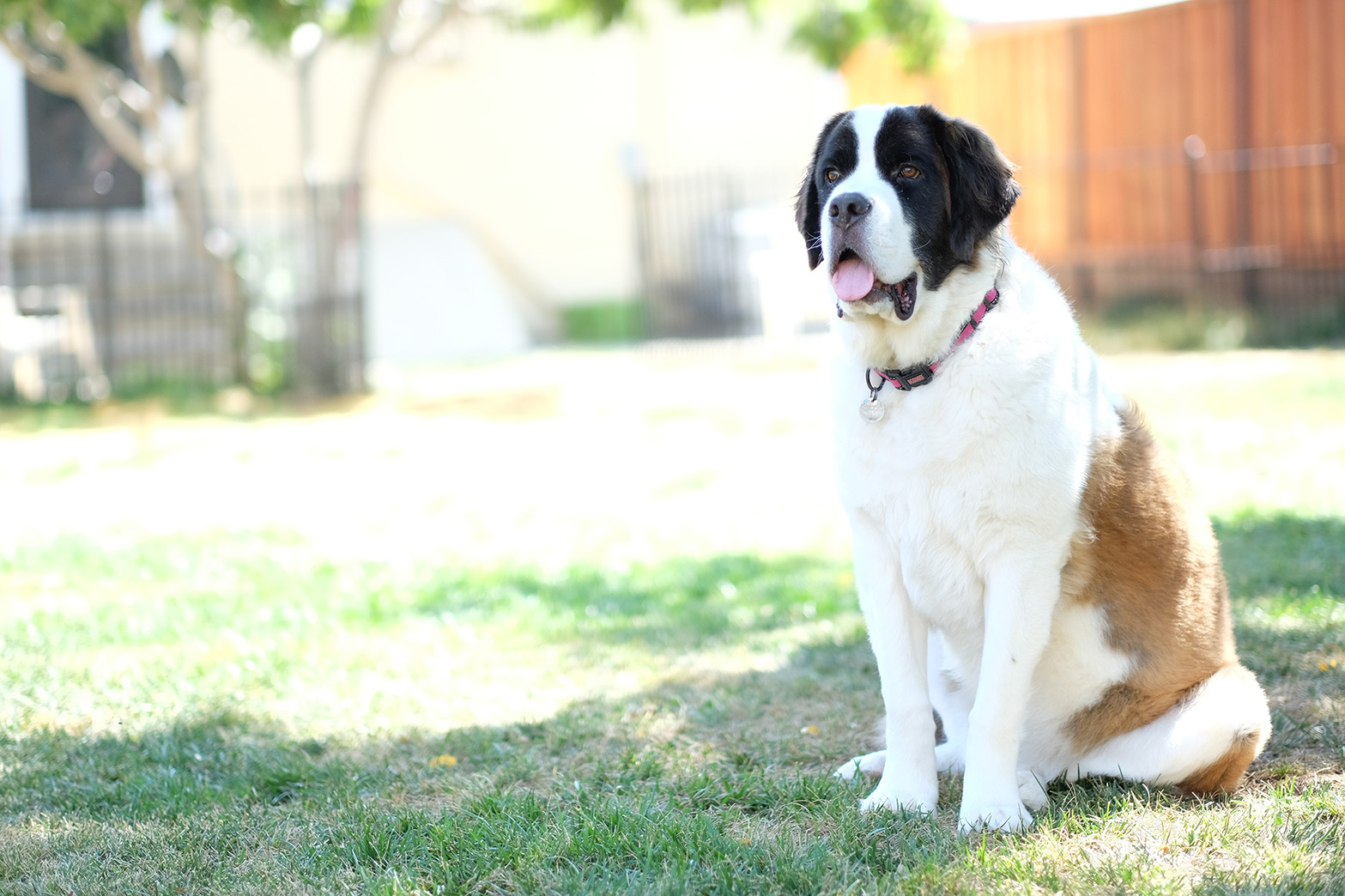
Physically, the Saint Bernard is an enormous dog, with males typically weighing between 120 and 180 pounds and standing 28 to 30 inches tall at the shoulder. Females are slightly smaller but still impressive in size. The breed has a sturdy, muscular build, with a broad chest, powerful legs, and a massive head, which gives it a commanding presence. One of the most distinguishing features of the Saint Bernard is its thick, dense coat, which comes in both short-haired and long-haired varieties. The coat is usually a combination of white with reddish-brown patches, and it provides protection against the cold, which was crucial for the dog’s original work in freezing temperatures. Despite its thick coat, the Saint Bernard's gentle and calm demeanor gives it an approachable, even regal appearance.
Temperamentally, the Saint Bernard is renowned for its gentle and affectionate nature. While its size may seem intimidating, it is known as a "gentle giant," often displaying a calm and friendly disposition toward children and other pets. The breed is social and enjoys being part of the family, often forming strong bonds with its human companions. Despite its working dog origins, the Saint Bernard is generally laid-back and relaxed when at home, although it still enjoys daily walks and playtime to keep it healthy and happy. Its patient and loving demeanor makes it an excellent companion for families, though its large size means that it is best suited to homes with enough space for it to move around comfortably.
The Saint Bernard's intelligence and trainability make it a great companion, though it can sometimes be a bit stubborn, requiring consistent training and leadership. While they were bred to work independently in search-and-rescue missions, modern Saint Bernards are often content with simply being loving family members. However, due to their large size and potential for health issues, such as hip dysplasia and heart conditions, they require proper care, exercise, and regular veterinary check-ups. The Saint Bernard’s combination of size, strength, and gentle nature has earned it a place as one of the most iconic and beloved dog breeds, with a legacy that continues to resonate as a symbol of loyalty, bravery, and affection.
History
The Saint Bernard is a legendary breed with origins deeply rooted in the Swiss Alps, where it became famous for its role in rescue missions. Its history begins in the 11th century when monks at the hospice of Saint Bernard Pass, a treacherous alpine route between Switzerland and Italy, established a refuge for travelers. The monks likely acquired large, Mastiff-type dogs from nearby valleys to serve as guardians and working companions. Over centuries, these dogs were selectively bred for their strength, endurance, and ability to navigate the snow-covered mountains, evolving into the Saint Bernard we recognize today.
By the 17th century, the Saint Bernard had become indispensable at the hospice, particularly for its ability to locate and rescue travelers stranded in the snow. These dogs were renowned for their keen sense of direction, resilience in harsh conditions, and protective instincts. They worked in teams, with one dog digging through the snow to locate a traveler and another returning to the hospice to alert the monks. While popular depictions often include a barrel of brandy around their necks, this is more myth than reality, likely popularized by Victorian-era artwork.
The breed's fame spread in the 19th century, thanks in part to the stories of their heroic rescues and the monks’ efforts to share their legacy. One of the most famous Saint Bernards, Barry, is credited with saving the lives of over 40 people and became a symbol of the breed’s bravery and loyalty. However, by the mid-19th century, the breed faced a decline due to harsh winters and disease. To preserve the Saint Bernard, breeders introduced bloodlines from other large breeds, such as the Newfoundland, which influenced the modern breed's appearance.
Today, the Saint Bernard is celebrated as a gentle giant, known for its friendly demeanor, loyalty, and adaptability. While it is no longer used for alpine rescues, the breed remains a symbol of selflessness and heroism. Its rich history reflects its vital role in the survival of travelers and its enduring bond with humanity.
Appearance
Saint Bernards are massive, heavily boned dogs with a broad, powerful head and a deep chest. Their overall outline is substantial and balanced—built for strength and stamina more than speed.
Coats come in two types: smooth (short, dense, tough hair) and long (medium-length hair that is straight to slightly wavy). Typical coloring is white with red or reddish-brown markings, often with darker shading on the face and ears, and the breed’s expression is usually soft and intelligent.
Colors
• Brindle & White
• Brown & White
• Mahogany & White
• Orange & White
• Red & White
• Rust & White
• White & Brown
• White & Orange
• White & Red
Health
Like many giant breeds, Saint Bernards are at risk for orthopedic problems such as hip dysplasia, and careful growth management is important. Feeding an appropriate large-breed growth diet during puppyhood and avoiding excessive forced exercise can help reduce stress on developing joints.
They’re also a breed where owners should discuss bloat (gastric dilatation-volvulus) risk and prevention strategies with a veterinarian. Routine wellness care—weight control, dental hygiene, and keeping nails/feet in good condition—goes a long way toward preserving mobility and comfort.
Care
Grooming needs are moderate but steady. Weekly brushing helps manage shedding and keeps the coat and skin in good condition; long-coated dogs typically need a bit more attention around feathering and tangles. Expect drool—having towels around and keeping facial folds clean is part of normal care.
Exercise should be regular but not extreme: daily walks and light play are usually enough for adults. Because they can struggle in heat, plan activity for cooler parts of the day, provide plenty of water, and prioritize shade and indoor cooling during warm weather.
Training
Training should start early, before the puppy grows into a dog that can easily outweigh or out-muscle an adult handler. Saints respond best to calm, reward-based methods paired with clear boundaries—short sessions, lots of reinforcement, and real-life practice (polite greetings, leash manners, settling).
They can be stubborn or slow to repeat drills, so focus on consistency and management rather than confrontation. Basic obedience and a reliable recall/"leave it" are especially valuable given the breed’s size and the practical realities of living with a giant dog.
Temperament
A well-bred Saint Bernard is generally calm, affectionate, and tolerant, especially with familiar people. Many are notably patient with children, though their sheer size means accidental bumps are always a possibility.
They’re often reserved with strangers at first rather than overtly outgoing, and they can be protective in a quiet, watchful way. Intelligence is paired with an independent streak, so consistency matters—if the rules change day to day, a Saint will happily improvise.
Lifestyle
Saint Bernards are usually happiest as indoor family dogs with space to stretch out and a cool place to rest. They can do well in a home with a yard, but they don’t need constant high-intensity activity; what they do need is room for their large body and a predictable routine.
Climate matters. Many Saints love cold weather and can struggle in hot, humid conditions, so air conditioning, summer schedule adjustments, and careful monitoring for overheating are key in warmer regions.
Ownership
Owning a Saint Bernard is a commitment to “giant-breed logistics.” Food, crates, beds, vehicle space, grooming supplies, and veterinary care all scale up with the dog’s size, and so does the importance of training and supervision.
If you want an affectionate, steady companion and you’re comfortable managing drool, shedding, and big-dog expenses, the breed can be deeply rewarding. The best owners prioritize early socialization, gentle structure, and ongoing manners so the dog’s strength is always paired with self-control.
Interesting Facts
- Originated in the Swiss Alps around the Great St. Bernard Pass and became famous for mountain rescue work.
- Historically kept by hospice monks; early Saints were used as companions, watchdogs, and pathfinders in deep snow.
- Coat varieties: smooth and long; long coats became more common after historical crosses introduced the trait.
- Known for a calm, gentle demeanor but grows into a very large, powerful adult that benefits from early training.
- Often does better in cool weather than hot weather; heat management is a major day-to-day consideration.
- Drooling is common and is considered normal for the breed.