
Samoyed
Basics
The Samoyed is a northern spitz-type working dog developed alongside the Samoyed peoples of Siberia. Traditionally, these dogs helped herd and guard reindeer, pulled sleds, and lived closely with families—work that shaped a breed known for both stamina and sociability.
Modern Samoyeds are cheerful, people-oriented companions with real working-dog energy. They’re bright and expressive, and they thrive when they get daily exercise and plenty of interaction rather than being left to entertain themselves.
Description
The Samoyed is a striking and friendly breed of dog, known for its fluffy white coat, distinctive "Sammy smile," and gentle, affectionate nature. Originating from Siberia, the Samoyed was developed by the nomadic Samoyede people, who used these dogs to herd reindeer, pull sleds, and keep their owners warm in the harsh Arctic climates. Due to their close relationship with their human families, Samoyeds are renowned for their friendly, social temperament, and they thrive in environments where they can be active and engaged with people.
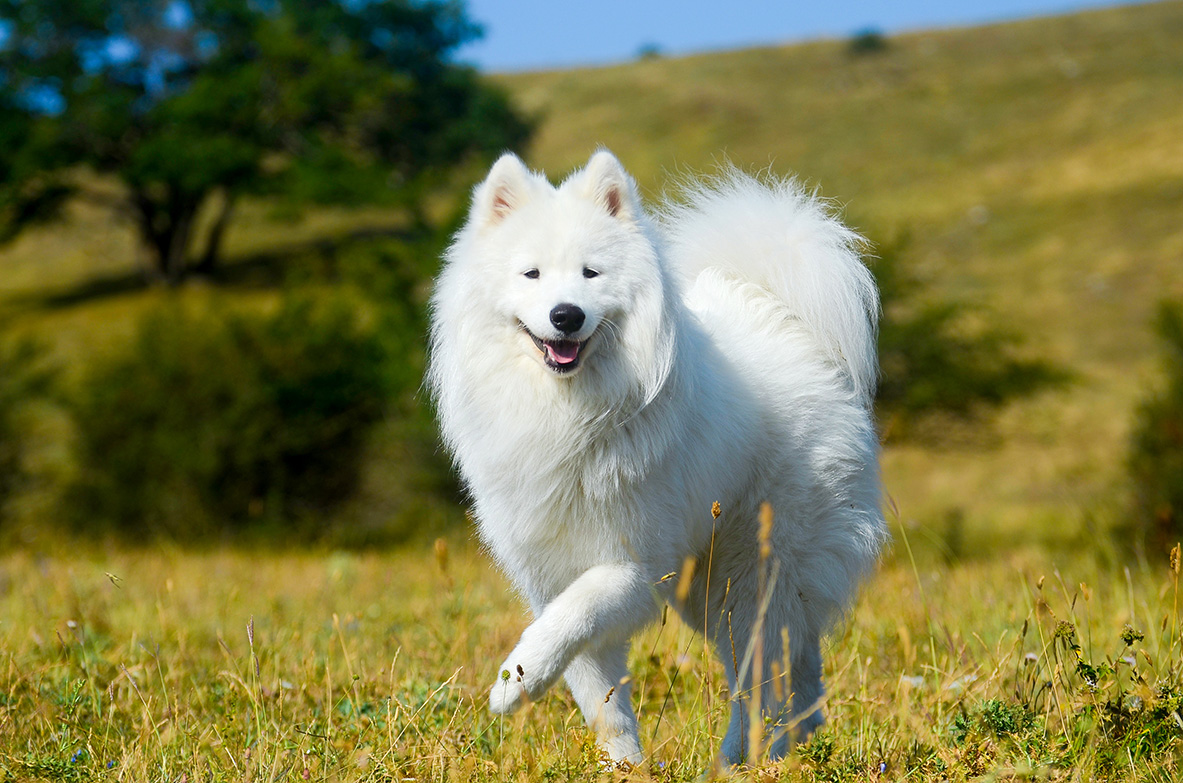
Physically, the Samoyed is a medium to large-sized dog, typically standing between 19 and 23.5 inches tall at the shoulder and weighing between 35 and 65 pounds. Its most defining feature is its thick, dense double coat, which is primarily white but can also come in shades of cream or biscuit. The outer coat is long, straight, and luxurious, while the undercoat is soft and insulating, allowing the Samoyed to withstand extremely cold temperatures. Their fluffy tail curls over their back, adding to their characteristic appearance. With their expressive eyes, erect ears, and the famous "smile" that gives them a friendly and approachable look, Samoyeds have an undeniably charming presence.
In terms of temperament, Samoyeds are known for being affectionate, playful, and social. They are often described as "people dogs" because they love being around their families and are typically good with children and other pets. These dogs are highly intelligent and trainable but can also be independent and stubborn at times, so consistent, positive reinforcement is key to successful training. Although they are generally calm and gentle, they are also energetic and enjoy regular exercise, whether through walks, runs, or playtime. Samoyeds are well-suited to active families or individuals who can provide them with plenty of attention and physical activity.
While their beauty and friendly nature make them popular as companion animals, Samoyeds are also known for their shedding, which can be quite significant due to their thick double coat. Regular grooming is essential to keep their coat in good condition and to prevent mats from forming. Additionally, Samoyeds are vocal dogs and may bark or "talk" to their owners, which can make them excellent watchdogs. However, due to their social nature, they may not always be the best choice for homes where they are left alone for extended periods. Overall, the Samoyed is a versatile, affectionate breed that thrives on human companionship and is sure to bring joy and energy to any home.
History
The Samoyed is an ancient and majestic breed with origins deeply tied to the nomadic Samoyedic peoples of Siberia, who relied on these dogs for survival in the harsh Arctic environment. Named after the Samoyede tribes, the breed was used for herding reindeer, pulling sleds, and keeping their owners warm during frigid nights by sleeping close to them. Known for their resilience, strength, and friendly demeanor, Samoyeds were indispensable to the daily lives of these northern tribes.
The breed's characteristic "Sammy smile," a slightly upturned mouth, not only contributes to its charming appearance but also prevents drooling, which could lead to ice forming on the dog's face in subzero temperatures. Their dense, weather-resistant double coat was perfectly adapted to the Arctic climate, providing insulation and protection against the elements. This adaptability made them invaluable working dogs capable of enduring long days of labor in some of the world's most unforgiving conditions.
In the late 19th and early 20th centuries, Samoyeds were introduced to the Western world by Arctic explorers, who admired the breed’s hardiness and gentle disposition. These dogs were instrumental in many polar expeditions, including those led by Fridtjof Nansen and Roald Amundsen. The explorers' accounts of the Samoyed's endurance and loyalty captured the interest of breeders and enthusiasts in Europe and North America.
By the early 20th century, the Samoyed gained popularity as a companion dog and show dog, while still retaining its working heritage. The American Kennel Club (AKC) officially recognized the breed in 1906. Today, the Samoyed is celebrated for its friendly, sociable nature, and striking appearance. While it is no longer a working dog in its traditional sense, the breed’s rich history as a loyal partner to humans in extreme conditions endures, symbolizing strength, beauty, and a deep bond with humanity.
Appearance
Samoyeds are substantial but graceful dogs with a compact, powerful build and an unmistakable “Sammy smile.” The upturned corners of the mouth help reduce drooling and, historically, helped prevent icicles from forming around the lips in cold climates.
Their hallmark is a thick double coat: a soft, dense undercoat with a straight, harsher outer coat that stands off the body. The coat is typically white (sometimes with biscuit/cream shading), and the overall look is plush, bright, and weather-resistant.
Colors
• Biscuit
• Cream
• White
• White & Biscuit
Health
Samoyeds are generally hardy, but responsible breeding and routine veterinary care matter. Keeping them lean is especially important because a thick coat can hide weight gain, and extra weight adds strain to joints and overall fitness.
Work with your veterinarian on a preventive plan that includes dental care, parasite control, and breed-appropriate screening. If you’re raising a puppy, focus on steady growth and avoid overdoing high-impact exercise while the dog is still developing.
Care
Coat care is a major part of Samoyed ownership. Weekly brushing is the baseline, and during heavy seasonal shedding (“blowing coat”) you’ll likely need more frequent sessions to prevent mats and keep loose undercoat under control.
Daily needs also include steady exercise and a cool environment. Their thick coat protects them in cold weather, but many Samoyeds struggle in heat—plan walks for cooler hours, provide shade and water, and use air conditioning during hot spells.
Training
Samoyeds respond best to reward-based training that feels like a game—food, toys, and short upbeat sessions. They’re smart and can excel at obedience, tricks, and dog sports, but repetition without variety tends to lose them.
Because they’re strong and can be vocal, early training for leash manners, polite greetings, and a reliable “quiet/settle” cue pays off. Give them jobs (retrieves, scent games, pulling activities where appropriate) to satisfy their working roots.
Temperament
Samoyeds are generally friendly, playful, and outgoing—often welcoming with strangers and affectionate with family. Many do well with children and other dogs when properly socialized, but their enthusiasm can be a lot for very small kids.
They’re intelligent and quick to learn, yet they can be independent and a bit stubborn. When bored or under-exercised, they may channel that energy into digging, vocalizing, or mischief, so mental engagement is just as important as physical activity.
Lifestyle
A Samoyed fits best in an active household that enjoys daily walks, play, and regular grooming. They’re typically happiest when they can be involved in family life rather than being a backyard-only dog.
They can do well in many home setups, but they need space to move and a plan for weather. Cold climates tend to be easy for them; warm, humid areas require more careful scheduling, cooling, and supervision to prevent overheating.
Ownership
Samoyeds are rewarding but not low-maintenance. Between grooming, exercise, and their social needs, they’re a breed for people who want a highly interactive companion and can commit time every day.
If you appreciate a talkative, bright, friendly dog—and you’re prepared for shedding, brushing, and some digging tendencies—you’ll likely love living with a Samoyed. The key is channeling their energy into training, play, and structured routines so their charm doesn’t turn into chaos.
Interesting Facts
- Developed in Siberia with the Samoyed peoples for herding/guarding reindeer, sled work, and close family companionship.
- Known for the “Sammy smile,” with upturned mouth corners that help reduce drooling in cold climates.
- Thick double coat: soft, dense undercoat plus a straight, harsher outer coat that stands off the body.
- Typically very friendly and sociable, but can be vocal and prone to digging when bored.
- Often happiest with daily exercise plus mental games/training.
- Many do better in cool weather than hot weather; heat management is important.