
Shetland Sheepdog
Basics
The Shetland Sheepdog ("Sheltie") is a small herding breed developed on Scotland’s Shetland Islands. It was shaped by rugged terrain and the need for a quick, responsive dog that could help manage small livestock and poultry while also living closely with people.
Today’s Sheltie is best known as a bright, biddable companion with strong herding instincts. They tend to bond closely with their families and often excel in obedience, agility, and other activities that let them think and move.
Description
The Shetland Sheepdog, often referred to as the "Sheltie," is a highly intelligent and agile herding breed that originated on the Shetland Islands, located to the north of Scotland. The breed was developed by crossing various herding dogs, including Collies, with smaller dogs to create a breed capable of managing livestock in the harsh climate and terrain of the islands. Shelties were primarily used to herd sheep and other livestock, and their quick learning ability and excellent work ethic made them invaluable to farmers. Today, the Shetland Sheepdog is a popular companion dog, known for its loving nature, trainability, and beautiful appearance.
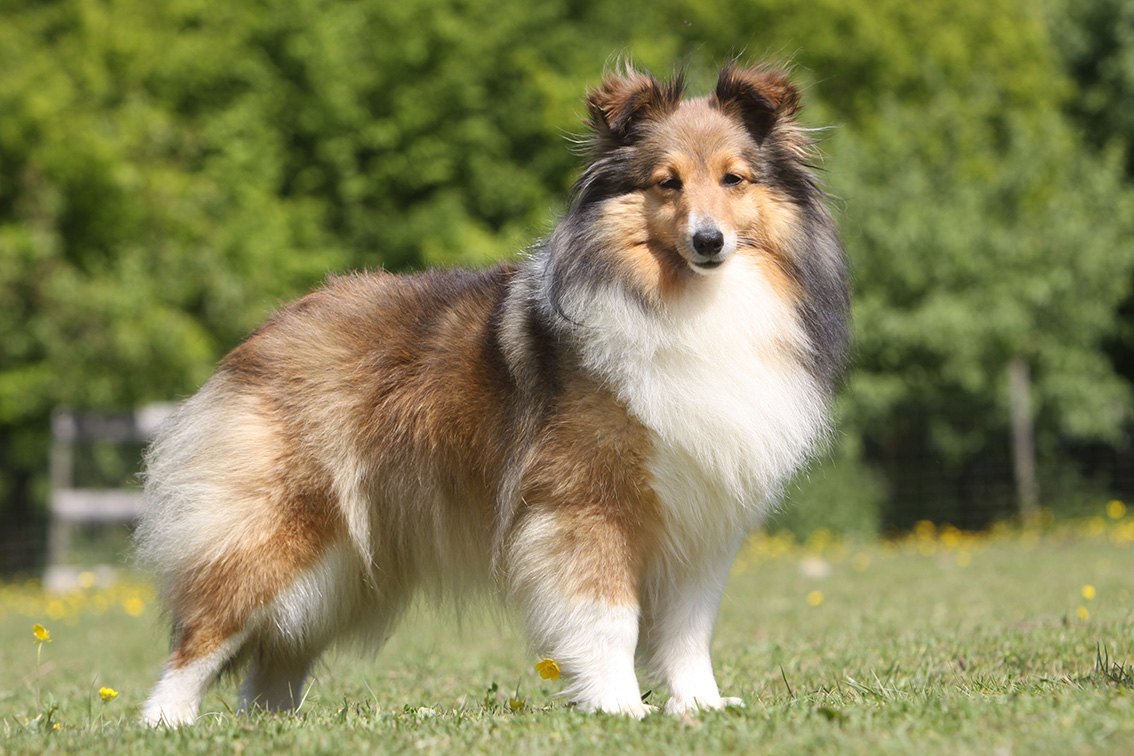
Physically, the Shetland Sheepdog is a small to medium-sized dog, typically standing between 13 and 16 inches at the shoulder and weighing around 15 to 25 pounds. It has a well-proportioned, athletic build, designed for agility and speed. One of the breed's most striking features is its thick double coat, which is abundant and luxurious, with a soft undercoat and a longer, harsher outer coat. The coat comes in a variety of colors, including sable, black, and merle, often with white and tan markings. Shelties have a well-defined head with a refined, gentle expression, and their long, graceful tails and erect ears complete their appealing, elegant appearance.
Temperamentally, Shetland Sheepdogs are known for their intelligence, loyalty, and affection. They are highly trainable, often excelling in obedience training and dog sports such as agility, obedience trials, and herding competitions. This breed is eager to please its owners, making it a great choice for active families or individuals who enjoy training their dogs. Shelties are also known for their herding instinct, and they may attempt to herd children, other pets, or even vehicles, as they were originally bred to control livestock. While they are generally gentle and friendly, they can be reserved or shy around strangers, making them excellent watchdogs.
Despite their agility and energy, Shetland Sheepdogs are typically calm and content in a home environment, as long as they receive enough physical exercise and mental stimulation. They thrive on human companionship and enjoy spending time with their families. Regular exercise, such as daily walks, playtime, or engaging in dog sports, is important to keep them mentally and physically fit. Their thick coat requires regular grooming to prevent matting and to keep them comfortable. While Shelties can be vocal, often barking to alert their family of potential intruders, they are generally well-behaved and adaptable dogs. Overall, the Shetland Sheepdog is a charming, intelligent, and loyal companion that makes an excellent addition to families, particularly those who appreciate an active, trainable breed.
History
The Shetland Sheepdog, affectionately known as the "Sheltie," is a highly intelligent and versatile herding breed that originates from the rugged Shetland Islands of Scotland. This breed was developed to help local farmers manage small herds of sheep and livestock in the harsh and windswept environment of the islands. The Sheltie’s small size, agility, and intelligence made it perfectly suited to its role, as it needed to be quick and resourceful to maneuver livestock on rough and uneven terrain. The breed’s origins likely involve a mix of native herding dogs, Scandinavian spitz-type dogs brought by early Norse settlers, and later crossings with other working breeds, such as the Rough Collie.
By the 19th century, the Shetland Sheepdog had become a recognizable and valued part of life on the islands, not only for its herding skills but also as a loyal companion. Its small size and resourcefulness mirrored the adaptability of the Shetland Islands’ ponies and sheep, which were bred to thrive in the limited resources of the region. Initially, the breed was referred to as the "Toonie Dog," derived from the word *tun,* meaning farm, further emphasizing its role as a practical farm helper.
In the early 20th century, the Sheltie began gaining recognition beyond the Shetland Islands. Breeders refined the breed by crossing it with the Rough Collie, which enhanced its appearance while preserving its herding instincts and intelligence. The Shetland Sheepdog was officially recognized by The Kennel Club in the United Kingdom in 1909 and by the American Kennel Club (AKC) in 1911, helping the breed grow in popularity as both a working dog and a family companion.
Today, the Shetland Sheepdog is celebrated worldwide for its intelligence, trainability, and affectionate nature. While it retains its herding instincts, it has also excelled in canine sports such as agility, obedience, and rally. The breed’s rich history as a hardworking and loyal partner reflects its enduring appeal and the dedication of those who have preserved its unique qualities.
Appearance
Shetland Sheepdogs are small, agile dogs with a refined, collie-like outline and an alert expression. They’re built for speed and endurance rather than bulk, with a light, athletic frame that makes them quick on their feet.
Their coat is a double coat: a long, harsh, straight outer coat over a short, dense undercoat. The ruff and mane are typically prominent, and the breed is known for a polished, “flowing” look—though that look requires regular grooming to maintain.
Colors
• Black & Tan
• Black & White
• Blue Merle
• Merle
• Sable
• Sable & White
• Tricolored
Health
A sensible lifestyle—lean body condition, regular exercise, and routine veterinary care—supports long-term health in Shelties. Because their coat can hide changes in body condition, it helps to check weight with your hands, not just by sight.
Work with a veterinarian and a responsible breeder on breed-appropriate screening and prevention. Keeping teeth clean, maintaining nails/feet, and addressing skin/ear issues early are practical habits that make a noticeable difference over time.
Care
Regular grooming is a real requirement. Brushing and combing several times a week helps prevent mats (especially behind the ears, in the ruff, and at the pants), and it keeps shedding manageable—though many Shelties still shed a lot.
Exercise needs are moderate but consistent. Daily walks plus backyard games, training sessions, and puzzle toys suit most Shelties well, and many thrive when they have a sport outlet like agility or herding-style games.
Training
Training is usually a pleasure with Shelties because they’re fast learners and enjoy being directed. Keep sessions short, upbeat, and varied; they tend to do best with reward-based methods and clear, consistent cues.
Because barking is common, it’s worth teaching a “quiet” cue early and rewarding calm behavior. Building confidence through gentle exposure to new people, places, and sounds is also important for preventing timidity.
Temperament
Shelties are typically very intelligent, eager to learn, and responsive to their people. Many are affectionate and playful at home, and they often do well with children when supervised—though herding behavior can show up as heel-nipping in excited play.
It’s also common for Shelties to be reserved or shy with strangers. Early, positive socialization helps them stay confident, and training that uses praise, games, and treats usually works better than harsh corrections for this sensitive breed.
Lifestyle
Shelties tend to do best as indoor family dogs with daily interaction and something to do. They can adapt to apartments or houses as long as their exercise and mental stimulation needs are met, but they usually dislike being isolated.
They’re often sensitive to their environment and can be sound-aware, so a calm routine and thoughtful training help in busy neighborhoods. If you want a highly responsive companion who enjoys learning, the Sheltie lifestyle can be a great fit.
Ownership
A Sheltie owner should be ready for two big themes: training and grooming. The upside is a dog that often loves to learn and participate in family activities; the tradeoff is the time needed for coat care and the consistency needed to manage barking and herding instincts.
If you enjoy teaching skills, doing dog sports, or simply living with a clever, engaged companion, Shelties are wonderfully rewarding. Choosing a well-socialized puppy from health-tested lines and continuing positive socialization into adulthood sets the tone for an easy, confident dog.
Interesting Facts
- Developed on Scotland’s Shetland Islands as a small, agile herding dog.
- Often described as a “miniature collie”-type breed in overall look, but with its own history and purpose.
- Double coat: long, harsh outer coat over a dense undercoat; regular brushing helps prevent mats.
- Very intelligent and typically excels in obedience and agility-style activities.
- Can be reserved with strangers; early socialization supports confidence.
- Barking and heel-nipping herding behavior can appear without training and outlets.