
Siberian Husky
Basics
The Siberian Husky is a medium-sized working dog developed to pull light loads at a steady pace over long distances in cold climates. Bred to work with people and other dogs rather than to guard property, they’re typically social with strangers and happiest when they have a “job” and daily activity.
As a companion, a Husky fits best with owners who want an athletic, outdoorsy partner and who can provide structure. They tend to be clever and independent, so success usually comes from consistent routines, secure management, and plenty of exercise instead of expecting automatic obedience.
Description
The Siberian Husky is a striking and energetic dog breed known for its beautiful appearance, strong work ethic, and friendly nature. Originating in the harsh, cold environments of Siberia, these dogs were bred by the Chukchi people to pull sleds over long distances in freezing temperatures. Their primary role was to transport goods and people across vast, snowy landscapes, and they were chosen for their endurance, stamina, and ability to work in teams. Today, Siberian Huskies are popular as companion animals, prized for their vibrant personalities and striking looks, but they still retain the energy and drive that made them excellent sled dogs.
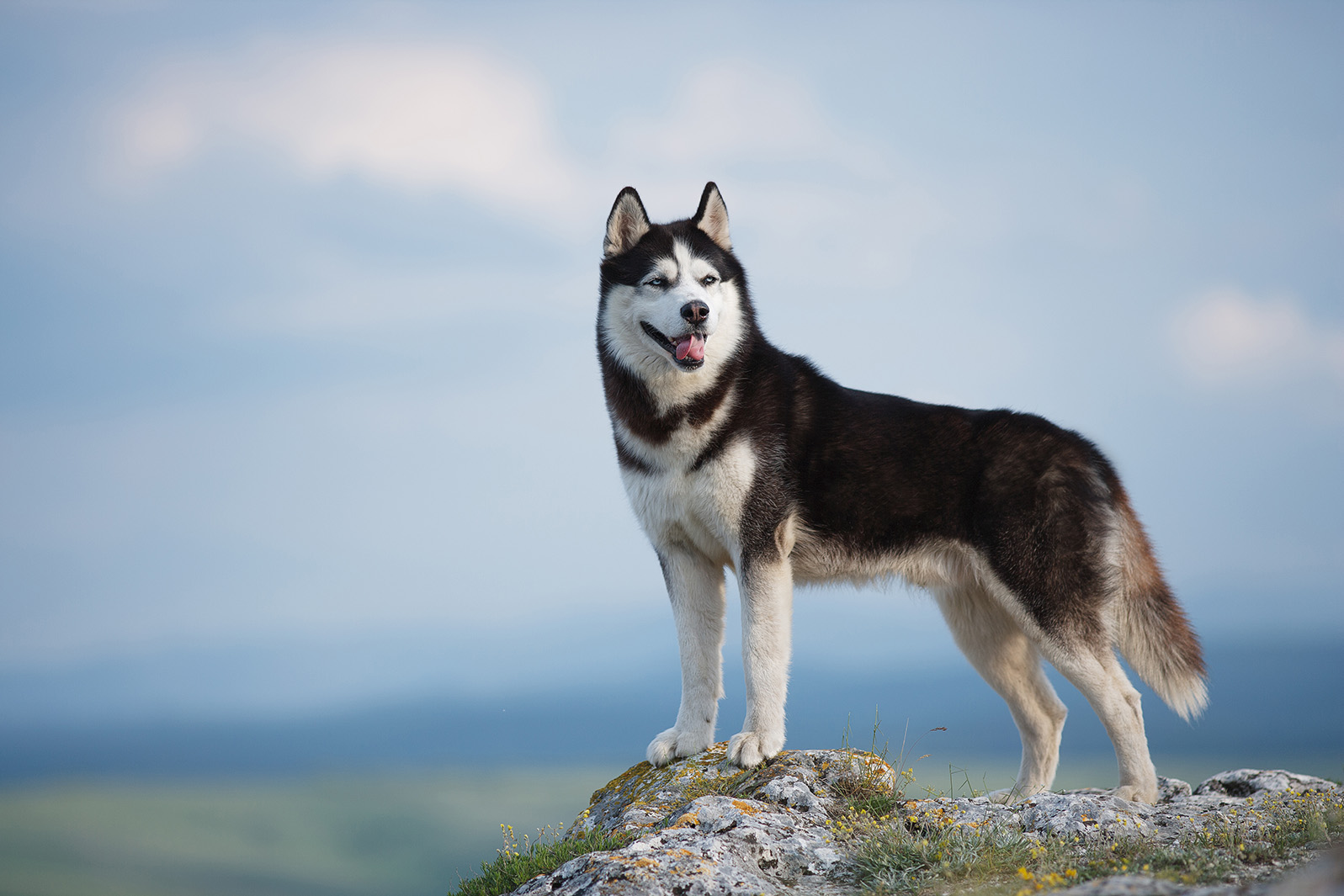
Physically, the Siberian Husky is a medium-sized dog with a well-muscled, athletic build designed for speed and endurance. Adult dogs typically stand between 20 and 24 inches tall at the shoulder and weigh between 35 and 60 pounds. One of the breed's most distinctive features is its thick double coat, which is designed to protect it from the cold temperatures it was originally bred to endure. Their coat comes in a wide variety of colors, including black, gray, red, and pure white, and they often have striking markings, including a facial mask and bright blue, brown, or even heterochromatic (two different-colored) eyes. Their erect triangular ears and bushy tail, which they carry curled over their back, contribute to their striking appearance.
Temperamentally, the Siberian Husky is known for being friendly, outgoing, and independent. These dogs are typically not aggressive, and they are usually good with children and other pets, though they may have a strong prey drive due to their history as hunting and working dogs. They are also highly intelligent, which can make them both easy to train and occasionally stubborn, as they tend to think for themselves. While they are generally affectionate and social, Siberian Huskies can be independent and sometimes aloof with strangers. Due to their high energy and strong pack instincts, they thrive in active households where they can get plenty of exercise and stimulation.
Siberian Huskies require regular physical activity to keep them happy and healthy. Without enough exercise, they can become bored and potentially destructive. They are known to be escape artists, able to dig and climb, so secure fencing is a must if they are allowed outside. Huskies also have a thick double coat that requires regular grooming, especially during shedding seasons, to prevent matting and keep their coat in good condition. Despite their beautiful looks and friendly demeanor, owning a Siberian Husky requires commitment, as they need an outlet for their energy and a structured environment. However, for the right owner, the Siberian Husky is a loyal, lively, and affectionate companion that can bring joy to an active and engaging household.
History
The Siberian Husky is an ancient and iconic breed with origins deeply rooted in the Arctic regions of Siberia. The breed was developed by the Chukchi people, a nomadic tribe in northeastern Siberia, who relied on these dogs for survival in one of the world’s harshest environments. For thousands of years, Siberian Huskies were bred to pull sleds, transport goods, and assist in hunting, showcasing their remarkable stamina, speed, and resilience. Their dense double coat, strong build, and compact size made them well-suited to enduring freezing temperatures and navigating snow-covered landscapes.
The Chukchi people carefully bred the Siberian Husky not only for its physical abilities but also for its temperament. The dogs needed to be friendly and cooperative to work in teams and live closely with their human families. This close bond between the Chukchi and their dogs ensured the breed’s survival and allowed it to thrive as an essential part of Arctic life. For centuries, Siberian Huskies remained largely unknown to the outside world, their reputation confined to the remote Siberian wilderness.
The breed gained international attention in the early 20th century when Siberian Huskies were brought to Alaska for sled dog races during the gold rush. Their speed and endurance quickly outshone the larger, slower freight dogs commonly used in the region. In 1925, the breed’s reputation was solidified during the famous serum run to Nome, Alaska, also known as the "Great Race of Mercy." A team of Siberian Huskies led by Balto helped deliver life-saving diphtheria antitoxin across 674 miles of harsh terrain, saving countless lives and earning the breed worldwide admiration.
The American Kennel Club (AKC) recognized the Siberian Husky in 1930, and its popularity continued to grow as both a working dog and a beloved companion. Today, the Siberian Husky is celebrated for its intelligence, friendly nature, and athleticism. While it remains a favorite for sledding and other canine sports, it is also a cherished family pet, admired for its striking appearance and rich history as a loyal and hardworking breed.
Appearance
Siberian Huskies are quick, light on their feet, and built for endurance. They have a moderately compact body, erect triangular ears, and a well-furred “brush” tail; their movement is meant to look smooth and efficient rather than heavy or pounding.
The breed carries a dense double coat designed for harsh weather, with many acceptable colors and markings. A hallmark feature is the almond-shaped eye set and expressive look; brown or blue eyes are both common, and some dogs have one of each.
Colors
• Agouti & White
• Black
• Black & Tan
• Black & White
• Black Tan & White
• Brown & White
• Gray & White
• Grey
• Red & White
• Sable & White
• White
Health
Siberian Huskies are generally hardy, but responsible owners should plan for preventive care and screening. Like many medium-to-large breeds, orthopedic concerns such as hip dysplasia can occur, and maintaining a lean body condition helps reduce joint stress.
Eye health is a common focus in the breed, with inherited conditions (such as cataracts or progressive retinal changes) discussed by breed organizations and veterinary references. When choosing a breeder, ask about eye exams and other recommended health testing in the pedigree, and keep up with routine veterinary visits throughout adulthood.
Care
Coat care is a major part of Husky ownership. Their double coat “blows” seasonally, which can mean heavy shedding for weeks; regular brushing helps keep the undercoat from matting and reduces hair around the house. Basic maintenance also includes nail trims, ear checks, and routine dental care.
Daily physical activity matters more than long grooming sessions. Huskies do best with a mix of aerobic exercise (running, hiking, pulling sports when appropriate) and mental outlets like scent games or training puzzles. In hot or humid weather, plan exercise for cooler hours and provide shade and water.
Training
Huskies learn quickly, but they don’t always see the point of repetition. Short, upbeat sessions with clear rewards usually work better than drilling. Because the breed is bred for independent work in harness, reliability off-leash can be difficult; many owners treat a fenced area and a leash as non-negotiable safety tools.
Early socialization and polite-leash skills pay off. Teaching “leave it,” impulse control, and a strong recall foundation (even if it’s not perfect) helps reduce chasing and door-dashing. Consider structured activities—canicross, skijoring, bikejoring, or obedience games—to give that brain something to do.
Temperament
The classic Husky temperament is friendly and gentle, with an alert, outgoing attitude. They’re often playful with people and generally not possessive or suspicious in the way many guard-oriented breeds can be.
Independence is part of the package. Many Huskies are curious, opportunistic, and motivated by movement—so wildlife, neighborhood cats, and even a fluttering leaf can trigger a chase. They also tend to enjoy canine company and may become restless or noisy if under-stimulated.
Lifestyle
This is an active, people-oriented breed that thrives with daily movement and engagement. A quick walk around the block rarely satisfies a Husky; they’re better matched to households that can commit to longer outings, running partners, and weekend adventures.
Secure containment is part of the lifestyle. Many Huskies are talented diggers and climbers, so a sturdy fence and supervision are important. They often enjoy colder weather and can be sensitive to heat, so their routines may shift seasonally depending on climate.
Ownership
Before bringing home a Husky, be honest about time and management. Plan for substantial daily exercise, consistent training, and an environment designed to prevent escapes. If you travel often or prefer a low-shedding, low-energy dog, this breed can be a poor fit.
When selecting a dog, prioritize reputable breeders who follow breed-club guidance on temperament and health testing, or consider rescue organizations experienced with northern breeds. Ask about the dog’s energy level, prey drive, and comfort around other animals so expectations match reality.
Interesting Facts
- Originally developed as a sled dog built for endurance rather than heavy hauling.
- Typically friendly with people; not known as a strong guard-dog breed.
- Dense double coat with seasonal “coat blow” that can produce intense shedding.
- Erect ears, brush tail, and efficient, smooth gait reflect northern working heritage.
- Eye color can be brown or blue; some dogs have one of each.
- Often excels in activities like canicross, skijoring, and other pulling sports.