
Sloughi
Basics
The Sloughi is an ancient North African sighthound developed to course game across open terrain. Often nicknamed the “Arabian Greyhound,” it’s built for speed and endurance and historically hunted by sight over long distances.
In modern homes, the Sloughi is typically a quiet, elegant companion—especially indoors—while still carrying the strong chase instinct and athletic drive that shaped the breed. In the U.S. it’s comparatively rare, so prospective owners benefit from seeking out breed clubs and experienced sighthound people early.
Description
The Sloughi, also known as the Arabian Greyhound, is an elegant and ancient breed of sighthound that hails from North Africa, particularly Morocco, Algeria, and Tunisia. Used primarily for hunting game such as hares, gazelles, and foxes, the Sloughi has been prized for its exceptional speed, keen sight, and agility. This breed has a history that dates back over a thousand years, and it is deeply woven into the culture and traditions of the Berber people, who relied on it for its hunting prowess in the harsh desert and mountainous regions of North Africa. Despite its long history, the Sloughi remains relatively rare outside of its native regions but is gaining recognition in other parts of the world.
Physically, the Sloughi is a medium-sized dog, standing between 24 and 29 inches tall at the shoulder and weighing between 40 and 60 pounds. It has a sleek, athletic build that emphasizes speed and endurance, with a long, narrow head, a deep chest, and strong legs built for chasing prey. The coat is short, smooth, and typically comes in colors such as fawn, red, black, or brindle, often with white markings on the chest, legs, or tips of the toes. The Sloughi’s expressive, almond-shaped eyes and erect ears add to its noble and striking appearance. The breed’s physical appearance is a testament to its hunting roots, designed to help it track and catch game in a variety of environments.
Temperamentally, the Sloughi is known for being calm, dignified, and independent. Although they are incredibly intelligent and trainable, they are also known for their independent nature, which can make training a bit challenging, especially for first-time dog owners. Sloughis are typically reserved with strangers but are affectionate and loyal to their families, often forming strong bonds with their owners. They are not known for being particularly vocal, and their gentle nature makes them good companions in homes with children or other pets, though they may be inclined to chase smaller animals due to their strong prey drive. Despite their independent streak, Sloughis thrive on human companionship and enjoy spending time with their families.
Due to their history as hunting dogs, Sloughis require regular exercise to stay healthy and happy. They have high energy levels and love to run, making them well-suited for activities like lure coursing, agility, or other canine sports that allow them to showcase their speed and athleticism. While they are generally calm indoors, they need a secure, fenced area where they can safely run and stretch their legs. Their short coat requires minimal grooming, but they do benefit from regular brushing to keep their skin healthy and free from debris. The Sloughi is a rare and fascinating breed, known for its grace, speed, and history as a noble hunting companion in the deserts of North Africa.
History
The Sloughi, often referred to as the "Arabian Greyhound," is an ancient and elegant sighthound with origins deeply rooted in North Africa. This breed has been a loyal companion to the Berber tribes of Morocco, Algeria, Tunisia, and Libya for centuries, where it was valued for its speed, endurance, and hunting prowess. The Sloughi was primarily used to hunt game such as hare, gazelle, and jackal in the arid deserts and mountainous regions of North Africa. Its keen eyesight and agility allowed it to excel in tracking and pursuing prey over challenging terrain.
The breed’s history is intertwined with the nomadic lifestyle of its human companions, serving not only as a hunting partner but also as a guardian and a symbol of status. Sloughis were highly regarded and often treated with great care and reverence, reflecting their importance in daily life and their cultural significance. The breed’s loyalty and adaptability ensured its survival in the harsh environments of the Sahara and surrounding regions.
In the late 19th and early 20th centuries, European explorers and colonists brought attention to the Sloughi, and a small number of dogs were introduced to Europe. In 1925, the breed was officially recognized by the French Kennel Club, as France had colonial ties to many regions where the Sloughi thrived. Despite this recognition, the breed remained relatively rare outside its native lands.
Today, the Sloughi is still most closely associated with its North African heritage, though it has gained a dedicated following in Europe and North America. The Fédération Cynologique Internationale (FCI) formally recognized the breed in 1935, and the American Kennel Club (AKC) accepted it into the hound group in 2016. While the Sloughi continues to excel as a hunting dog in its homeland, it is also appreciated as a loyal and affectionate companion, admired for its grace, intelligence, and rich cultural history.
Appearance
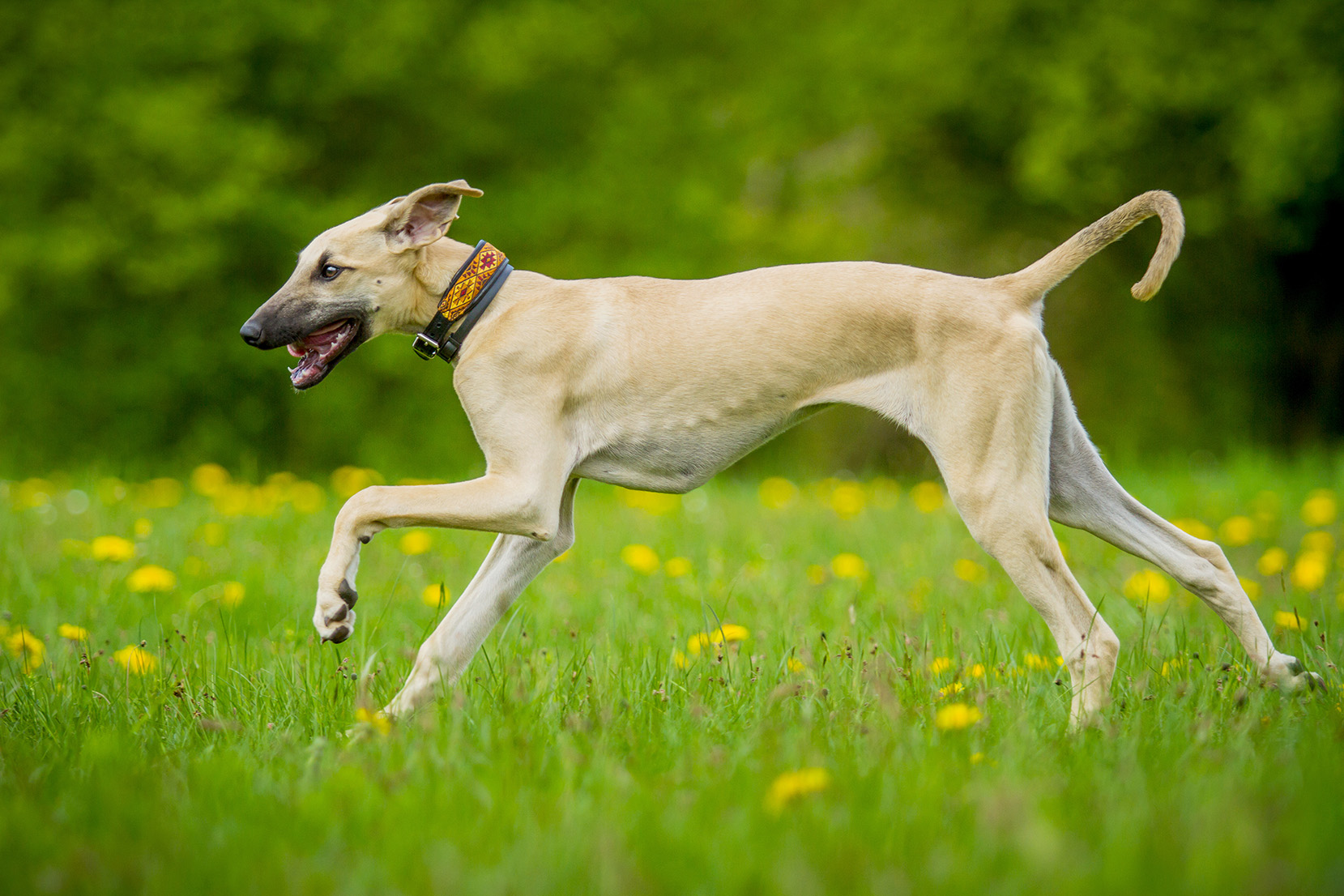
Sloughis are lean, medium-sized, smooth-coated hounds with a refined wedge-shaped head, drop ears, and a long tail carried low with a gentle upward curve at the tip. The topline is close to horizontal, with a slightly arched loin and a deep chest paired with a well-tucked underline—an outline made for efficient galloping.
The coat is short, tight, and fine, showing defined bone and clean muscle rather than heavy substance. Colors are generally within the sand-to-mahogany fawn range and may include dark overlays or a black mask; heavy or extensive white markings are typically considered undesirable in standards.
Colors
• Black
• Brindle
• Cream
• Mahogany
• Red
• Sandy
• Tan
Health
There’s no single, breed-specific list of issues that applies to every Sloughi line, but owners should think in “sighthound basics”: keep a lean body condition, avoid sudden overexertion in young dogs, and watch for soft-tissue injuries from high-speed running.
Work with your veterinarian on an age-appropriate conditioning plan and discuss safe anesthesia and pain-control choices, since lean, athletic dogs can have different sensitivities than heavier breeds. Choosing breeders who can document longevity and health history in their lines is especially important in a rarer breed.
Care
Coat care is simple: occasional brushing, routine bathing as needed, and basic ear, dental, and nail maintenance. The bigger care needs are athletic: keep the dog lean, condition gradually, and pay close attention to pads, nails, and minor strains after sprinting or rough ground.
Because Sloughis are short-coated and lightly built, comfort matters—soft bedding for bony pressure points and weather protection in cold or wet conditions can make a big difference. Like many sighthounds, they also appreciate a predictable routine and a quiet place to decompress.
Training
Sloughis can be intelligent and thoughtful, but they’re rarely “robot obedience” dogs. Training goes best when it’s short, upbeat, and reward-based, with plenty of success repetitions and minimal harsh correction. Early socialization and gentle exposure to handling, grooming, and new environments are key.
Recall training deserves special focus, but it must be paired with management. Even a well-trained Sloughi may ignore a cue when prey appears, so long-line practice, secure fencing, and careful door/vehicle routines are essential parts of the training plan.
Temperament
A classic Sloughi trait is dignified reserve. Many are affectionate and playful with their family but naturally cautious with strangers, preferring to observe before engaging. They’re often sensitive dogs who respond best to calm voices and fair, consistent handling.
Their hunting heritage shows up as a strong sight-chase response—anything small and fast can flip the “on switch.” With good socialization they can live peacefully with other dogs, but introductions should be thoughtful, and they’re usually not the kind of dog that thrives in chaotic, highly social environments.
Lifestyle
Sloughis tend to be calm house dogs—provided they get real outlets for speed and movement. They thrive with opportunities to run safely (secure fenced areas, carefully managed sprint sessions) plus regular walks and enrichment that engages their senses without overstimulating them.
This is typically not an off-leash “park dog.” Their lifestyle fit is best with people who enjoy a quieter home, can provide secure containment, and are comfortable managing prey drive around wildlife and small pets.
Ownership
Good Sloughi ownership starts with security and structure: a reliable fence, leash-first habits, and consistent routines. Because many Sloughis are reserved, owners should be willing to advocate for their dog—avoiding forced interactions and giving the dog time to warm up.
It’s also a relationship breed. Sloughis often bond strongly to their people and do best when treated as part of the household rather than an outdoor kennel dog. If you want an outgoing greeter who enjoys nonstop attention from strangers, a Sloughi may feel too aloof; if you value a gentle, dignified companion with serious athletic ability, they can be an exceptional match.
Interesting Facts
- Ancient North African sighthound developed for coursing game across open terrain.
- Typically short, fine coat with minimal grooming needs.
- Often reserved with strangers but gentle and affectionate with family.
- Strong sight-chase drive; secure fencing and leash management are crucial.
- Built for efficient, floating movement and sprinting—conditioning and pad care matter.