
Spanish Greyhound
Basics
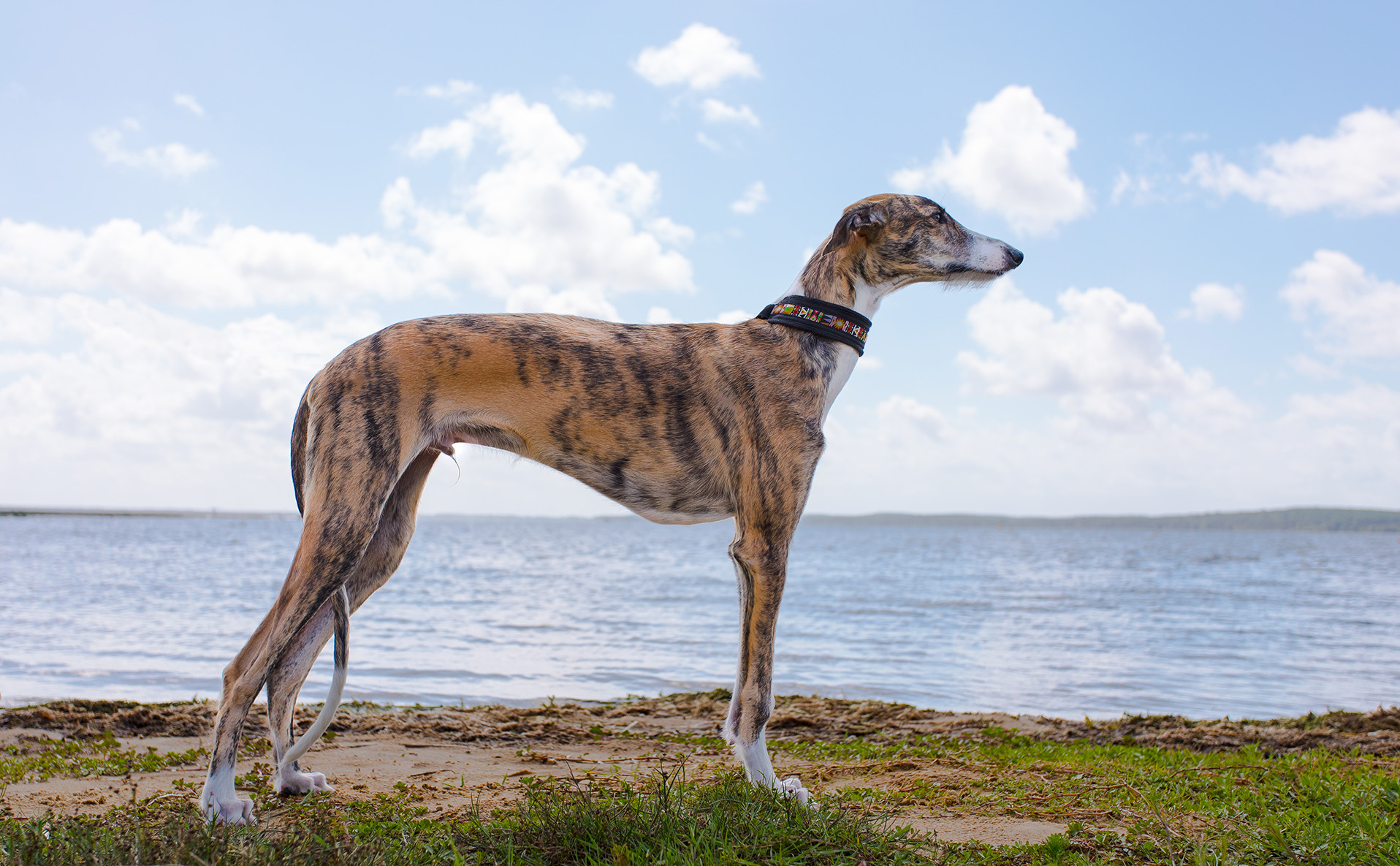
The Spanish Greyhound (Galgo Español) is a traditional Spanish sighthound developed to course hare across open, flat country. In the FCI standard, the breed is described as a good-sized, slightly longer-than-tall greyhound type with a long, narrow head, ample chest capacity, a deep tuck-up, and a very long tail—built for speed and endurance rather than heavy power.
Historically, the Galgo has been valued as a working hunting dog, guided primarily by sight in open fields. Modern dogs may still be used for field work in some regions, but many are kept as quiet companions that enjoy short bursts of running followed by long stretches of rest.
Description
The Spanish Greyhound, also known as the Galgo Español, is a noble and elegant breed of sighthound with deep roots in Spanish history. Originating in Spain, these dogs have been used for centuries for hunting, particularly for chasing game such as hares and rabbits. The breed is known for its incredible speed, agility, and stamina, making it a prized hunting companion in the fields of Spain. While their primary purpose has traditionally been as hunters, Spanish Greyhounds are also cherished as family pets and companions due to their calm and affectionate nature.
Physically, the Spanish Greyhound is a lean, athletic dog, standing between 24 to 28 inches tall at the shoulder and weighing between 50 and 60 pounds. They have a slender, streamlined build designed for speed, with long legs, a deep chest, and a long, narrow head that aids in their excellent eyesight. Their coat is short and smooth, which comes in a variety of colors, including fawn, brindle, black, white, and various combinations. The breed's expressive eyes, which often appear soft and gentle, reflect their calm and affectionate personality. The Spanish Greyhound's long, whip-like tail and graceful, poised movements further contribute to its striking and elegant appearance.
Temperamentally, Spanish Greyhounds are known for their gentle and reserved nature. While they are independent and somewhat reserved around strangers, they are typically very affectionate with their families and are often described as loyal and loving companions. Despite their hunting background, they are not hyperactive like some other breeds; rather, they tend to be calm and relaxed indoors, enjoying a comfortable and peaceful environment. However, they do have a strong prey drive due to their sighthound instincts, meaning they may chase small animals or moving objects if not closely monitored or trained. Socialization and proper training are important to ensure they are well-adjusted in a family setting.
The Spanish Greyhound is also known for its resilience and endurance, which has allowed it to thrive in the diverse landscapes of Spain, from flat plains to rugged hills. Although they are still used for hunting in some regions, the breed has also become a popular companion in many homes due to its adaptable and easy-going temperament. Despite their athleticism, they are generally low-maintenance when it comes to grooming, requiring only occasional brushing to keep their coats in good condition. Due to their gentle nature, these dogs often make excellent pets in homes with children, as well as with other pets, as long as their prey drive is managed.
Sadly, the breed has faced challenges in recent years, particularly in Spain, where many Spanish Greyhounds have been abandoned or neglected after hunting season, due to their perceived expendability by some hunters. As a result, rescue organizations have worked tirelessly to provide these dogs with second chances for adoption, often finding them loving homes outside of Spain. The Spanish Greyhound’s dignified demeanor and affectionate nature make it a beloved breed for those who understand its needs, and they are increasingly gaining recognition as loyal, graceful companions both in their native Spain and around the world.
History
The Spanish Greyhound, known as the Galgo Español, is an ancient and elegant breed with a history that dates back thousands of years. Its origins are believed to trace to the Iberian Peninsula, where it was likely introduced by Phoenician traders or Celtic tribes. The breed’s name, *Galgo*, is derived from the Latin word *canis Gallicus*, meaning "dog of the Gauls." These dogs were prized for their speed, endurance, and keen eyesight, making them exceptional hunters of hare and other small game in the open plains of Spain.
During the Middle Ages, the Galgo became highly valued among Spanish nobility, and ownership of the breed was often restricted to the upper classes. They were used in coursing, a sport in which the dogs would chase and capture prey, and their performance in the field earned them a revered place in Spanish culture. The breed’s slender build and athletic abilities were particularly suited to Spain’s varied terrain, from arid plateaus to rolling hills, where they excelled as swift and tireless hunters.
The Spanish Greyhound faced challenges in the modern era, particularly during the 19th and 20th centuries, as hunting practices evolved and other breeds gained popularity. However, the *Galgo Español* retained its role in traditional hare coursing, a sport deeply ingrained in rural Spanish life. Unfortunately, the breed has also faced issues of mistreatment in some areas, especially in regions where they are used intensively for hunting. Efforts by animal welfare groups and enthusiasts have sought to protect and promote the Galgo, ensuring its well-being and preservation.
Today, the Spanish Greyhound is cherished both as a working dog and as a companion animal. Its gentle and affectionate nature, combined with its sleek and graceful appearance, has earned it admirers worldwide. While it remains a vital part of Spain’s hunting traditions, increasing awareness of the breed’s plight has led to greater efforts to celebrate and safeguard its place in history and modern society.
Appearance
The Galgo is an athletic, streamlined sighthound with clean lines, compact bone, and a rectangular outline (length slightly greater than height). The head is long and lean with a narrow muzzle; the ears are typically carried in a “rose” style, and the eyes are set to give a calm, reserved expression.
Coats are fine and can be short and smooth or a harsher, semi-long variety; both standards emphasize functional protection without heaviness. Colors are widely permitted in the standard, and the overall picture is of a light, elastic runner with a strong loin, pronounced tuck-up, and a long, low-set tail that may end in a hook.
Colors
• Black
• Brindle
• Cinnamon
• Fawn
• Other
• Parti-Color
• Red
• White
Health
As a generally athletic, lean sighthound, the Galgo benefits from maintaining a fit body condition and avoiding unnecessary weight. Their build can make them more prone to scrapes or pad wear if they run on rough surfaces, so gradual conditioning and routine foot checks are smart.
Because individual and regional health risks vary, owners should work with a veterinarian on a preventive plan (vaccines, parasite control, dental care) and discuss any breed-typical concerns seen locally. If adopting an adult dog (common for the breed), a baseline exam and bloodwork can help establish a healthy starting point.
Care
Galgo coats are typically low-odor and fairly easy to maintain: a quick brush or wipe-down keeps most smooth-coated dogs tidy, while the rougher-coated variety benefits from occasional more thorough brushing to prevent tangles. Nails, ears, and teeth still need routine attention, and many Galgos appreciate a warm bed and draft-free resting spot due to their lean build.
Exercise needs are best met with a mix of daily leash walks and opportunities for controlled sprinting in a secure area. Because the breed is built to run and can fixate on prey, off-leash time should be reserved for safely enclosed spaces; sturdy fencing and a well-fitted collar or harness matter.
Training
Spanish Greyhounds tend to learn best with calm, reward-based training and short sessions that keep pressure low. They can be sensitive to harsh corrections; building confidence and making cues “worth it” (treats, play, permission to move) usually produces better reliability.
Early focus on recall foundations (on long lines), leash manners, and settling skills pays off, especially for a breed that alternates between intense bursts of drive and relaxed downtime. Many Galgos also enjoy simple lure-style games or nosework-style enrichment that channels energy without over-arousing them.
Temperament
In the breed standards, the Spanish Greyhound is characterized as serious and reserved in everyday situations, but energetic and lively when hunting or running. Many individuals are gentle, quiet house dogs that prefer calm handling and predictable routines.
Like most sighthounds, the Galgo can have a strong chase instinct and may become intensely focused on moving objects outdoors. With thoughtful socialization, they are often polite with people and can do well with other dogs, but introductions and management around small pets should be handled carefully.
Lifestyle
The Spanish Greyhound often fits well in a quiet home where they can relax for much of the day and get consistent, moderate daily activity. They are usually content in an apartment if their exercise needs are met, but they do best when they have access to a safely enclosed space for occasional running.
Cold or wet weather can be uncomfortable for many Galgos, so coats and indoor comfort matter in cooler climates. Their chase drive means walks are more enjoyable and safer with secure equipment and a plan for wildlife-heavy areas.
Ownership
Prospective owners should expect a devoted but somewhat independent companion: many Galgos are affectionate on their own terms and appreciate gentle, respectful handling. A securely fenced yard (or reliable access to a safe enclosed run) and a commitment to leash safety are key ownership considerations.
If you are adopting through a rescue, you may be working with an adult dog who is still learning household life; patience, routine, and positive training help them settle. Look for breeders or rescues that prioritize sound temperament and appropriate placement, and be prepared to manage prey drive responsibly.
Interesting Facts
• FCI Group 10 (Sighthounds), Section 3 (Short-haired Sighthounds), without working trial.
• Developed in Spain as a sighthound for coursing hare in open fields.
• Standards describe a slightly longer-than-tall outline with a long, narrow head and a very long tail.
• Two coat varieties are recognized in standards: smooth/short and a harsher, semi-long type.
• Temperament in the standard: serious and reserved, but energetic and lively when running or hunting.