
Spanish Water Dog
Basics
The Spanish Water Dog is a medium-sized, athletic working breed developed in Spain for practical farm and field jobs. Traditionally, they were valued as versatile helpers—moving livestock, retrieving from water, and staying close to their people while keeping an eye on the property.
Most Spanish Water Dogs are lively and people-oriented, with a strong “job-first” mindset. They tend to bond tightly with their household and do best when they have daily physical exercise plus something to think about, not just a quick walk around the block.
Description
The Spanish Water Dog, known as *Perro de Agua Español* in its native Spain, is a versatile and highly skilled working dog with a rich history. Originally bred in Spain for various tasks, including herding, hunting, and water retrieving, the breed is highly regarded for its intelligence, agility, and strong work ethic. The Spanish Water Dog's history dates back to at least the 12th century, where it was used by fishermen along the coast to retrieve fish and nets from the water. Over time, this breed also became highly valued by shepherds for herding sheep and goats, as well as for its ability to guard livestock. Today, the breed is still widely used for herding, water work, and as a companion dog in Spain and around the world.
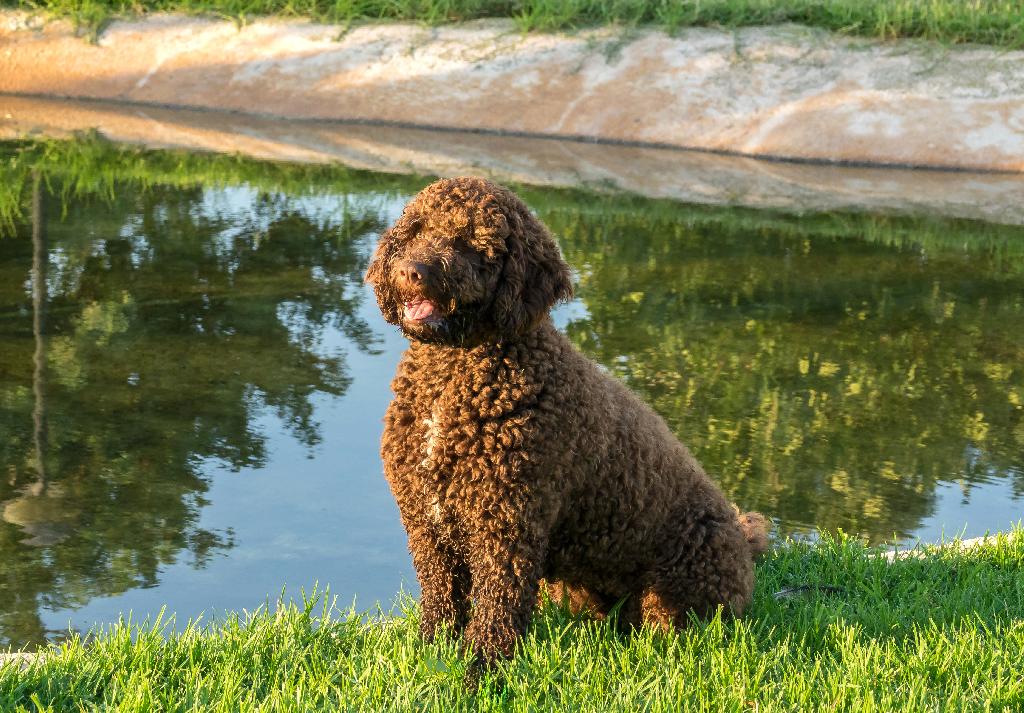
Physically, the Spanish Water Dog is a medium-sized dog, standing between 17 and 20 inches at the shoulder and weighing between 30 and 50 pounds. It has a compact and muscular build, well-suited to its working roles. The breed is most recognizable by its curly, woolly coat, which is water-resistant and often forms cords, similar to the coat of a poodle. This coat provides protection against the elements, particularly when working in water or in harsh weather conditions. The coat comes in a variety of colors, including white, black, brown, and a combination of these colors, often with patchy markings. Their expressive, dark eyes and ears that hang close to the head contribute to their alert and intelligent appearance.
Temperamentally, the Spanish Water Dog is known for being highly intelligent, loyal, and energetic. It thrives on mental and physical challenges, making it an excellent working dog for herding and water retrieval tasks. The breed is eager to please, which makes it highly trainable, although it can be somewhat independent and may require an experienced handler to fully harness its potential. Spanish Water Dogs are often described as friendly and affectionate, forming strong bonds with their families. They tend to be good with children and other pets, although their high energy and herding instincts may cause them to be a bit boisterous or overly enthusiastic at times.
The Spanish Water Dog requires regular exercise and stimulation to stay happy and healthy. It excels in active households where it can be given a job to do, such as herding, retrieving, or participating in dog sports like agility or obedience. The breed is also an excellent swimming companion, thanks to its natural affinity for water, and it enjoys activities that allow it to use its swimming and retrieving skills. Grooming the Spanish Water Dog requires regular maintenance to keep the coat in good condition, including brushing and occasional washing to prevent matting of the cords. Because of its intelligence and versatility, the Spanish Water Dog makes an exceptional working dog as well as a loving, active companion. Its natural instincts, combined with its affectionate nature, make it a well-rounded and adaptable breed suitable for various tasks and living situations.
History
The Spanish Water Dog (*Perro de Agua Español*) is a versatile and ancient breed with a long history as a working dog in Spain. Its origins are believed to date back over a thousand years, with its ancestors thought to have arrived in the Iberian Peninsula with traders from North Africa or the Middle East. These early water dogs were prized for their adaptability, intelligence, and versatility, making them ideal for a range of tasks, including herding livestock, retrieving from water, and assisting fishermen. The breed became particularly associated with rural and coastal regions of Spain, such as Andalusia, where it excelled as both a herder and water retriever.
Throughout the centuries, the Spanish Water Dog remained a staple of working life in Spain, valued for its ability to adapt to the diverse needs of its owners. Its curly, waterproof coat provided protection from harsh weather and dense vegetation, making it well-suited for both land and water tasks. The breed’s intelligence and trainability allowed it to excel in herding sheep and goats, retrieving fish and nets for fishermen, and even guarding property.
Despite its long history, the Spanish Water Dog was relatively unknown outside its working communities until the mid-20th century. As rural lifestyles changed and mechanization replaced many traditional roles, the breed’s numbers began to decline. However, dedicated Spanish breeders and enthusiasts worked to preserve the *Perro de Agua Español*, emphasizing its historical significance and unique characteristics. In 1985, the Spanish Water Dog was officially recognized by the Spanish Royal Canine Society, and its popularity began to grow.
Today, the Spanish Water Dog is celebrated not only for its working abilities but also as a loyal and affectionate companion. It has gained recognition in international dog communities, including the American Kennel Club (AKC) in 2015. The breed’s rich history and enduring versatility highlight its importance in Spain’s agricultural and maritime heritage, as well as its modern role as a cherished family pet and competitive sport dog.
Appearance
A Spanish Water Dog is compact and robust with a slightly off-square outline and a purposeful, agile way of moving. The head is strong but not heavy, with drop ears and an alert, intelligent expression.
The breed’s signature feature is its coat: naturally curly, woolly, and capable of forming cords as it grows. Colors are typically solid black, brown, or white, and also black-and-white or brown-and-white; the overall look is meant to be rustic rather than sculpted.
Because the coat is meant to be shown and kept in a natural state, grooming is more about coat management than styling. Many owners keep the coat clipped evenly all over for practicality, while others maintain longer curls or cords with careful separation and cleanliness.
Colors
• Beige
• Beige & White w/Black Nose
• Beige & White w/Brown Nose
• Beige w/Black Nose
• Beige w/Brown Nose
• Black
• Black & White
• Brown
• Brown & White
• White & Black
• White & Brown
• White w/Black and Tan
• White w/Black Nose
• White w/Brown Nose
• White w/Brown Tick
Health
Spanish Water Dogs are generally sturdy, but like all breeds they have known inherited risks that responsible breeders screen for. The Spanish Water Dog Club of America emphasizes health testing and participation in OFA/CHIC-style programs to make results transparent.
Commonly referenced concerns in the breed include hip dysplasia and a set of eye diseases, including progressive retinal atrophy forms that can be screened with ophthalmologist exams and DNA tests. Thyroid disease is also a recognized issue, and there is a specific inherited condition called congenital hypothyroidism with goiter (CHG) for which DNA testing is available.
For owners, the practical takeaway is to choose breeders who can show current, verifiable clearances for the sire and dam (hips, eyes, thyroid, and the breed-recommended DNA tests). On the pet side, keep up with routine veterinary care, maintain a healthy body condition, and ask your vet promptly about changes in vision, energy level, coat quality, or appetite.
Care
Daily care starts with structured exercise and enrichment. Plan on active play, training sessions, and opportunities to use the dog’s nose and brain; bored Spanish Water Dogs can invent their own entertainment (often the noisy kind).
Coat care is unique: the curls can trap debris and can mat tightly if neglected. Many owners avoid brushing and instead manage the coat by keeping it evenly clipped, checking for tangles or foreign material after outdoor time, and bathing as needed with thorough drying.
Routine basics still apply—regular nail trims, ear checks/cleaning (especially after swimming), and dental care. A balanced diet and keeping the dog lean also matter, as these dogs are built to work and move efficiently.
Training
Training tends to go well when it’s upbeat, consistent, and gives the dog a clear purpose. Spanish Water Dogs are typically quick studies, but they can be sensitive to harsh corrections; they respond best to reward-based methods and fair boundaries.
Start early with socialization and handling skills (grooming, vet exams, being calmly tethered), then build foundational cues like recall, loose-leash walking, and “place.” Because the breed is naturally vigilant, teaching a cue to stop barking and settle is especially valuable.
They often shine in dog sports and working outlets such as obedience, rally, agility, herding, scent work, and retrieving games. Short, frequent sessions—plus puzzle toys and “find it” games—usually keep motivation high and help prevent unwanted herding/nipping behaviors.
Temperament
Spanish Water Dogs are intelligent, energetic, and highly trainable, especially when they understand the point of the work. They’re commonly described as loyal and attentive, and many will choose a “favorite” person while still being affectionate with the rest of the family.
With strangers, the breed is often naturally reserved and watchful rather than instantly social. A good Spanish Water Dog should be confident and steady, but early, positive exposure to new people, places, surfaces, and sounds is important so that caution doesn’t become anxiousness.
As a herding-bred dog, some individuals may use their mouth when excited, particularly as puppies, and may try to “organize” fast-moving kids or pets. Thoughtful supervision and early training around impulse control usually keep these instincts manageable in family life.
Lifestyle
This is an active, involved companion for people who like doing things with their dog. A Spanish Water Dog fits best in a home that enjoys training, outdoor time, and structured routines—whether that’s hikes, swimming, sports classes, or daily skill practice.
They can do well in houses or apartments if their exercise and mental workload are met, but they’re not great “couch-only” dogs. Many also have a strong alert-barking tendency; pairing management (windows/yard triggers) with “quiet” and relaxation training makes a noticeable difference.
Because they often bond closely, long stretches of isolation can be hard on them. If your schedule regularly leaves a dog alone all day, plan for midday help, enrichment plans, and gradual alone-time training from puppyhood.
Ownership
Owning a Spanish Water Dog is a commitment to activity, training, and coat management. Before bringing one home, be honest about whether you can provide daily outlets for energy and curiosity, plus the time to keep the coat clean and comfortable.
When looking for a puppy, prioritize breeders who can document health testing and who match puppies thoughtfully to homes. Expect questions from a good breeder about your lifestyle, plans for training, and how you’ll handle the breed’s natural reserve and watchdog instincts.
Set your household up for success with early routines: safe confinement, chew/toy rotation, clear rules for greeting and play, and a training plan that includes calmness as a skill. With the right structure, Spanish Water Dogs are devoted partners that thrive when they’re truly included in daily life.
Interesting Facts
- Developed in Spain as a practical all-around working dog, commonly used for herding and water-related retrieving work.
- Distinctive woolly, curly coat can form cords; many owners keep it evenly clipped for easier maintenance.
- Often reserved with strangers and naturally watchful, so early socialization and calm “settle” training are important.
- Strong learning ability and versatility make the breed a good match for dog sports like obedience, rally, agility, scent work, and herding.
- Reputable breeders typically screen for hips, eyes, thyroid disease, and breed-relevant DNA-tested conditions such as forms of PRA and CHG.