
Spinone Italiano
Basics
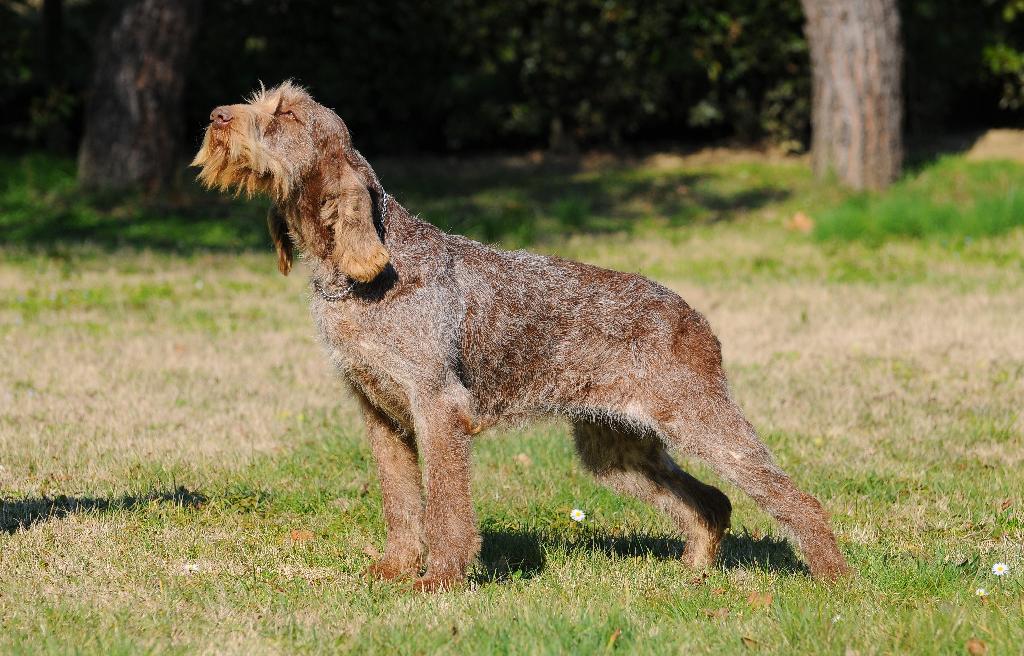
The Spinone Italiano is a rustic, rough‑coated Italian gundog built for long days in the field. Breed standards emphasize endurance, powerful bone and muscle, big feet for stability, and a harsh single coat with thick skin that helps the dog push through underbrush and handle cold water.
Originally developed as a versatile pointer and retriever, the Spinone is expected to work methodically across varied terrain and to be a natural swimmer. In the home, many owners value the breed as a steady companion—typically gentle and people‑oriented, but not a “robotic” athlete that needs nonstop speed work to be happy.
Description
The Spinone Italiano is a distinguished and versatile breed of hunting dog that hails from Italy, where it has been used for centuries as a reliable hunting companion. Known for its gentle temperament and exceptional work ethic, the Spinone Italiano has a long history of being employed in a variety of fieldwork tasks, including pointing, retrieving, and tracking game. The breed is believed to have ancient origins, possibly dating back to the Roman Empire, and it has been carefully refined over generations to excel in both upland bird hunting and waterfowl hunting. The Spinone Italiano's combination of strength, stamina, and intelligence makes it a beloved breed among hunters, particularly in Italy, where it remains a symbol of tradition and expertise in hunting circles.
Physically, the Spinone Italiano is a large and robust dog, standing between 23 and 27 inches tall at the shoulder and weighing between 60 and 85 pounds. It has a muscular and solid frame, well-suited to the physical demands of hunting in challenging terrains, whether in dense forests or across rough fields. The breed's most notable feature is its dense, wiry coat, which provides excellent protection against the elements, including water, thorns, and brambles. The coat typically comes in a variety of colors, including white, orange, brown, or a mix of these, often with distinctive speckled or patched markings. The Spinone Italiano has a broad head, large expressive eyes, and a prominent, square-shaped muzzle, giving it a gentle, almost thoughtful expression. Its ears are long and set low, adding to its overall distinctive and noble appearance.
Temperamentally, the Spinone Italiano is known for its calm, friendly, and affectionate nature. Despite its large size and powerful build, the breed is gentle and patient, making it an excellent companion both in the field and at home. Spinoni are particularly well-regarded for their loyalty and willingness to work, making them easy to train for fieldwork and other tasks. Although they are hardworking and dedicated in the field, they are also laid-back and relaxed indoors, enjoying the company of their families. The breed tends to be good with children and can get along well with other pets, although their hunting instincts may sometimes prompt them to chase smaller animals.
The Spinone Italiano requires regular exercise and mental stimulation to stay happy and healthy, as it is an active breed with a strong work ethic. It thrives in environments where it can engage in regular hunting activities or participate in dog sports, but it also enjoys long walks and playtime in the yard. Grooming the Spinone Italiano involves regular brushing to keep its coat free of tangles and to maintain its wiry texture. While not overly demanding in terms of grooming, the breed's coat does require attention to prevent matting. The Spinone Italiano's calm demeanor, intelligence, and versatile nature make it a wonderful choice for active families and individuals who appreciate a dog that is both a dedicated worker and a loving companion. Whether in the field or at home, the Spinone Italiano is a remarkable breed that offers both beauty and utility.
History
The Spinone Italiano, often referred to simply as the Spinone, is one of the oldest and most versatile hunting breeds, with origins that can be traced back to ancient Italy. This rugged and adaptable gundog is believed to have descended from ancient Roman dogs and other European hunting breeds. Historical references to Spinone-like dogs appear as early as the Renaissance, in Italian art and literature, where they are depicted assisting hunters in marshlands and dense forests. Their name, "Spinone," likely comes from the Italian word *spino*, meaning thorn, reflecting the breed’s ability to navigate through tough and thorny terrain while hunting.
The Spinone was developed primarily in northern Italy, particularly in the Piedmont region, where it became a trusted companion for hunters. Known for its versatility, the Spinone excelled in pointing, retrieving, and tracking game in a variety of environments. Unlike faster, more specialized hunting dogs, the Spinone was valued for its methodical approach, intelligence, and stamina, making it a reliable partner for long days in the field. Its thick, wiry coat provided protection from harsh weather and rough vegetation, further enhancing its utility as a working dog.
The breed’s popularity waned during the 19th and early 20th centuries, as other pointing and retrieving breeds, such as the English Pointer and German Shorthaired Pointer, gained favor. The two World Wars further endangered the Spinone, as the conflicts disrupted breeding programs and reduced the need for traditional hunting dogs. By the mid-20th century, the Spinone was at risk of extinction. Dedicated Italian breeders worked to revive the breed, focusing on preserving its working traits and unique characteristics. Their efforts led to the breed’s recognition by the Fédération Cynologique Internationale (FCI) in 1955.
Today, the Spinone Italiano is cherished for its gentle temperament, versatility, and rich history. While it remains a skilled hunting companion, it has also found a place as a loyal family pet and a participant in canine sports. The breed’s enduring legacy is a testament to its adaptability and the dedication of those who have worked to preserve its unique qualities over centuries.
Appearance
Spinoni are large, sturdy dogs with a distinctive outline and a soft, “almost human” expression. The head is long with a notable profile (the skull and muzzle axes are described as divergent), and the breed is known for a prominent nose, expressive eyes, and facial furnishings—brows and a rustic beard.
The body tends toward a square build, with a topline often described in two segments (slightly sloping then rising into a firm loin). The coat is harsh and protective rather than silky, typically appearing wiry with enough density to shield the dog in brush and cold conditions. Color is commonly combinations of white with orange or brown (often roan), matching the breed’s classic hunting-dog look.
Colors
• Brown Roan
• Brown Roan w/ Markings
• Orange Roan
• Orange Roan w/ Markings
• Solid White
• White
• White & Brown
• White & Orange
Health
Spinoni are generally tough, working-bred dogs, but they’re still a large, deep-chested breed and should be managed with that in mind. Maintain a lean body condition, keep nails and feet in good shape for traction, and watch for soreness after heavy activity—endurance dogs can overdo it quietly.
Discuss breed-relevant screening with a veterinarian and (when choosing a puppy) ask breeders for documented health testing in the parents. As with many larger sporting breeds, topics to ask about commonly include hips and elbows, eye health, and heart health. Deep-chested dogs can also be at risk for bloat (GDV), so talk through feeding and activity routines that reduce risk.
Routine prevention goes a long way: parasite control, dental care, and prompt attention to ear issues (especially for swimmers) help keep an active Spinone comfortable and working.
Care
Plan for regular grooming. The Spinone’s rough coat is meant to be functional, but it still needs consistent brushing and periodic tidying to prevent mats, especially around the beard, legs, and undercarriage. Many owners keep the coat natural-looking and focus on maintenance rather than a stylized trim.
Exercise should match the breed’s purpose: long walks, hikes, and opportunities to sniff and explore suit them well. Water retrieves, tracking games, and field-type outings are great fits. Because they were built for endurance, a Spinone often does best with steady daily activity rather than sporadic bursts of very intense exercise.
Like other bearded breeds, routine face and ear care matters. Wipe the beard after meals and check ears regularly—especially if the dog swims—so moisture and debris don’t linger.
Training
Training a Spinone Italiano is usually most successful when it’s calm, consistent, and rewarding. They tend to respond well to positive reinforcement and to sessions that feel purposeful—retrieving games, scent work, and structured “jobs” can keep them engaged.
Because the breed is often described as patient and sometimes stubborn, avoid drilling or harsh corrections that can shut the dog down. Short, frequent sessions with clear criteria work better than long battles of will. Build reliable recalls and polite leash skills early; an all‑terrain hunter with a good nose can decide to follow scent if foundations are weak.
Socialization matters too: expose puppies thoughtfully to different people, surfaces, and environments, and pair new experiences with good outcomes. A confident, well-socialized Spinone is far easier to live with and to take into sporting or family settings.
Temperament
In the field, the Spinone is traditionally described as patient, cooperative, and methodical—an experienced all‑terrain hunter that keeps going when conditions get rough. That steady working style often carries over into daily life: many Spinoni are calm indoors once their exercise needs are met, and they tend to enjoy staying close to their people.
They’re usually sociable and tolerant, but they can also have an independent streak. Instead of sharp, high‑octane intensity, expect a thoughtful dog that prefers clear routines and fair handling. When bored or under‑engaged, a Spinone may invent its own entertainment—often in slow, determined fashion.
Lifestyle
A Spinone Italiano fits best with people who want a companion that can truly “do the day” with them—walks, weekend hikes, training classes, and outdoor time. They can adapt to a quieter household, but they’re not ideal for a purely sedentary lifestyle; their brains and bodies expect regular engagement.
They often do well with families because they’re typically steady and tolerant, but supervision with small kids is still important due to the breed’s size and enthusiasm. If you enjoy water activities, field sports, or scent-based games, the Spinone’s natural retrieving and tracking instincts can be a perfect match.
Because they’re social dogs, many Spinoni struggle if isolated for long hours. A predictable routine, companionship, and outlets for sniffing and exploring help prevent nuisance behaviors.
Ownership
Before bringing one home, be honest about space and time. The Spinone is large, strong, and happiest when included in daily life; they’re not a “backyard only” dog. Budget for training, grooming tools (and possibly professional tidying), and the wear-and-tear costs of an active sporting breed.
Look for breeders who prioritize temperament and health testing, and who can show that their dogs meet the breed’s functional intent—not just appearance. Ask what the parents do (hunting, performance sports, therapy work, active family life) and how puppies are raised and socialized.
If you adopt, seek rescues or breed clubs that understand Spinoni. A good match should consider your activity level, other pets, and whether you can provide the steady exercise and companionship this breed thrives on.
Interesting Facts
- Origin: Italy; developed as a versatile pointing and retrieving hunting dog.
- Typical temperament: sociable, docile, patient, and cooperative; can be quietly stubborn.
- Built for endurance: standards emphasize stamina, strong bone, and efficiency over flash.
- Notable look: rough coat, rustic beard and brows, and a soft “almost human” expression.
- Natural water dog: described in standards as able to handle cold water and retrieve by nature.
- Body outline: tends toward a square build with a distinctive topline and robust feet for rough ground.