
Standard Schnauzer
Basics
The Standard Schnauzer is the original (“prototype”) of the three Schnauzer sizes and was developed in Germany as an all-purpose farm dog. Historically they were valued as watchful guardians and determined rat catchers—versatile workers who could live closely with their people.
Today, the breed is an energetic, medium-sized companion with a strong sense of purpose. They tend to do best with owners who enjoy training and routines, and who want a dog that’s engaged, expressive, and ready to participate in daily life.
Description
The Standard Schnauzer is a distinctive and versatile breed that combines intelligence, energy, and a strong work ethic. Originating in Germany, the Standard Schnauzer is one of the oldest and most recognizable breeds in the Schnauzer family, which also includes the Miniature Schnauzer and the Giant Schnauzer. Known for its wiry coat, bushy eyebrows, and mustache, the Standard Schnauzer was originally bred as a farm dog, used for herding livestock, guarding, and even catching small vermin like rats. Over the years, the breed's intelligence and adaptability have allowed it to excel in a wide range of roles, from working as a guard dog to serving as a loyal companion.
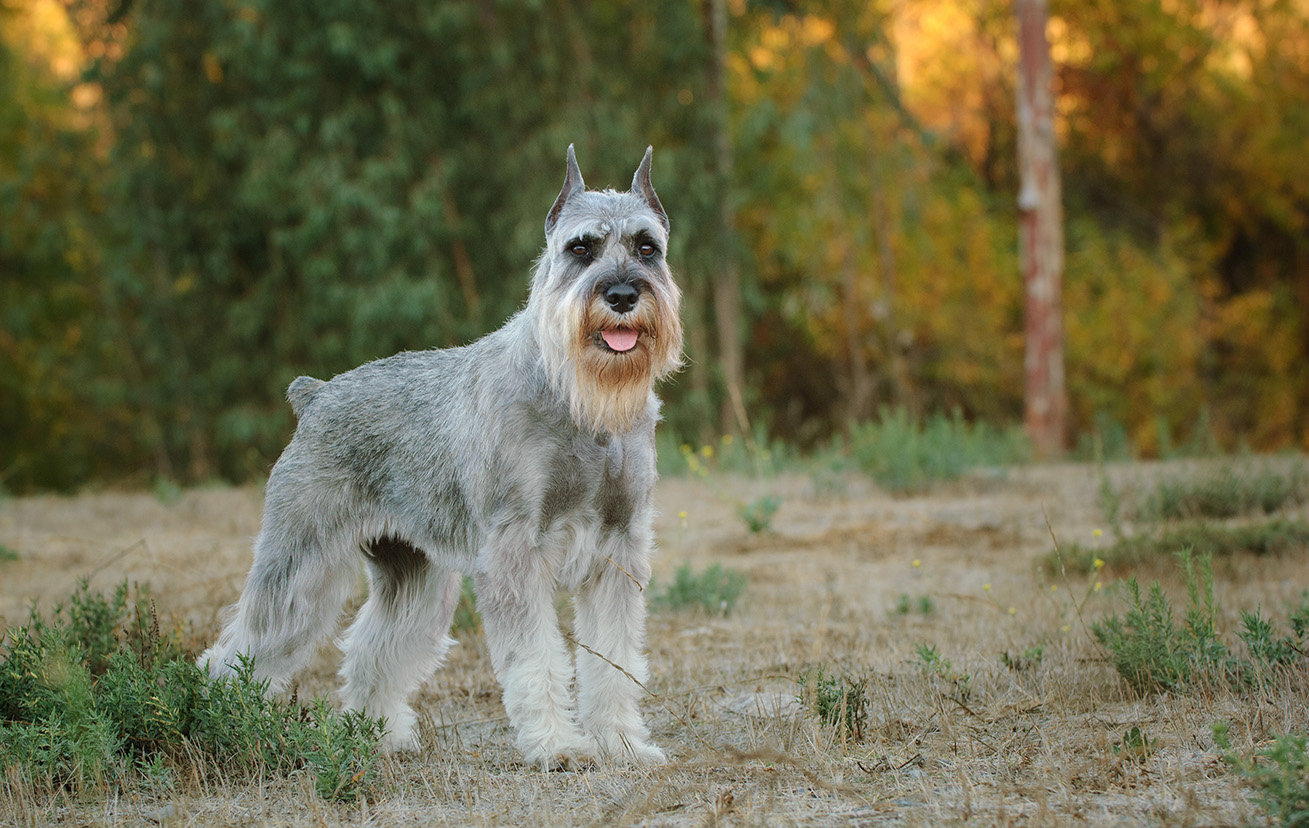
Physically, the Standard Schnauzer is a medium-sized dog, typically standing between 17 and 20 inches tall and weighing around 30 to 50 pounds. It has a square, compact build that reflects its practical origins as a working dog. Its wiry coat, which is most commonly salt-and-pepper or solid black, gives the breed a distinctive, rugged appearance. Regular grooming is necessary to maintain its coat, as it grows long and can become tangled if not properly cared for. The Schnauzer's signature bushy eyebrows and mustache add to its expression, giving the breed an alert and intelligent look. The dog’s ears are typically cropped, although some Schnauzers may have natural, floppy ears depending on breeding and local customs.
Temperamentally, the Standard Schnauzer is known for its high energy, confidence, and independence. These dogs are extremely intelligent and eager to work, making them highly trainable and well-suited to a variety of activities, from obedience training to agility competitions. However, their independent nature can sometimes make them a challenge for novice dog owners, as they require consistent leadership and clear boundaries. They are generally affectionate and loyal to their family but can be reserved or protective with strangers, making them excellent watchdogs. They are also very social and enjoy being involved in family activities, though their strong prey drive means they should be supervised around small animals.
The Standard Schnauzer is a versatile breed that thrives in environments where it can remain active and engaged. While it has a strong instinct to work, it also makes a wonderful companion for those who provide it with regular exercise, mental stimulation, and affection. Whether acting as a farm dog, participating in canine sports, or simply being a beloved family member, the Standard Schnauzer is a breed that combines intelligence, loyalty, and a strong sense of purpose. It’s an ideal dog for active individuals or families who can provide the stimulation and leadership this intelligent breed needs to thrive.
History
The Standard Schnauzer is a robust and versatile breed with origins that trace back to 15th and 16th-century Germany. It is the original and oldest of the three Schnauzer breeds, serving as the foundation for both the Miniature Schnauzer and the Giant Schnauzer. Initially known as the "Wire-Haired Pinscher," the Standard Schnauzer was developed as a multipurpose working dog, excelling in roles such as farm guardian, rat catcher, and herding assistant. The breed’s distinctive appearance, characterized by its wiry coat, bushy eyebrows, and beard, helped protect it from harsh weather and pests, making it well-suited for life on German farms.
The breed’s ancestors likely included German Pinschers and rough-coated herding and working dogs, resulting in a medium-sized dog with intelligence, agility, and strength. Standard Schnauzers were often depicted in artwork of the Renaissance period, further emphasizing their longstanding presence in German culture. They were particularly valued for their sharp instincts, loyalty, and protective nature, which made them reliable farm dogs and family companions.
In the 19th century, the breed’s name changed to "Schnauzer," derived from the German word *schnauze*, meaning "snout," in reference to its distinctive facial features. During this time, the Standard Schnauzer gained recognition at dog shows in Germany, and breeders began refining its characteristics to establish a more consistent appearance and temperament. The breed's popularity spread beyond Germany, especially after World War I, when soldiers returning home introduced Schnauzers to other countries, including the United States.
The American Kennel Club (AKC) recognized the Standard Schnauzer in 1904, and its popularity as both a working dog and a companion grew. Today, the breed is celebrated for its intelligence, trainability, and versatility. While it retains its traditional working instincts, the Standard Schnauzer has also excelled in various roles, including search and rescue, therapy work, and dog sports such as obedience and agility. Its rich history as a hardworking and loyal breed underscores its enduring appeal and adaptability.
Appearance
Standard Schnauzers are squarely built, robust dogs with a harsh, wiry coat and a distinctive face. The classic look includes arched eyebrows, a bristly mustache, and a pronounced beard that frames a rectangular head.
The coat is typically either black or “pepper and salt,” with furnishings on the legs and face that may appear lighter. The overall outline should look athletic and balanced rather than heavy, and their trot is meant to be free, ground-covering, and efficient.
Colors
• Black
• Pepper & Salt
Health
The breed is often described as naturally hardy, but responsible ownership still means prevention and screening. Maintain a lean body condition, keep up with dental care, and discuss age-appropriate monitoring with your veterinarian.
When selecting a breeder, ask what health testing is commonly performed in their lines and request documentation where applicable. Planning ahead for potential orthopedic and eye-related concerns seen across many medium-sized breeds is wise, even when a dog appears outwardly robust.
Care
The coat needs planned maintenance. Many owners keep the wiry texture through hand-stripping, while others choose clipping for practicality; either way, regular brushing and combing helps prevent tangles in the furnishings and keeps the beard from becoming messy. Routine care also includes nail trims, ear checks, and dental hygiene.
Exercise should match their working-dog roots. A Standard Schnauzer usually thrives with daily walks plus some higher-intensity play, training games, or dog sports. Without enough activity and mental engagement, they can become noisy, stubborn, or creatively destructive.
Training
Standard Schnauzers are smart, quick to learn, and often thrive when training feels like a job with clear rules. Keep sessions short and consistent, reward the behavior you want, and avoid harsh methods that can create pushback in a confident, opinionated dog.
Focus early on polite greetings, leash manners, and impulse control—especially because many have a strong interest in small moving things. Structured outlets like rally, obedience, scent work, agility, or barn-hunt style games can be a great match for their drive and problem-solving.
Temperament
This breed is known for a lively but composed temperament—bold, confident, and very devoted to family. Many Standard Schnauzers are naturally alert and take their role as “house supervisor” seriously, which can make them excellent watchdogs.
They are intelligent and typically enjoy working with their humans, but they can also be independent and persistent. Early socialization helps channel that confidence into good manners, especially around strangers, new environments, and other animals.
Lifestyle
A Standard Schnauzer fits best in an active home where the dog is treated as a participant, not décor. They typically enjoy being close to their people, learning household routines, and having regular opportunities to work their brain.
They can adapt to many living situations, including suburban homes and some apartments, as long as they get daily exercise and training. Because they’re alert and vocal, teaching a “quiet” cue and providing enrichment can make shared-wall living much easier.
Ownership
Expect a dog with opinions and a strong presence. Owners should be prepared to provide consistent boundaries, ongoing training, and a grooming plan that matches the coat style they want. If you prefer a low-maintenance, laid-back pet, a Standard Schnauzer may feel like “too much dog.”
Look for breeders and rescues that prioritize stable temperament and responsible placement. Ask about the dog’s comfort with kids, other dogs, and smaller pets, and be realistic about supervising interactions—especially if your household has cats or other small animals.
Interesting Facts
- Developed in Germany as a versatile farm dog, including guarding and rat-catching work.
- The “prototype” for the Miniature and Giant Schnauzer varieties.
- Signature facial furnishings: eyebrows, mustache, and beard.
- Coat is harsh and wiry; many owners choose either hand-stripping or clipping for upkeep.
- Typical colors include black and “pepper and salt.”
- Often excels in training-based activities like rally, obedience, scent work, and agility.