
Tibetan Mastiff
Description
The Tibetan Mastiff is a majestic and ancient breed known for its imposing size, loyalty, and protective instincts. Originating in the Himalayan regions of Tibet, this breed was traditionally used as a guardian for livestock, monasteries, and homes. Its role as a protector is deeply ingrained in its temperament, making it a highly vigilant and independent dog. The Tibetan Mastiff is considered one of the foundational breeds from which many modern mastiffs and mountain dogs have descended.
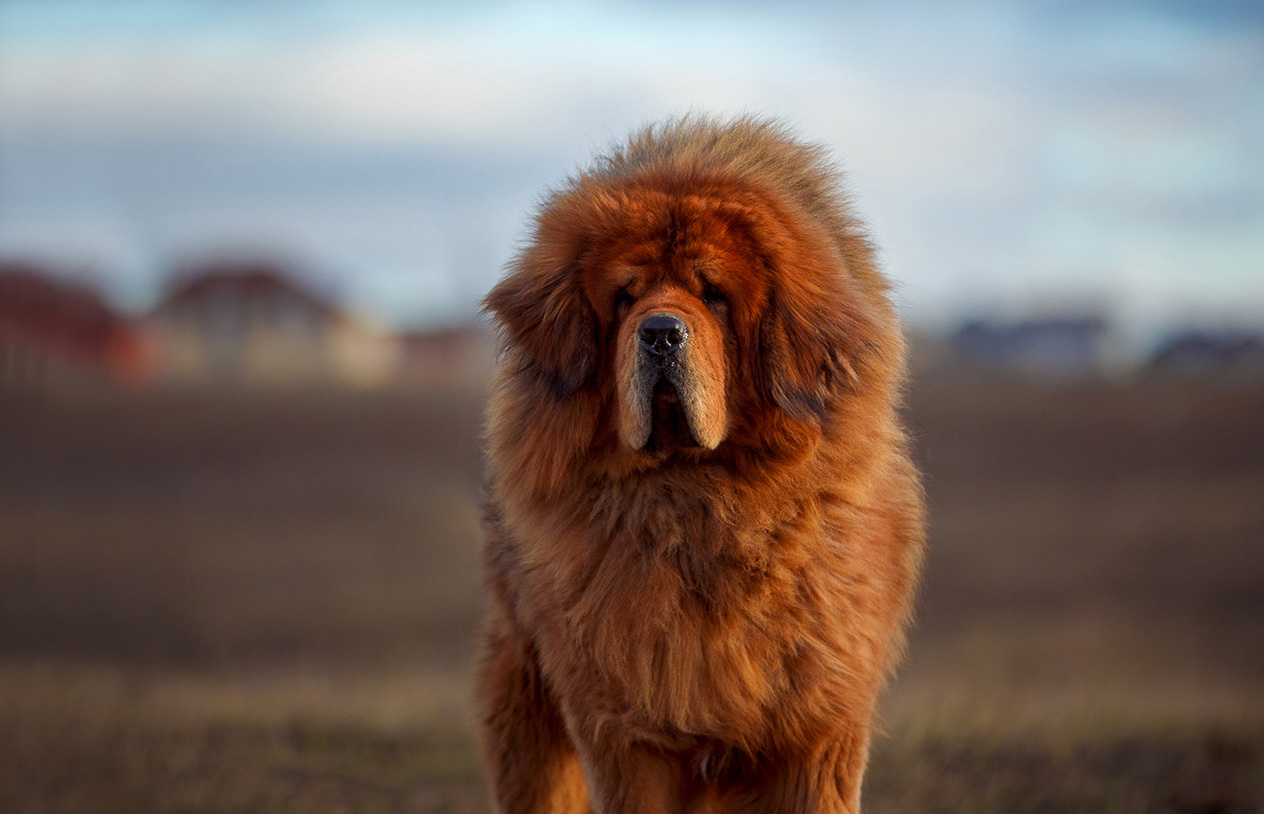
Physically, the Tibetan Mastiff is a large, powerful dog with a thick double coat that helps it withstand harsh, cold climates. Males typically weigh between 85 and 160 pounds, while females are slightly smaller. They stand 24 to 30 inches tall at the shoulder. Their luxurious coat, which comes in a variety of colors including black, brown, blue-gray, and gold, often features a mane-like ruff around the neck, enhancing their regal appearance. Their expressive eyes, broad head, and sturdy build contribute to their commanding presence.
Temperamentally, Tibetan Mastiffs are intelligent, independent, and deeply devoted to their families. While they are affectionate with their owners, they can be aloof or wary around strangers, a trait that makes them excellent guardians. They are naturally protective and will respond assertively if they sense a threat, yet they are not typically aggressive without cause. These dogs thrive in environments where they can exercise both their minds and bodies but are equally content relaxing near their family, provided their needs are met.
Owning a Tibetan Mastiff requires a commitment to proper training, socialization, and management. Their independent nature can make them challenging for inexperienced dog owners, as they are not as eager to please as some other breeds. However, with consistent, positive reinforcement training, they can become well-mannered and reliable companions. Ideal for those with space to accommodate their size and energy levels, Tibetan Mastiffs are best suited to homes with large yards or rural settings. This breed combines ancient guardianship instincts with a loving heart, making them a unique and rewarding addition to the right household.
History
The Tibetan Mastiff is an ancient and majestic breed with origins that date back thousands of years to the rugged Himalayan regions of Tibet, Nepal, and Bhutan. Known as a guardian of livestock, monasteries, and villages, the breed was developed to protect against predators such as wolves, leopards, and even intruders. Its thick double coat, massive build, and imposing presence made it perfectly suited to the harsh climates and high altitudes of its homeland. The Tibetan Mastiff is deeply tied to Tibetan culture and history, often regarded as a symbol of strength and loyalty.
The breed’s origins are somewhat shrouded in mystery, but it is believed to be one of the foundational breeds from which other mastiff and large working breeds descended. Marco Polo, during his travels to Asia in the 13th century, described a dog of extraordinary size and ferocity, likely referring to the Tibetan Mastiff. For centuries, these dogs remained isolated in the Himalayan regions, serving their roles as protectors and living alongside nomadic herders and monks.
The Tibetan Mastiff was first introduced to the Western world in the 19th century when British travelers and colonial officials brought a few specimens to England. The breed piqued the interest of European dog enthusiasts for its unique appearance and ancient heritage. However, it remained relatively rare outside its native regions until the late 20th and early 21st centuries, when its popularity surged globally, particularly in China, where it became a status symbol.
Today, the Tibetan Mastiff is celebrated for its independent and protective nature. While it is still used as a guardian in some parts of the world, it is also cherished as a loyal companion by those who appreciate its majestic appearance and ancient lineage. The breed’s history reflects its enduring role as a protector and its deep connection to the cultures of the Himalayas.
Colors
• Black
• Black & Tan
• Blue Gray
• Blue Gray & Tan
• Brown
• Brown & Tan
• Cream
• Cream Sable
• Red Gold
• Red Gold Sable