
Toy Fox Terrier
Basics
The Toy Fox Terrier (TFT) is a small, square-built terrier that combines true toy size with classic terrier confidence. Originally developed from smaller Smooth Fox Terriers and refined in the United States, the breed moved from barnyard ratter to lively, people-centered companion without losing its bold, “game” attitude.
Despite their compact stature, TFTs are athletic and quick, with surprising endurance and an alert, watchful nature. They tend to form strong attachments to their household and thrive when they’re treated like a real dog—given training, structure, and daily outlets for their busy minds.
Description
The Toy Fox Terrier is a small, energetic, and intelligent toy breed that combines the playful personality of a terrier with the charm and affection of a lapdog. Standing 8.5 to 11.5 inches tall and weighing between 4 to 9 pounds, the Toy Fox Terrier is compact yet sturdy, with a fine-boned but athletic build. Its sleek, short coat comes in a variety of color combinations, including white with black, tan, or chocolate markings, giving it a polished and lively appearance.
This breed is known for its spirited and curious nature, making it an excellent companion for active families or individuals who enjoy an engaging and playful pet. Toy Fox Terriers are highly intelligent and quick learners, excelling in obedience, tricks, and canine sports like agility. Their terrier roots give them a strong prey drive, and they retain the boldness and tenacity of their larger terrier relatives, despite their small size.
In addition to their energetic side, Toy Fox Terriers are affectionate and deeply loyal, often forming strong bonds with their owners. They thrive on human companionship and enjoy being part of family activities, whether it's playing in the yard, going for a walk, or snuggling on the couch. While they are generally good with children and other pets, their small size makes them better suited for households with older children who can handle them gently.
The Toy Fox Terrier is also known for its adaptability. They do well in various living environments, from apartments to larger homes, as long as they receive regular exercise and mental stimulation. Their minimal grooming needs and easy-to-care-for coat make them a low-maintenance choice for busy households. With their blend of intelligence, charm, and energy, Toy Fox Terriers are beloved companions who bring joy and liveliness to any home.
History
The history of the Toy Fox Terrier is rooted in the United States, where it was developed in the early 20th century as a smaller, more companion-oriented version of the Smooth Fox Terrier. Originally bred to serve as both working dogs and loving companions, Toy Fox Terriers were created by selectively breeding Smooth Fox Terriers with smaller breeds like Chihuahuas and Italian Greyhounds. This careful breeding process aimed to reduce their size while retaining their intelligence, agility, and bold terrier spirit.
The breed’s ancestry is strongly tied to its terrier roots, particularly the Smooth Fox Terrier, which was originally bred in England as a hunting and vermin-control dog. When the Smooth Fox Terrier made its way to the United States, American breeders began to refine the breed to create a smaller version that could thrive in a variety of roles. Toy Fox Terriers were used in circuses for their intelligence and ability to perform tricks, as well as on farms to hunt rats and other small pests.
The Toy Fox Terrier was officially recognized as a distinct breed by the United Kennel Club (UKC) in 1936, and later by the American Kennel Club (AKC) in 2003. Its recognition as a toy breed highlighted its transition from a working terrier to a beloved family companion. Over the years, breeders focused on refining the Toy Fox Terrier’s size, temperament, and appearance, ensuring it retained its lively and intelligent personality while becoming more suited to modern family life.
Today, the Toy Fox Terrier is celebrated as a versatile and adaptable breed that embodies the best qualities of both terriers and toy dogs. Its journey from the farms and circuses of early America to the homes of dog enthusiasts worldwide showcases its enduring appeal and versatility. With its rich history and vibrant personality, the Toy Fox Terrier remains a cherished breed for those seeking an energetic, affectionate, and loyal companion.
Appearance
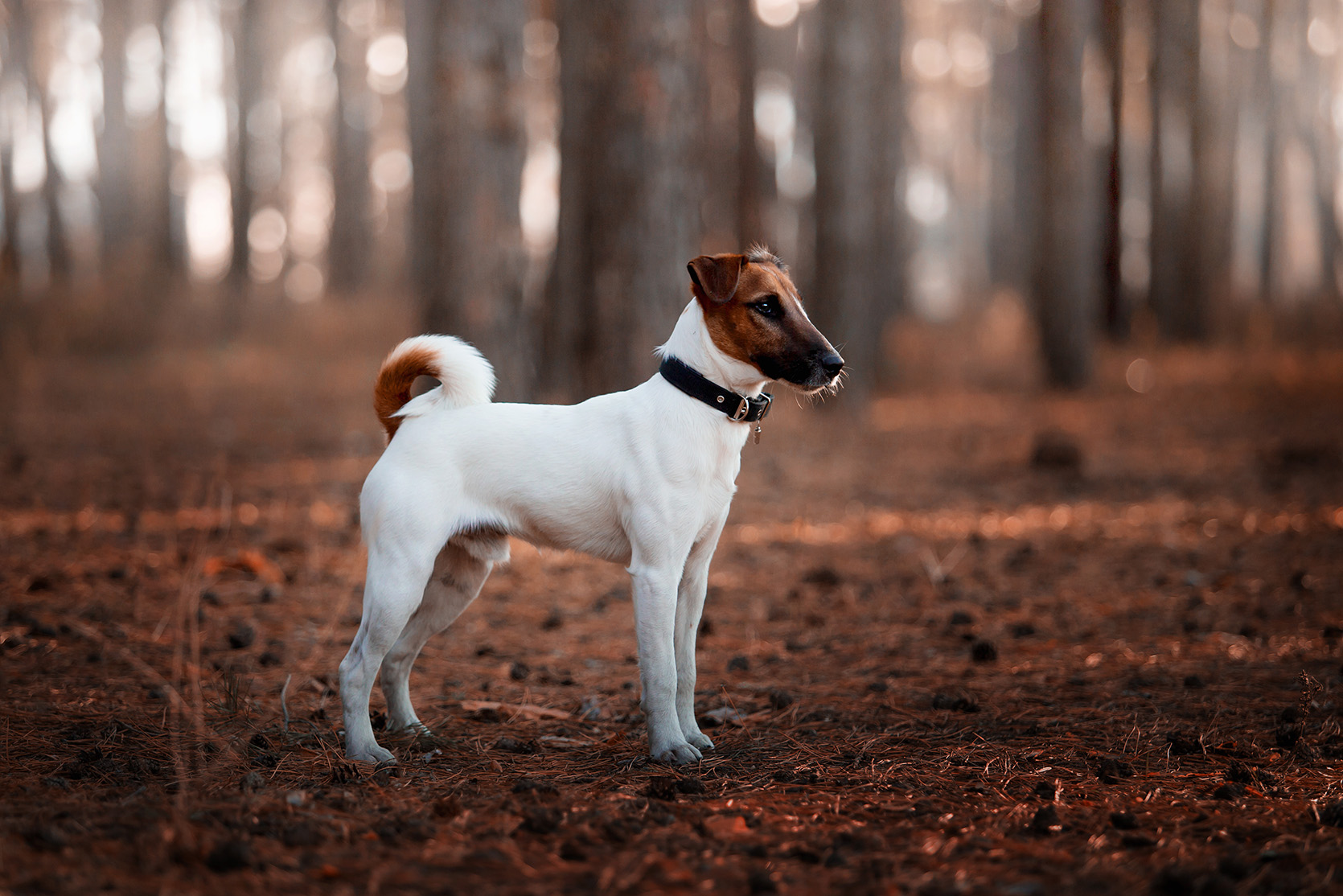
Toy Fox Terriers are fine-boned but sturdy, with a clean, wedge-shaped head, bright expression, and distinctive pointed, erect ears. The body is compact and square in profile, with a short, firm back and a high-set tail (often carried upright when attentive).
The coat is short, satiny, and glossy, lying close to the body and requiring minimal grooming. White is the predominant body color, typically paired with black, tan, or black-and-tan markings; overall presentation is crisp, elegant, and “aristocratic” for a terrier.
Colors
• White & Black
• White & Chocolate
• White & Tan
• White Black & Tan
• White, Chocolate & Tan
Health
Overall, Toy Fox Terriers are often long-lived, but responsible breeding and preventive care still matter. Small breeds commonly face orthopedic concerns such as patellar luxation, and some individuals may be prone to Legg-Calvé-Perthes disease; keeping the dog lean and avoiding high-impact jumping from furniture can help protect joints.
Like many toy dogs, they can also be susceptible to dental disease and may develop allergies or skin sensitivities. The best risk-reduction steps are choosing breeders who health-test, maintaining routine veterinary checkups, and addressing diet, dental care, and weight early rather than reactively.
Care
Coat care is simple: a weekly brush or rub-down and occasional baths keep the short coat shiny, and routine nail trims and ear checks prevent common minor issues. Because they’re small, dental hygiene is especially important—regular tooth brushing and vet-guided dental care help reduce tartar and gum disease.
Exercise needs are moderate but consistent. Short walks plus energetic indoor play and brain games usually meet their needs, though many will happily do more. In cold weather they may need a sweater for outdoor time, and in hot weather they do best with shade, water, and sensible activity limits.
Training
Toy Fox Terriers are smart and often enjoy working with their person, but they can also be independent and quick to test boundaries. Training goes best with upbeat, reward-based sessions that are short, frequent, and varied, with clear rules that everyone in the household follows.
Focus early on house-training, quiet/settle cues, and impulse control (leave it, wait at doors, coming when called). Providing appropriate outlets for chasing and digging instincts—like flirt poles, scent games, or structured play—helps prevent nuisance behaviors from becoming habits.
Temperament
A TFT is often described as “truly a toy and a terrier”: affectionate and comedic at home, yet spirited, determined, and confident when something catches its interest. Many are lively lifelong players who enjoy interactive games, learning tricks, and patrolling the house with a big-dog sense of importance.
They’re usually loyal to their people and can be naturally protective or vocal, which makes early socialization and polite greeting skills worth prioritizing. As with many terriers, a strong prey drive can show up around small pets outdoors, so secure leashes and recall practice matter.
Lifestyle
The TFT adapts well to apartment living as long as it gets daily play and training time. They’re typically happiest as indoor dogs who can be close to their people, with opportunities to burn energy through games, short walks, and learning activities.
They can be great travel companions because of their size, but they don’t enjoy being left out or under-stimulated. A home that enjoys interacting with a bright, busy little dog—and can manage barking and prey drive thoughtfully—is usually a good match.
Ownership
Owning a Toy Fox Terrier means embracing a small dog with a large personality. They tend to want to be involved in everything, and they do best with gentle but consistent leadership—clear routines, positive training, and rules that don’t change day to day.
Prospective owners should plan for safety management: secure leashes and fences, careful supervision with larger dogs, and steps to prevent injury from falls. If you want a compact companion who is affectionate, funny, and eager to learn, the TFT can be a terrific fit—especially for owners willing to provide structure and daily engagement.
Interesting Facts
- Developed from small Smooth Fox Terriers; originally valued as barnyard ratters.
- UKC began registering the Toy Fox Terrier under its current name on February 24, 1936.
- UKC height range: about 8.5–11 inches at the withers; weight up to about 8 lb (preferred roughly 4.5–7.5 lb).
- Coat is short, satiny, and glossy; white should be the predominant body color.
- Known for being both a cuddly toy companion and a bold, “true terrier” personality.