
Treeing Walker Coonhound
Basics
The Treeing Walker Coonhound is an American scenthound developed to trail quickly and then “tree” game, most famously raccoon. Bred for endurance and drive, they are athletic, vocal, and happiest when they have a job to do rather than a quiet, low-activity routine.
As a companion, this breed tends to be friendly and people-oriented, but their hound instincts can take over outdoors. A secure fence, reliable identification, and a plan for daily exercise and scent work are key to living well with a Walker.
Description
The Treeing Walker Coonhound is a highly energetic and intelligent breed, prized for its remarkable tracking and hunting abilities. Originating in the United States, this breed was developed in the 18th century by crossing English Foxhounds with other hounds to create a versatile and efficient hunting dog. Renowned for their ability to chase and "tree" game—such as raccoons, opossums, and even larger prey like bobcats—they earned their reputation as skilled and relentless hunters. The breed is named after Thomas Walker, an early breeder who significantly influenced its development.
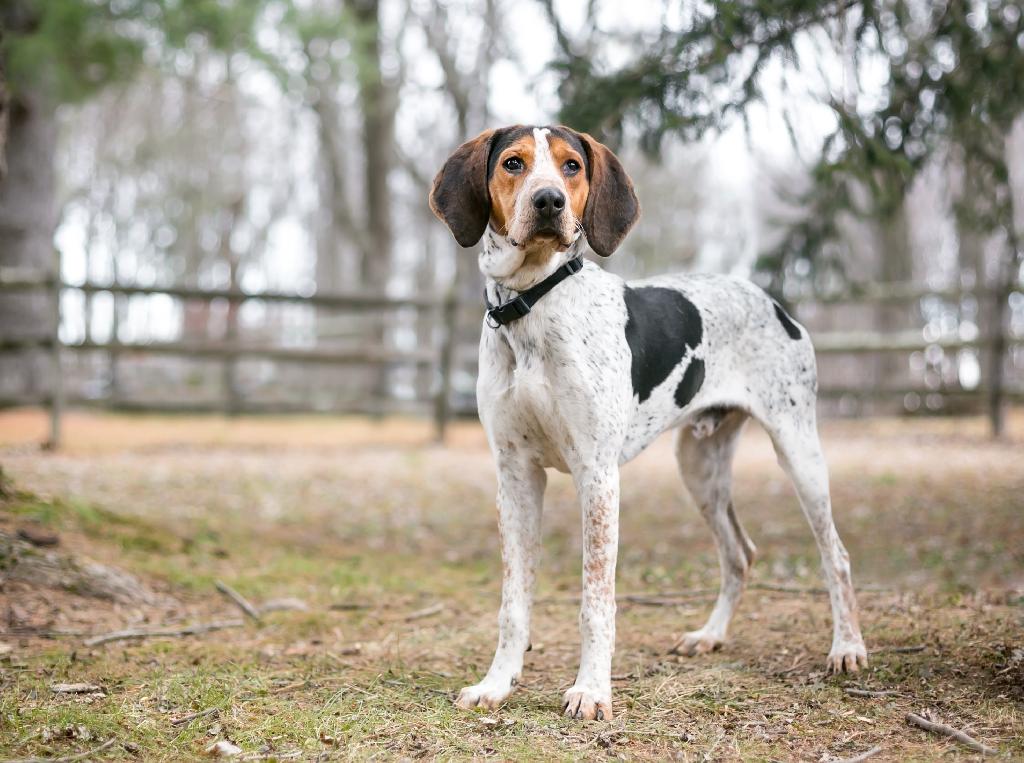
Physically, the Treeing Walker Coonhound is a medium to large dog with a sleek, athletic build. They typically weigh between 50 and 70 pounds and stand around 20 to 27 inches tall at the shoulder. Their short, glossy coat is low-maintenance and comes in a distinctive tricolor pattern of black, white, and tan. Their expressive brown eyes and long, floppy ears give them a classic hound appearance. These traits, coupled with their loud, melodic bark or bay, make them unmistakable among dog breeds.
In addition to their hunting prowess, Treeing Walker Coonhounds are known for their friendly and outgoing personalities. They are affectionate with family members and generally good with children, though their high energy levels require regular exercise and mental stimulation to prevent boredom and unwanted behavior. While they are excellent outdoor companions, their intelligence and adaptability make them suitable for indoor living, provided their exercise needs are met.
This breed thrives in environments where it can explore, track scents, and engage in physical activity. Due to their hunting lineage, they may have a strong prey drive, making early training and socialization crucial. Treeing Walker Coonhounds are ideal for active individuals or families who appreciate their exuberance, loyalty, and hunting heritage. Whether as a working dog or a cherished family pet, this breed combines athleticism with a lovable temperament, making it a favorite among hound enthusiasts.
History
The Treeing Walker Coonhound traces its ancestry back to the mid-18th century, when English Foxhounds were first brought to the American colonies. Early settlers relied on these imported hounds to track various types of game, including foxes and raccoons in the dense forests of the mid-Atlantic and Southern states. Over time, these English Foxhounds were selectively bred with other colonial hounds to enhance specific hunting traits—particularly the ability to “tree” raccoons and hold them at bay by baying loudly until the hunter arrived. Among these early hounds, one standout was a dog known as Tennessee Lead in the mid-19th century, whose exceptional speed, tracking instinct, and treeing ability made a significant impact on the developing breed lines.
Two influential breeders, George Washington Maupin and John Walker of Kentucky, were instrumental in shaping what would become the Treeing Walker Coonhound. They refined the traits inherited from English Foxhounds, focusing on a keen nose, a resonant voice, and an unrelenting desire to chase game up a tree. Initially, the dogs were simply called Walker Hounds; however, as breeders continued to emphasize treeing ability over fox-chasing traits, a distinct variety emerged that excelled at trailing raccoons specifically. By the early to mid-20th century, these specialized “Treeing Walkers” had garnered a reputation for their speed and accuracy in locating game.
Formal recognition of the Treeing Walker Coonhound came in the mid-20th century. The United Kennel Club (UKC) recognized it as a distinct breed in 1945, distinct from other coonhounds. Over the decades, Treeing Walkers have become one of the most popular coonhound breeds in the United States, widely used in competition hunts and beloved by dedicated coon hunters for their stamina, vocal prowess, and headstrong yet trainable nature. Today, while they maintain a strong following in traditional hunting circles, these hounds are also appreciated by some as loyal companions, reflecting a lineage that combines English Foxhound roots with the tenacity and independence needed for hunting in America’s thick woodlands.
Appearance
Treeing Walkers are medium-to-large, balanced hounds with a clean, athletic outline built for covering ground. The chest is deep for lung room, the back is strong, and the overall impression is of speed with stamina rather than heavy bone.
They have a short, smooth, glossy coat that’s practical in the field. Tri-color (white/black/tan) is common, and the ears are medium length, soft, and hanging—classic scenthound features paired with a high-carried, saber-like tail.
Colors
• Bi-color
• Black
• Tricolored
• White
Health
Treeing Walker Coonhounds are often considered a generally healthy, robust working breed, with many living into the low-to-mid teens. Like other medium-to-large athletic dogs, they can be predisposed to orthopedic wear-and-tear and conditions such as hip dysplasia.
Ear problems are common across floppy-eared hounds, especially if ears stay damp after swimming or bathing. Some individuals may also develop endocrine issues such as hypothyroidism. The best prevention is practical: keep them lean and fit, stay current on parasite prevention, and bring recurring skin/ear/energy changes to your veterinarian early.
Care
This is a high-exercise breed. Plan for long, purposeful activity every day—brisk walks aren’t usually enough on their own. Runs, hikes, structured play, and (best of all) nose-led activities like tracking games help meet their physical needs and keep the brain engaged.
Grooming is straightforward: a weekly brush and occasional bath typically keeps the short coat in good shape. Pay extra attention to the ears; floppy ears can trap moisture and debris, so routine checks and cleaning help reduce the risk of ear irritation or infection.
Training
Treeing Walkers are intelligent and can learn quickly, but they were bred to work at a distance and make decisions on the trail. Training goes best with calm consistency, short sessions, and positive reinforcement that makes you more rewarding than the environment.
Prioritize recall alternatives and safety skills: name response, emergency recall, leash manners, and “leave it.” Because scent can override everything, many owners use long lines and fenced areas for freedom, and they build reliable habits through repetition in gradually more distracting settings.
Temperament
In the home, Treeing Walker Coonhounds are typically good-natured, social, and affectionate, often enjoying being part of the family’s daily rhythm. Many are polite with strangers after proper introductions, and they usually do well with other dogs when raised and socialized thoughtfully.
Outdoors, they’re energetic, independent workers with a powerful nose and a strong desire to follow scent. They can be very vocal (the famous bay), and their prey drive means small animals may trigger chase behavior unless carefully managed and trained.
Lifestyle
This breed fits best with an active household that enjoys the outdoors and can provide daily, structured outlets. They’re often content to relax at home after real exercise, but without enough activity they can become noisy, restless, and creative about escaping.
Space helps, but it’s not just “a yard”—it’s secure containment and supervision. Apartment life can work only if you can consistently meet exercise needs and manage barking/howling, because many Walkers will announce scents, wildlife, and visitors with enthusiasm.
Ownership
Owning a Treeing Walker means embracing hound realities: scent-driven decision-making, a loud voice, and a tendency to roam if given the chance. A tall, secure fence and a commitment to leashed or long-line outings in unfenced areas are practical necessities for many homes.
These dogs thrive with people who enjoy training as a lifestyle—ongoing socialization, enrichment, and polite house habits. If you want a quiet, off-switch dog with minimal exercise needs, this isn’t the best match; if you want a bright, athletic partner for hiking, running, or hunting, a Walker can be a terrific choice.
Interesting Facts
- Bred to trail with a strong nose and then “tree” game; known for speed plus endurance.
- Distinctive vocal “bay” is part of the breed’s working style and can be loud in neighborhoods.
- Short, smooth coat is low-maintenance, but ear checks/cleaning are especially important.
- Common coloration is tri-color (white/black/tan), though patterns can vary.
- Often does best with secure fencing or a long line—many will follow scent far if given the chance.