
Weimaraner
Basics
The Weimaraner is a German sporting dog developed as an all‑around hunter: bold enough for larger game historically, and later prized as a versatile pointer and retriever in the field. Today the breed is still happiest when it has real work, structured exercise, and lots of time with its people rather than being left to “self‑entertain.”
In the home, Weimaraners are typically intensely people‑oriented and can be demanding of attention. When their exercise and mental needs aren’t met, they’re well known for turning that unused energy into restlessness, destructiveness, or nuisance behaviors.
Description
The Weimaraner is a sleek and athletic dog known for its striking silver-gray coat, intelligence, and boundless energy. Originally bred in Germany during the early 19th century, the breed was developed as a versatile hunting dog capable of pursuing large game such as deer, boar, and bear. Over time, as large game hunting declined, the Weimaraner became an expert in hunting smaller game like birds and rabbits. Named after the court of Weimar, where the breed was first standardized, the Weimaraner quickly gained a reputation for its stamina, sharp instincts, and close bond with its owners.
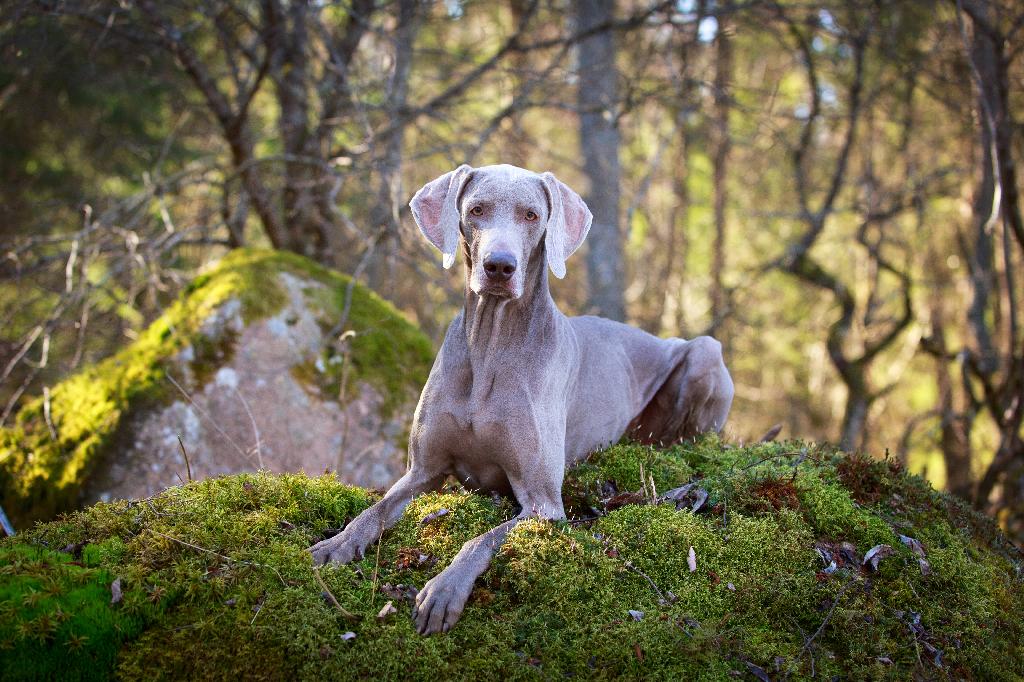
Physically, the Weimaraner is a medium to large-sized dog, with males typically standing 25 to 27 inches tall at the shoulder and females slightly smaller at 23 to 25 inches. They weigh between 55 and 90 pounds, depending on their build and gender. The breed's short, smooth coat is its most recognizable feature, shimmering in shades of silver or gray, earning it the nickname "the Gray Ghost." Their eyes, which can be amber, gray, or blue-gray, add to their elegant and expressive appearance. Weimaraners have long, graceful necks, deep chests, and a powerful yet agile build, designed for speed and endurance in the field.
Temperamentally, Weimaraners are affectionate, loyal, and highly energetic dogs that thrive on human companionship. They are often described as "velcro dogs" because they tend to stay close to their owners, forming strong bonds with their families. While their intelligence and eagerness to please make them highly trainable, Weimaraners can also be independent and occasionally stubborn, requiring consistent and patient training from an early age. They are excellent with children and generally good with other dogs, though their strong prey drive means they may not be suitable for homes with small pets unless carefully managed.
Weimaraners are best suited for active households that can meet their high exercise and mental stimulation needs. Daily vigorous exercise, such as long walks, runs, or play sessions, is essential to keep them physically and mentally satisfied. They excel in various canine sports, including agility, obedience, and tracking, and they enjoy activities like hiking and swimming. Without sufficient stimulation, they can become bored and destructive, as their energy and intelligence demand an outlet. With proper care, training, and activity, the Weimaraner is a devoted and spirited companion, offering a blend of elegance, athleticism, and love to families who can match its vibrant personality.
History
The Weimaraner, often called the "Gray Ghost" due to its striking silver-gray coat, is a versatile hunting breed with origins in 19th-century Germany. It was developed by noblemen in the Weimar region, who sought to create an all-purpose hunting dog capable of tracking, pointing, and retrieving both small and large game. These aristocrats were meticulous in their breeding programs, combining traits from Bloodhounds, German Pointers, and other hunting breeds to produce a dog with exceptional speed, stamina, and scenting ability. The result was the Weimaraner, a breed that quickly became a status symbol among the German elite.
The Weimaraner was initially used for hunting large game such as deer, boar, and bear, but as hunting practices evolved in the late 19th and early 20th centuries, the breed adapted to focus on smaller game and bird hunting. The breed’s intelligence, trainability, and loyalty made it not only a capable hunting companion but also a devoted family dog. To preserve the breed’s qualities, German breeders controlled its availability, allowing only select individuals to own and breed Weimaraners.
The breed began to gain recognition outside of Germany in the early 20th century. The first Weimaraners were brought to the United States in the 1920s, and their popularity grew rapidly after World War II when returning American soldiers introduced the breed to a wider audience. The American Kennel Club (AKC) officially recognized the Weimaraner in 1943, and it became a favorite among hunters and dog enthusiasts for its versatility, striking appearance, and affectionate nature.
Today, the Weimaraner is celebrated not only as a hunting dog but also as a loyal and energetic family companion. It excels in a variety of roles, including search and rescue, obedience, and agility competitions. The breed’s history reflects its adaptability and the dedication of those who worked to preserve its unique qualities, ensuring its enduring appeal among dog lovers worldwide.
Appearance
The Weimaraner is a medium-sized, athletic dog built for speed and endurance, presenting an overall picture of balance, stamina, and efficient movement. In outline the body is slightly longer than tall, with a deep chest and strong, level topline.
The hallmark is the solid gray coat (often described as silver- to mouse-gray) and the distinctive light eyes—commonly amber, gray, or blue-gray. Most are short-coated with a sleek, dense feel, though a longer-coated variety exists; ears are long and set high, giving the head its classic, aristocratic expression.
Size is typically in the mid‑20s inches at the shoulder, with males larger on average than females, reinforcing the breed’s “medium but substantial” sporting-dog presence.
Colors
• Blue
• Gray
• Silver
• Silver Gray
Health
Overall, a well-bred Weimaraner can be a robust athlete, but owners should still plan for breed-typical risks and preventive care. Ask breeders for documentation of health testing and for a clear explanation of what issues they see in their lines.
As a deep-chested, active sporting breed, Weimaraners can be at risk for gastric dilatation-volvulus (bloat). Discuss feeding routines, exercise timing around meals, and emergency planning with your veterinarian; some owners also ask about prophylactic gastropexy when appropriate.
Other concerns seen in the breed can include orthopedic problems (such as hip issues) and eye problems; regular vet checks and prompt evaluation of limping, exercise intolerance, or eye irritation are important for keeping an athletic dog comfortable and safe.
Care
The short coat is straightforward to maintain: a quick weekly brushing or wipe-down helps remove loose hair and keep the coat glossy. Routine ear checks and cleaning are important, especially since the ears are long and can trap moisture and debris.
This breed is not low-maintenance in lifestyle care. Daily vigorous exercise plus a mental outlet (training sessions, scent games, retrieving, field work, or dog sports) are essential to prevent boredom and problem behaviors.
Plan for management: secure fencing, safe off-leash opportunities only where permitted, and a home setup that reduces opportunities for counter-surfing, chewing, and “creative redecorating” when they’re under-stimulated.
Training
Start early and keep training engaging. Weimaraners are quick learners, and short, upbeat sessions with food, toys, and real-life rewards typically outperform harsh corrections.
Because many Weims are athletic and environmentally focused, leash skills and a reliable recall should be priorities. Use controlled setups (long lines, fenced areas) to build habits before expecting reliability around wildlife and exciting distractions.
Obedience work isn’t just about manners for this breed—it’s also mental exercise. Incorporating tracking/nosework, retrieving games, and sport foundations can channel their drive into something productive and satisfying.
Temperament
Weimaraners are generally friendly and intelligent, with an alert, fearless attitude that reflects their working background. They tend to bond closely with their family and prefer to be included in daily life, often following their people from room to room.
Because they’re both sensitive and driven, many Weims respond best to calm, consistent handling and reward-based training paired with clear boundaries. Without guidance, their enthusiasm can show up as jumping, pulling, barking/whining, or over-the-top greetings.
With appropriate socialization, they can be gentle and playful with children, but their size and intensity may be a bit much for very small kids or frail household members.
Lifestyle
Weimaraners thrive in active households that genuinely enjoy daily movement: long walks and runs, hiking, hunting/field work, or structured dog sports. They do best when they can work alongside a person and are given a “job” rather than being expected to relax all day with minimal activity.
They’re typically not ideal for owners who are away for long hours, or for apartment living without a serious exercise plan. When under-exercised or isolated, many become noisy, anxious, and destructive.
If you want a dog that’s happiest glued to your side and ready for the next adventure, a Weim can be a great match—as long as you’re equally committed to the routine that keeps them stable.
Ownership
Choosing a Weimaraner is choosing an athletic, people-focused partner. Look for breeders who prioritize stable temperament, working ability or meaningful performance titles, and documented health testing—and who will be honest about whether your lifestyle fits the breed’s needs.
Plan your first months around structure: crate training, safe confinement, consistent house rules, and daily training time. Early socialization (people, dogs, handling, environments) helps prevent the development of reactivity or anxiety as the dog matures.
Long term, successful ownership usually comes down to inclusion and purpose. A Weim that gets companionship, exercise, and training tends to be a delightful, devoted housemate; one that doesn’t is likely to become a full-time project.
Interesting Facts
- Nicknamed the “Gray Ghost” for its distinctive silvery-gray color and hunting style.
- Originated in 19th-century Germany and was developed as a versatile hunting dog (later specializing as a bird dog, pointer, and retriever).
- Typically medium-sized and athletic, commonly in the mid‑20s inches at the shoulder.
- Known for strong attachment to family and a need for substantial daily exercise and mental work.
- Short, sleek coat is relatively easy to groom, but the breed is high-maintenance in activity needs.