
Welsh Springer Spaniel
Basics
The Welsh Springer Spaniel is a medium-sized sporting dog developed to work all day in the field. Breed standards describe a compact, symmetrical dog built for endurance and hard work, with a smooth, ground-covering gait and noticeable drive from the rear.
Historically, accounts vary on exactly how long the breed has been distinct, but it is widely associated with Wales and the British spaniel tradition. Today, Welsh Springers are valued both as active family companions and as capable hunting partners, often a bit more reserved with strangers than the more gregarious spaniel types.
Description
The Welsh Springer Spaniel is a versatile and affectionate breed known for its hunting skills and loyal nature. Originating in Wales, this breed has a long history as a gundog, prized for its ability to flush and retrieve game in challenging terrain. The Welsh Springer Spaniel is closely related to other spaniel breeds but is distinguished by its unique red-and-white coat and slightly smaller stature compared to its cousin, the English Springer Spaniel. Historically, these dogs were used by hunters and farmers in Wales, and their adaptability and strong work ethic have made them cherished companions for both working and family settings.
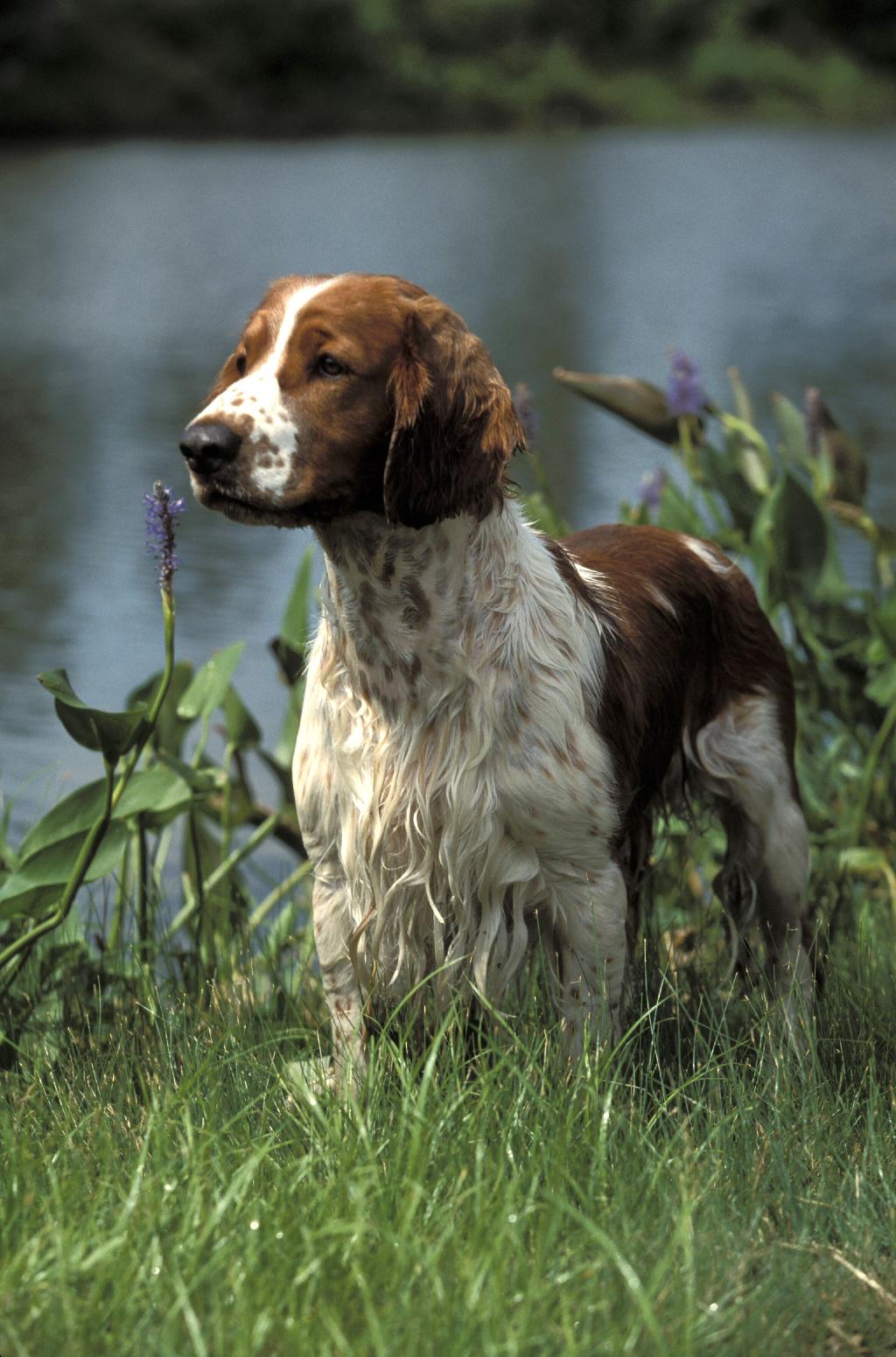
Physically, the Welsh Springer Spaniel is a medium-sized dog, standing 17 to 19 inches tall at the shoulder and weighing between 35 and 55 pounds. It has a compact and muscular build, designed for endurance and agility in the field. The breed's most distinctive feature is its beautiful, dense, water-resistant coat, which is always red and white in color. The long, feathery fur on their ears, chest, legs, and tail adds to their elegant appearance, but regular grooming is necessary to prevent tangles and maintain their coat's condition. Their expressive, almond-shaped eyes and floppy ears give them a sweet and approachable look that matches their friendly temperament.
In terms of personality, the Welsh Springer Spaniel is affectionate, devoted, and eager to please. They form strong bonds with their families and are often referred to as "velcro dogs" because of their tendency to stick close to their owners. This breed is generally good with children and other pets, making it an excellent choice for families. However, their strong hunting instincts mean they may occasionally chase birds or small animals, so early training and socialization are important. Welsh Springers are intelligent and relatively easy to train, though they can be slightly reserved with strangers, which makes early socialization critical to developing their confidence.
The Welsh Springer Spaniel thrives in active households where it can get plenty of exercise and mental stimulation. Daily walks, playtime, and training sessions are essential to keep them happy and healthy. They excel in various canine sports, such as agility, obedience, and tracking, which allow them to use their natural athleticism and intelligence. Despite their energy levels outdoors, they are calm and well-mannered in the home, provided their exercise needs are met. With their combination of beauty, charm, and versatility, the Welsh Springer Spaniel is a wonderful companion for individuals and families who enjoy an active and affectionate dog.
History
The Welsh Springer Spaniel is an ancient and versatile breed with a history that traces back to the early hunting dogs of Britain. Its roots can be found in the medieval era when spaniels were prized for their ability to flush game from dense underbrush and retrieve it for hunters. The Welsh Springer Spaniel is thought to have been developed in Wales, where its distinctive red-and-white coat and compact, muscular build made it ideally suited to navigating the rugged countryside and thick hedgerows of the region.
By the 16th and 17th centuries, spaniels had become distinct breeds, and the Welsh Springer Spaniel was recognized as a separate variety from its English relatives. Originally referred to as the "Welsh Cocker" or simply "Welsh Spaniel," the breed gained its name "Springer" due to its ability to "spring" game from cover. Unlike its cousin, the English Springer Spaniel, the Welsh Springer retained its unique red-and-white coat, which became a hallmark of the breed.
The breed gained recognition in the late 19th century, with the establishment of formal dog shows and breed standards. In 1902, the Welsh Springer Spaniel was officially recognized by The Kennel Club in the United Kingdom. Despite its popularity in Wales, the breed remained less common outside its homeland compared to other spaniels. It gained a small but dedicated following in the United States, where the American Kennel Club (AKC) recognized it in 1914.
Today, the Welsh Springer Spaniel is celebrated as a hardworking and affectionate breed. While it retains its natural hunting instincts and excels in field trials, it has also become a beloved family companion. Its rich history as a trusted working dog and its distinctive appearance ensure its enduring appeal among dog enthusiasts. The Welsh Springer Spaniel remains a symbol of the strong bond between humans and their canine partners in both work and leisure.
Appearance
Welsh Springer Spaniels present a balanced, rectangular outline: the body is only slightly longer than tall, never appearing leggy. The head is proportionate with a defined stop and a straight, fairly square muzzle; the ears are comparatively small, set moderately low, and hang close to the cheeks in a "vine leaf" shape.
The coat is naturally straight or flat with a soft, silky feel and enough density for protection in rough weather. Feathering is moderate on the legs and light on ears and tail. Breed standards restrict color to rich red and white, and the overall look should be functional and athletic rather than heavily sculpted.
Colors
• Red & White
Health
As a generally sturdy sporting breed, Welsh Springer Spaniels benefit from the same sensible health approach as other medium gun dogs: maintain a lean body condition, keep up with dental care, and prioritize joint-friendly exercise over repetitive high-impact jumping.
When choosing a breeder, ask what health screening is done in the line (commonly hips and eyes in many sporting breeds) and request documentation of results. A veterinarian can help tailor parasite prevention, diet, and activity as the dog matures and ages.
Care
Their straight, feathered coat benefits from routine brushing to prevent tangles in the feathering and to remove debris picked up outdoors. Regular ear checks and gentle cleaning are important because the drop ears can trap moisture and dirt; nails and teeth also need standard maintenance.
This is an athletic breed that does best with consistent daily activity and a safe space to run. Because they were built for endurance, a quick stroll often isn’t enough—plan for longer walks, play sessions, and opportunities to use their nose.
Training
Welsh Springer Spaniels were developed to work closely with a handler, and they typically respond well to positive, reward-based training. Keep sessions short, upbeat, and frequent, and focus on clear criteria so the dog understands exactly what earns the reward.
Because many individuals are energetic and easily interested in scents and movement, early work on recall, leash manners, and impulse control pays off. Field games (retrieving, quartering patterns, scent games) are great outlets that also reinforce cooperation.
Temperament
A well-bred Welsh Springer Spaniel is described as kind, merry, and very active, with aggression and nervousness considered unacceptable. Many are affectionate and loyal with their people, and they tend to thrive when included in daily life rather than left to entertain themselves.
Compared with some other spaniels, Welsh Springers can be a little reserved with unfamiliar people. Good socialization helps them stay confident and polite, while still keeping the steady, biddable temperament that made them useful as close-working gun dogs.
Lifestyle
This breed fits best with owners who genuinely enjoy an active routine. They are happiest when they get both physical exercise and mental work—training games, scent activities, or a job to do—rather than only backyard time.
Welsh Springers often do well in homes where they can be close to their people, and many dislike long stretches of isolation. They can adapt to suburban life or apartment living if exercise is reliable, but they are not a low-energy, "once-a-day" dog.
Ownership
Prospective owners should expect a friendly, people-oriented dog with real sporting drive. That means budgeting time for training, enrichment, and off-leash skills (in safe areas) so the dog’s energy and curiosity don’t turn into nuisance behaviors.
Look for breeders who prioritize temperament and functional structure described by established breed standards, and who can show that puppies are raised with early handling and exposure to normal household life. For many families, the best match is an adult or older puppy whose personality and energy level are already clear.
Interesting Facts
• Color in breed standards: rich red and white only.
• Built for endurance: compact, symmetrical, and designed for hard work in the field.
• Typical height (Kennel Club standard): about 48 cm (dogs) and 46 cm (bitches) at the withers.
• UKC recognition year: 1956.
• Ears are described as small and "vine leaf" shaped, hanging close to the cheeks.