
Wire Fox Terrier
Basics
The Wire Fox Terrier is a bold, athletic terrier that traces back to Britain’s hunt terriers and the tradition of foxhunting. The breed was prized for being ready and enthusiastic at a moment’s notice—an alert little dog expected to keep up with horses and hounds and then work when needed.
Modern Wire Fox Terriers are spirited companions and well-known show-ring performers. They’re typically happiest with owners who enjoy an active, clever dog and who can provide both training and a proper outlet for terrier drive.
Description
The Wire Fox Terrier is a lively, athletic terrier developed in England, known for its bold personality, sharp intelligence, and unmistakable wire-textured coat. Compact and well-balanced, the breed is built for agility and endurance rather than brute strength. Its dense, wiry coat provides protection from weather, brambles, and rough ground, reflecting its origins as a serious working dog rather than a purely ornamental breed.
Originally bred for fox hunting, the Wire Fox Terrier worked closely with hounds, locating foxes that had gone to ground and bolting them so the hunt could continue. This role demanded fearlessness, independence, and a strong voice, along with the flexibility to maneuver through narrow underground passages. The breed’s alert expression and upright carriage reflect a dog constantly aware of its surroundings and ready to act.
In temperament, the Wire Fox Terrier is energetic, confident, and highly curious. It thrives on activity and mental stimulation, often displaying a playful, mischievous streak alongside classic terrier determination. While affectionate and engaging with its family, it retains a strong prey drive and independent mindset, making consistent training and outlets for its energy especially important.
Today, the Wire Fox Terrier is widely recognized as a show dog and companion, yet it continues to excel in performance activities such as agility, obedience, barn hunt, and earthdog trials. Beneath its polished grooming and distinctive outline lies a true working terrier—driven, courageous, and shaped by generations of demanding field work alongside hounds.
History
The Wire Fox Terrier shares its origins with the Smooth Fox Terrier, emerging in England during the 18th century as a specialist dog for fox hunting. Its primary role was to work alongside packs of hounds, entering dens to locate foxes that had gone to ground and bolting them so the hunt could continue. This demanded a small but fearless terrier with strong nerves, a good voice, and the physical toughness to work underground in tight, hostile conditions.
Early Wire Fox Terriers descended from the same pool of working British terriers that produced the Smooth variety. The primary distinction was coat type rather than function. In rougher terrain and colder, wetter regions, a harsh, wiry coat was favored because it provided better protection from thorns, rock, and weather. White coloration was intentionally selected so hunters could easily distinguish the dog from the fox during moments of confusion at the earth.
By the mid- to late 19th century, as dog shows became popular, breeders began separating the wire-coated and smooth-coated dogs into distinct varieties. The Wire Fox Terrier quickly gained prominence in the show ring due to its striking outline and expressive face. It was officially recognized as a separate breed from the Smooth Fox Terrier in the late 1800s, and it went on to become one of the most successful terrier breeds in early competitive dog showing.
As fox hunting declined in the 20th century, the Wire Fox Terrier transitioned increasingly into a show and companion role. Despite this shift, its historical purpose remains evident in its structure, confidence, and high energy. The breed’s history reflects a balance between hard, functional origins and refinement through selective breeding—resulting in a terrier that still carries the attitude and drive of a true earth-working dog beneath its polished appearance.
Appearance
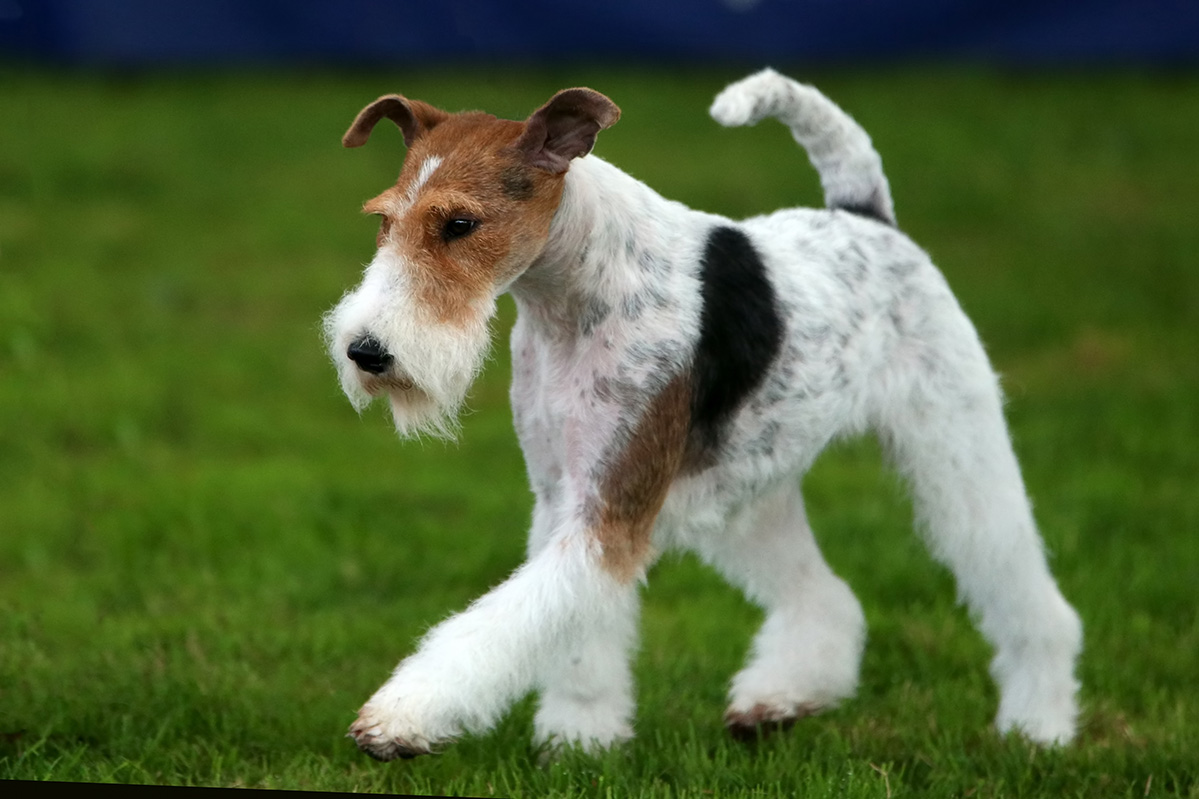
Wire Fox Terriers are compact and balanced with a distinctive, clean head and a confident posture that often looks like they’re “on their toes.” They have small V-shaped ears folding forward, a short back, and a springy, agile way of moving.
The hallmark is the wire coat: dense, harsh, and “broken” in texture, with furnishings on the face and legs that form the classic beard and leg hair. The traditional coloration is predominantly white with black and/or tan markings, a practical working look carried into the modern standard.
Colors
• White
• White & Black
• White & Tan
• White Black & Tan
• White Tan & Black
Health
Wire Fox Terriers are generally sturdy, but conscientious breeders still screen and select for long-term soundness. Eye health is a common emphasis in kennel-club style health guidance, and routine eye examinations are often recommended.
Keeping the dog lean and well-conditioned helps reduce orthopedic strain over time, especially in a breed that likes to launch, sprint, and play hard. Maintain dental care and regular checkups, and work with your veterinarian on a preventive plan appropriate to the dog’s age and activity level.
Care
This breed’s care is more about grooming and enrichment than about sheer size. The wire coat needs regular brushing to prevent tangles in the furnishings, and many owners maintain proper texture and outline with hand stripping (or a skilled grooming plan) rather than simple clipping.
Exercise needs are moderate-to-high for a small dog: daily brisk walks plus games that use their brain and nose. Provide safe chew outlets and rotate enrichment to reduce nuisance behaviors like digging or “patrolling” the house for trouble.
Training
Wire Fox Terriers are smart and fast, but they’re not automatic people-pleasers. Training goes best when it’s consistent, reward-based, and kept interesting—think short sessions, variety, and clear rules.
Because chasing is a feature, not a bug, don’t assume a reliable recall will appear on its own. Teach recall and impulse control early, use a leash or secure area around wildlife, and consider channeling their intensity into activities like agility, rally, or scent games.
Temperament
Expect a bright, outgoing personality. Many Wire Fox Terriers are comical, busy, and very engaged with their environment; they often make their own fun if the day is too quiet.
They can be intense about movement and small animals, and they may be vocal when excited or bored. Early, structured socialization helps them be polite with strangers and other dogs, but they still tend to keep a strong terrier opinion about how things should be done.
Lifestyle
This is an active “small dog with big-dog energy.” Wire Fox Terriers can adapt to many living situations, including a smaller home, as long as they get daily exercise, training time, and enough mental stimulation.
They tend to do best with households that enjoy structure and engagement. Secure fencing and supervised outdoor time matter, and if you have close neighbors, early work on calm behavior and barking cues can make city life much easier.
Ownership
Prospective owners should be honest about the grooming commitment. A Wire Fox Terrier’s coat can be beautiful and practical, but it’s not low-effort; plan for regular professional grooming and/or learning hand stripping and routine coat care at home.
Choose breeders who can explain their health screening practices (including recommended eye checks) and who prioritize stable, workable temperaments. For the right person, the breed is a hilarious, high-spirited teammate; for someone wanting a quiet, easygoing pet, it can feel like too much dog in a small package.
Interesting Facts
- Origin: Britain; developed from hunt terriers used alongside foxhunts.
- Coat: harsh, dense wire coat with classic beard and furnishings.
- Grooming note: maintaining traditional texture often involves hand stripping.
- Typical color: predominantly white with black and/or tan markings.
- Signature vibe: alert, energetic, and “always ready” for the next activity.
- Close relative: Smooth Fox Terrier (similar build and temperament; different coat).