Wirehaired Pointing Griffon
Basics
The Wirehaired Pointing Griffon is a versatile, close-working bird dog developed to hunt in mixed terrain—fields, brush, and wetlands—then retrieve game on land and from water. Often called a “Griff” (or, internationally, the Korthals Griffon), the breed is known for cooperation in the field, a strong nose, and the stamina to hunt at a steady pace all day.
At home, many Griffs are people-oriented companions who prefer to be included in daily life rather than left to entertain themselves. They tend to bond closely with their family, and they’re usually at their best when they have regular training, outdoor exercise, and a clear job (from hunting and tracking to structured games and dog sports).
Description
The Wirehaired Pointing Griffon is a versatile and athletic sporting dog known for its excellent hunting abilities and close bond with its owners. Developed in the late 19th century by Dutch breeder Eduard Korthals, the breed was designed to be a capable and efficient gundog that excelled at pointing and retrieving in diverse terrains, including fields, wetlands, and woodlands. Korthals meticulously crossed various breeds, such as the German Pointer, Spaniels, and Setters, to create a hardy and adaptable dog that could work in a variety of conditions. Today, the Wirehaired Pointing Griffon is beloved not only for its hunting skills but also for its friendly and devoted nature as a family companion.
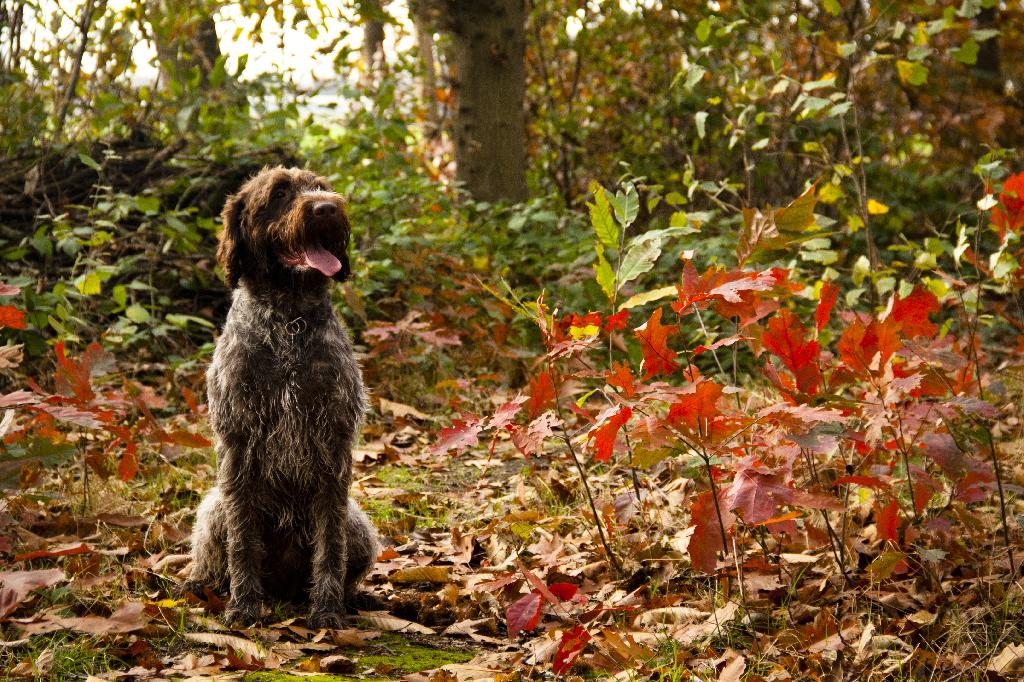
Physically, the Wirehaired Pointing Griffon is medium-sized, with males standing 22 to 24 inches tall at the shoulder and females slightly smaller at 20 to 22 inches. They weigh between 50 and 70 pounds, with a lean and muscular build that reflects their athleticism and stamina. The breed’s most distinctive feature is its rough, wiry coat, which provides protection in harsh weather and dense underbrush. This coat is typically a steel-gray color with brown or liver markings, and it requires regular grooming to maintain its texture and prevent matting. Griffons are also recognized for their expressive, bushy eyebrows, mustache, and beard, giving them a rugged and charming appearance.
Temperamentally, the Wirehaired Pointing Griffon is intelligent, eager to please, and highly affectionate with its family. They are known for their gentle and playful demeanor, making them excellent companions for households with children. However, they are also active and energetic dogs that thrive on exercise and mental stimulation. Griffons require regular opportunities to run, play, and engage in activities like agility training or scent games to channel their energy productively. As hunting dogs, they are naturally driven and focused in the field, working closely with their handlers to track and retrieve game. They are often referred to as “the supreme gundog” for their ability to work tirelessly and efficiently in challenging conditions.
Wirehaired Pointing Griffons are social animals that enjoy being part of a family and are typically friendly with other dogs. However, their strong prey drive means they may not always be suited to homes with small pets unless introduced and trained carefully. Training a Griffon is usually straightforward due to their intelligence and willingness to work, but it is important to use positive reinforcement and consistency. With proper socialization, training, and an active lifestyle, the Wirehaired Pointing Griffon makes an excellent pet for active families or individuals who can meet their physical and mental needs. Whether as a loyal hunting partner or a beloved family member, the Wirehaired Pointing Griffon is a spirited and endearing breed.
History
The Wirehaired Pointing Griffon is a versatile and hardworking gundog with a history that dates back to the late 19th century in Europe. The breed’s development is credited to Eduard Karel Korthals, a Dutch sportsman and avid hunter who sought to create the ideal hunting dog. Korthals began his breeding program in the 1870s, working primarily in Germany and the Netherlands. His vision was to produce a dog that could excel in both pointing and retrieving game in a variety of terrains, including dense brush, marshlands, and open fields. The result was the Wirehaired Pointing Griffon, a rugged and versatile breed with a keen nose, strong hunting instincts, and a distinctive wiry coat.
To create the breed, Korthals crossed a variety of dogs, including Griffons, Spaniels, Pointers, and Setters, selecting for traits such as intelligence, stamina, and a harsh, weather-resistant coat. By 1887, Korthals had refined the breed to a point where its characteristics were consistent, and the Wirehaired Pointing Griffon began gaining recognition among hunters across Europe. The breed was well-suited for waterfowl hunting as well as upland game, making it highly versatile and sought after by sportsmen.
The Wirehaired Pointing Griffon was introduced to North America in the early 20th century, where it gained a following among hunters who appreciated its versatility and cooperative temperament. The American Kennel Club (AKC) recognized the breed in 1887, further cementing its place as a capable and loyal sporting dog. While it remains less common than some other pointing breeds, the Griffon has a dedicated group of enthusiasts who value its unique traits and working abilities.
Today, the Wirehaired Pointing Griffon is celebrated not only as a hunting companion but also as a family pet. Its friendly and intelligent nature, combined with its ability to adapt to various environments, has made it a favorite among active families and hunters alike. The breed’s history reflects the dedication of Korthals and others who sought to create a truly versatile and dependable gundog.
Appearance
Griffs are medium-sized, sturdily built sporting dogs with a practical, “all-weather” look. The head is often described as expressive, with prominent eyebrows and a noticeable beard and mustache—facial furnishings that, along with the harsh coat, help protect the dog when working through cover.
The coat is the breed’s hallmark: a straight, rough, wiry outer coat with a softer, dense undercoat that provides insulation in cold water and rough conditions. Colors are typically steel gray with brown markings, or other shades that still read as muted, working-dog coloration; overall, the coat is meant to be functional rather than flashy. Because the coat is designed to shed water and resist thorns, it usually shouldn’t be clipped down like a doodle-style coat.
Colors
• Brown
• Chestnut
• Chestnut & Gray
• Chestnut Brown
• Chestnut Roan
• Gray w/ Brown Markings
• White
• White & Brown
• White & Orange
Health
Wirehaired Pointing Griffons are generally sturdy, but they can still be affected by the common orthopedic and eye issues seen in many athletic, medium-to-large breeds. When you’re choosing a puppy, ask the breeder for documented health screening results on the parents (hips and elbows are common priorities) and any breed-recommended eye testing.
Like many deep-chested sporting dogs, some individuals may be at risk for gastric dilatation-volvulus (bloat/GDV). It’s worth learning the warning signs (sudden unproductive retching, restlessness, a distended abdomen) and discussing risk-reduction strategies with your veterinarian; in some cases, owners consider a preventive gastropexy.
Keeping the dog lean and well-conditioned, staying current on preventive care, and addressing ear/skin irritation early (especially for dogs that swim often) will go a long way toward supporting long-term soundness.
Care
Daily exercise is important, but for this breed “exercise” should include both movement and purposeful mental work. Long walks, hiking, off-leash running in safe areas, retrieving, scent games, and (if possible) field training or swimming sessions help satisfy the Griff’s working instincts.
Coat care is moderate and very routine-friendly. Plan on brushing/combing weekly to prevent tangles in the furnishings and to remove burrs after time in brush, plus regular beard/ear cleanup (the beard can hold water and food). Some owners do light hand-stripping or carding to keep the coat harsh and tidy, but most pet homes can manage with brushing and occasional trimming of feet and furnishings.
As with any active outdoor breed, keep nails short for traction, check paw pads for abrasions, and stay current on parasite prevention—especially if the dog regularly works in fields or marshy areas.
Training
Griffs tend to learn quickly and usually want to work with their person, which can make training feel smooth—especially when you start early and keep sessions upbeat. Focus first on foundation skills that protect the dog’s freedom later: recall, leash manners, place/settle, polite greetings, and impulse control around birds and wildlife.
Because the breed is often sensitive, training methods matter. Short, consistent sessions with clear criteria, food/toy rewards, and calm corrections (when needed) typically produce the best reliability and confidence. Harsh, repetitive punishment can create avoidance or reduce drive, particularly in young dogs.
If you plan to hunt, build a progressive path: exposure to birds and gunfire should be carefully introduced, and retrieving should be taught as a fun, structured game before you expect steadiness in real hunting situations.
Temperament
Wirehaired Pointing Griffons are often described as friendly, eager, and quick-witted. In the field they’re typically cooperative and “handler-focused,” which is one reason many hunters appreciate them as a walking gun dog that stays in useful range and checks in naturally.
In family settings, they’re commonly affectionate and social, and many do well with respectful kids when properly supervised. Like most sporting breeds, they can be mouthy as youngsters and may chase small animals if not taught boundaries early; thoughtful socialization and consistent house rules make a big difference.
They’re also sensitive to tone—heavy-handed corrections can shut them down or make them wary—so the best temperaments usually come from calm structure, clear expectations, and plenty of reward-based practice.
Lifestyle
This breed fits best with an active household that enjoys being outside. A Griff who gets a real daily routine—exercise, training, and a bit of problem-solving work—tends to be calm and pleasant indoors; a bored Griff can become noisy, chewy, or pushy about getting attention.
They can live in a variety of settings, but they’re not a great match for long, lonely days in a backyard. Many do best with owners who can include them in family life, provide regular social contact, and offer structured outlets like hunting, tracking, nose work, or retriever games.
If you have small pets, plan for management and training: early exposure and reliable impulse control are important because many Griffs will naturally notice movement and scent.
Ownership
Owning a Wirehaired Pointing Griffon is easiest when you want a partner, not a decoration. Expect to invest time—especially in the first 18–24 months—into training, adolescence management, and building a recall that holds up around birds and scent.
When selecting a breeder, prioritize stable temperaments, working ability appropriate to your goals (hunting/field vs. primarily companion), and transparent health documentation. A good breeder will talk honestly about drive level, coat upkeep, and what the breed is like to live with, and will help match you with a puppy whose energy and confidence fit your household.
Rescue can also be a great option for experienced, active homes; adult Griffs often settle nicely once they have consistent structure and daily outlets.
Interesting Facts
- Versatile pointing and retrieving breed developed to work close to the hunter in mixed terrain, including water.
- Common nickname: “Griff”; internationally, the breed is often associated with Eduard Karel Korthals.
- Signature look includes a harsh, wiry coat plus pronounced eyebrows and a beard/mustache.
- Typically thrives with daily exercise *and* mental work (training, scent games, field tasks).
- Often described as cooperative and people-oriented, but can be sensitive to harsh handling.
- Outdoor-ready coat can collect burrs in the beard and furnishings—quick post-hike grooming helps a lot.