
Tamaskan Dog
The Tamaskan Dog is a large, athletic, northern-type dog developed to resemble a wolf while still being a trainable companion and working partner. Breed standards emphasize a rangy, well-balanced build, an alert expression, erect ears, and efficient, ground-covering movement.
Many Tamaskans mature slowly and are often described as intelligent, quick learners with an independent streak. They tend to do best with owners who enjoy an active routine and who can provide structure, enrichment, and a job to do—whether that’s hiking, pulling sports, scent work, or service/therapy-style tasks.
Description
The Tamaskan Dog is a strikingly beautiful and highly energetic breed, known for its resemblance to the wolf but with a friendly, approachable nature. Originally developed in Finland and other Northern European countries, the Tamaskan was bred to work as a sled dog and to assist in various tasks requiring strength, stamina, and agility. The breed is a mix of several northern dog breeds, including the Alaskan Malamute, Siberian Husky, and the Finnish Lapphund, which contributed to its wolf-like appearance and its high energy levels. Despite their wild looks, Tamaskans are domesticated dogs with a loving and loyal temperament.
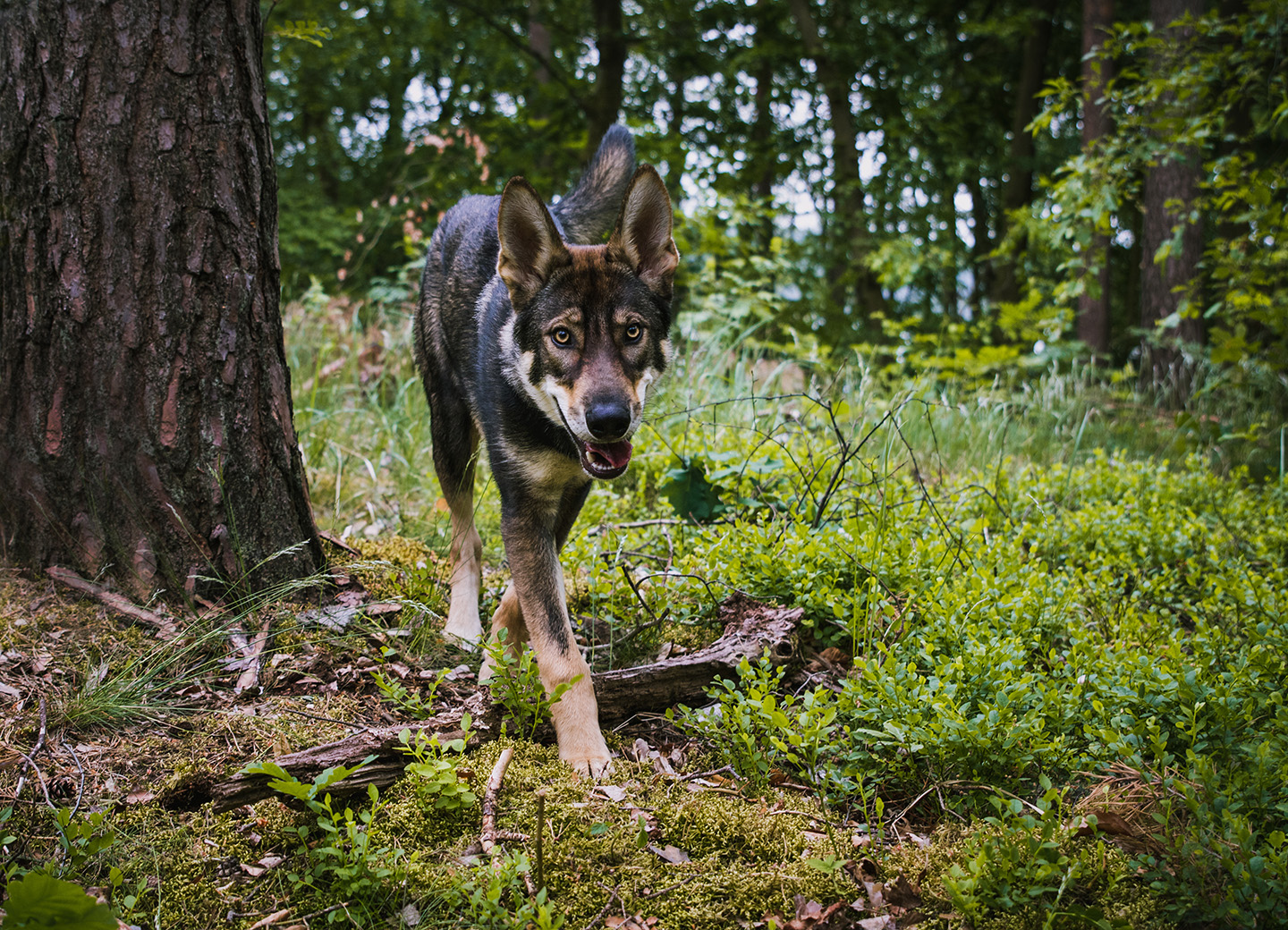
Physically, the Tamaskan is a large, powerful dog that stands between 24 and 28 inches at the shoulder and typically weighs between 55 and 100 pounds. They have a thick double coat, usually gray or red with distinctive markings resembling that of a wolf. Their dense coat helps them withstand colder temperatures, and they have an elegant yet muscular build, which aids them in performing tasks like pulling sleds or running at high speeds. Their striking blue or amber eyes, erect triangular ears, and bushy tail add to their wild appearance, making them one of the most visually stunning dog breeds.
The Tamaskan Dog is known for its intelligence and eagerness to work, but it also requires a high level of exercise and mental stimulation. These dogs are not suited for owners with a sedentary lifestyle, as they thrive on physical activity and enjoy tasks that challenge their abilities. They are often described as independent thinkers, which means they can be a bit stubborn at times, but with proper training and socialization, they are responsive and eager to please their owners. Their temperament is generally friendly and gentle, especially with their family members, making them great companions for active households. However, they may not be as tolerant of strangers, often exhibiting cautious behavior until they are comfortable.
Due to their intelligence and high energy, Tamaskans are best suited for experienced dog owners who can provide them with the physical and mental stimulation they need. These dogs are also highly social and tend to bond strongly with their families, often forming close relationships with both adults and children. While they do well in a family setting, they require space to roam and play, and they thrive in environments where they can get plenty of exercise, such as homes with large yards or rural properties. Whether as an athletic companion or a loyal family member, the Tamaskan Dog is a breed that embodies both beauty and strength, making it a unique addition to any home.
History
The Tamaskan Dog is a relatively modern breed with a history rooted in the desire to create a domestic dog that closely resembles a wolf in appearance but has the temperament and trainability of a family pet. The breed originated in the 1980s and 1990s, when breeders in Finland began selectively crossing northern dog breeds, such as Siberian Huskies, Alaskan Malamutes, and German Shepherds, to achieve this goal. The initial foundation stock included dogs with wolf-like features, but no actual wolf content, ensuring the breed would remain domesticated and suitable for family life.
The Tamaskan Dog was developed to combine an impressive, wolf-like appearance with intelligence, versatility, and a friendly nature. Early breeders focused on creating a dog that could excel in a variety of roles, including sledding, search and rescue, and canine sports. Health and temperament were also prioritized, resulting in a breed that is known for being loyal, gentle, and highly trainable. The breed’s name, "Tamaskan," was chosen to reflect its northern heritage, with "Tama" meaning "mighty wolf" in a Native American language.
The Tamaskan Dog has gained a dedicated following over the past few decades, with the establishment of the Tamaskan Dog Register (TDR) to maintain breed standards and promote responsible breeding practices. While it is not yet recognized by major kennel clubs such as the American Kennel Club (AKC) or Fédération Cynologique Internationale (FCI), the breed continues to grow in popularity due to its striking appearance and well-rounded personality.
Today, the Tamaskan Dog is appreciated as a versatile and affectionate companion. While its working abilities remain strong, it is also a favorite among active families who value its friendly demeanor and wolf-like elegance. The breed’s history as a carefully designed and purpose-driven creation reflects the dedication of breeders to achieving a balance between beauty, function, and companionship.
Tamaskan Dog Hunting Ability and Traditional Roles
Appearance
Tamaskans are slightly longer than tall, with moderate bone and visible athletic muscle. Standards describe a wolf-like outline: a wedge-shaped head, almond-shaped eyes, fully pricked triangular ears, a straight topline, and a low-set, well-furred “bottle-brush” tail.
The double coat is weather-resistant, with a coarser outer coat and a softer undercoat that varies seasonally. Accepted colors are typically gray-agouti variations (often described as red gray, wolf gray, or black gray) with a required facial mask; the overall look is meant to read “northern sled dog type” rather than heavy or bulky.
Colors
• Black
• Grey
• Red
Health
Health information collected by the Tamaskan Dog Register (TDR) highlights that, like many large athletic breeds, Tamaskans can experience orthopedic concerns such as hip and elbow dysplasia, and other conditions have been reported across body systems (for example, eye disorders and certain cardiac conditions). The same TDR recordkeeping also notes that reports span multiple registries and are intended as a tracking resource rather than a guarantee of risk for any individual dog.
For prospective owners, the practical takeaway is to prioritize breeders who document health screening and openly share results, and to keep adult dogs lean and well-conditioned to support joints. Regular veterinary care, appropriate exercise progression, and prompt evaluation of limping, exercise intolerance, or neurologic changes are especially important in a large, active breed.
Care
Coat care is usually moderate: weekly brushing most of the year, with more frequent brushing during seasonal shedding when the undercoat “blows.” Keep an eye on ears, feet, and the feather-free areas where debris can hide after hikes; routine nail trimming helps maintain sound movement.
Daily outlets matter at least as much as grooming. Plan on substantial exercise plus enrichment—long walks with sniff time, structured play, pulling sports, tracking/scent work, or training games. Without enough activity, many northern-type dogs (Tamaskans included) can become noisy, restless, or inventive about finding their own fun.
Training
Tamaskans are often fast learners, but they benefit from training that is consistent, reward-based, and varied. Short sessions with clear cues, high-value reinforcement, and gradual distractions tend to work better than repetitive drilling.
Put extra emphasis on recall, loose-leash walking, and calm greetings early, then maintain those skills through adolescence. Because some individuals can be independent, management tools (secure fencing, long lines, and structured routines) are often part of responsible training until reliability is well proven.
Temperament
A well-bred Tamaskan is commonly portrayed as bright, attentive, and people-aware—often strongly bonded to their family. Standards also note that they can be willful, which usually shows up as selective attention when something more interesting is available.
Because they’re built and described as capable working dogs, many thrive when they have predictable routines, plenty of exercise, and regular mental work. In typical pet homes, the most successful temperaments are supported by early socialization, calm handling, and training that rewards engagement rather than relying on pressure.
Lifestyle
Tamaskans fit best in homes that enjoy being outside and doing things together. They can adapt to many living situations, but they generally need daily time to run, pull, hike, or work their brains; a quick neighborhood potty break schedule usually isn’t enough.
They’re typically happiest living indoors as part of the family, with predictable structure and opportunities to engage with people. If you’re frequently away or prefer a low-energy dog, a Tamaskan may feel like too much—especially during the long adolescent phase as the breed matures.
Ownership
Choosing a Tamaskan is largely about honestly matching energy level and management needs. Look for breeders or registries that can explain their goals, provide clear health documentation, and describe what they expect from owners in terms of exercise, training, and containment.
Plan for the ongoing costs of a large, active dog: quality nutrition, preventive veterinary care, training support, and equipment for safe management (sturdy harness/leash systems and secure fencing). A good fit is an owner who enjoys consistency—daily routines, ongoing training, and shared activities—rather than a “set it and forget it” pet.
Interesting Facts
• Large, wolf-like northern-type dog; standards emphasize balance, athleticism, and an efficient, effortless gait.
• Slow-maturing breed; many don’t feel fully mature until roughly 3–4 years.
• Double coat with seasonal undercoat shedding; generally needs regular brushing, especially during coat blows.
• Often intelligent and quick to learn, but can be independent—best with consistent, reward-based training.
• TDR health tracking reports include orthopedic issues (e.g., hip/elbow dysplasia) among conditions recorded in the breed.
• Typically thrives with an active lifestyle and a “job,” such as hiking, pulling sports, tracking, or structured training.