
American Brittany
The American Brittany (often called the Brittany) is a compact, athletic bird dog known for doing “double duty”: a pleasant house companion that can turn into an intense, stylish hunter the moment it’s time to work. Developed as a pointing and retrieving dog, it’s especially associated with upland game and the kind of all-day stamina that field people prize.
Brittanys are typically medium in size and easy to travel with, but they are not a low-activity breed. Most thrive when they get daily opportunities to run, sniff, and work with their people—whether that’s hunting, long hikes, or dog sports that let them use their nose and speed.
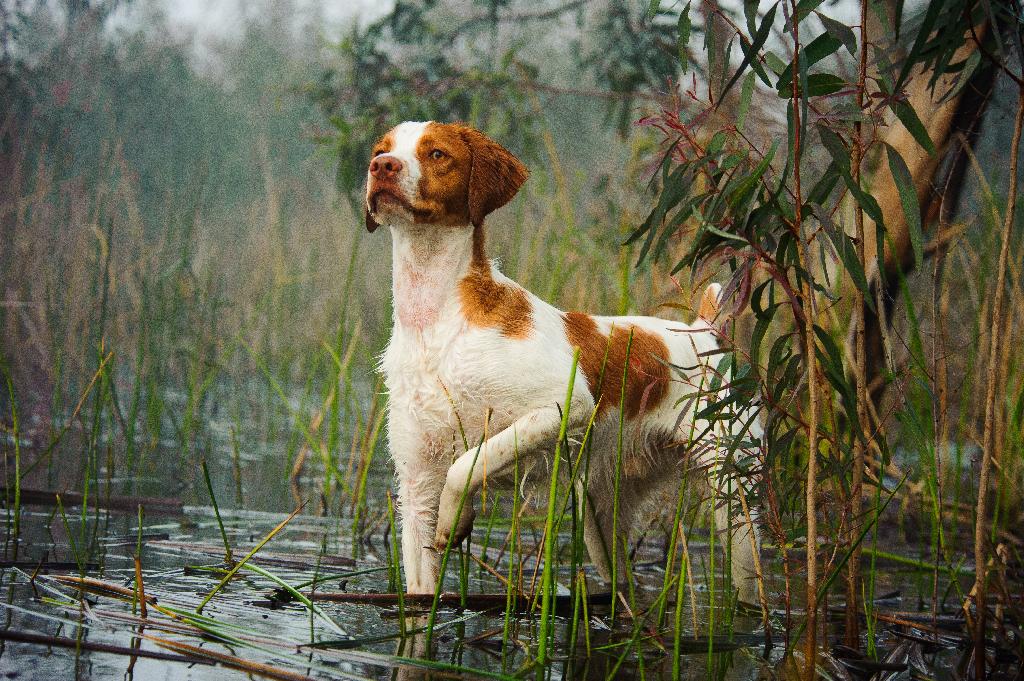
Description
The American Brittany, often simply referred to as the Brittany, is a versatile and energetic hunting dog breed known for its exceptional fieldwork and friendly, affectionate nature. Originally bred as a pointing and retrieving gun dog, the American Brittany excels in bird hunting and is highly regarded for its stamina, agility, and keen nose.
Physically, the Brittany is a medium-sized dog with a compact and athletic build, typically weighing between 30 to 40 pounds. It has a distinctive coat that can be either wavy or flat, often in orange and white or liver and white, with a slightly rugged texture that helps it blend into outdoor environments. The breed’s ears are typically set high and have a soft, wavy texture, and its tail is often docked or left natural, depending on local customs.
Known for its high energy levels, the American Brittany thrives in active households and requires plenty of physical exercise and mental stimulation. It is an enthusiastic and eager-to-please dog, making it relatively easy to train, especially when motivated by positive reinforcement and interactive activities.
The Brittany is friendly, outgoing, and enjoys being around people, including children and other pets, making it an excellent family companion. Its hunting instincts remain strong, so early socialization is important to help manage its prey drive and ensure good behavior with other animals.
This breed does well in homes where they have space to run and play, and they are best suited for active individuals or families who can provide them with the exercise and mental challenges they need. Whether as a hunting partner or a loyal family pet, the American Brittany’s enthusiasm, intelligence, and affectionate nature make it a popular choice among dog lovers.
History
The American Brittany, often referred to simply as the Brittany, has a rich history that originates in the Brittany region of France, where it was developed as a versatile hunting dog. Dating back to the 17th and 18th centuries, the breed's ancestors were likely a mix of local French spaniels and English pointers brought over by British sportsmen. These dogs were admired for their agility, keen noses, and ability to work both as pointers and retrievers, making them excellent companions for bird hunters.
The Brittany first gained recognition as a distinct breed in the mid-19th century, with its reputation spreading across Europe as a skilled hunting dog, particularly for game birds like partridge and pheasant. Its compact size, stamina, and versatility allowed it to excel in a variety of terrains, from open fields to dense underbrush. The breed was first officially recognized in France in 1907 as the *Epagneul Breton*, or Brittany Spaniel, reflecting its origins as a spaniel-type working dog.
The breed made its way to the United States in the 1930s, where it quickly gained popularity among American hunters. American breeders focused on refining the Brittany’s abilities, favoring traits that enhanced its performance in upland bird hunting, including speed, agility, and pointing ability. Over time, the American Brittany began to diverge slightly from its French counterpart, particularly in appearance and style. In the U.S., the breed developed a leaner, more agile build and was often referred to simply as the “Brittany” rather than “Brittany Spaniel” to distinguish it from traditional flushing spaniels.
The American Kennel Club (AKC) officially recognized the breed in 1934, and it has since become one of the most popular hunting dogs in the United States. While the breed continues to excel in field trials and hunting competitions, its friendly and affectionate temperament has also made it a beloved family companion. The Brittany’s intelligence, energy, and eagerness to please have cemented its reputation as both a tireless field worker and a versatile, loyal pet. Today, the American Brittany remains a testament to its French heritage while reflecting the refinements of its American evolution.
American Brittany Hunting Ability and Traditional Roles
Appearance
The Brittany is square and closely knit, with enough leg to cover ground quickly and efficiently. Breed standards describe a rugged, agile dog—strong and energetic without looking heavy or clumsy.
The coat is dense and can be flat or wavy, with moderate feathering rather than heavy furnishings. Common colors are orange-and-white or liver-and-white, in clear or roan patterns; light ticking is often seen. Many Brittanys have naturally short tails, and docked tails have traditionally been common in the U.S., though natural tails are also seen.
Colors
• Black & White
• Blue Roan
• Liver & White
• Liver Roan
• Liver White & Orange
• Orange & White
• Orange Roan
• Piebald
• Roan
• White / Black
• White / Liver
• White / Orange
• White & Liver
• White & Orange
• White Black & Orange
Health
Overall, the Brittany is generally regarded as a robust, athletic breed when responsibly bred and kept fit. A good routine of lean body condition, consistent conditioning, and basic preventive care goes a long way for an active gun dog.
Prospective owners should still ask breeders for proof of health screening appropriate to the breed and a clear plan for lifelong veterinary care. For working dogs, also consider “practical health”: nail/foot care, parasite prevention, and prompt attention to small injuries from brush, thorns, and rough terrain.
Care
Plan on regular, purposeful exercise and some sort of job for the brain. A Brittany that gets daily running time, training games, or scent work is usually much easier to live with than one that only gets short leash walks.
Grooming is straightforward: brush and comb once or twice a week to remove loose hair and prevent small tangles in the feathering. After field time, check for burrs, foxtails, and minor scrapes, and keep ears clean and dry—especially for dogs that swim or retrieve in wet cover.
Training
Because Brittanys are sensitive and eager, training typically goes fastest with reward-based methods: food, toys, and especially access to what they want (running, sniffing, retrieving). Short sessions with lots of success keep them enthusiastic.
Focus early on recall, steadiness around birds/squirrels, and calm behavior in the house. Many Brittanys benefit from structured outlets—hunt tests, field work, agility, rally, or nosework—because it channels their speed and nose into clear rules and teamwork.
Temperament
Brittanys are widely described as friendly, people-oriented, and eager to please. They tend to be bright and biddable, often wanting to stay connected to their humans rather than working at an extreme distance.
That said, they’re also lively, adventurous dogs with plenty of initiative. Without enough exercise and mental outlets, the same drive that makes them great in the field can show up as restlessness, barking, or “busy” behavior around the house. Most do best with kind, consistent handling rather than harsh corrections.
Lifestyle
This is a high-energy, outdoorsy breed. Brittanys are happiest in homes where someone genuinely wants to do things with the dog most days—runs, long walks, hikes, training, or time in safe open areas.
With sufficient exercise, many settle nicely indoors and enjoy being close to the family. Without it, apartment life can be challenging unless the owner is very committed to daily activity and enrichment. They commonly enjoy social outings and typically do well with polite children and other dogs when well socialized.
Ownership
A Brittany fits best with an owner who likes an interactive, responsive dog and can provide structure, training, and real exercise. They’re often chosen by hunters for their versatility, manageable size, and cooperative style, but they also make excellent companions for active households.
Look for breeders who aim to preserve the “dual dog” ideal—sound temperament and athletic structure that can perform in the field and live comfortably at home. When you bring one home, invest early in training and safe off-leash skills (or long-line alternatives) to prevent chasing issues and to keep the dog’s big engine under control.
Interesting Facts
- Medium-sized gundog, typically around 17½–20½ inches at the shoulder and roughly 30–45 pounds.
- Bred to point and retrieve; commonly used for upland game and known for close-to-medium range field work.
- Dense coat (flat or wavy) with moderate feathering; common colors include orange/white or liver/white, often with ticking or roaning.
- High energy and very people-oriented; usually easiest to live with when given daily vigorous exercise.
- Often naturally bob-tailed or traditionally docked in the U.S.; natural tails are also seen depending on lines and local norms.